
Finding the best telescope focusers for refractor telescopes can make a noticeable difference in sharpness, especially when viewing planets, double stars, or deep-sky targets at higher magnifications.
This roundup includes dedicated focusing hardware alongside refractor telescopes with useful focusing features, helping beginners and experienced observers compare practical upgrade paths in one place.
Best 10 Telescope Focusers for Refractor Telescopes Picks for 2026
DIY Precision Pick

- Gear-assisted fine adjustment
- Locking screw for eyepiece stability
- 1.25-inch interface for DIY refractors
Best For: DIY 80mm refractor telescope builds
Integrated Upgrade Pick

- Dual-speed 1:10 focuser
- 90mm focus travel for accessories
- 360-degree field rotator for cameras
Best For: Astrophotography and visual observing
Motorized Control Pick
Alstar AccuFocus Electronic Focuser
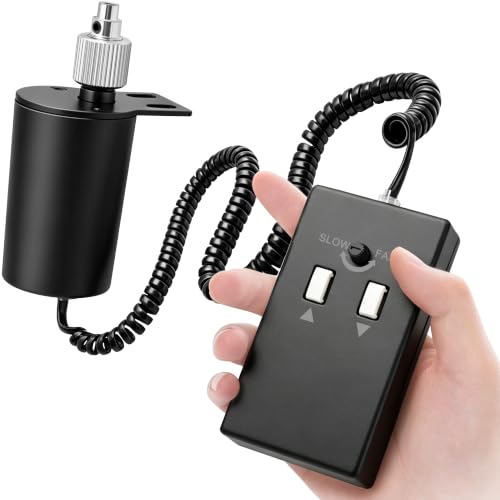
- Vibration-free pushbutton control
- Adjustable focusing speed
- Fits compatible single-speed systems
Best For: 60–127mm single-speed refractors
Astrophotography Kit Pick
SV503 80ED with Field Flattener

- 2-inch dual-speed 1:10 focuser
- Includes 0.8X focal reducer
- Designed for edge-to-edge imaging
Best For: Portable deep-sky astrophotography
Best Beginner Pick

- 102mm refractor with fully XLT-coated optics
- Smartphone-guided target locating
- Manual mount with slow-motion controls
Best For: Beginners who want guided visual observing
Best Dual-Speed Focuser

- 2.5-inch dual-speed manual focuser
- Wide-field f/6.5 achromatic refractor
- Lightweight tube for viewing or imaging
Best For: Wide-field observers and entry-level astrophotographers
Best for Astrophotography
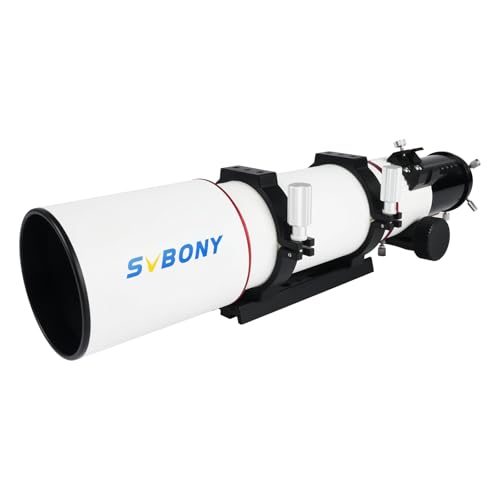
- 80mm f/6 triplet APO optical design
- 2.5-inch 1:10 dual-speed focuser
- Designed for deep-sky imaging and visual use
Best For: Astrophotographers needing precise manual focus
Best Flat-Field Value
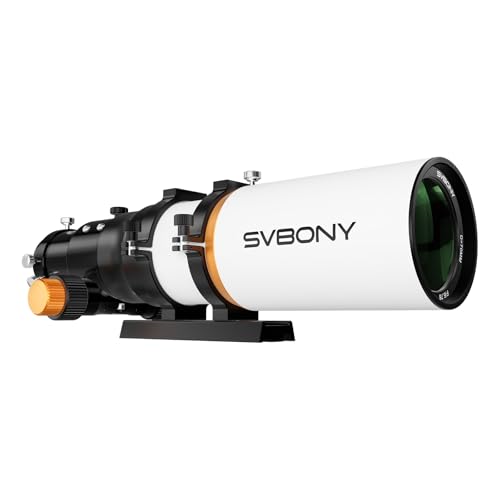
- Dual-speed focuser for fast and fine adjustments
- Built-in field flattener simplifies imaging
- ED optics and anti-glare design improve clarity
Best For: Wide-field observing and convenient refractor astrophotography
Best Rotating Focuser

- 1:10 dual-speed focuser for smooth precision
- 360-degree rotation aids composition
- 90mm aperture increases light gathering
Best For: Beginners seeking flexible visual and photographic use
Best Precision Imaging Focuser

- 2.5-inch 10:1 rack-and-pinion focuser
- Reserved holes support compatible EAF systems
- Built-in flattener suits wide-field imaging
Best For: Astrophotographers planning precise or electronic focusing
DIY Precision Pick – 80mm Toothed Focusing Seat
For shoppers comparing telescope focusers for refractor telescopes, this manual focusing seat is a compact option for DIY builds. Its toothed focusing tube provides gear-assisted adjustment, while the 1.25-inch eyepiece interface suits compatible visual setups.
Best For: DIY refractor telescope projects using 1.25-inch eyepieces.
Pros:
- Gear-assisted fine focusing with 120mm focusing length
- Locking screw helps hold the eyepiece securely
- Threaded interior is designed to reduce internal reflections
- Lightweight ABS construction
Cons:
- Manual operation rather than motorized focusing
- Designed for 80mm DIY refractor applications
- Compatibility is centered on 1.25-inch eyepieces
This is a straightforward replacement or build component for users who value adjustable, stable manual focusing without adding electronic controls. Confirm the telescope dimensions and eyepiece interface before ordering.
Integrated Upgrade Pick – SV503 102mm ED Refractor
If you want telescope focusers for refractor telescopes as part of a complete optical system, the SV503 102mm includes a dual-speed focuser rather than requiring a separate upgrade. Its 1:10 adjustment, 90mm focus travel, and 360-degree field rotator are especially useful for visual observing and astrophotography.
Best For: Users seeking a complete 102mm ED refractor with precise focusing for imaging and visual astronomy.
Pros:
- Dual-speed 1:10 focuser supports fine focus adjustments
- 90mm focus travel accommodates imaging accessories
- 360-degree field rotator helps align cameras
- S-FPL51 ED glass and fully multi-coated optics reduce color fringing and reflections
Cons:
- At 3.95kg, it is less portable than smaller refractors
- Does not include a finderscope
- Requires a suitable mount or tripod setup
Rather than being only a focuser replacement, this is a full refractor platform with a capable focusing system already installed. It is a strong fit when focusing performance, accessory clearance, and camera alignment matter together.
Motorized Control Pick – Alstar AccuFocus Electronic Focuser
For telescope focusers for refractor telescopes where vibration-free adjustment is a priority, the Alstar AccuFocus adds motorized control to compatible single-speed systems. Its handheld controller offers adjustable speed, helping users make coarse or very fine focus changes without touching the focusing knob.
Best For: Owners of compatible 60–127mm single-speed refractors who want portable electronic focusing.
Pros:
- Pushbutton controller enables hands-off focusing
- Adjustable speed supports coarse and fine adjustments
- Includes brackets for Crayford and rack-and-pinion focusers
- Battery-powered design is suited to field use
Cons:
- 9V battery is not included
- Not compatible with Maksutov, Dobsonian, or APO two-speed focusers
- Requires compatibility checking and basic installation
This kit can make high-magnification viewing and astrophotography focusing steadier, but its compatibility limits are important. Check that your refractor uses a supported single-speed focuser before purchasing.
Astrophotography Kit Pick – SV503 80ED with Field Flattener
Among telescope focusers for refractor telescopes, this SV503 80ED kit combines a 2-inch dual-speed focuser with a 0.8X field flattener. The 1:10 micro-adjustment is aimed at accurate imaging focus, while the flattener is designed to keep stars sharper across the frame.
Best For: Portable deep-sky astrophotography setups using a camera and larger imaging sensor.
Pros:
- 2-inch dual-speed focuser with 1:10 micro-adjustment
- 0.8X reducer shortens exposure requirements and widens the field
- Field flattener targets sharper edge-to-edge stars
- Lightweight 2.5kg OTA is easier to carry
Cons:
- Manual focusing rather than electronic focusing
- Designed primarily around camera-based astrophotography
- Supplied as an OTA rather than a complete mounted telescope
This is a focused imaging package for users who want a lightweight refractor, precise dual-speed adjustment, and a faster optical system in one setup. A suitable mount and camera remain necessary for practical imaging.
Best Beginner Pick – StarSense Explorer DX 102AZ
For beginners comparing telescope focusers for refractor telescopes, the Celestron StarSense Explorer DX 102AZ keeps operation straightforward with manual focusing and a smartphone-guided navigation system. Its 102mm fully XLT-coated refractor is designed for clear views of the Moon, planets, and brighter deep-sky objects.
Best For: Beginners who want guided sky navigation and simple manual focusing for visual observing.
Pros:
- StarSense Explorer app uses sky recognition to help locate targets.
- 102mm refractor with fully XLT-coated optics supports sharp, vivid views.
- Manual altazimuth mount includes dual-axis slow-motion controls.
- Includes 25mm and 10mm eyepieces, tripod, diagonal, and phone dock.
Cons:
- Manual focusing and manual operation require hands-on adjustments.
- Designed primarily for visual observing rather than a dedicated astrophotography setup.
This is a practical all-in-one choice if ease of locating objects matters more than advanced focuser control. The included accessories and two-year warranty add convenience for new observers.
Best Dual-Speed Focuser – SVBONY SV48P 102mm
The SVBONY SV48P stands out among telescope focusers for refractor telescopes with its 2.5-inch dual-speed focuser and 360-degree rotatable design. Its 102mm f/6.5 achromatic optical tube offers a wide field of view and is positioned for visual observing as well as wide-field astrophotography.
Best For: Users who want fine manual focus control and a lightweight refractor optical tube for wide-field viewing or imaging.
Pros:
- Dual-speed focuser supports quick rough focusing and finer adjustments.
- 2.5-inch focuser and rotatable design suit wide-field astrophotography.
- Fully multi-coated optics and AR coating support brightness and contrast.
- Lightweight 7-pound design is easier to transport and support.
Cons:
- Optical tube is achromatic, so chromatic aberration may require correction filters for imaging.
- No mount or finderscope is included.
- Field rotator is not included.
Choose this model when focuser usability is a priority and you already have a compatible mount and accessories. The short focal ratio favors broad views, while the dual-speed mechanism gives more precise control than a basic single-speed focuser.
Best for Astrophotography – SVBONY SV550 80mm ED Triplet
For demanding telescope focusers for refractor telescopes, the SVBONY SV550 combines an 80mm f/6 triplet apochromatic optical design with a 2.5-inch dual-speed toothed focuser and 1:10 micro-reduction control. The OTA is built for visual observing and deep-sky astrophotography, with an emphasis on reducing chromatic aberration and vignetting.
Best For: Astrophotographers and experienced observers seeking a compact APO optical tube with precise fine focusing.
Pros:
- Triplet APO design uses S-FPL51 ED glass and correction elements to reduce chromatic aberration.
- 2.5-inch dual-speed toothed focuser includes 1:10 micro-reduction control.
- Design helps reduce vignetting with full-frame cameras.
- Internal light baffles and multiple extinction measures support contrast.
Cons:
- Optical tube is sold without a complete mount setup.
- Manual focusing requires user adjustment rather than motorized control.
- Its specialized APO design may be more than casual visual observers need.
This is the strongest fit for buyers who value optical correction and fine focuser adjustments for imaging. Its compact 480mm focal length and 5.6-degree stated field of view also support broad deep-sky framing.
Best Flat-Field Value – SV503 70mm ED Refractor
For shoppers comparing telescope focusers for refractor telescopes, the SVBONY SV503 stands out with a dual-speed focuser that supports both quick coarse adjustments and precise fine tuning. Its built-in field flattener also simplifies astrophotography by removing the need for a separate flattener.
Best For: Wide-field visual observing and convenient astrophotography with a compact 70mm ED refractor.
Pros:
- Dual-speed focuser provides coarse and ultra-fine adjustment.
- Built-in field flattener helps produce sharp stars across a flat, wide field.
- ED glass and anti-glare design help reduce chromatic aberration and stray light.
- Includes a 2-inch-to-1.25-inch adapter and mounting hardware.
Cons:
- The 70mm aperture gathers less light than the larger refractors in this roundup.
- Manual focusing does not provide built-in electronic focusing.
The SV503 is a practical choice when focuser control and imaging convenience matter. Its self-flat-field design, ED optics, and dual-speed mechanism make it especially appealing to users who want a straightforward refractor setup without adding a separate field flattener.
Best Rotating Focuser – SV48P 90mm Refractor OTA
If you are evaluating telescope focusers for refractor telescopes, the SVBONY SV48P combines a rotatable 2-inch dual-speed focuser with a larger 90mm aperture. The 1:10 gearing is designed for smooth, precise focusing, while 360-degree rotation supports photographic composition and visual observing.
Best For: Beginners and observers who want a larger-aperture refractor with flexible camera or eyepiece positioning.
Pros:
- 1:10 dual-speed focuser supports precise adjustment.
- 360-degree focuser rotation helps with photographic composition.
- 90mm aperture provides more light input than 70mm and 80mm options.
- Metal focusing interface is designed to improve optical-axis parallelism.
Cons:
- Achromatic optics may show more false color than the ED models listed here.
- The focuser is manual rather than electronically powered.
The SV48P offers a useful blend of aperture, focusing precision, and rotation. It is a strong fit for beginners who want to explore lunar and deep-sky viewing while retaining extra flexibility for photography.
Best Precision Imaging Focuser – SV530 80mm ED Refractor
Among telescope focusers for refractor telescopes, the SVBONY SV530 is the most imaging-focused option here. Its 2.5-inch 10:1 dual-speed rack-and-pinion focuser has a 60mm focusing stroke, and reserved EAF mounting holes support compatible electronic focusers such as ZWO EAF, SharpSky, and MyFocuser Pro.
Best For: Astrophotographers who want precise manual focusing now and a path toward electronic focusing later.
Pros:
- 2.5-inch 10:1 rack-and-pinion focuser offers precise adjustment.
- 60mm focusing stroke supports varied observing and imaging setups.
- Reserved EAF holes accommodate several compatible electronic focusers.
- Built-in field flattener and triplet design support sharper wide-field images.
Cons:
- This model is not an APO, according to the supplied specifications.
- Its 9-pound weight may require a sturdier mounting setup than smaller OTAs.
- Electronic focusing hardware is not included.
The SV530 is the most capable choice for users building a more advanced imaging rig. It pairs a substantial precision focuser with a built-in flattener and dedicated EAF mounting provisions, while remaining suitable for visual observation.
How We Picked the Best Telescope Focusers for Refractor Telescopes
We evaluated these selections for focusing control, optical compatibility, construction, aperture, intended use, and overall value. Because the list includes both standalone focuser hardware and complete refractor telescopes, we considered how each option serves a different buyer: a DIY builder, an observer upgrading an existing optical tube, or someone choosing a complete setup with a usable focusing system.
We also looked for features that affect real-world usability, including toothed focusing tubes, electronic focusing, ED glass, field flatteners, aperture, focal ratio, and common 1.25-inch or 2-inch accessory compatibility where applicable. Product specifications can vary by configuration, so confirm the exact included accessories before ordering.
Quick Comparison
| Best For | What to Prioritize | Relevant Options |
|---|---|---|
| DIY projects | Mounting dimensions and drawtube compatibility | 80mm focusing seat |
| High-precision focusing | Fine adjustment or electronic control | Alstar AccuFocus |
| Portable visual observing | Moderate aperture and manageable size | SV503, SV48P, and Celestron models |
| Astrophotography | Rigid focuser, ED optics, and field correction | SV503, SV530, and SV550 models |
Key Buying Factors for Telescope Focusers for Refractor Telescopes
Compatibility and Mounting
Before buying a replacement focuser, measure the optical tube, mounting pattern, required back focus, and drawtube travel. A focuser that uses a different flange or tube diameter may require an adapter or may not be practical to install. Also check whether your diagonal, camera, and extension tubes use a 1.25-inch or 2-inch interface.
Focusing Precision
Basic rack-and-pinion systems can work well for visual use, while fine-focus controls help when observing at high magnification or imaging. Electronic focusing can reduce vibration and make repeatable adjustments easier, but it adds cost, power requirements, and setup complexity.
Optical System and Imaging Needs
ED refractors help control chromatic aberration, while field flatteners improve star shape toward the edges of many camera sensors. These features do not replace a rigid, accurate focuser, but they can complement it. For astrophotography, prioritize minimal play, smooth motion, adequate load capacity, and reliable locking.
Travel, Weight, and Balance
Make sure the focuser has enough travel to reach focus with your intended diagonal, eyepieces, or camera. A heavier focuser or imaging train can shift the telescope’s balance, so verify that the mount and dovetail can handle the complete setup.
Who Should Buy Which Telescope Focusers for Refractor Telescopes?
Choose the standalone 80mm focusing seat if you are building or modifying a compatible DIY telescope and are comfortable verifying measurements. The Alstar electronic focuser is better suited to users who value remote or repeatable fine adjustments.
For a complete refractor setup, smaller SV48P and SV503 models emphasize portability, while 102mm options provide more light-gathering ability at the cost of additional size and weight. The SV550 triplet and SV530 are stronger candidates for demanding visual or imaging users who prioritize ED optics and field performance. Celestron’s StarSense Explorer DX 102AZ is a practical choice for beginners who want app-assisted object locating alongside a sizable refractor.