
Precise focus can make the difference between crisp stars and wasted imaging time. The best telescope focusers for deep-sky imaging help you achieve repeatable focus, compensate for temperature changes, and minimize vibration during long exposures.
This roundup compares motorized and manual options for different telescope designs, budgets, and astrophotography workflows, so you can choose a focuser that matches your optical tube and imaging goals.
Best 10 Telescope Focusers for Deep Sky Imaging Picks for 2026
Temperature-Savvy Upgrade
Auto/Manual Motorized Telescope Focuser

- Automatic and manual focusing modes
- Temperature sensor for software adjustment
- Plug-and-play 3.5mm interface
Best For: Astrophotographers seeking flexible electronic focus control
Established SCT Choice
Celestron Focus Motor for SCT and EdgeHD

- Computer and hand-controller operation
- Backlash compensation and indexed positioning
- Two-year US warranty
Best For: Compatible Celestron SCT and EdgeHD imaging systems
Broad-Software Option
Electric Autofocus Telescope Focuser
- Automatic and manual operation
- Temperature-sensing focus adjustment
- Supports various third-party software
Best For: Users prioritizing software and device compatibility
Integrated Imaging Platform
Sky-Watcher Quattro 250P Newtonian

- Fast f/4, 10-inch imaging Newtonian
- 2-inch dual-speed manual focuser
- Designed for APS-C and full-frame illumination
Best For: Dedicated deep-sky imaging rigs with adequate mount capacity
Best Budget Motor Upgrade
AccuFocus Electronic Telescope Focuser

- Motorized control for smoother focusing
- Adjustable coarse-to-fine speed settings
- Includes brackets, coupler, cable, and hardware
Best For: Adding electronic focus control to compatible telescopes
Best Complete Deep-Sky Astrograph

- Fast Newtonian design for deep-sky astrophotography
- 160mm parabolic mirror with sharp star performance
- Supports APS-C sensors with broad illumination
Best For: Fast APS-C deep-sky imaging with a Newtonian astrograph
Best Simple Electronic Focuser

- Pushbutton motorized focusing without vibration
- Adjustable speeds for coarse and fine control
- Includes compatible brackets and mounting hardware
Best For: Straightforward battery-powered focus adjustments
Best Metal Build
Skyoptikst 2-Inch Crayford Focuser
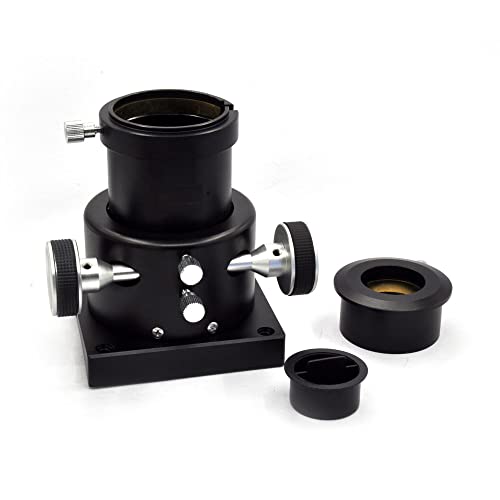
- Fully metal Crayford-style design
- Accepts 2-inch and 1.25-inch accessories
- Threaded interior minimizes reflections
Best For: 6- to 8-inch reflector telescope owners
Best Compact Rack-and-Pinion
SVBONY SV181 1.25-Inch Focuser

- 65mm travel with gear adjustment
- Built-in brass ring protects eyepiece barrels
- Includes a 1.25-inch dust cover
Best For: Compatible 114mm or 150mm Newtonian reflectors
Best Motorized Upgrade
Astromania AccuFocus Electronic Focuser

- Motorized focusing reduces manual touch
- Variable speed from coarse to very fine
- Runs on a standard 9V battery
Best For: Single-speed 60–127mm refractors and reflectors
Temperature-Savvy Upgrade – Auto/Manual Motorized Telescope Focuser
For telescope focusers for deep sky imaging, this motorized unit is designed to add automated adjustment without giving up manual control. Its plug-and-play design, temperature sensor, and standard 3.5mm interface make it a practical option for compatible setups.
Best For: Astrophotographers who want automatic focusing with temperature-aware adjustment and a manual fallback.
Pros:
- Supports one-click automatic focusing through compatible software.
- Onboard temperature sensor can help software compensate for temperature changes.
- Includes a hand controller for manual focusing.
- Plug-and-play design supports many telescope focuser systems.
Cons:
- Compatibility should be confirmed for the specific telescope and focuser system.
- Software and interface support may vary by setup.
This focuser is a flexible accessory for imaging sessions where repeatable electronic control matters, particularly when temperatures change. Verify the required interface and supported software before buying.
Established SCT Choice – Celestron Focus Motor for SCT and EdgeHD
Among telescope focusers for deep sky imaging, the Celestron Focus Motor is purpose-built for compatible Schmidt-Cassegrain and EdgeHD optical tubes. It enables computer-controlled focusing and can help reduce vibration during remote or hands-free observing.
Best For: Celestron SCT, EdgeHD, and compatible Rowe-Ackermann Schmidt Astrograph users building a computer-controlled setup.
Pros:
- Supports electronic focusing from a computer or compatible Celestron hand controller.
- Offers multiple speed rates, automatic goto, indexed focuser position, and backlash compensation.
- Can draw power from a Celestron computerized mount or directly through USB.
- Includes a two-year US warranty and access to US-based support.
Cons:
- Designed for a specified range of Celestron-compatible optical tubes rather than universal use.
- Advanced control features require compatible software or equipment.
For owners of supported Celestron tubes, this is a focused solution with useful software controls and established brand support. Check the compatibility list before ordering.
Broad-Software Option – Electric Autofocus Telescope Focuser
This electric focuser is aimed at users comparing telescope focusers for deep sky imaging who want automated focusing across a range of third-party software and telescope systems. It combines plug-and-play operation with a temperature sensor and manual control.
Best For: Astrophotographers looking for broad driver and software compatibility with automatic and manual focusing options.
Pros:
- Supports one-click automatic focusing with compatible software.
- Temperature sensor enables software-based adjustment for changing conditions.
- Designed to work with various third-party software programs and focusing devices.
- Includes a hand controller for manual operation.
Cons:
- Actual compatibility depends on the drivers, software, and focuser device in use.
- The supplied notes do not specify a particular connector or telescope model list.
This model makes the most sense when software flexibility is a priority, but buyers should verify driver support and physical fit with their imaging setup before purchasing.
Integrated Imaging Platform – Sky-Watcher Quattro 250P Newtonian
Unlike standalone telescope focusers for deep sky imaging, the Sky-Watcher Quattro 250P is a complete 10-inch imaging Newtonian with a built-in 2-inch dual-speed Crayford-style focuser. Its fast f/4 optics and oversized secondary are designed to support efficient imaging with larger camera sensors.
Best For: Deep-sky imagers who want a fast, large-aperture Newtonian with an integrated dual-speed manual focuser.
Pros:
- Fast f/4 optics can capture detail in shorter exposure times.
- 2-inch dual-speed Crayford-style focuser supports precise manual adjustment.
- Oversized secondary is designed to illuminate APS-C and full-frame DSLRs without vignetting.
- Includes tube rings, a Vixen-style dovetail, and an 8×50 finderscope.
Cons:
- The 33.2-pound optical tube may require substantial mounting capacity.
- Focusing is manual rather than motorized.
- Its 10-inch optical tube is a larger, less portable option.
This is a telescope-and-focuser package rather than a replacement focuser. It is compelling for dedicated imaging rigs, provided your mount can handle the optical tube and your workflow suits manual focusing.
Best Budget Motor Upgrade – AccuFocus Electronic Telescope Focuser
For deep-sky imaging, stable and repeatable focus adjustments can be more useful than manual tweaking. This AccuFocus electronic focuser adds motorized control, adjustable speed, and a pushbutton hand controller to compatible telescopes, helping you make fine adjustments without vibration.
Best For: Telescope owners who want an affordable electronic focusing upgrade for compatible Crayford or rack-and-pinion focusers.
Pros:
- Provides smooth, precise focusing through a pushbutton hand controller.
- Offers adjustable speeds from coarse to very fine for focusing control.
- Includes brackets, hardware, cable, shaft coupler, tools, and installation materials.
- Works with many telescopes and supports both Crayford and rack-and-pinion setups.
Cons:
- Requires one 9-volt battery, which is not included.
- Compatibility and installation depend on the telescope’s focuser design.
Its vibration-free electronic control and included mounting hardware make it a practical choice for improving focus consistency in deep-sky imaging, provided your telescope is compatible.
Best Complete Deep-Sky Astrograph – Askar N160 F3.4 Reflector
The Askar N160 is built specifically for deep-sky astrophotography, combining a 160mm Newtonian reflector with a fast focal ratio. Its included 2-inch 0.95× corrector optimizes the system to F3.4 and supports APS-C sensors with broad illumination.
Best For: Deep-sky imagers seeking a fast Newtonian astrograph with APS-C coverage and a precision parabolic mirror.
Pros:
- Fast F3.6 native design becomes F3.4 with the included corrector.
- 160mm parabolic primary mirror is designed for sharp, pinpoint star images.
- Supports APS-C sensors with ample illumination coverage and reduced risk of dark corners.
- Low-expansion borosilicate mirrors and enhanced aluminum coatings support stable, bright images.
Cons:
- Uses manual focusing rather than an electronic focuser.
- Newtonian optics require precise collimation using the primary-mirror adjustment knobs.
- The supplied details do not specify a motorized focusing or imaging-control system.
With its fast optical system, 160mm aperture, and APS-C-oriented illumination, the N160 is the most purpose-built option here for deep-sky imaging, though users should plan to manage manual focus and collimation.
Best Simple Electronic Focuser – AccuFocus Telescope Focuser
When comparing telescope focusers for deep sky imaging, a straightforward motorized accessory can make repeatable adjustments easier. This AccuFocus model uses a DC motor, adjustable speed control, and a pushbutton hand controller for smooth focusing without vibration on compatible telescopes.
Best For: Imagers who want a compact, battery-powered electronic focuser with broad compatibility and included installation hardware.
Pros:
- Enables smooth, precise adjustments without vibration from the hand controller.
- Provides selectable speeds ranging from coarse to very fine.
- Includes brackets for Crayford and rack-and-pinion focusers, plus a shaft coupler.
- Compact motorized design is powered by a commonly available 9-volt battery.
Cons:
- The required 9-volt battery is not included.
- Installation may require matching the supplied brackets and coupler to the telescope.
- The supplied information does not mention computer or automated focusing control.
This is a practical manual-control upgrade for reducing focus vibrations during imaging sessions, especially when your telescope uses a compatible Crayford or rack-and-pinion focuser.
Best Metal Build – Skyoptikst 2-Inch Crayford Focuser
For astronomers comparing telescope focusers for deep sky imaging, the Skyoptikst 2-Inch Crayford focuser offers a fully metal build, smooth manual adjustment, and compatibility with both 2-inch and 1.25-inch accessories. It is designed for 6- to 8-inch reflector telescopes.
Best For: Reflector owners who want a sturdy 2-inch focuser with broad eyepiece compatibility.
Pros:
- Crayford-style mechanism supports smooth, accurate focusing.
- Accepts both 2-inch and 1.25-inch accessories.
- Fully threaded interior helps minimize internal reflections.
- Fully metal body suits a durable telescope upgrade.
Cons:
- Manual focusing does not provide motorized or computer-controlled adjustment.
- Designed for reflector telescopes, so compatibility should be checked before purchase.
This is a practical choice when mechanical smoothness and a solid metal construction matter more than electronic focusing. Confirm that your telescope’s mounting dimensions match the focuser before ordering.
Best Compact Rack-and-Pinion – SVBONY SV181 1.25-Inch Focuser
The SVBONY SV181 is a 1.25-inch rack-and-pinion option for shoppers considering telescope focusers for deep sky imaging on compatible Newtonian reflectors. Its 65mm travel, gear adjustment, dual knobs, and internal brass ring are aimed at controlled manual focusing.
Best For: Owners of compatible 114mm or 150mm Newtonian reflectors using 1.25-inch eyepieces.
Pros:
- 65mm of focuser travel provides useful adjustment range.
- Gear mechanism and dual knobs support fine manual tuning.
- Internal brass ring helps hold eyepieces without marking the barrel.
- Threaded interior helps reduce reflections, and a dust cover is included.
Cons:
- Limited to 1.25-inch eyepieces.
- Compatibility is specifically listed for certain Newtonian reflector sizes.
- Manual operation lacks electronic focusing control.
With its relatively light 410g weight and focused feature set, the SV181 suits a compatible small-to-medium Newtonian setup. Verify the telescope interface and accessory size before upgrading.
Best Motorized Upgrade – Astromania AccuFocus Electronic Focuser
The Astromania AccuFocus adds motorized adjustment for telescope focusers for deep sky imaging, helping users make smooth focus changes without touching the focusing knob. Its hand controller offers adjustable speeds from coarse to very fine and runs on a standard 9V battery.
Best For: Single-speed refractors and reflectors in the 60–127mm range where vibration-free electronic adjustment is useful.
Pros:
- Motorized operation enables smooth adjustments without manual knob contact.
- Pushbutton controller provides coarse-to-fine speed selection.
- Includes brackets, hardware, cables, and related installation parts.
- Compatible device listings include Celestron, Sky-Watcher, Meade, and Orion equipment.
Cons:
- Requires a standard 9V battery.
- Not compatible with telescopes using APO two-speed focusing.
- Designed for single-speed focusing systems, so fit must be checked carefully.
AccuFocus is the most suitable option here when reducing touch-induced movement is a priority. Its stated compatibility limitation makes telescope focuser type and size the key checks before purchase.
How We Picked the Best Telescope Focusers for Deep Sky Imaging
We evaluated these 10 options by focusing on compatibility, focusing precision, mechanical stability, installation requirements, and usefulness in real astrophotography workflows. Motorized models were considered for automation, repeatability, and temperature-sensor support, while manual focusers were assessed for smooth travel, rigidity, and value.
Compatibility is especially important. A focuser designed for Schmidt-Cassegrain or EdgeHD telescopes may not fit a Newtonian reflector, and a 1.25-inch model may restrict your camera, filter, or accessory choices. Always confirm the mounting pattern, drawtube size, travel range, and available back focus before ordering.
Quick Comparison
- Best for automated focusing: Motorized focusers with computer control and temperature compensation.
- Best for Schmidt-Cassegrain users: The dedicated Celestron Focus Motor for compatible SCT and EdgeHD models.
- Best for Newtonian imaging: A rigid Crayford-style focuser or a compatible electronic unit.
- Best for budget upgrades: Manual rack or Crayford focusers when automation is not essential.
- Best for flexible setups: Electronic focusers that can be adapted to multiple astronomy telescopes.
Key Buying Factors for Telescope Focusers for Deep-Sky Imaging
Compatibility and Mounting
Check whether the focuser is intended for your optical tube type. SCT, EdgeHD, Newtonian, and refractor systems use different mounting arrangements. Also verify whether an adapter, mounting bracket, or additional hardware is required.
Stability and Load Capacity
Your focuser must support the camera, filter wheel, guide camera, and any adapters without flexure. A solid metal body and smooth, backlash-resistant mechanism are valuable for long exposures and precise plate solving.
Motor Control and Automation
Motorized focusing is useful when paired with autofocus software. Look for compatible control methods, such as USB, a dedicated hand controller, or an astronomy control system. Temperature compensation can help maintain focus as the night cools.
Travel, Speed, and Fine Adjustment
Confirm that the drawtube travel reaches focus with your camera train. Fine adjustment improves accuracy, while a suitable motor speed can reduce focusing time without introducing excessive vibration.
Who Should Buy Which Telescope Focusers for Deep Sky Imaging?
Choose a motorized electronic focuser if you image unattended, use autofocus routines, or want repeatable focus across filters and temperature changes. Choose the Celestron-specific motor if you own a compatible Schmidt-Cassegrain or EdgeHD telescope and want an integrated focusing solution.
Choose a Crayford focuser if smooth manual adjustment and strong mechanical control matter most, particularly on a reflector. Choose a rack-style or compact 1.25-inch focuser for a simpler, lower-cost setup, provided its load capacity and optical compatibility meet your needs.
Before buying, compare the focuser with your complete imaging train—not just the telescope. Camera weight, adapters, filters, back focus, software support, and available power can determine whether an otherwise capable model works smoothly in the field.