
Finding the best compact telescope focuser can make a noticeable difference in sharpness, control, and observing comfort. The right upgrade depends on your telescope design, drawtube size, imaging setup, and need for manual or motorized adjustment.
We compare 10 options ranging from rack-and-pinion and helical focusers to electronic motors, adapters, and telescope-compatible accessories, with attention to fit, travel, precision, and practical installation.
Best 10 Compact Telescope Focusers Picks for 2026
Best Adjustable Rack-and-Pinion Pick
SV181 1.25-Inch Telescope Focuser

- 65 mm rack-and-pinion travel
- Brass ring protects eyepiece barrels
- Threaded interior helps reduce reflections
Best For: 114 mm and 150 mm Newtonian reflectors
Best Motorized Upgrade
Celestron SCT and EdgeHD Focus Motor

- Computer-controlled electronic focusing
- Supports speed rates and backlash compensation
- USB or compatible mount powered
Best For: Compatible Celestron SCT and EdgeHD systems
Best Full-Metal Replacement
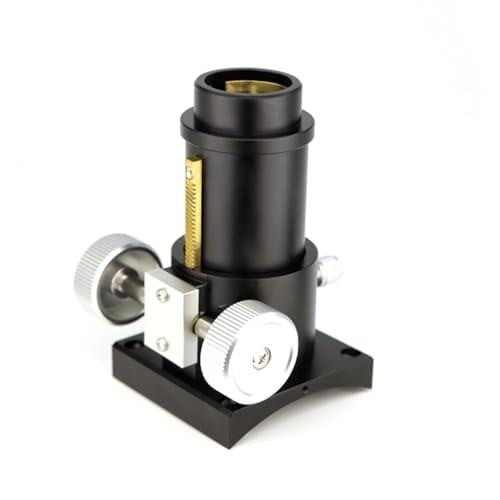
- Full-metal rack-and-pinion design
- Threaded interior helps minimize reflections
- Includes curved base plate and dust cover
Best For: 150 mm to 203 mm Newtonian reflectors
Best Alignment Accessory
Astromania 1.25-Inch Laser Collimator

- Fits standard 1.25-inch focusers
- Seven adjustable red-laser brightness levels
- Compact metal body with included battery
Best For: Newtonian telescope collimation
Precision Travel Focuser
16-Bearing Astrophotography Focuser

- Low-light-leakage design for deep-space imaging
- Large coarse and fine adjustment wheels
- 360-degree rotation with quick-release two-speed parts
Best For: Astrophotographers needing compact manual focusing control
Guide Scope Specialist
1.25-Inch Double Helical Focuser

- 0.05 mm precision scale with 10 mm travel
- Fixed orientation keeps cameras and eyepieces stable
- Lightweight all-metal design for guide scopes
Best For: Compact guide-scope and finder-scope focusing
Portable Beginner Telescope
SARBLUE Mak60 Compact Travel Scope

- 750 mm focal length in a 20 cm tube
- Fully multi-coated Maksutov-Cassegrain optics
- Includes tripod, eyepiece, and phone adapter
Best For: Beginners wanting a portable manual-focus telescope kit
Vibration-Free Focusing
AccuFocus Electronic Telescope Focuser

- Motorized focusing with low-vibration control
- Adjustable coarse-to-fine speed knob
- Includes brackets, cable, and installation hardware
Best For: Users wanting smoother electronic telescope focusing
Threaded Eyepiece Conversion
SVBONY 1.25-Inch Focuser Adapter

- Converts M42x0.75 threads for 1.25-inch eyepieces
- Three thumbscrews secure and center accessories
- All-metal anodized aluminum construction
Best For: Reflector telescope users with compatible M42 threads
Flexible Motor Control
AccuFocus Electronic Telescope Focuser

- Pushbutton electronic focusing without vibration
- Adjustable speed from coarse to fine
- Brackets support Crayford and rack-and-pinion focusers
Best For: Observers upgrading compatible telescope focusers
Best Adjustable Rack-and-Pinion Pick – SV181 1.25-Inch Telescope Focuser
For reflector-telescope owners comparing compact telescope focusers, the SVBONY SV181 emphasizes controlled manual adjustment in a 1.25-inch format. Its 65 mm travel, fine-tuning gear, and dual-knob design are suited to Newtonian setups that need smoother focusing.
Best For: Newtonian reflector telescopes measuring 114 mm or 150 mm, using 1.25-inch eyepieces.
Pros:
- Rack-and-pinion mechanism offers gear-based focal adjustment with 65 mm of travel.
- Internal brass ring helps hold eyepieces without marking the barrel.
- Fully threaded interior is designed to minimize reflections.
- Includes a 1.25-inch dust cover.
Cons:
- Manual focusing does not provide electronic or remote control.
- Compatibility is specifically oriented toward reflector telescope configurations.
The SV181 is a practical upgrade when smooth manual control and eyepiece protection matter more than motorized operation. Confirm the telescope’s mounting dimensions before ordering.
Best Motorized Upgrade – Celestron SCT and EdgeHD Focus Motor
Among compact telescope focusers, the Celestron Focus Motor is the specialized choice for hands-free electronic focusing. It connects to compatible Celestron Schmidt-Cassegrain and EdgeHD systems for computer-controlled adjustment and reduced focus vibration.
Best For: Celestron Schmidt-Cassegrain, EdgeHD, and compatible Rowe-Ackermann Schmidt Astrograph optical tubes.
Pros:
- Enables electronic focusing through a computer or compatible Celestron mount hand controller.
- USB or a compatible computerized mount can provide power.
- Offers multiple speed rates, automatic goto, indexed focuser position, and backlash compensation.
- Works with Celestron Focuser Utility software and Celestron PWI.
Cons:
- It is designed for specified Celestron optical tubes rather than general-purpose telescope use.
- Requires a computer, compatible mount, or USB connection for electronic operation.
This is a strong fit for remote or vibration-conscious observing, provided your optical tube appears on Celestron’s compatibility list. It is less suitable if you only need a basic manual focuser.
Best Full-Metal Replacement – 1.25-Inch Newtonian Focuser
This full-metal unit is a straightforward option for shoppers seeking compact telescope focusers for Newtonian reflectors. It combines a 1.25-inch format with a rack-and-pinion design, curved base plate, and threaded interior intended to limit stray reflections.
Best For: 150 mm to 203 mm Newtonian reflector telescopes, including many 6- to 8-inch models.
Pros:
- Full-metal construction provides a solid replacement-focused design.
- Rack-and-pinion mechanism supports manual focus adjustment.
- Fully threaded inside to minimize reflections.
- Includes a 1.25-inch dust cover and curved base plate.
Cons:
- Manual focus only, with no electronic control.
- Compatibility is listed for a specific Newtonian reflector size range, so mounting fit should be checked.
The Skyoptikst focuser offers a simple, durable-style configuration for compatible Newtonian telescopes. Verify the telescope’s mounting pattern and dimensions before treating it as a universal replacement.
Best Alignment Accessory – Astromania 1.25-Inch Laser Collimator
Although it is not a replacement focuser, the Astromania laser collimator is a useful companion for owners of compact telescope focusers on Newtonian reflectors. It fits standard 1.25-inch focusers and is designed to make optical alignment faster and more repeatable.
Best For: Newtonian and other reflective telescopes equipped with a standard 1.25-inch focuser.
Pros:
- Compact metal body fits 1.25-inch focusers and weighs 3 ounces.
- Seven brightness levels help adapt the red laser to different observing environments.
- Includes one CR2032 battery and German and English instructions.
- Three adjustment openings support collimator calibration.
Cons:
- This is an alignment tool, not a focuser or focusing mechanism.
- Battery-powered operation requires a CR2032 cell.
- Its laser output requires appropriate Class 3R safety precautions.
For Newtonian users, accurate collimation can complement a well-fitted focuser and help the telescope reach clearer views. Choose this accessory when alignment is the priority rather than replacing the focusing hardware.
Precision Travel Focuser – 16-Bearing Astrophotography Focuser
Telescope Focuser 16-Bearing Travel with Convex Adapter Ring for Astrophotography
Check Price On AmazonFor photographers comparing compact telescope focusers, this manual model emphasizes smooth handling, precise connections, and flexible composition control. Its 16-bearing travel design includes large adjustment wheels, a quick-release two-speed assembly, and 360-degree rotation.
Best For: Astrophotographers who want a compact manual focuser with rotational framing and low-light-leakage features.
Pros:
- Designed to minimize light leakage for deep-space photography.
- Large 38 mm coarse and 28 mm fine adjustment wheels are easier to grip.
- 360-degree rotation supports photographic composition and visual inspection.
- Quick-release two-speed components can be removed without taking apart the full focuser.
Cons:
- Manual operation does not provide electronic focusing.
- Compatibility and fit should be confirmed for the intended optical setup.
With its compact 2.2-by-2.2-by-2.44-inch dimensions and practical controls, this is a feature-focused option for imaging setups where precise handling and rotational adjustment matter.
Guide Scope Specialist – 1.25-Inch Double Helical Focuser
This Astromania model is one of the more purpose-built compact telescope focusers for guide scopes and finder scopes. Its double-helical mechanism provides a 10 mm focusing stroke with stated 0.05 mm accuracy, while the fixed orientation helps keep a guide star or camera view stable.
Best For: Guide-scope and finder-scope users who need fine, repeatable manual focusing for visual observing or astrophotography.
Pros:
- 0.05 mm precision scale and 10 mm focusing stroke support repeatable adjustments.
- Fixed orientation prevents mounted cameras or eyepieces from rotating during focusing.
- All-metal construction is intended to reduce flexure and thermal expansion.
- Compact 46–56 mm length and 3.2-ounce weight add minimal bulk.
Cons:
- Designed around 1.25-inch accessories and may not suit larger optical trains.
- Some connections require compatible M42x0.75 threading; the optional female-to-female adapter is not included.
- The 10 mm travel may be limiting for setups needing more adjustment range.
This is a focused choice for small guiding systems rather than a general-purpose main-telescope focuser. Check the listed threads and accessory requirements before ordering.
Portable Beginner Telescope – SARBLUE Mak60 Compact Travel Scope
Unlike a standalone focuser, the SARBLUE Mak60 is a complete compact telescope for buyers who want portable manual focusing in an easy-to-carry package. Its Maksutov-Cassegrain design pairs a 750 mm focal length with a 20 cm tube, and the kit includes a 20 mm eyepiece, tabletop tripod, phone adapter, and erect-image diagonal.
Best For: Beginners, families, and travelers seeking a compact telescope with simple manual focusing for daytime and introductory astronomical viewing.
Pros:
- Compact 20 cm optical tube is easy to pack and transport.
- Fully multi-coated optics are designed for vivid, high-contrast views.
- Included 20 mm eyepiece provides 37.5x magnification.
- Tool-free setup includes a tabletop tripod and smartphone adapter.
Cons:
- This is a complete telescope, not a replacement focuser for another optical tube.
- The included tabletop tripod is intended for tabletop use rather than a full-size mount.
- Its beginner-oriented kit may not meet advanced imaging or mounting needs.
The Mak60 is best considered when portability and simplicity matter more than upgrading an existing telescope. Its compact tube and included accessories make it a convenient entry-level travel setup.
Vibration-Free Focusing – AccuFocus Electronic Telescope Focuser
The AccuFocus Electronic Telescope Focuser is a practical option for anyone seeking compact telescope focusers with motorized, low-vibration adjustment. Its pushbutton controller and variable speed knob help make fine focusing easier, while the included brackets support Crayford and rack-and-pinion setups.
Best For: Telescope users who want smoother electronic focusing and adjustable control without manually turning the focuser.
Pros:
- Motorized focusing is designed for smooth, precise adjustments without vibration.
- Adjustable speed control ranges from coarse to very fine movement.
- Includes brackets, shaft coupler, cable, hardware, and installation tools.
- Works with many telescopes and is powered by one 9-volt battery.
Cons:
- The required 9-volt battery is not included.
- Compatibility may depend on the telescope’s focuser design and installation space.
With its compact motor assembly and included mounting hardware, this AccuFocus model is a useful upgrade for observers prioritizing steady, controlled focus changes.
Threaded Eyepiece Conversion – SVBONY 1.25-Inch Focuser Adapter
The SVBONY Telescope Eyepiece Adapter is a compact telescope focuser accessory for reflector setups using an M42x0.75 male thread. It accepts 1.25-inch eyepieces and uses three locking thumbscrews to secure and center inserted astronomy accessories.
Best For: Reflector telescope owners who need an all-metal adapter for connecting M42x0.75-threaded accessories to 1.25-inch eyepieces.
Pros:
- Accepts standard 1.25-inch astronomical accessories.
- Three thumbscrews help secure and fine-tune eyepiece centering.
- All-metal anodized aluminum construction is designed for durability.
- Manual design requires no battery or external power.
Cons:
- It is compatible with M42x0.75 male threads, so thread matching is essential.
- Designed for 1.25-inch accessories rather than larger eyepiece formats.
This adapter is best viewed as a fit-and-alignment solution rather than a motorized focuser, offering a straightforward way to secure compatible eyepieces and accessories.
Flexible Motor Control – AccuFocus Electronic Telescope Focuser
This AccuFocus model is among the compact telescope focusers suited to observers who want electronic control with a broad mounting approach. The pushbutton hand controller supports smooth adjustments, while the speed knob lets you move from quick coarse focusing to more precise fine tuning.
Best For: Astronomy users seeking a battery-powered electronic focuser compatible with many telescopes, including setups using Crayford or rack-and-pinion focusers.
Pros:
- Pushbutton operation provides smooth focusing without vibration.
- Variable speed control supports both fast and fine adjustments.
- Includes brackets for Crayford and rack-and-pinion focusers.
- Works with equatorial or altazimuth mount configurations.
Cons:
- One 9-volt battery is required but not included.
- Installation requires matching the included bracket and coupler to the telescope.
The included motor assembly, control box, cable, hardware, and tools make this a relatively complete electronic focusing kit for users ready to install a motorized upgrade.
How We Picked the Best Compact Telescope Focusers
We evaluated these Compact Telescope Focusers by looking at compatibility, focusing mechanism, adjustment precision, construction, installation requirements, and intended use. Because a focuser that works well on a Newtonian reflector may not fit a Schmidt-Cassegrain or Maksutov-Cassegrain telescope, telescope design was treated as a primary selection factor.
We also considered whether each option is best suited to visual observing, guiding, planetary imaging, or long-exposure astrophotography. Electronic models were assessed for motorized-control potential, while manual focusers were judged by their travel, smoothness, and ease of adjustment. Adapters and alignment accessories are included because they can be essential parts of a compact focusing or imaging setup, but they should not be mistaken for universal replacement focusers.
Quick Comparison
| Type | Best For | What to Check |
|---|---|---|
| Rack-and-pinion focuser | Reflectors and general visual use | Tube size, mounting pattern, and drawtube diameter |
| Helical focuser | Guide scopes and fine manual adjustment | Available travel and eyepiece compatibility |
| Electronic focuser or motor | Remote focusing and astrophotography | Telescope compatibility, power, and controller support |
| Adapter or accessory | Connecting cameras, eyepieces, or alignment tools | Thread standard, barrel size, and optical path |
Key Buying Factors for Compact Telescope Focusers
Compatibility and Mounting
Start with the telescope model and optical design. Newtonian focusers often require a specific base shape, hole spacing, and drawtube height. Schmidt-Cassegrain and EdgeHD systems typically use dedicated motor solutions rather than a universal replacement focuser. Verify measurements before ordering, especially for products described as suitable for a range of reflector sizes.
Travel, Precision, and Load Capacity
Focuser travel determines whether you can bring different eyepieces or cameras to focus. Fine adjustment is valuable for high magnification and astrophotography, while a rigid drawtube helps prevent image shift. If you use a heavier camera, filter wheel, or reducer, check the stated load capacity and look for a secure locking mechanism.
Manual Versus Motorized Control
Manual focusers are simple, inexpensive, and effective for visual observing. Motorized focusers are more useful when vibration must be minimized or when you want computer-assisted or remote focusing. Confirm whether the product is a complete motorized focuser, an add-on motor, or an electronic unit requiring separate control hardware.
Adapters and Optical Standards
Common details include 1.25-inch eyepiece barrels, M42 threads, and telescope-specific interfaces. An adapter can solve a connection problem, but it does not necessarily add focusing travel or improve mechanical stability. Match every thread and barrel dimension across the optical train.
Who Should Buy Which Compact Telescope Focusers?
Choose a rack-and-pinion replacement if you use a compatible Newtonian reflector and want a straightforward mechanical upgrade. A helical model is a practical choice for guide scopes or users who prioritize compact fine adjustment. Astrophotographers should favor a rigid, low-shift focuser or a compatible electronic system, provided the motor and telescope interfaces match.
Buy an adapter when your main goal is connecting an eyepiece, camera, or threaded accessory—not replacing the telescope’s focusing mechanism. If portability is the priority, verify that the focuser does not add excessive height or weight. Finally, beginners should confirm compatibility with the exact telescope before choosing based on price alone; a perfectly built focuser is still unsuitable if its mounting pattern, travel, or optical interface is wrong.