
Cold nights demand more than a thick-looking sleeping bag. The right choice balances temperature rating, insulation, fit, packability, and the conditions you expect outdoors.
We compared 10 popular sleeping bags for cold weather, from roomy flannel-lined designs to compact mummy bags, so you can find dependable warmth without buying more bag than you need.
Best 10 Sleeping Bags for Cold Weather Picks for 2026
Best Big-and-Tall Flannel Pick

- Roomy 40-by-84-inch adult fit
- Five pounds of Holofill 808 insulation
- Machine washable with storage system
Best For: Big-and-tall campers wanting a warm, cozy rectangular bag
Best Extra-Roomy Cold-Weather Value

- 90-by-39-inch oversized fit
- 30°F comfort and 0°F extreme ratings
- Converts to a blanket and includes compression sack
Best For: Tall, broad, or side-sleeping campers seeking extra room
Best Lightweight Versatile Option

- About 4.2 pounds with compact storage
- 41°F comfort rating for moderate cold
- Waterproof shell and adjustable foot zipper
Best For: Family and car campers wanting a lighter, flexible bag
Best Mummy-Style Winter Pick

- 0°F cold-weather rating
- Mummy shape with draft tube and hood
- Machine washable with five-year warranty
Best For: Cold-weather campers who prefer a fitted, heat-retaining design
Best Plush-Lined Pick
FARLAND Cold-Weather Sleeping Bag

- Full microplush lining
- Roomy rectangular design
- Waterproof and windproof shell
Best For: Adults up to 6 feet who want soft, spacious warmth
Best All-Weather Value

- 25°F, 20°F, and 0°F options
- Soft poly-flannel lining
- Hood and draft tubes
Best For: Campers wanting flexible temperature choices and comfort
Best for Tall Campers
LONDTREN 0-Degree XXL Sleeping Bag
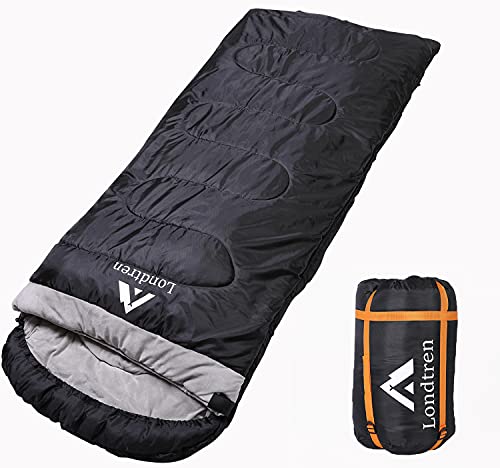
- 90-by-40-inch XXL fit
- Rated 0–15°F
- Flannel lining and drawstring hood
Best For: Big-and-tall adults camping in winter conditions
Best Balanced Cold-Weather Pick

- 400GSM hollow-fiber insulation
- Roomy semi-rectangular design
- Water-resistant and machine washable
Best For: Car camping, family trips, and mild winter use
Best Roomy Winter Comfort

- Fits campers up to 7 feet
- Includes a plush camping pillow
- Opens into a blanket
Best For: Big and tall campers, car camping, and RV travel
Best Lightweight Mild-Weather Pick

- About 3 pounds with compression sack
- Waterproof outer shell
- Rated for approximately 50–77°F
Best For: Three-season camping, kids, and casual backpacking
Best Big-and-Tall Flannel Pick – Coleman Heritage 10°F
For shoppers comparing sleeping bags for cold weather, the Coleman Heritage stands out for its roomy 40-by-84-inch design, substantial insulation, and soft flannel lining. Its 10°F rating, durable cotton shell, and machine-washable construction make it a practical choice for colder camping trips or guest use.
Best For: Big-and-tall adults who prioritize warmth, interior space, and a cozy flannel feel.
Pros:
- Roomy fit accommodates campers up to 6 feet 7 inches tall.
- Five pounds of Holofill 808 insulation supports warmth down to its 10°F rating.
- Heavy-duty cotton cover, flannel liner, no-snag zipper, and FiberLock construction.
- Machine washable and includes a Wrap ‘N’ Roll storage system.
Cons:
- At 8.9 pounds, it is relatively heavy for carrying long distances.
- Its rectangular design may be less thermally efficient than a mummy bag.
The Heritage is a comfort-focused cold-weather bag rather than a lightweight backpacking option. Choose it when generous dimensions, durable materials, and easy cleaning matter more than minimizing packed weight.
Best Extra-Roomy Cold-Weather Value – HiZYNICE XXL 0°F
The HiZYNICE XXL is a roomy option for sleeping bags for cold weather, combining a 90-by-39-inch cut with a cotton flannel lining and a water-resistant polyester shell. Its 30°F comfort, 15°F limit, and 0°F extreme ratings provide useful guidance for camping, RV trips, cabins, and overnight guests.
Best For: Tall or side-sleeping adults who want extra space, flannel comfort, and flexible use.
Pros:
- Oversized design fits adults up to 6 feet 7 inches tall.
- 100% cotton flannel lining offers a soft, cozy sleep surface.
- Two-way, snag-resistant zipper supports ventilation and easier access.
- Can open into a blanket, pair with another bag, and includes a compression sack.
Cons:
- The listed 30°F comfort rating is notably warmer than its 0°F extreme rating.
- Its cotton-filled construction may be less suitable for ultralight packing.
This bag offers strong everyday versatility, especially for users who dislike restrictive mummy shapes. Pay closest attention to the comfort rating when planning genuinely cold-weather nights.
Best Lightweight Versatile Option – KANYAK 3-4 Season Bag
For shoppers seeking adaptable sleeping bags for cold weather without a bulky pack, this KANYAK model weighs about 4.2 pounds and compresses into a compact storage size. Its 41°F comfort rating, waterproof polyester shell, and adjustable zipper layout make it suited to moderate cold and varied outdoor uses.
Best For: Family camping, car camping, and travelers who want a lighter, flexible bag for multiple seasons.
Pros:
- Lightweight 4.2-pound design with a compact storage bag.
- Waterproof, breathable 210T anti-tearing polyester shell.
- Separate foot zipper allows added ventilation or warmth control.
- Side zippers can join two compatible bags into a double bag.
Cons:
- Its 41°F comfort rating is less suitable for severe winter conditions.
- The product notes describe a short three-month warranty.
- Polyester pongee lining may feel less plush than cotton flannel.
This is a practical all-purpose option when packability and ventilation are more important than deep-winter insulation. For sustained temperatures near freezing, use its comfort rating—not its 23°F extreme rating—as the safer planning reference.
Best Mummy-Style Winter Pick – Coleman North Rim 0°F
The Coleman North Rim uses a mummy shape, hollow polyester insulation, and a draft tube to help retain heat in sleeping bags for cold weather. Rated for temperatures as low as 0°F, it also adds an adjustable hood and ventilation features for a more tailored fit during cold camping trips.
Best For: Campers who want a warmer, more body-contoured design for cold-weather use.
Pros:
- 0°F rating supports use in very cold conditions.
- Mummy shape and Thermolock draft tube help reduce heat loss.
- Adjustable hood balances warmth and ventilation.
- Machine washable and backed by a five-year limited warranty.
Cons:
- The 32-inch width is more restrictive than rectangular designs.
- Its 74-inch maximum height is shorter than the other big-and-tall options here.
- Mummy styling may not suit sleepers who prefer substantial room to move.
The North Rim is the most purpose-built winter design in this group, emphasizing heat retention over spaciousness. It is a strong match for cold campers who can work with a more fitted 82-by-32-inch profile.
Best Plush-Lined Pick – FARLAND Cold-Weather Sleeping Bag
For campers seeking sleeping bags for cold weather with a soft feel from the moment they climb in, the FARLAND combines full microplush coverage with a roomy rectangular shape. Its 10–50°F temperature range, waterproof and windproof features, and included compression sack make it a versatile option for camping, travel, emergencies, or indoor use.
Best For: Adults and teenagers up to 6 feet who prioritize plush warmth and extra room over a compact mummy-style fit.
Pros:
- Microplush lining covers the back, sides, and foot area for warmth on every side.
- Roomy 87-by-33-inch rectangular design allows users to turn, stretch, or use it as a blanket when fully unzipped.
- Two-way, snag-resistant zipper is designed for smoother one-handed operation.
- Waterproof, windproof construction and a compression sack support portable use.
Cons:
- Its 2.83-kilogram weight may feel heavy for backpacking.
- The recommended maximum height is 6 feet, so taller campers may need a longer bag.
Choose this FARLAND model if immediate softness, interior coverage, and rectangular sleeping space are your priorities. It is especially practical for car camping and general-purpose cold-weather use.
Best All-Weather Value – TETON Celsius Sleeping Bag
The TETON Celsius is a practical choice among sleeping bags for cold weather when you want multiple temperature-rating options and a comfortable, roomy interior. Its poly-flannel lining, double-layer construction, draft tubes, hood, and included stuff sack are designed to support warm camping across changing conditions.
Best For: Campers and families wanting a versatile all-season bag with a soft lining, hood, and straightforward packing system.
Pros:
- Available in 25°F, 20°F, and 0°F versions for different cold-weather needs.
- Soft poly-flannel lining and a roomy rectangular shape emphasize sleeping comfort.
- Half-circle mummy-style hood helps retain warmth and keeps a pillow clean.
- Double-layer construction, draft tubes, and a durable stuff sack improve cold-weather usability and packing.
Cons:
- At 5 pounds, it is less suited to ultralight backpacking.
- The listed maximum height recommendation is 80 inches, which may limit taller users.
With its several temperature options and comfort-focused construction, the Celsius is a strong general camping bag. Pairing it with an insulated camp pad, as the manufacturer suggests, can further improve warmth.
Best for Tall Campers – LONDTREN 0-Degree XXL Sleeping Bag
For tall or broad campers comparing sleeping bags for cold weather, the LONDTREN stands out with a 90-by-40-inch profile and room for users up to 7 feet. Its 0–15°F temperature rating, flannel lining, hood, shoulder warmer belt, and waterproof polyester shell target winter camping in demanding conditions.
Best For: Big-and-tall adults who need an extra-wide winter bag with a hood and substantial cold-weather features.
Pros:
- Extra-large 90-by-40-inch dimensions accommodate users up to 7 feet tall.
- 0–15°F temperature rating and a 20–55°F comfort range suit winter camping.
- Flannel lining, zipper draft tubes, shoulder warmer belt, and drawstring hood support heat retention.
- Waterproof, rip-stop 210T polyester shell helps resist damp conditions.
Cons:
- At 7 pounds, it is bulky for carry-intensive trips.
- The extra-large shape may be more space than shorter or slimmer campers need.
This LONDTREN model is the most accommodating option in the group for height and width. It makes the most sense for winter car camping or other situations where warmth and interior space matter more than pack weight.
Best Balanced Cold-Weather Pick – 0-Degree Camping Sleeping Bag
For shoppers comparing sleeping bags for cold weather, this semi-rectangular model offers a practical mix of insulation, weather resistance, space, and portability. Its 400GSM hollow-fiber fill, adjustable hood, draft tubes, and 290T polyester taffeta shell make it a useful choice for spring, fall, and mild winter camping.
Best For: Car camping, family trips, and campers who want extra room with a compressible design.
Pros:
- 400GSM insulation is thicker than the 250–300GSM fill noted for many sleeping bags.
- Generous 87-by-33-inch size fits most adults or kids up to 5 feet 11 inches.
- Water-resistant shell, adjustable hood, draft tubes, and anti-snag zipper help improve cold-weather comfort.
- Can be zipped together with a compatible opposite-side zipper bag and is machine washable.
Cons:
- At 4.2 pounds, it is heavier than options aimed primarily at ultralight backpacking.
- The listed temperature range is 32°F limit and 77°F comfort, so it is better suited to mild winter conditions than severe cold.
This is a versatile option when warmth and roominess matter more than minimum pack weight. The compression sack and washable construction also make it especially practical for car camping and repeated family use.
Best Roomy Winter Comfort – MEREZA 0-Degree Sleeping Bag
Among sleeping bags for cold weather, the MEREZA stands out for its oversized rectangular shape and comfort-focused extras. It measures 32.3 by 90.5 inches, fits campers up to 7 feet, and includes a plush camping pillow for a more bed-like setup during camping, RV travel, or outdoor trips.
Best For: Big and tall campers, car campers, and anyone prioritizing space and included comfort features.
Pros:
- Extra-large 90.5-inch length and 32.3-inch width provide room to stretch out.
- Included 220G plush camping pillow and contoured hood support a comfortable sleep setup.
- Waterproof and windproof 210T polyester taffeta shell helps resist moisture and stains.
- Bottom zipper allows foot ventilation or lets the bag open fully as a blanket.
Cons:
- Its 5.73-pound net weight is relatively heavy for backpacking.
- The listed comfort temperature is 40°F, so the “0-degree” title should not be treated as a comfort rating.
- The product details list it as a three-season bag despite its winter-oriented design.
This model is best viewed as a spacious comfort option rather than a lightweight expedition bag. Its generous dimensions, pillow, and convertible foot section make it well suited to campers who dislike restrictive mummy-style designs.
Best Lightweight Mild-Weather Pick – MalloMe Camping Sleeping Bag
For shoppers seeking sleeping bags for cold weather in milder seasons, the MalloMe offers a lighter, more compact alternative. It weighs about 3 pounds, fits a 6-foot adult, and combines a waterproof outer shell, synthetic insulation, compression sack, and temperature guidance of roughly 50°F to 77°F.
Best For: Spring, summer, fall, cool-weather camping, and casual backpacking where low weight matters.
Pros:
- Approximately 3 pounds with a compression sack for easier carrying.
- Waterproof outer shell and double-layered S-shaped stitching help protect against the elements.
- Adjustable headrest, snag-free double-sided zippers, and a securing Velcro strap add convenience.
- Designed for adults and kids and can be machine washed when needed.
Cons:
- The 50°F to 77°F rating makes it less suitable for genuinely cold winter nights.
- Its 31.5-by-86.6-inch rectangular size offers less width than the roomier options in this roundup.
- At about 3 pounds, it is lightweight for camping but not an ultralight option for serious backpacking.
This is a sensible choice for three-season camping and cool-weather trips rather than freezing conditions. Its lighter pack weight, easy-care shell, and kid-friendly design make it a convenient general-purpose sleeping bag.
How We Picked the Best Sleeping Bags for Cold Weather
We focused on the features that matter most in real camping conditions: published temperature ratings, insulation and lining materials, zipper and hood design, interior space, portability, and ease of cleaning. We also included different shapes and sizes because a tall camper, backpacker, and family camper have very different priorities.
Temperature ratings are useful comparison points, but they are not guarantees. Your sleeping pad, clothing, shelter, humidity, wind, and personal tolerance all affect how warm you will feel.
Quick Comparison
| Best For | Look For | Common Trade-Off |
|---|---|---|
| Maximum warmth | 0°F or lower rating, draft protection, hood | More weight and bulk |
| Roomy comfort | Rectangular or oversized design | Less thermal efficiency |
| Backpacking | Lightweight insulation and compact compression | Narrower fit or less padding |
| Family camping | Easy-care shell, versatile temperature range | Usually larger when packed |
Key Buying Factors for Sleeping Bags for Cold Weather
Temperature Rating
Choose a bag rated below the coldest temperature you realistically expect. For shoulder-season camping, a 20°F to 30°F bag may be sufficient; winter and below-freezing trips generally call for a 0°F model or colder. Treat extreme ratings as survival-oriented guidance rather than a promise of comfort.
Shape, Size, and Fit
Mummy bags conserve heat with a close fit, contoured hood, and narrower footbox. Rectangular and big-and-tall bags provide more room to turn, but the extra interior volume can require more body heat to warm. Check the listed height and shoulder dimensions before ordering.
Insulation and Moisture Protection
Synthetic insulation is often affordable, quick-drying, and practical for damp camping. Fleece or flannel linings can feel warmer and softer, while waterproof or water-resistant shells help protect against condensation and light moisture. No sleeping bag should be treated as a substitute for a dry shelter.
Weight, Packed Size, and Maintenance
For car camping, comfort and washability may matter more than pack size. Backpackers should prioritize weight, compression, and a stuff sack. Confirm whether the bag is machine washable and follow the care instructions to preserve its loft.
Who Should Buy Which Sleeping Bags for Cold Weather?
- Choose a roomy rectangular or big-and-tall bag if you dislike restrictive mummy shapes, need extra length, or mostly camp near your vehicle.
- Choose a 0°F mummy-style bag for colder trips where heat retention, a hood, and draft control matter more than spaciousness.
- Choose a lightweight compact bag for backpacking, hiking, or travel, provided its rating matches your expected nighttime temperatures.
- Choose a fleece- or flannel-lined option if softness and comfort are priorities for casual camping.
- Choose a versatile family-oriented bag when adults and children may share camping gear across changing seasons.
Finally, pair your bag with an insulated sleeping pad and dry base layers. Even the best Sleeping Bags for Cold Weather perform poorly when placed directly on cold ground or used in a damp, poorly ventilated shelter.