
Infrared night vision goggles can help you navigate a dark campsite, observe wildlife, or scan a trail without relying on a visible flashlight. But a head strap, helmet mount, and handheld-style binocular body offer different experiences—even when listings use the same “goggles” label.
These 10 options span head-mounted monoculars and binoculars, digital zoom, recording features, and claimed long-distance viewing. The guide below helps you match those features to how you’ll actually use them.
Best 10 Infrared Night Vision Goggles Picks for 2026
Best for Immersive Viewing
GOWWPUN 3D Head-Mounted Goggles
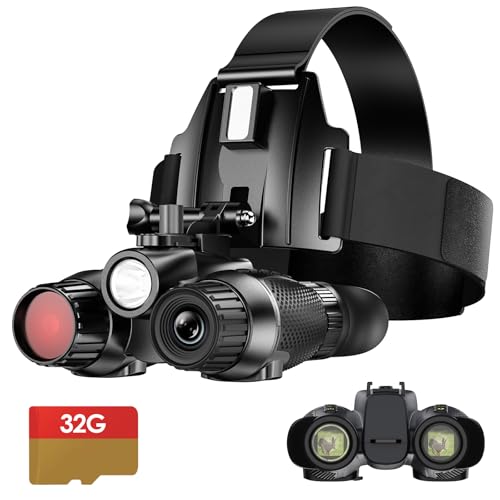
- Dual screens with adjustable eyepieces
- Seven IR levels and white fill light
- Headband and helmet adapter included
Best For: Hands-free, dual-eyepiece night viewing
Best for Phone Sharing
4K WiFi Night Vision Binoculars

- App-based live view and file downloads
- 4K video and up to 112MP photos
- Motion detection and 10 IR levels
Best For: Recording wildlife and sharing footage to a phone
Best Compact Head-Mounted Option

- Headband included for hands-free use
- 1.54-inch display with manual focus
- 850nm infrared illumination
Best For: Single-eye, head-mounted nighttime observation
Best Versatile Wear Options
GOYOJO 4K Night Vision Goggles

- Handheld, headband, or helmet-bracket use
- Dual screens with adjustable eye spacing
- 4K video and 32GB card included
Best For: Flexible mounting and nighttime recording
Helmet-Mount Pick
AILNJUC NV8160 Night Vision Goggles

- FAST/MICH-compatible mount included
- 1080p video and 12MP photos
- Up to 4 hours in infrared mode
Best For: Helmet-mounted wildlife watching and property monitoring
Dual-Display Pick
HUVIOVED NV8300 Night Vision Goggles

- Two 1.4-inch 390 × 390 displays
- Independent ±3.5-diopter adjustment
- Stated 250–300 m full-dark range
Best For: Viewers who need individual eyepiece adjustment
Recording Pick
Dsoon Head-Mounted Night Vision Goggles
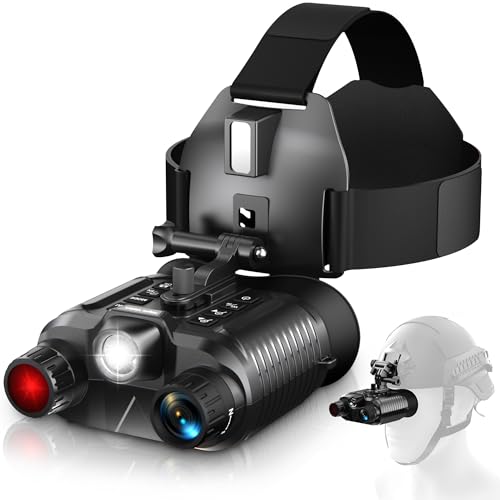
- Stated 4K video and 36MP photos
- Seven infrared and fill-light levels
- Three to five hours of infrared use
Best For: Recording nighttime observations with limited movement
Best for Longer Viewing Sessions
Dsoon Head-Mounted Night Vision Goggles

- Binocular-style display and headband
- 1080p video with audio
- Not water-resistant
Best For: Hands-free observation and recording
Best for Adjustable Infrared
AILNJUC Helmet-Mount Night Vision Goggles

- Seven infrared brightness levels
- Helmet mount and headband options
- 1080p video and 12MP photos
Best For: Scouting with adjustable illumination
Best for Included Accessories
ArzzuNiu Head-Mounted Night Vision Goggles

- Headband and 32GB card included
- 2.7-inch LCD and 8x digital zoom
- Helmet hardware may cost extra
Best For: A bundled hands-free viewing kit
Best for Immersive Viewing – GOWWPUN 3D Head-Mounted Goggles
These infrared night vision goggles prioritize an immersive, hands-free view with dual screens, adjustable eyepieces, and a headband or helmet-mount option. They also offer 4K recording and 36MP photos for documenting outings.
Best For: Buyers who want wearable, dual-eyepiece viewing and adjustable infrared illumination.
Pros:
- Dual-screen viewing with individual diopter adjustment and manual focus.
- Seven infrared levels, a white fill light, and four selectable color effects.
- Includes headband and helmet-mount adapter; helmet sold separately.
Cons:
- Not water-resistant.
- The stated 10-degree field of view is relatively narrow.
The viewing options are the main draw, but plan to adjust the eyepieces and focus for a clear image. Keep this model out of rain.
Best for Phone Sharing – 4K WiFi Night Vision Binoculars
For buyers who want to share nighttime footage, these infrared night vision goggles connect to a smartphone for live viewing and file downloads. They capture 4K video, offer photos up to 112MP, and include a 32GB memory card.
Best For: Wildlife watchers who want phone-connected viewing and recording.
Pros:
- WiFi app supports live viewing, capture, and local file downloads without a subscription.
- Up to 1,500 feet of stated infrared viewing range under suitable conditions.
- Motion detection, 10 IR levels, and a rechargeable 5,000mAh battery.
Cons:
- Most device buttons have limited functions while WiFi mode is active.
- Manual focus and digital zoom require adjustment for distant subjects.
This is a practical choice for recording around campsites or backyards. The advertised viewing range and battery life depend on conditions and settings.
Best Compact Head-Mounted Option – GOYOJO Night Vision Monocular
This monocular offers a single-eye alternative to binocular-style infrared night vision goggles. Its included adjustable headband supports hands-free use, while an 850nm infrared illuminator and manual-focus lens help with nighttime observation.
Best For: Buyers who prefer a head-mounted monocular for camping or wildlife observation.
Pros:
- Includes an adjustable headband and can also be used handheld.
- 1.54-inch, 320 × 320 display and 20mm manual-focus lens.
- 850nm infrared illumination for black-and-white viewing in darkness.
Cons:
- Monocular design does not provide a dual-eye view.
- Its stated 7x magnification does not support manual zoom.
Choose this model for its straightforward wearable format rather than zoom flexibility. The listing gives different distance figures, so treat long-range performance as condition-dependent.
Best Versatile Wear Options – GOYOJO 4K Night Vision Goggles
These infrared night vision goggles can be used handheld, with the included headband, or with the helmet-compatible mounting bracket. Dual screens, adjustable interpupillary distance, and 4K video recording make them a flexible option for outdoor observation.
Best For: Buyers who want multiple carrying and mounting options in one kit.
Pros:
- Dual screens with 60–72mm interpupillary adjustment.
- Adjustable 850nm infrared illumination and up to 8x digital zoom.
- Includes a 32GB memory card, headband, mounting bracket, and storage bag.
Cons:
- Manual focus takes adjustment as viewing distance changes.
- Digital zoom is not optical magnification.
The included accessories make this the most adaptable wearing setup of the four. Its stated visibility in complete darkness reaches up to 1,000 feet, though actual results will vary with conditions.
Helmet-Mount Pick – AILNJUC NV8160 Night Vision Goggles
For shoppers comparing infrared night vision goggles for hands-free observation, the AILNJUC NV8160 includes a mount compatible with FAST and MICH helmets; the helmet itself is not included. Its 850nm illuminator offers seven brightness levels, while the 2.7-inch screen makes it easy to review what you are seeing.
Best For: Wildlife watching or property monitoring when helmet mounting and adjustable infrared illumination matter.
Pros:
- Records 1080p video and 12MP photos, with a 32GB card included.
- Offers 8x digital zoom and a stated viewing distance of up to 1,312 feet.
- Rated IP54 and provides up to four hours of infrared use per charge.
Cons:
- Compatible helmet must be purchased separately.
- Infrared runtime is shorter than its stated nine-hour runtime on normal settings.
This is a practical option if helmet compatibility is your priority. Treat the long-range figure as a stated maximum, and plan around the four-hour infrared battery estimate for extended outings.
Dual-Display Pick – HUVIOVED NV8300 Night Vision Goggles
Among infrared night vision goggles, the HUVIOVED NV8300 stands out for its two 1.4-inch displays and independently adjustable eyepieces. Its headwear strap and stated compatibility with tactical helmet wear give you more than one way to use it, though the supplied notes do not specify an infrared wavelength.
Best For: Viewers who want separate left- and right-eye adjustments in a compact, head-worn device.
Pros:
- Dual 390 × 390 displays support the product’s 3D-style viewing design.
- Each eyepiece has independent focus and ±3.5-diopter adjustment.
- Includes a head strap and 32GB memory card; IP54-rated housing adds weather resistance.
Cons:
- The dual displays are smaller than the 2.7-inch screens listed for the other picks.
- Battery runtime is not specified in the supplied notes.
Choose this model for its binocular viewing arrangement and individual eye adjustment rather than for an unverified recording or battery specification. Its stated full-dark observation range is 250–300 meters.
Recording Pick – Dsoon Head-Mounted Night Vision Goggles
If you want infrared night vision goggles that also document nighttime outings, the Dsoon model pairs an 850nm illuminator with stated 4K video and 36MP photo capture. It includes a 32GB TF card, a 2.7-inch display, and handheld, headband, or helmet-mounted use options.
Best For: Stationary nighttime observation when high-resolution recording and flexible mounting are priorities.
Pros:
- Seven infrared levels and seven fill-light steps help tailor illumination.
- Records 4K video and 36MP photos, with optional time and date stamps.
- USB-C charging is stated to take about 2.5 hours; infrared runtime is listed at three to five hours.
Cons:
- The manufacturer cautions that the headband is not intended for wide-ranging movement.
- A helmet is not included for helmet-mounted use.
Its recording features make it appealing for documenting wildlife or campsite activity, but the headband guidance matters: use it for limited movement in open areas and stow the device while walking.
Best for Longer Viewing Sessions – Dsoon Head-Mounted Night Vision Goggles
These Dsoon infrared night vision goggles combine a binocular-style display with an adjustable headband for hands-free observation. An 850nm illuminator supports viewing in complete darkness, while 8x digital zoom and manual focus help you adjust the image.
Best For: Adults who want hands-free nighttime viewing with video and audio recording.
Pros:
- Records 1080p video with audio.
- Rechargeable battery is rated for up to 4 hours with continuous full infrared use or 7 hours with lower infrared usage.
- Raised buttons are designed to be identifiable by touch in darkness.
Cons:
- Not water-resistant.
- Helmet mounting requires third-party mounts that are not supplied.
The binocular layout is a practical choice if you expect to observe for extended periods. Choose it for the included headband and recording features, but plan separately for helmet hardware or wet conditions.
Best for Adjustable Infrared – AILNJUC Helmet-Mount Night Vision Goggles
These AILNJUC infrared night vision goggles offer seven brightness settings for their 850nm illuminator, giving you control as lighting conditions change. The package includes a helmet mount for compatible FAST/MICH helmets, as well as an adjustable headband for hands-free use.
Best For: Nighttime wildlife observation or scouting when adjustable infrared brightness and helmet mounting matter.
Pros:
- Seven infrared brightness levels.
- Records 1080p video and takes 12MP photos.
- Rechargeable 3000mAh battery is rated for up to 4 hours of continuous infrared use or 9 hours on normal settings.
Cons:
- Helmet is not included.
- The specified 8-degree field of view is relatively narrow.
This is the strongest fit of the three for shoppers who prioritize adjustable illumination. The claimed viewing distance reaches 1,312 feet, but the narrower field of view makes it more suited to scanning specific areas than taking in a broad scene.
Best for Included Accessories – ArzzuNiu Head-Mounted Night Vision Goggles
These ArzzuNiu infrared night vision goggles come with a headband, helmet-mount bracket and 32GB TF card, making the included kit useful for hands-free viewing and recording. A 2.7-inch LCD, 8x digital zoom and seven infrared adjustment levels give you several ways to tailor the view.
Best For: Shoppers who want a bundled headband and memory card for nighttime wildlife viewing or recording.
Pros:
- Includes a headband, neck strap, helmet-mount bracket and 32GB TF card.
- Captures photos and video with audio, according to the listing.
- Built-in 3000mAh rechargeable battery eliminates the need for AA batteries.
Cons:
- Helmet and L4G24 metal helmet mount are not included.
- Manual refocusing may be needed after zooming.
The included accessories make this a convenient starting package for head-mounted use. If you intend to attach it to a helmet, check the required mounting hardware before buying rather than assuming the supplied bracket is the complete setup.
How We Picked the Best Infrared Night Vision Goggles
We focused on the buying details that matter across these 10 listings: whether a unit is designed for head mounting, its monocular or binocular-style layout, infrared illumination, focus controls, power source, and recording or connectivity features. We also considered included accessories such as head straps, memory cards, and helmet-compatibility claims. Product titles alone cannot verify image quality, runtime, or usable range, so treat headline specifications as starting points rather than guaranteed field performance.
Quick Comparison: Match the Design to the Job
For walking or other tasks that require free hands, start with a head-mounted model and check how securely and comfortably it fits. A single-screen monocular-style device may feel different from a binocular-style viewer; neither label tells you the field of view or depth perception without more detail. If you mainly watch from a stationary position, prioritize viewing comfort, controls, and recording features over mounting hardware. Wi-Fi and memory-card support are useful if sharing footage matters, but they do not make a darker scene easier to see.
Key Buying Factors for Infrared Night Vision Goggles
Illumination and Usable Range
Digital night vision commonly relies on a built-in infrared illuminator in very dark conditions. Compare adjustable IR settings and focus options, then look for real sample footage at distances similar to yours. An advertised 1,148-foot or 1,312-foot range does not necessarily mean you can identify an animal or obstacle clearly at that distance. Also note that 850 nm IR emitters can show a faint red glow at the source, which may matter for wildlife observation or discreet use.
Fit, Viewing Comfort, and Safety
Check the complete mounted weight, strap adjustability, eye relief, and whether you can operate buttons while wearing gloves. A front-heavy viewer may become uncomfortable over time. Digital screens can narrow peripheral awareness and make judging steps or terrain harder; move slowly, use a separate light when safety requires it, and never use goggles while driving.
Image, Power, and Storage
High video-resolution or megapixel claims do not by themselves predict low-light clarity. Sensor performance, lens quality, IR output, and screen brightness matter too. Digital zoom enlarges an image but cannot add missing detail. Compare battery runtime with IR enabled, charging options, removable storage support, and what comes in the box before deciding on value.
Who Should Buy Which Infrared Night Vision Goggles?
Choose a secure, lightweight head-mounted option for short hands-free tasks. Pick a model with straightforward manual focus and adjustable IR for wildlife watching at varying distances. Choose recording, a supplied memory card, or Wi-Fi if documenting outings is your priority. If helmet use is essential, confirm the exact mount interface rather than relying on a compatibility phrase. For extended walking, prioritize comfort, situational awareness, and verified runtime over the biggest advertised zoom or range number.