
Shopping for night vision goggles for deep space viewing can be confusing: many listings use “night vision” to describe ordinary low-light optics, not electronic image intensifiers. And faint galaxies and nebulae need more than a catchy label.
These six options span binocular-style viewers, portable telescopes, and an app-controlled smart telescope. The right choice depends on whether you want a simple handheld view, a steadier magnified view, or images captured over time.
Best 6 Night Vision Goggles for Deep Space Viewing Picks for 2026
Best for App-Guided Deep-Sky Imaging
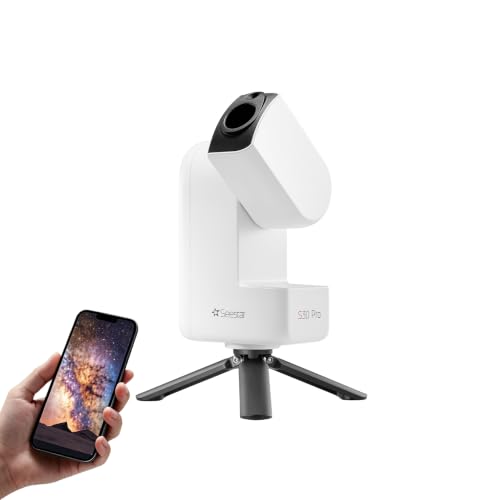
- Automatic GoTo targeting and tracking
- Phone-based deep-sky imaging
- Portable 3.6-pound design
Best For: Beginners seeking guided deep-sky photos on a phone
Compact Low-Light Binocular Pick
KLFBZAZ Star-Viewing Binoculars

- Book-size portable design
- Anti-reflective lens listed
- 1× and 1 mm specifications warrant checking
Best For: Adults seeking compact handheld low-light viewing
Handheld Monocular Alternative

- BAK-4 prism and coated optics
- Phone and tripod attachment described
- No complete-darkness viewing
Best For: Casual handheld low-light observation
Moon-Finding Starter
Manual-Focus Stargazing Telescope

- Finder mirror for locating the moon
- Manual focus adjustment
- Portable outdoor design
Best For: Beginners and students observing the moon
Weather-Ready Monocular

- BAK-4 prism and coated lenses
- Low-light viewing, not total darkness
- Phone-and-tripod connection option
Best For: Portable outdoor viewing in low light
Specified 60 mm Option
Finder-Equipped Entry Telescope

- Stated 60 mm outlet diameter
- Finder and 45-degree mirrors
- Stated weight of 2.5 kg
Best For: Beginners seeking a finder-equipped telescope
Best for App-Guided Deep-Sky Imaging – ZWO Seestar S30 Pro
If you are searching for night vision goggles for deep space viewing but would rather see and photograph celestial objects on a phone, the Seestar S30 Pro is a different kind of option. This app-controlled smart telescope uses automatic GoTo targeting and tracking for deep-sky imaging; it is not a wearable viewer.
Best For: Beginners who want guided, phone-based views and photos of deep-sky objects.
Pros:
- Automatic targeting, tracking, and one-tap imaging simplify setup.
- Built-in light-pollution filters help with imaging in urban skies.
- Compact 3.6-pound body supports portable observing.
Cons:
- Requires a smartphone or tablet for viewing.
- Designed for deep-sky objects, not planetary observation.
Choose this for automated astrophotography rather than a through-the-eyepiece or goggle-style experience. Keep it stationary during deep-sky imaging for stable tracking.
Compact Low-Light Binocular Pick – KLFBZAZ Star-Viewing Binoculars
KLFBZAZ Binoculars Star Viewing Low Light Night Vision High Power Professional Outdoor
Check Price On AmazonFor shoppers comparing night vision goggles for deep space viewing, these book-size binoculars are a portable low-light option rather than a documented night-vision device. The listing describes clear, bright images, but its stated 1× maximum magnification and 1 mm objective give little basis for expecting detailed deep-sky views.
Best For: Adults prioritizing compact, handheld low-light viewing over deep-sky detail.
Pros:
- Book-size design is easy to carry.
- Anti-reflective lens is listed among its features.
- Designed for adult use.
Cons:
- Listed specifications are 1× magnification and a 1 mm objective.
- No electronic night-vision capability is specified.
Consider these only if portability matters most. Confirm the optical specifications with the seller before buying them for astronomy.
Handheld Monocular Alternative – Portable Stargazing Monocular
If night vision goggles for deep space viewing are on your list, this handheld monocular offers a different approach: coated optics and a BAK-4 prism for low-light viewing. Its listing explicitly says it cannot see in complete darkness, and it does not provide the magnification or aperture needed to judge deep-sky performance.
Best For: Handheld low-light viewing with the option to attach a phone and tripod.
Pros:
- BAK-4 prism and multi-coated lens are listed for light transmission.
- One-handed design; a smartphone adapter and tripod connection are described.
- Sealed optics offer protection against dust and moisture.
Cons:
- Cannot provide a view in complete darkness.
- Not suitable for prolonged heavy rain or immersion.
- Magnification and aperture are not supplied.
This is a more plausible pick for casual low-light observation than for verified deep-space detail. Check the missing optical specifications before choosing it specifically for stargazing.
Moon-Finding Starter – Manual-Focus Stargazing Telescope
If you’re comparing night vision goggles for deep space viewing, this is better understood as a manually focused telescope for stargazing. Its finder mirror and wide-angle eyepiece are aimed at making moon observation easier for beginners.
Best For: Beginners and students who want a straightforward telescope for observing the moon.
Pros:
- Finder mirror helps locate the moon.
- Manual focus lets you adjust the view.
- Wide-angle eyepiece and portable design support outdoor use.
Cons:
- No electronic night-vision capability is specified.
- Magnification and aperture are not provided in the notes.
Consider it for simple lunar viewing, but check the missing optical specifications before relying on it for faint deep-space targets.
Despite appearing in searches for night vision goggles for deep space viewing, this product is described as a handheld monocular with low-light viewing, not electronic night vision. Its BAK-4 prism, coated optics, and optional phone-and-tripod setup make it a portable viewing option.
Best For: One-handed outdoor viewing in low light, with the option to attach a phone and tripod.
Pros:
- BAK-4 prism and multi-coated lenses are specified.
- Dust-, fog-, and water-resistant construction is described.
- Can be used with a smartphone adapter and tripod.
Cons:
- Cannot provide a view in complete darkness.
- Not intended for prolonged heavy rain or submersion.
Its portable setup may appeal to casual observers, but the notes do not establish how well it resolves faint astronomical objects.
For shoppers searching night vision goggles for deep space viewing, this listing describes a monocular-style entry telescope instead. Its stated 60 mm outlet diameter, finder mirror, and 45-degree viewing mirror provide a few concrete features to compare.
Best For: Beginners or students who want a finder-equipped telescope and can accommodate its stated 2.5 kg weight.
Pros:
- Lists a 60 mm outlet diameter.
- Includes a finder mirror.
- Has a 45-degree mirror and precise-focus feature.
Cons:
- At a stated 2.5 kg, it may be less convenient to carry than a lighter handheld option.
- No electronic night-vision function or deep-space performance is specified.
The listed hardware makes this easier to assess than a listing with no dimensions, but confirm the complete optical specifications before choosing it for astronomy.
How We Picked the Best Night Vision Goggles for Deep Space Viewing
We considered the six selected products as different approaches to stargazing, rather than treating every “night vision” claim as the same technology. Our comparison emphasizes the optical and imaging features that matter for faint targets: light-gathering aperture, usable magnification, stability, viewing comfort, and whether a device can capture and combine exposures. Product names alone do not establish specifications or real-world performance, so check the current listing before buying.
Quick Comparison
The ZWO Seestar S30 Pro is the app-controlled smart-telescope choice for buyers interested in captured images. The remaining listings describe binocular-style viewers, monocular or telescope-style optics, and beginner-oriented equipment. Traditional optics offer direct viewing; a smart telescope uses a camera and screen instead of an eyepiece. Neither approach is inherently better for everyone: the experience you want matters as much as the target.
Key Buying Factors for Night Vision Goggles for Deep Space Viewing
Understand What “Night Vision” Means
Conventional binoculars and telescopes do not amplify light electronically. True image-intensified night vision and digital low-light devices are separate technologies, and their usefulness for astronomy varies. If a listing does not clearly specify an intensifier tube or electronic sensor, do not assume it has one.
Prioritize Aperture Over Advertised Power
For visual observing, a larger objective lens or telescope aperture gathers more light and can make faint objects easier to detect. Extremely high magnification often makes an image dimmer and shakier. Look for stated aperture and magnification figures, not just phrases such as “high-definition” or “deep space.”
Plan for Stability and Your Sky
Handheld binoculars are convenient for sweeping star fields, but a tripod can make extended viewing more comfortable. Telescopes need a stable mount, especially at higher magnifications. Dark skies, clear weather, and a few minutes for your eyes to adapt can improve a visual session more than a marketing claim.
Decide Whether You Want to Look or Capture
A direct eyepiece view is immediate, but most faint deep-sky objects will not look like colorful photographs. A smart telescope can build an image from multiple exposures and display details that are difficult to see visually, though it requires power, an app, and time to image.
Who Should Buy Which Night Vision Goggles for Deep Space Viewing?
Choose binocular-style optics if you want portable, straightforward views of the Moon, bright star clusters, and broad Milky Way fields. Consider a stable telescope-style option if you prefer magnified visual observing and are willing to manage setup and alignment. Choose the smart telescope if your priority is recording and sharing images of faint objects rather than looking through an eyepiece. For a child or first-time buyer, favor manageable size, clear specifications, and simple operation over the largest advertised magnification. Before ordering, verify the included mount or tripod, power requirements, return policy, and actual optical or sensor specifications.