
Shopping for digital night vision goggles? Start with how you plan to use them. A helmet-mounted unit leaves your hands free, while binocular-style models with larger screens may be more comfortable for stationary viewing.
These 10 picks include compact monoculars, head-mounted devices, and handheld binoculars. Our guide below explains which specifications matter after dark—and which claims deserve a closer look.
Best 10 Digital Night Vision Goggles Picks for 2026
Best Helmet-Mount Option
GOYOJO GNG2K Night Vision Monocular
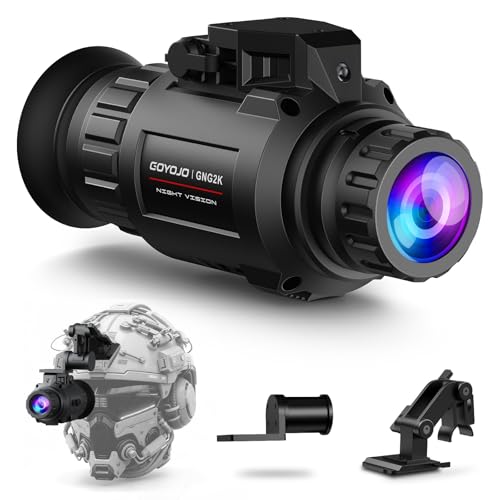
- 2K image with 60Hz refresh
- 940nm IR; claimed 300m range
- Helmet mount and compass included
Best For: Hands-free nighttime navigation and property checks
Best for Optical Zoom
WOSPORTS 4K Night Vision Goggles

- 10x optical plus 8x digital zoom
- 4K video; 64GB card included
- Seven IR brightness settings
Best For: Tripod-supported observation of distant subjects
Best Ambient-Light Color Mode

- Color Boost uses available light
- 4K video and 40MP photos
- Backlit controls and SOS flashlight
Best For: Wildlife viewing in changing light conditions
Best for Extended Recording
Vtiisamao Night Vision Binoculars

- 10,000mAh rechargeable battery
- 4K video with audio; 64GB card
- 940nm IR and 3.99-inch screen
Best For: Longer wildlife or property-monitoring sessions
Best for Flexible Mounting

- Handheld or head-mounted use
- 4K video and 36MP photos
- 32GB TF card included
Best For: Flexible mounting and nighttime recording
Best for Tripod Viewing
Vtiisamao NV4000B Night Vision Binoculars
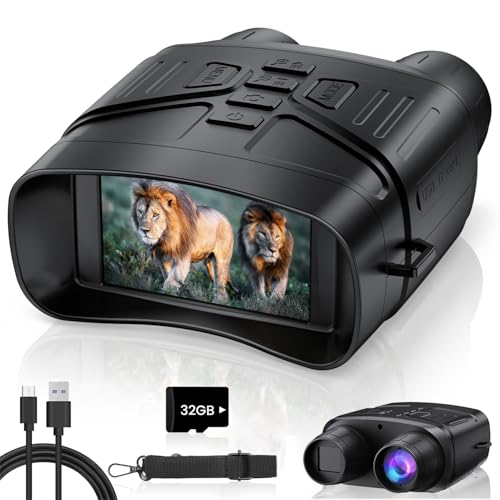
- 3-inch viewing screen
- 5000mAh rechargeable battery
- 32GB card and tripod mount
Best For: Stationary wildlife or property observation
Best for Stationary Hands-Free Use
Dsoon NV8161-A Night Vision Goggles
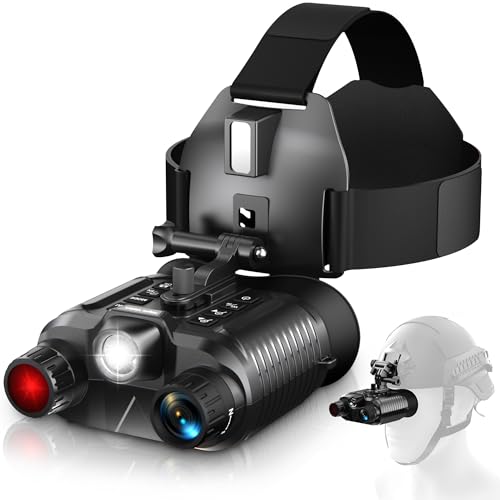
- Head mount included
- 4K video and 36MP photos
- Headband not for wide movement
Best For: Mostly stationary hands-free observation
Best for Recording
Vtiisamao Z8 Night Vision Binoculars

- Advertised 5K video and 60MP photos
- 3-inch screen and 32GB card included
- Tripod-compatible; manual focus
Best For: Recording wildlife or camping outings
Best Head-Mounted Option
GOYOJO NV8300 Night Vision Goggles

- Handheld or head-mounted use
- Dual screens with adjustable eye spacing
- 4K video and 32GB card included
Best For: Flexible hands-free outdoor viewing
Best Large-Screen Pick
XOOIOOY 4K Night Vision Binoculars

- 4.5-inch HD screen
- Seven IR levels and 10x digital zoom
- Not water resistant
Best For: Large-screen camping and wildlife viewing
Best Helmet-Mount Option – GOYOJO GNG2K Night Vision Monocular
If you want digital night vision goggles for hands-free trail or property checks, the GOYOJO GNG2K is a helmet-mountable monocular with a supplied quick-release mount. Its 2K image and 60Hz refresh rate prioritize a smooth live view over high-resolution recording.
Best For: Buyers who want a compact, helmet-mounted view for navigation, wildlife observation, or property monitoring.
Pros:
- 2688 x 1520 resolution, 60Hz refresh rate, and a 45-degree field of view.
- 940nm infrared illumination with three brightness levels; claimed range up to 300m in total darkness.
- Four display modes, 1–4x digital zoom, and a built-in electronic compass.
Cons:
- Monocular design does not provide a two-eye view.
- Focus is manual, and zoom is digital rather than optical.
Choose this for its helmet-ready layout and wide scanning view. If your priority is capturing photos or video, the supplied specifications do not list recording features.
Best for Optical Zoom – WOSPORTS 4K Night Vision Goggles
Among digital night vision goggles for viewing distant subjects, this WOSPORTS model stands out for its stated 10x optical zoom alongside 8x digital zoom. It also records 4K video and 48MP photos, with a 64GB TF card included.
Best For: Wildlife watchers who want magnification, built-in recording, and a tripod-compatible viewing setup.
Pros:
- 10x optical and 8x digital zoom for distant viewing.
- 850nm infrared light has seven brightness settings and a claimed range up to 1,315 feet.
- 3-inch screen, included 64GB TF card, and rechargeable 5,000mAh battery.
Cons:
- Not designed for helmet mounting.
- At high magnification, a tripod may be useful for keeping the view steady.
The optical zoom makes this a practical choice when reach matters more than hands-free use. Its advertised battery life is up to 20 hours, so plan for actual runtime to depend on how you use the screen and infrared light.
Best Ambient-Light Color Mode – VisioGear Night Thunder X3
The VisioGear Night Thunder X3 offers digital night vision goggles buyers an alternative to relying on infrared all evening: its AI Color Boost mode enhances available moonlight or starlight for color viewing. For darker scenes, it has a three-level IR light and records 4K video or 40MP photos.
Best For: Campers and wildlife watchers who want color viewing when ambient light allows, plus recording after dark.
Pros:
- AI Color Boost mode can be used before switching to infrared.
- Claimed viewing range over 2,000 feet with IR in total darkness.
- Backlit controls, a flashlight with SOS strobe, and a protective case.
Cons:
- MicroSD or TF card is not included.
- Color Boost depends on available ambient light; battery runtime drops from up to 18 hours with IR off to up to 10 hours with IR on.
This is a versatile option for changing light conditions, particularly if you value easy-to-find controls. Note that its 5x optical magnification is fixed, while the additional zoom is digital.
Best for Extended Recording – Vtiisamao Night Vision Binoculars
These Vtiisamao digital night vision goggles pair a large 3.99-inch viewing screen with a 10,000mAh rechargeable battery and an included 64GB TF card. They are especially appealing if you want to save 4K video, 48MP photos, and audio during longer observation sessions.
Best For: Wildlife or property monitoring where discreet infrared illumination and convenient recording matter.
Pros:
- 940nm infrared light has no visible red glow and a claimed viewing range up to 1,968 feet.
- Records 4K video with audio and captures photos up to 48MP.
- Large screen, included 64GB card, and standard 1/4-inch-20 tripod mount.
Cons:
- 8x zoom is digital; focus is manual.
- No specific battery runtime is stated, and a tripod is not included.
The screen and included storage make this an easy pick for reviewing footage in the field. Its large battery is promising for extended outings, but runtime will vary with IR level and screen brightness.
Best for Flexible Mounting – Dsoon 4K Head-Mounted Goggles
These digital night vision goggles suit buyers who want to switch between handheld viewing and hands-free observation. The included head mount and bracket add flexibility, while an 850nm infrared illuminator and adjustable IR settings support viewing in darkness.
Best For: Camping or property observation where flexible mounting and recording matter.
Pros:
- Records up to 4K video and 36MP photos, with 8x digital zoom.
- Includes a 32GB TF card, head mount, neck strap, and carrying bag.
- Offers seven IR levels, seven fill-light settings, and a 2.7-inch display.
Cons:
- Quoted infrared-mode battery life is 3–5 hours.
- Helmet mounting requires a helmet, which is not included.
Choose this model if the included mounting accessories are more useful to you than longer infrared runtime. Its stated 1,312-foot viewing range is a manufacturer claim, so expect results to depend on conditions.
Best for Tripod Viewing – Vtiisamao NV4000B Night Vision Binoculars
For shoppers comparing digital night vision goggles for stationary observation, the Vtiisamao NV4000B offers a 3-inch screen and a standard tripod mount. Its 850nm infrared illuminator enables black-and-white viewing in darkness, and the included memory card lets you start recording after setup.
Best For: Wildlife watching or property monitoring from a fixed viewing position.
Pros:
- 3-inch display provides viewing without holding the device against your eyes.
- 5000mAh rechargeable battery and included USB-C cable.
- Includes a 32GB card and supports a standard 1/4-inch-20 tripod mount.
Cons:
- Tripod is not included.
- Battery runtime is not specified and varies with settings.
The tripod connection is the practical differentiator here, particularly for steadier recordings. If you need wearable hands-free use instead, note that the supplied accessories list a neck strap rather than a head mount.
Best for Stationary Hands-Free Use – Dsoon NV8161-A Night Vision Goggles
These digital night vision goggles combine an included headband with handheld and optional helmet-mounted use. The 850nm infrared illuminator, seven IR levels, and 2.7-inch display give you adjustable viewing options, while 4K recording and a 32GB TF card support nighttime documentation.
Best For: Hands-free observation while largely staying in one place.
Pros:
- Includes head mount, bracket, neck strap, and 32GB TF card.
- Supports 4K video, 36MP photos, and 8x digital zoom.
- Seven IR and fill-light settings, plus optional time and date stamps.
Cons:
- The seller cautions that headband use is not suited to wide movement.
- Helmet is not included; stated infrared runtime is 3–5 hours.
This is a fit for observing and recording from a relatively stable position, not navigating quickly in darkness. Keep the seller’s movement caution in mind before choosing the head-mounted setup.
Best for Recording – Vtiisamao Z8 Night Vision Binoculars
If you want digital night vision goggles that can also capture your outings, the Vtiisamao Z8 offers advertised 5K video and 60MP photos, with a 3-inch screen for reviewing footage. Its 850nm infrared illuminator supports viewing in darkness, while the included 32GB card lets you start saving clips without buying storage separately.
Best For: Wildlife watchers and campers who want handheld nighttime viewing and photo or video recording.
Pros:
- 5000mAh rechargeable battery and included 32GB TF card.
- Type-C cable included for transferring photos and video.
- Standard 1/4-inch tripod compatibility for stationary viewing.
Cons:
- Manual focus requires adjustment as subjects change distance.
- Product details list water resistance, not waterproof protection.
The Z8 is a practical choice if recording and easy file transfer matter most. Note that the supplied specifications differ on magnification, so check the listing if zoom strength is a deciding factor.
Best Head-Mounted Option – GOYOJO NV8300 Night Vision Goggles
For buyers who need digital night vision goggles they can wear, the GOYOJO NV8300 includes a headband and helmet-compatible mounting bracket, as well as a handheld option. Dual screens with adjustable interpupillary distance offer a different viewing setup from single-screen binoculars, and the device records advertised 4K video with audio.
Best For: Outdoor users who want the flexibility to switch between handheld and head-mounted viewing.
Pros:
- Includes headband, mounting bracket, storage bag, and 32GB memory card.
- Adjustable 850nm infrared levels, screen brightness, and up to 8x digital zoom.
- Dual-screen viewing with 60–72mm interpupillary adjustment.
Cons:
- Manual focus may need frequent adjustment while moving.
- The claimed 1,000-foot visibility in total darkness is a manufacturer-stated figure, not a guaranteed result in every setting.
Its included mounting accessories are the main reason to choose this model. If recording is equally important, the advertised 36MP photos and 4K video add useful documentation options.
Best Large-Screen Pick – XOOIOOY 4K Night Vision Binoculars
These digital night vision goggles stand out for their 4.5-inch HD screen, which may appeal to buyers who prefer viewing on a larger display. The XOOIOOY binoculars pair a 4K imaging system with 10x digital zoom and seven adjustable infrared levels for day or night observation.
Best For: Campers and wildlife watchers who prioritize a large screen and adjustable infrared settings.
Pros:
- 4.5-inch display and seven IR levels.
- 5000mAh rechargeable battery and included 8GB memory card.
- Built-in compass, multi-mode LED light, and glow-in-the-dark buttons.
Cons:
- Listed as not water resistant, so it needs protection from wet weather.
- Included 8GB card offers less storage than the 32GB cards supplied with the other two picks.
This is the display-focused choice of the three, with extra controls suited to nighttime use. Its lack of water resistance is the key trade-off for outdoor trips.
How We Picked These Digital Night Vision Goggles
We focused on practical differences across the 10 selected listings: viewing and mounting style, stated infrared (IR) options, screen and recording features, power setup, and included accessories. The lineup spans a compact helmet-mountable monocular, head-mounted goggles, and handheld binocular-style devices. Specifications in product names are manufacturer claims, not independently verified performance tests; check the current listing for what is actually included.
Quick Comparison: Choose a Viewing Style First
- Helmet-mountable monocular: A compact option if you want one-eye viewing and need to keep your hands free. Confirm mount compatibility and account for the effect on depth perception.
- Head-mounted binocular-style device: Consider this for hands-free viewing with a two-eye display. Check weight, fit, and whether the screen remains comfortable during extended use.
- Handheld binoculars with a screen: Often the simplest choice for stationary wildlife watching or scanning from a campsite, especially if several people will share the device.
Key Buying Factors for Digital Night Vision Goggles
Infrared Illumination and Real-World Range
Digital night vision relies on a sensor and often needs built-in IR illumination in very dark conditions. A 940 nm illuminator is generally less visibly conspicuous than an 850 nm one, but stated viewing distance can vary with conditions and the subject. If discretion matters, check the illuminator wavelength; if distance matters, look for credible sample footage taken in darkness rather than relying on a maximum-range claim.
Image Detail, Zoom, and Field of View
“4K” may describe saved video rather than the resolution you see through the eyepiece or screen. Check display specifications separately. Optical magnification can help reveal distant detail, whereas digital zoom enlarges the existing image and may make it look softer. Higher magnification also narrows the area you can scan, so prioritize a usable field of view over the largest zoom number.
Fit, Power, and Recording
For head-mounted use, verify helmet or head-strap compatibility, device weight, focus adjustment, and access to controls while wearing it. Compare stated battery runtime with IR switched on, not just standby time; a rechargeable battery or included memory card is useful only if its capacity suits your outings. For recording, confirm supported card size and whether the camera saves photos, video, or both.
Who Should Buy Which Digital Night Vision Goggles?
Choose a helmet-mountable monocular if mobility and hands-free operation come first. Pick a head-mounted binocular-style model if you want a two-eye display and are willing to check fit carefully. For casual backyard wildlife viewing or shared use, a handheld model with a larger screen may be easier to handle. If recording is your priority, compare sample footage, storage, and battery life before paying extra for a higher advertised resolution.
Finally, remember that these are digital devices, not thermal imagers: they depend on available light or IR illumination and cannot see through walls or dense vegetation. Use them responsibly around wildlife and other people, and confirm any local rules that apply to your intended use.