
Dobsonian telescopes are a favorite for deep-sky observers because they pair large apertures with simple, stable mounts. That makes them a smart choice for seeing more detail in faint targets like galaxies, nebulae, and star clusters.
Below, we focus on the best options for different budgets, skill levels, and portability needs so you can find the right Dobsonian telescope for deep sky viewing without overbuying or underestimating your observing setup.
Best 9 Dobsonian Telescopes for Deep Sky Viewing Picks for 2026
Best 8-inch Aperture Value
Sky-Watcher Classic 200 Dobsonian

- 8-inch aperture for bright deep-sky views
- Includes eyepieces, finder, and 2-inch focuser
- Simple solid-tube Dobsonian design for easy use
Best For: Beginners who want a simple, capable 8-inch Dobsonian for deep-sky observing.
Best Smart Imaging Pick
ZWO Seestar S30 Pro Smart Telescope

- App-controlled GoTo and tracking reduce setup complexity
- Dual cameras support deep-sky and wide-field imaging
- One-tap processing makes astrophotography approachable
Best For: New astrophotographers who want automated deep-sky imaging with minimal effort.
Best for Portable Aperture
Sky-Watcher Flextube 250 10-inch Dobsonian

- 10-inch aperture for bright deep-sky views
- Collapsible tube for easier transport
- Includes eyepieces and finder scope
Best For: Observers who want a large Dobsonian that’s easier to move to darker skies.
Best for Easy Deep-Sky Finding
Celestron StarSense Explorer 8-inch Dobsonian
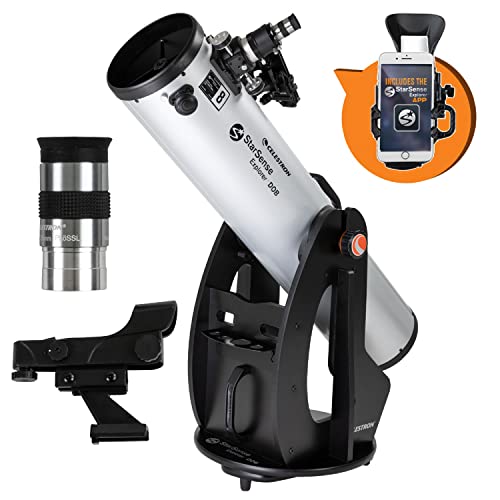
- App-guided locating reduces the learning curve
- 8-inch aperture supports bright deep-sky views
- Stable manual Dobsonian base is easy to use
Best For: Beginners who want an 8-inch Dobsonian with guided target finding and simple setup.
Best for Guided Deep-Sky Hunting

- 150mm aperture for strong light gathering
- GoTo tracking helps find faint targets faster
- Collapsible tabletop design saves space
Best For: Observers who want a portable Dobsonian with guided finding for deep-sky viewing.
Best for Easy Setup
Celestron StarSense Explorer 150AZ

- Phone-guided StarSense app makes finding targets much easier
- 6-inch reflector is capable on bright deep-sky objects
- Simple tabletop Dobsonian-style mount keeps operation approachable
Best For: Beginners who want a simple tabletop reflector with smartphone-assisted navigation.
Best GoTo Dobsonian
Sky-Watcher Virtuoso GTI 130P Collapsible Tabletop

- 130mm aperture with fast f/5 optics
- Built-in Wi-Fi GoTo control via SynScan Pro
- Freedom Find encoders support manual slewing
Best For: Beginners who want a compact GoTo Dobsonian for easier deep-sky observing.
Best for Big Aperture on a Budget
Sky-Watcher Flextube 300 12-inch Dobsonian
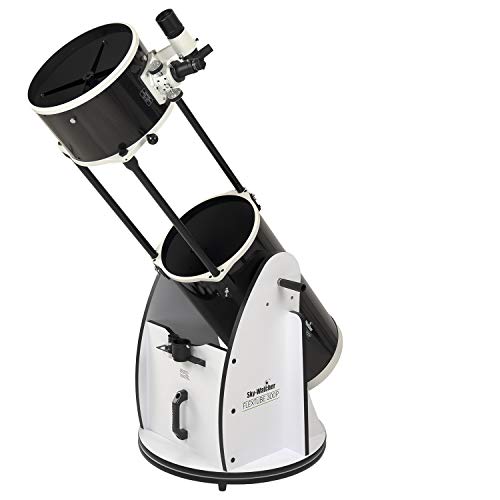
- 12-inch aperture for bright deep-sky viewing
- Collapsible design is easier to store and transport
- Includes eyepieces, finder scope, and 2-inch focuser
Best For: Observers who want a large-aperture Dobsonian with better portability than most 12-inch models.
Best Heavy-Duty Pick
Sky-Watcher Heritage 130mm Tabletop Dobsonian

- 5-inch aperture for bright, affordable views
- Arrives fully assembled for quick observing
- Compact tabletop design suits beginners
Best For: Beginners who want a compact Dobsonian with solid deep-sky performance.
Best 8-inch Aperture Value – Sky-Watcher Classic 200 Dobsonian
If you want a classic light-gathering scope that keeps setup simple, the Sky-Watcher Classic 200 is a strong pick among dobsonian telescopes for deep sky viewing. Its 8-inch aperture, smooth Dobsonian motion, and included accessories make it an easy way to start pulling in brighter galaxies, clusters, and nebulae without overcomplicating the experience.
Best For: Beginners and budget-minded observers who want a straightforward 8-inch Dobsonian with enough aperture to make deep-sky targets rewarding.
Pros:
- 8-inch aperture delivers bright, detailed views of deep-sky objects
- Includes 25mm and 10mm eyepieces plus a 9×50 finder scope
- 2-inch Crayford focuser and smooth Teflon bearings improve usability
- Simple solid-tube design is easy to learn and transport
Cons:
- Large tube and base take more space than smaller telescopes
- Manual tracking requires hands-on nudging at higher magnification
- Heavier than compact beginner models once assembled
For observers focused on value and straightforward performance, this scope hits a sweet spot in dobsonian telescopes for deep sky viewing. It offers the aperture most beginners will appreciate without adding unnecessary complexity.
Best Smart Imaging Pick – ZWO Seestar S30 Pro Smart Telescope
If you want a beginner-friendly way to capture deep-sky targets without learning manual tracking, the Seestar S30 Pro is a strong alternative to traditional dobsonian telescopes for deep sky viewing. Its app-controlled GoTo system, dual cameras, and one-tap imaging modes make it easier to produce usable astrophotos of nebulae, galaxies, and the Milky Way from the start.
Best For: New astrophotographers and casual stargazers who want automated deep-sky imaging with minimal setup.
Pros:
- Automatic GoTo and tracking simplify target finding for beginners
- Dual-camera design handles both detailed deep-sky shots and wide Milky Way scenes
- Built-in AI processing, mosaic stitching, and noise reduction improve results with one tap
- Portable smart design adds daytime use for landscapes and birdwatching
Cons:
- Not a traditional manual telescope for visual observing
- More focused on imaging than eyepiece-based viewing
- Premium tech features may be more than casual observers need
For shoppers comparing dobsonian telescopes for deep sky viewing, this model stands out less for raw aperture and more for convenience, automation, and image capture. It’s a better fit if you value easy deep-sky photos over classic hands-on observing.
Best for Portable Aperture – Sky-Watcher Flextube 250 10-inch Dobsonian
If you want a large-aperture option without giving up portability, this Sky-Watcher Flextube is a strong fit for dobsonian telescopes for deep sky viewing. Its 10-inch mirror gathers plenty of light for galaxies, nebulae, and star clusters, while the collapsible tube makes it easier to transport than a fixed-tube scope of the same size.
Best For: Beginners and casual deep-sky observers who want a big, easy-to-use Dobsonian that can still travel to darker skies.
Pros:
- 10-inch large aperture delivers bright, high-contrast views of faint deep-sky targets
- Collapsible Flextube design improves portability without sacrificing light-gathering power
- Tension control handles and Teflon bearings make manual tracking smooth and simple
- Includes useful accessories like two eyepieces and an 8×50 right-angle finder
Cons:
- Still a bulky telescope overall, so storage and transport take planning
- Manual operation may feel less convenient than motorized or computerized scopes
- Needs careful collimation to get the best performance from the optics
As a practical middle ground between aperture and portability, this model stands out for observers who want serious light grasp for dobsonian telescopes for deep sky viewing without committing to a fixed, hard-to-move tube.
Best for Easy Deep-Sky Finding – Celestron StarSense Explorer 8-inch Dobsonian
If you want one of the more beginner-friendly dobsonian telescopes for deep sky viewing, the Celestron StarSense Explorer 8-inch stands out for how little guesswork it leaves in the process. The smartphone dock and app help you locate targets quickly, while the 8-inch reflector still gives you the aperture needed for bright nebulae, galaxies, and clusters.
Best For: Beginners who want a large-aperture Dobsonian with app-guided target finding and simple manual tracking.
Pros:
- StarSense app helps you find objects without needing advanced star-hopping skills
- 8-inch aperture is strong for observing deep-sky favorites like Orion and Andromeda
- Stable Dobsonian base makes manual observing straightforward
- Works with iPhone and Android for flexible setup
Cons:
- Phone-assisted navigation adds dependency on a charged smartphone
- Bulkier than smaller beginner scopes, so it needs storage space
For buyers comparing dobsonian telescopes for deep sky viewing, this model is appealing because it combines the light-gathering of an 8-inch reflector with much easier object location than a traditional manual Dobsonian. It is a smart pick if you want strong visual performance without a steep learning curve.
Best for Guided Deep-Sky Hunting – Sky-Watcher Virtuoso GTI 150P
Sky Watcher Sky-Watcher Virtuoso GTI 150P Collapsible Tabletop GoTo Dobsonian Telescope
Check Price On AmazonIf you want dobsonian telescopes for deep sky viewing that make locating faint objects easier, the Sky-Watcher Virtuoso GTI 150P stands out with its 150mm aperture and GoTo tracking in a compact tabletop design. It’s a practical choice for observers who want more time looking at galaxies, nebulae, and clusters and less time manually hunting them down.
Best For: Beginners and intermediates who want a portable Dobsonian with GoTo assistance for deep-sky targets.
Pros:
- 150mm aperture gathers enough light for solid deep-sky performance
- GoTo and tracking help you find and keep faint objects centered
- Collapsible tabletop design is easier to store and transport
Cons:
- Tabletop format needs a sturdy base or stand
- Requires power for GoTo and tracking features
For observers comparing dobsonian telescopes for deep sky viewing, this model is appealing because it blends classic light-gathering Dobsonian optics with modern object-finding support. It’s especially useful if you want a more guided experience without moving up to a larger, bulkier scope.
Best for Easy Setup – Celestron StarSense Explorer 150AZ
If you want one of the more approachable dobsonian telescopes for deep sky viewing, the Celestron StarSense Explorer 150AZ stands out for its phone-guided navigation and 6-inch reflector. It is designed to help beginners find targets faster, while still giving enough aperture for bright nebulae, galaxies, and star clusters.
Best For: Beginners who want a tabletop reflector that makes locating deep-sky objects much easier with smartphone guidance.
Pros:
- StarSense app and phone dock simplify target finding without prior astronomy experience
- 6-inch reflector provides solid views of the Moon, planets, and brighter deep-sky objects
- Manual altazimuth Dobsonian-style base keeps operation simple and intuitive
- Curated tonight’s-best-targets list helps you make the most of each session
Cons:
- Tabletop design needs a sturdy stand or table, which adds setup considerations
- Not ideal if you want fully automated GoTo tracking
- Best results on faint deep-sky objects still depend on darker skies
For shoppers comparing dobsonian telescopes for deep sky viewing, this model is a smart entry point because it balances aperture with a much easier finding process. It is less about raw advanced performance and more about helping beginners actually get to the objects they want to see.
Best GoTo Dobsonian – Sky-Watcher Virtuoso GTI 130P Collapsible Tabletop
Sky Watcher Sky-Watcher Virtuoso GTI 130P Collapsible Tabletop GoTo Dobsonian Telescope
Check Price On AmazonIf you want dobsonian telescopes for deep sky viewing with a little more convenience built in, this 130mm tabletop model is a smart pick. The fast f/5 optic and 650mm focal length give it enough light-gathering ability for brighter galaxies, nebulae, and star clusters, while the GoTo mount helps you get on target faster under dark skies.
Best For: Beginners and casual observers who want a compact Dobsonian with GoTo assistance for easier deep-sky hopping.
Pros:
- 130mm aperture offers bright, detailed views for the size
- Fast f/5 optics are well suited to deep-sky targets
- Built-in Wi-Fi and SynScan Pro app add easy GoTo control
- Freedom Find encoders let you move manually without losing alignment
Cons:
- Tabletop design needs a sturdy base or stand
- Not as much aperture as larger Dobsonians for faint objects
- GoTo features add complexity compared with a basic manual scope
This is a versatile choice if you want dobsonian telescopes for deep sky viewing without giving up tracking help and portability. It is especially appealing for observers who value convenience and smart features, but it still remains limited by its 130mm aperture on the faintest targets.
Best for Big Aperture on a Budget – Sky-Watcher Flextube 300 12-inch Dobsonian
If you want serious light-gathering power without jumping to a complicated mount, this is one of the more compelling dobsonian telescopes for deep sky viewing. The 12-inch mirror, smooth Dobsonian base, and collapsible tube make it a strong option for users who want bright views of nebulae, galaxies, and star clusters with easier storage than a traditional solid tube.
Best For: Observers who want a large-aperture Dobsonian with better portability than most 12-inch models.
Pros:
- 12-inch aperture delivers bright, detailed deep-sky views
- Collapsible strut design improves portability and storage
- Includes 2-inch focuser, two eyepieces, and an 8×50 finder
- Smooth tracking with tension control handles and needle bearings
Cons:
- Still a large telescope that takes space and strength to move
- Not the easiest choice for grab-and-go use
This model stands out if your priority is deep-sky performance first, with portability as a close second. For buyers comparing dobsonian telescopes for deep sky viewing, it offers a rare mix of large aperture, solid included accessories, and a design that is easier to live with than many full-size reflectors.
Best Heavy-Duty Pick – Sky-Watcher Heritage 130mm Tabletop Dobsonian
The Sky-Watcher Heritage 130mm is a smart pick if you want one of the more approachable dobsonian telescopes for deep sky viewing without paying for a larger, more cumbersome setup. Its 130mm aperture gathers enough light for brighter nebulae, star clusters, and lunar detail, while the tabletop Dobsonian base keeps it simple for beginners.
Best For: Beginners and casual observers who want a compact, ready-to-use Dobsonian with real deep-sky capability.
Pros:
- 5-inch aperture offers strong light gathering for the price
- Fully assembled design makes it easy to start observing right away
- Compact tabletop format is easy to move and store
- Includes two eyepieces and a red dot finder to get started
Cons:
- Tabletop mount requires a sturdy elevated surface for comfortable viewing
- Not as powerful as larger Dobsonians for faint deep-sky objects
For shoppers comparing dobsonian telescopes for deep sky viewing, this model stands out as an easy, low-fuss entry point that still delivers meaningful aperture. It is especially appealing if portability and simplicity matter more than maximum reach.
How We Picked These Dobsonian Telescopes for Deep Sky Viewing
We prioritized aperture first, since larger mirrors gather more light and reveal fainter objects more effectively. We also considered mount stability, ease of setup, portability, and whether each model is a strong fit for visual astronomy rather than specialized imaging. Features that improve finding targets, such as smartphone assistance or GoTo tracking, were included when they add real value without making the telescope harder to use.
Quick Comparison
As a rule, 8-inch Dobsonians offer the best all-around balance of performance and manageability, 10-inch models step up noticeably in light-gathering for richer views, and 12-inch models are best for observers who can handle the size and weight. Tabletop and collapsible designs are easier to store and transport, but they usually require a stable base and may be less convenient than full-size floor-standing scopes.
Key Buying Factors for Dobsonian Telescopes for Deep Sky Viewing
Aperture
This is the most important spec. For Dobsonian Telescopes for Deep Sky Viewing, 130mm to 150mm is a good entry point, 8-inch class models are a strong sweet spot, and 10-inch or larger instruments offer a clear jump in faint-object performance.
Portability and Storage
Large apertures are great, but only if you will actually use the telescope. Solid-tube models are straightforward and robust, while collapsible designs are easier to fit in a car or closet. Tabletop versions can be compact, but they need a very steady observing platform.
Finder and Navigation Support
App-enabled or assisted-finding systems can reduce frustration, especially under suburban skies where star-hopping is harder. They do not replace aperture, but they can make it easier to spend time observing instead of searching.
Mount Stability and Ease of Use
A Dobsonian should move smoothly in altitude and azimuth without wobble. A stable mount helps you track objects at higher magnifications and keeps the observing experience relaxed, which matters a lot on faint targets.
Who Should Buy Which Dobsonian Telescopes for Deep Sky Viewing?
Choose a 130mm to 150mm model if you want a compact, lower-cost introduction to the hobby. Pick an 8-inch Dobsonian if you want the best blend of performance, price, and ease of use. Go with a 10-inch model if deep-sky detail is the priority and you can handle the added bulk. A 12-inch scope is best for serious visual observers with enough space, strength, and observing discipline to support a larger instrument. If you want the easiest target finding, consider an app-enabled or GoTo design, but if raw deep-sky performance matters most, put aperture first.