
Choosing the right eyepiece kit can make a bigger difference than upgrading the telescope itself, especially for lunar and planetary observing.
This roundup of planetary eyepiece kits focuses on practical value, useful magnification ranges, and accessories that actually help at the eyepiece.
Best 10 Planetary Eyepiece Kits Picks for 2026
Best Starter Kit
SVBONY SV233 12-Piece Telescope Accessory Kit

- Four eyepieces plus a 2x Barlow widen your magnification options
- Includes LRGB, moon, and polarizing filters for contrast tuning
- Hard case makes it easy to store and transport the full set
Best For: Beginners who want an all-in-one telescope accessory bundle for planets and the Moon.
Best Value
Celestron 1.25" Plossl Eyepiece Kit

- Five Plössl eyepieces cover a useful range of focal lengths.
- 2x Barlow expands magnification without extra purchases.
- Includes planetary and Moon filters plus a protective case.
Best For: Beginners who want a complete, affordable telescope accessory kit for planets and general viewing.
Best Zoom Pick
SVBONY SV215 3-8mm Zoom Eyepiece

- 3-8mm zoom replaces several fixed eyepieces
- Parfocal design cuts down on refocusing
- Click stops make night adjustments simple
Best For: Amateur astronomers who want one versatile eyepiece for lunar and planetary detail.
Best Starter Kit for Lunar & Planetary Viewing
Celticbird 1.25" Telescope Accessory Kit

- 3 Plossl eyepieces cover multiple magnification needs
- 2X Barlow and 4 filters add viewing flexibility
- Includes a lockable aluminum carry case
Best For: Beginners who want a complete 1.25-inch accessory kit for planets, the Moon, and light imaging.
Best for Lunar & Planetary Detail
SVBONY SC715C Planetary Camera

- 1.45μm IMX715 sensor for fine detail
- 512MB DDR3 cache helps keep captures smooth
- USB 3.0 and astronomy software support
Best For: Astrophotographers who want a dedicated color camera for Moon and planet imaging.
Best Accessory Kit
Celestron AstroMaster 8-Piece Eyepiece & Filter Kit

- Two eyepieces and a 2x Barlow add flexibility
- Planetary and lunar filters improve contrast
- Hard case and cloth make it easy to store and carry
Best For: New telescope owners who want an affordable all-in-one accessory kit for viewing the Moon and planets.
Best Wide-Field Starter Kit
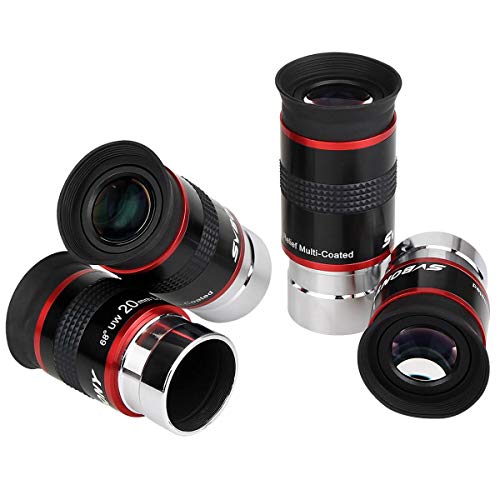
- Wide 68° field creates an immersive view
- Four focal lengths cover common observing needs
- Multi-coated optics help sharpen contrast
Best For: Beginners who want an affordable, wide-field 1.25" eyepiece kit for general astronomy.
Best with Extra Features
Astromania 1.25" Eyepiece Filter Kit

- 2 Plossl eyepieces plus a 2x Barlow for flexible magnification
- Moon and color filters help with lunar and planetary detail
- Includes a hard carry case for storage and travel
Best For: New astronomy buyers who want an all-in-one kit for lunar and planetary observing.
Best Entry-Level Upgrade
Celestron PowerSeeker Accessory Kit

- Two 1.25" Kellner eyepieces for beginner-friendly magnification
- Includes Moon, red, and blue filters for lunar and planetary viewing
- Hard case and cloth make storage and maintenance simple
Best For: Beginners who want an inexpensive all-in-one accessory kit for Moon and planet viewing.
Best Value Starter Kit
CelticBird 1.25" Telescope Eyepiece Kit

- 5 Plossl eyepieces from 40mm to 6mm
- 2X Barlow lens expands magnification options
- Includes 7 filters plus a metal carry case
Best For: Beginners and value-focused observers building a first planetary and lunar accessory kit.
Best Starter Kit – SVBONY SV233 12-Piece Telescope Accessory Kit
If you want one bundle that covers a lot of observing needs, the SVBONY SV233 is a practical pick among planetary eyepiece kits. It combines multiple eyepieces, a 2x Barlow, filters, and a carry case, so you can test different magnifications and contrast tools without buying everything separately.
Best For: Beginners and casual observers who want an all-in-one accessory set for Moon, planets, and general viewing.
Pros:
- Includes four eyepieces plus a 2x Barlow for a wide magnification range
- Comes with LRGB, moon, and variable polarizer filters for more contrast control
- Portable case helps keep the full kit organized and protected
Cons:
- Not a specialized premium eyepiece-only set
- Filter and accessory quality may be more utilitarian than high-end
As a value-packed bundle, this kit is most appealing if you want to experiment with planetary eyepiece kits before upgrading piece by piece. It offers a broad feature set for the price, though dedicated observers may eventually want to replace a few components with higher-end individual optics.
Best Value – Celestron 1.25" Plossl Eyepiece Kit
Celestron Accessory Kit with Five 1.25" Plossl Eyepieces, 2x Barlow and Filter Set
Check Price On AmazonIf you want a simple way to build out a telescope setup, this Celestron kit covers the essentials without requiring you to piece together individual accessories. It’s a practical pick for planetary eyepiece kits thanks to the five Plössl eyepieces, 2x Barlow, and included filters that help you experiment with different magnifications and planet detail.
Best For: Beginners and casual observers who want an all-in-one accessory kit for planets, the Moon, and general visual viewing.
Pros:
- Five 1.25" Plössl eyepieces give you a wide range of focal lengths from 32mm to 6mm.
- The 2x Barlow effectively doubles your magnification options without buying extra eyepieces.
- Planetary and Moon filters add useful contrast for common observing targets.
- Hard-sided, foam-lined case keeps everything organized and protected.
Cons:
- Plössl eyepieces are solid, but not as immersive as wider-field premium designs.
- The included filters are helpful, but serious planetary observers may still upgrade later.
For shoppers comparing planetary eyepiece kits, this one stands out more for completeness and value than for high-end optics. It’s a sensible bundle if you want a reliable starting point and room to expand later.
Best Zoom Pick – SVBONY SV215 3-8mm Zoom Eyepiece
If you want a flexible option for planetary eyepiece kits, the SVBONY SV215 gives you a 3mm to 8mm zoom range so you can fine-tune magnification without swapping eyepieces in the dark. Its parfocal design, constant eye relief, and click stops make it practical for quick adjustments during lunar and planetary observing.
Best For: Amateur astronomers who want one compact zoom eyepiece for dialing in views of the Moon, Jupiter, Saturn, Mars, and Venus.
Pros:
- Zoom range replaces multiple high-power eyepieces in one body
- Parfocal design reduces refocusing as you change magnification
- Click stops at 3, 4, 5, 6, 7, and 8mm are easy to use at night
- Fully multi-coated, 6-element/4-group optics for sharp high-power viewing
Cons:
- Best performance is limited to the high-power planetary range
- May still need minor refocusing at some zoom settings
- Not as simple a value buy as a basic fixed focal-length eyepiece
For planetary eyepiece kits, this is a strong convenience pick if you value quick adjustment and consistent handling over collecting several separate lenses. It is especially useful for observers who want to experiment with magnification on changing seeing conditions.
Best Starter Kit for Lunar & Planetary Viewing – Celticbird 1.25" Telescope Accessory Kit
If you want one box that covers the basics, this is a practical pick among planetary eyepiece kits. You get three Plossl eyepieces, a 2X Barlow lens, and four filters, so you can experiment with magnification, moon detail, and brighter planets without buying pieces one at a time.
Best For: Beginners or casual observers who want an all-in-one 1.25-inch accessory set for lunar and planetary observing, with a simple path into basic astrophotography.
Pros:
- Includes 3 eyepieces, a 2X Barlow, and 4 filters in one kit
- Useful focal-length spread for moon, planets, and some deep-sky viewing
- Barlow adds flexibility and can support DSLR T-adapter use
- Comes with a portable aluminum carry case
Cons:
- Not as refined as premium individual eyepieces
- Filters are helpful, but not a substitute for high-end optics
- Best suited to 1.25-inch telescopes only
This kit makes sense if you want broad coverage without a big upfront investment. For shoppers comparing planetary eyepiece kits, it stands out more for completeness and value than for elite performance.
Best for Lunar & Planetary Detail – SVBONY SC715C Planetary Camera
If you want one of the more specialized planetary eyepiece kits for sharp lunar and planetary imaging, the SVBONY SC715C is built around a 1.45μm IMX715 sensor, low readout noise, and a fast USB 3.0 pipeline. It’s aimed at users who want clean, detailed captures rather than a general-purpose all-in-one solution.
Best For: Astrophotographers who want a dedicated color planetary camera for Moon and planet work, especially if they already have a telescope, focuser, and imaging setup.
Pros:
- 1.45μm pixel IMX715 sensor helps capture fine planetary detail
- 512MB DDR3 cache reduces delay and helps keep frames smooth
- USB 3.0 support and broad software compatibility add flexibility
- Lightweight aluminum body is easy to mount and manage
Cons:
- No built-in focus adjustment; telescope focuser handles focus
- Not compatible with smartphones
- Requires dedicated download software and a compatible computer
For buyers comparing planetary eyepiece kits, this SC715C stands out as a camera-first option for capturing crisp Moon and planet images, but it makes the most sense if you’re comfortable working with astronomy software and a telescope-based imaging setup.
Best Accessory Kit – Celestron AstroMaster 8-Piece Eyepiece & Filter Kit
If you want a simple way to stretch the usefulness of a beginner telescope, this Celestron kit is a smart add-on. It bundles two eyepieces, a 2x Barlow lens, and three filters, making it one of the more practical planetary eyepiece kits for improving contrast and dialing in different magnifications without buying pieces one by one.
Best For: New telescope owners who want an affordable all-in-one accessory kit for viewing the Moon and planets.
Pros:
- Includes two useful eyepieces plus a 2x Barlow lens for more viewing options
- Planetary and lunar filters help improve detail on the Moon, Mars, Jupiter, and Saturn
- Foam-lined hard case keeps accessories organized and protected
- Works with many telescopes that accept standard 1.25″ eyepieces and filters
Cons:
- Not a high-end upgrade if you already own quality eyepieces
- Best results depend on having a telescope with decent optics and stable seeing
- Camera attachment requires an optional T-ring sold separately
Overall, this is a straightforward value pick for anyone building out a starter observing setup. It is especially appealing among planetary eyepiece kits because it covers magnification, filtering, and storage in one inexpensive package.
Best Wide-Field Starter Kit – SVBONY 1.25" 68° Eyepiece Set
If you want a simple way to expand your observing options, this 4-piece set is a practical entry point for planetary eyepiece kits and general lunar or deep-sky viewing. The 68-degree apparent field gives a noticeably roomier view than basic stock eyepieces, while the fully multi-coated optics and multi-element design help keep images sharp and reasonably well corrected for the price.
Best For: Beginners and budget-minded observers who want a versatile 1.25″ eyepiece kit with wider views and multiple focal lengths.
Pros:
- 68-degree apparent field feels wide and immersive
- Fully multi-coated glass improves light transmission and contrast
- Includes four useful focal lengths: 6mm, 9mm, 15mm, and 20mm
- Fold-down rubber eye guards add comfort for eyeglass wearers
Cons:
- Not a premium planetary eyepiece kit for critical high-end viewing
- Best results depend on a well-collimated telescope
- Doesn’t include a case or other accessories
Overall, this set makes sense if you want affordable planetary eyepiece kits with a broader field of view and a usable spread of focal lengths. It’s a solid value pick for casual astronomy, especially if you’re upgrading from a single starter eyepiece.
Best with Extra Features – Astromania 1.25" Eyepiece Filter Kit
If you want one affordable accessory bundle that covers multiple observing needs, this is a practical pick among planetary eyepiece kits. The two Plossl eyepieces, 2x Barlow, and color/moon filters give newcomers a simple way to try different magnifications and improve views of the Moon and planets without buying everything separately.
Best For: New astronomy buyers who want a compact all-in-one kit for lunar and planetary observing.
Pros:
- Includes 2 Plossl eyepieces, a 2x Barlow, and 4 filters in one package
- Good starter versatility for Moon and planet viewing at different magnifications
- Carry case helps keep the accessories organized and protected
- 1.25-inch format fits many beginner and mid-range telescopes
Cons:
- Not a high-end optical upgrade for more demanding observers
- Filters are helpful, but their impact is more subtle than a premium eyepiece set
- Best suited to learning and experimenting rather than specialized performance
For beginners comparing planetary eyepiece kits, this bundle stands out for value and convenience rather than raw optical refinement. It gives you enough pieces to experiment with magnification and contrast before deciding which upgrades matter most.
Best Entry-Level Upgrade – Celestron PowerSeeker Accessory Kit
If you want a simple add-on that makes beginner views more flexible, this Celestron kit is a practical pick for planetary eyepiece kits. It pairs two usable 1.25″ eyepieces with three filters, giving new observers a low-cost way to experiment with Moon and planet contrast without buying pieces separately.
Best For: Beginners using a small telescope who want a budget-friendly way to try higher magnification and basic planetary filters.
Pros:
- Includes 15mm and 9mm Kellner eyepieces for medium and higher power viewing
- Moon, red, and blue filters help bring out detail on lunar and planetary targets
- Comes with a hard case and cleaning cloth for easy storage and upkeep
- Works with most telescopes that accept 1.25″ eyepieces
Cons:
- Kellner eyepieces are basic, not a premium optical upgrade
- Planet filters are useful, but the effects are modest compared with higher-end accessories
- Best results depend on telescope quality and steady viewing conditions
This kit makes sense if you want an affordable starter bundle rather than a specialized upgrade path. For first-time buyers comparing planetary eyepiece kits, it offers the essentials in one case and keeps the learning curve low.
Best Value Starter Kit – CelticBird 1.25" Telescope Eyepiece Kit
If you want one of the more practical planetary eyepiece kits for a telescope upgrade, this CelticBird set gives you a useful spread of magnifications plus filters without buying everything separately. The five Plossl eyepieces, 2X Barlow lens, and 7-filter bundle make it a flexible option for lunar detail, planetary viewing, and general backyard observing.
Best For: Beginners and budget-minded observers who want a complete 1.25-inch accessory set for planets, the Moon, and basic DSLR-adaptable use.
Pros:
- Five Plossl eyepieces cover low to high magnification from 40mm to 6mm.
- 2X Barlow lens effectively expands your magnification options.
- Color, polarizing, and moon filters help improve contrast and reduce glare.
- Metal carry case keeps the full kit organized and protected.
Cons:
- Included eyepieces are solid starters, but not premium planetary glass.
- Filter benefits can be subtle depending on telescope and viewing conditions.
For buyers comparing planetary eyepiece kits, this set stands out more for completeness and value than for high-end performance. It is a smart all-in-one choice if you want a broad accessory bundle that covers the basics and leaves room to grow.
How We Picked These Planetary Eyepiece Kits
We looked for kits that give observers a useful spread of focal lengths, solid build quality, and accessories that support real-world viewing. For planetary work, that means sharper high-power options, a dependable Barlow lens when included, and filters that can add value rather than clutter the case. We also favored kits that are easy to use with common 1.25-inch focusers and entry-to-mid-level telescopes.
Quick Comparison: What Matters Most
Not all Planetary Eyepiece Kits are built for the same job. Some lean toward higher magnification for lunar detail and planet contrast, while others offer a broader mix of eyepieces for general observing. Zoom eyepieces can be convenient, but fixed focal lengths often deliver simpler, more consistent performance. A well-matched kit should complement your telescope’s focal ratio and avoid pushing magnification beyond what your optics and seeing conditions can support.
Key Buying Factors for Planetary Eyepiece Kits
Focal Length Coverage
Look for a kit that covers low, medium, and high power, but pay special attention to the short focal lengths used for planets. For most observers, the most useful planetary range is the one that sits between comfortable viewing and the practical limit of the telescope.
Eyepiece Design and Eye Comfort
Plössl, Kellner, zoom, and wide-angle designs each have tradeoffs. Plössls are common and versatile, zoom eyepieces are convenient, and wider fields can make tracking easier at high power. Eye relief matters too, especially if you wear glasses or plan longer sessions.
Barlow Lens Quality
A 2X Barlow can effectively double your usable magnification options, but only if it is well made. A poor Barlow can soften images and add glare, so prioritize kits with decent optics over kits that simply include more pieces.
Filters and Accessories
Planetary filters can enhance contrast on the Moon and bright planets, but they are optional rather than essential. Cases, cleaning cloths, and secure packaging are nice additions, yet they should not distract from optical quality.
Who Should Buy Which Planetary Eyepiece Kits?
Beginners usually do best with simple Planetary Eyepiece Kits that include a few dependable focal lengths and a good Barlow. Observers who want convenience may prefer a zoom-based kit for faster field adjustments. If you already know your telescope’s focal length and observing style, a smaller, better-balanced kit is often more useful than a larger bundle filled with duplicates. For most buyers, the best choice is the kit that matches their telescope, their typical seeing conditions, and how often they want to swap eyepieces at the scope.