
Shopping for night vision means sorting out more than resolution and magnification. This list spans analog image-intensifier goggles and lower-cost digital viewers, including monoculars and binocular-style devices with very different strengths after dark.
Whether you want a helmet-mounted option, a white-phosphor image, or infrared-assisted viewing on a tighter budget, start by matching the technology to where and how you’ll use it.
Best 10 Military Grade Night Vision Goggles Picks for 2026
Best Digital Monocular
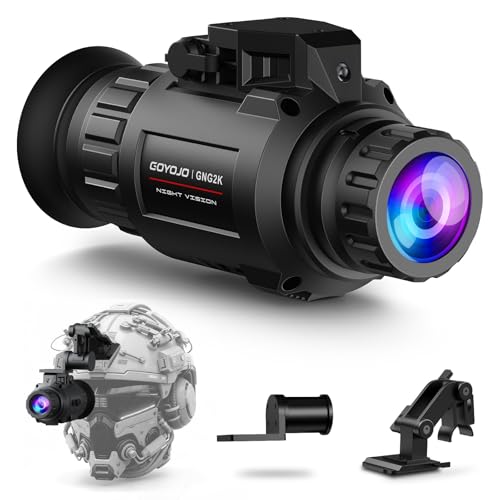
- 2K image with 60Hz refresh
- 45° field of view
- 940nm IR and four display modes
Best For: Helmet-mounted digital viewing outdoors
Best for 3D Viewing
GOWWPUN Head-Mounted Binoculars
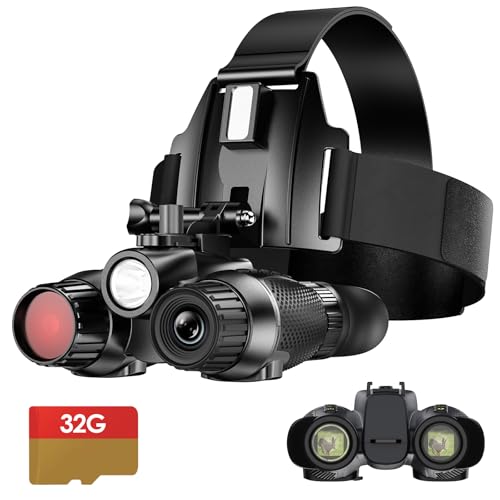
- Dual-screen 3D viewing
- Seven adjustable IR levels
- 36MP photos and 4K recording
Best For: Wearable 3D viewing and recording
Best Image Intensifier
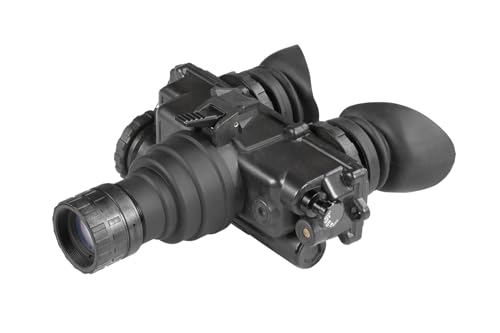
- Gen 2+ P43-green intensifier
- Automatic brightness control
- Head mount and accessories included
Best For: Green-phosphor intensifier night vision
Best Dual-Monocular Setup

- Two 2K/60Hz digital units
- Independent flip-up mount
- 940nm IR and four display modes
Best For: Two-eye helmet-mounted digital viewing
Premium Gen 3 Pick
AGM PVS-7 3AW2 White Phosphor Goggles
- Gen 3 auto-gated white phosphor
- Brightness control and light cutoff
- Head mount and IR illuminator included
Best For: Gen 3 white-phosphor viewing with hands-free mounting
Digital Recording Pick
GOYOJO NV8300 4K Night Vision Goggles

- 4K video, audio, and 36MP photos
- Adjustable 850nm infrared illumination
- Headband and mounting bracket included
Best For: Nighttime observation with photo and video capture
Green-Phosphor PVS-7 Pick

- Gen 2+ green-phosphor viewing
- 1x magnification; 40-degree field of view
- Head mount included; export restricted
Best For: U.S. buyers seeking a green-phosphor PVS-7
Best Gen 3 Pick
AGM PVS-7 3AW3 White Phosphor Goggles
- Gen 3 white phosphor intensifier
- Automatic brightness and bright-light cutoff
- Handheld or head-mounted use
Best For: Gen 3 white phosphor viewing
Best Wide-View Dual Tube

- Dual-tube Gen 2+ design
- 51-degree field of view
- Manual gain and built-in IR
Best For: Wide-view, helmet-mounted observation
Best Gen 2+ PVS-7
AGM PVS-7 NW1 White Phosphor Goggle
- Gen 2+ white phosphor viewing
- 1x with 40-degree field of view
- Head or helmet mounting
Best For: U.S. buyers wanting a hands-free Gen 2+ PVS-7
Best Digital Monocular – GOYOJO GNG2K
If you’re comparing military grade night vision goggles for hands-free outdoor use, the GOYOJO GNG2K is a digital monocular rather than an image-intensifier device. It pairs a claimed 2688 × 1520 image with a 60Hz refresh rate and a helmet mount.
Best For: Campers, wildlife watchers, and property owners who want a helmet-mountable digital monocular.
Pros:
- 45° field of view helps when scanning trails or property lines.
- 940nm IR illuminator offers three brightness levels.
- Four display modes and a built-in compass add viewing and navigation options.
Cons:
- Monocular design does not provide two-eye viewing.
- Its 1–4x zoom is digital, not optical.
Choose this for a compact, hands-free digital setup with flexible display settings; don’t mistake its tactical styling for a stated military qualification.
Best for 3D Viewing – GOWWPUN Head-Mounted Binoculars
For shoppers searching military grade night vision goggles but prioritizing an immersive two-eye display, these GOWWPUN digital binoculars offer dual-screen 3D viewing. They include a headband and an adapter for compatible FAST and MICH helmets, which are sold separately.
Best For: Outdoor users who want wearable 3D viewing and photo or video recording.
Pros:
- Dual eyepieces have individual diopter adjustments.
- Seven IR levels and a separate white fill light offer lighting choices.
- Supports 36MP photos and 4K video recording.
Cons:
- Specified 10° field of view is narrow for scanning.
- Listed as not water resistant.
The 3D display and recording features distinguish this model, but its narrow view and lack of water resistance make it a better fit for controlled conditions than wet-weather field use.
Best Image Intensifier – AGM PVS-7 Gen 2+
Among these military grade night vision goggles options, the AGM PVS-7 is the one listed with a Gen 2+ Level 3 P43-green image intensifier tube rather than a digital display. It can be handheld or head-mounted, and the package includes a head mount assembly.
Best For: Buyers specifically seeking green-phosphor image-intensifier night vision with included mounting accessories.
Pros:
- Automatic brightness control and bright-light cutoff help manage changing light.
- Built-in IR illuminator provides an option when ambient light is insufficient.
- Includes brow pads, eye cups, demist shields, a daylight filter, and a carrying case.
Cons:
- Listed weight of 1.1 pounds is worth considering for head-mounted use.
- Notes do not provide a quantified field of view or detection range.
This is the clearest fit here for someone who wants an intensifier-based PVS-7 configuration; assess the stated specifications and mounting setup rather than relying on military-grade marketing alone.
Best Dual-Monocular Setup – GOYOJO GNG2K x2
If you want two helmet-mounted viewers while shopping for military grade night vision goggles, the GOYOJO GNG2K x2 pairs two digital monoculars with an independent flip-up mount. Each unit is described with 2688 × 1520 imaging, a 60Hz refresh rate, and 940nm IR illumination.
Best For: Buyers who prefer a two-eye digital arrangement with independent flip-up mounting.
Pros:
- Includes two GNG2K units and a binocular mounting bracket.
- 45° stated field of view and four display modes offer viewing flexibility.
- Three-level 940nm IR and an electronic compass support nighttime navigation.
Cons:
- Listed package weight is 4.3 pounds; confirm worn weight before buying.
- 1–4x magnification is digital zoom.
The dual-unit mount is the reason to choose this over the single GNG2K. It remains a digital system, so compare its mounting arrangement and weight with your intended use.
Premium Gen 3 Pick – AGM PVS-7 3AW2 White Phosphor Goggles
If you’re comparing military grade night vision goggles for hands-free low-light use, the AGM PVS-7 3AW2 offers a Gen 3 auto-gated white-phosphor intensifier, helmet-mount compatibility, and a built-in infrared illuminator. At approximately 1.1 pounds, it also comes with a head mount and protective accessories.
Best For: Buyers prioritizing Gen 3 white-phosphor viewing and a supplied head-mount kit.
Pros:
- Gen 3 auto-gated white-phosphor intensifier for low-light viewing.
- Automatic brightness control and bright-light cutoff.
- Built-in IR illuminator and included head-mount assembly.
Cons:
- At approximately 1.1 pounds, it adds noticeable weight to a head-mounted setup.
- The supplied details conflict on the tube designation, listing both P43 and P45; confirm the exact specification before buying.
This is the feature-rich PVS-7 option of the three, particularly if white phosphor matters to you. Verify the intensifier specification with the seller rather than relying on the inconsistent listing terminology.
Digital Recording Pick – GOYOJO NV8300 4K Night Vision Goggles
The GOYOJO NV8300 is a digital alternative for shoppers searching for military grade night vision goggles but mainly needing nighttime observation and recording. It captures 4K video with audio and 36MP photos, with an adjustable 850nm infrared illuminator for use in darkness.
Best For: Camping, wildlife observation, or property monitoring where recording matters more than an image-intensifier tube.
Pros:
- Records 4K video with audio and 36MP photos; a 32GB card is included.
- Dual screens offer adjustable interpupillary distance from 60 to 72mm.
- Includes a headband and helmet-compatible bracket, plus adjustable IR and up to 8x digital zoom.
Cons:
- Digital night vision is not the Gen 2+ or Gen 3 intensified technology offered by the AGM models.
- Requires manual focusing, and 8x zoom is digital rather than optical.
Choose this model for its recording tools and flexible wear options, not as a substitute for a PVS-7 intensifier. Its stated visibility of up to 1,000 feet in total darkness is a product claim, so assess it against your intended setting.
Green-Phosphor PVS-7 Pick – AGM PVS-7 NL1 Gen 2+ Goggles
For buyers seeking military grade night vision goggles in a traditional green-phosphor configuration, the AGM PVS-7 NL1 provides a Gen 2+ intensifier, 1x magnification, and a stated 40-degree field of view. It supports head or helmet mounting and includes a built-in infrared illuminator.
Best For: U.S. buyers who want a hands-free, green-phosphor PVS-7 and can comply with its export restrictions.
Pros:
- 1x viewing and a stated 40-degree field of view.
- Head- or helmet-mountable, with a head-mount assembly included.
- Automatic brightness control, bright-light cutoff, and automatic shutoff.
Cons:
- At 1.5 pounds, it is heavier than the listed AGM Gen 3 model.
- Export outside the U.S. is prohibited under the supplied listing’s ITAR notice; purchase requires confirming U.S.-person status.
The NL1 suits shoppers who prefer an intensified PVS-7 over a recording-focused digital device and do not require the other AGM model’s white-phosphor Gen 3 specification. Check the export terms before ordering.
Best Gen 3 Pick – AGM PVS-7 3AW3 White Phosphor Goggles
If you’re shopping for military grade night vision goggles and want a Gen 3 option, the AGM PVS-7 3AW3 pairs a white phosphor image intensifier with automatic brightness control. It can be used handheld or mounted for hands-free viewing.
Best For: Buyers prioritizing Gen 3 white phosphor viewing and adaptable light management.
Pros:
- Gen 3 auto-gated white phosphor intensifier.
- Automatic brightness control and bright-light cutoff.
- Built-in IR illuminator for viewing in darkness.
- Includes a head mount assembly and protective accessories.
Cons:
- The PVS-7 design provides dual-eye viewing rather than two separate optical tubes.
- The supplied specifications list conflicting magnification information, so confirm that detail before buying.
Choose this model if its Gen 3 tube is your main priority; verify the magnification specification with the seller before ordering.
Best Wide-View Dual Tube – AGM NVG-50 NL1 Gen 2+ Goggles
Among military grade night vision goggles, the AGM NVG-50 NL1 stands out for its dual-tube Gen 2+ configuration and stated 51-degree field of view. It’s a practical choice if seeing more of your surroundings matters more than stepping up to a Gen 3 system.
Best For: Helmet-mounted use where a wide view and dual-tube depth perception are priorities.
Pros:
- 51-degree field of view for broader scanning.
- Dual tubes support depth perception.
- Manual gain control and a built-in IR illuminator.
- Waterproof, shock-resistant construction and dovetail mounting.
Cons:
- Gen 2+ rather than Gen 3.
- The supplied notes disagree on the model suffix (NL1 versus NL2); confirm the exact configuration before purchase.
The wider view is the clearest reason to pick this model, but double-check the listing’s model designation so you know which version you’re getting.
Best Gen 2+ PVS-7 – AGM PVS-7 NW1 White Phosphor Goggle
For buyers comparing military grade night vision goggles in the PVS-7 format, the AGM PVS-7 NW1 offers Gen 2+ white phosphor viewing with 1x magnification. Its head- or helmet-mountable design suits hands-free navigation and observation.
Best For: U.S. buyers seeking a Gen 2+ white phosphor PVS-7 for hands-free use.
Pros:
- White phosphor intensifier with dual-eye viewing.
- 1x magnification and a stated 40-degree field of view.
- Built-in IR illuminator, automatic brightness control, and bright-light cutoff.
- Includes a head mount assembly, demist shields, and a carrying case.
Cons:
- Gen 2+ rather than Gen 3.
- U.S. export restrictions apply; the supplied notes state that this product cannot be exported from the United States.
This is the more straightforward PVS-7 choice if Gen 2+ meets your needs; check the stated U.S.-person and export requirements before ordering.
How We Picked the Best Military Grade Night Vision Goggles
We compared the listed products by viewing technology, form factor, mounting approach, infrared illumination, and stated image specifications. The selection includes AGM image-intensifier goggles and GOYOJO and other digital options so buyers can weigh performance against cost and intended use. Specifications alone cannot establish real-world image quality, tube condition, or durability; verify the exact configuration and seller documentation before purchasing.
Quick Comparison: Analog Vs. Digital
AGM’s PVS-7 models use image-intensifier tubes and are the closer fit for shoppers seeking conventional military-style night vision. The listed variants span Gen 2+ and Gen 3, green and white phosphor, and different tube grades. The NVG-50 NL1 offers a dual-tube Gen 2+ alternative for buyers who prefer a separate image for each eye.
Digital options, including the GOYOJO GNG2K monocular and GNG2K x2 binoculars, typically cost less and may offer recording, high-refresh displays, or built-in infrared. They rely on electronic sensors and screens, however, and advertised video resolution is not equivalent to image-intensifier performance. Some digital viewers also require infrared light in very dark conditions.
Key Buying Factors for Military Grade Night Vision Goggles
Tube Generation and Documented Performance
For analog goggles, compare the specific tube’s resolution, signal-to-noise ratio, blemish limits, and warranty where those details are available. “Gen 3” and “white phosphor” describe important characteristics, but neither guarantees that one particular unit outperforms another. Ask whether tube specifications apply to the actual unit you will receive.
Available Light and Infrared Needs
Image intensifiers amplify available light; digital devices may need their IR illuminator when ambient light is scarce. A 940 nm illuminator generally has a less visible emitter glow than 850 nm, though usable range depends on the device and conditions. Active IR can be detectable to other night-vision equipment, so it is not inherently covert.
Fit, Field of View, and Total Cost
Check whether a device is truly hands-free and whether its mount, adapter, helmet, and power supply are included. A PVS-7 provides a shared image to both eyes, while a dual-tube setup uses separate optical channels. Consider weight, battery runtime, focus controls, weather protection, return terms, and the cost of compatible accessories before comparing prices.
Who Should Buy Which Military Grade Night Vision Goggles?
Choose an AGM PVS-7 Gen 2+ model if you want traditional passive night vision and are balancing price against tube performance; compare the green- and white-phosphor listings by documented specs rather than color alone. Consider a Gen 3 PVS-7 if its verified tube specifications justify the added expense for your conditions. Look at the NVG-50 if dual-tube viewing and its associated mounting costs fit your budget.
For casual observation or recording on a tighter budget, a digital GOYOJO model may make more sense. Pick a monocular for a simpler setup, or a binocular-style viewer if you prefer its viewing arrangement—but confirm whether it has two independent sensors before assuming it offers true stereoscopic vision. For any product marketed as Military Grade Night Vision Goggles, prioritize verified specifications and a clear return policy over the label.