
Choosing the right adapter kit can make a bigger difference in astrophotography than many beginners expect. A solid fit, correct spacing, and stable mounting help you capture sharper lunar, planetary, and deep-sky images with less frustration.
This roundup focuses on practical, widely useful options for telescope users who want dependable camera or smartphone attachment, plus a few helpful spacing and power accessories for a smoother imaging workflow.
Best 10 Astrophotography Adapter Kits for Telescopes Picks for 2026
Best for Pentax-K Cameras
Astromania 1.25" T-Adapter Kit

- Includes Pentax-K T-ring and 1.25-inch T-adapter
- All-metal construction for durability
- Simple manual setup for prime-focus imaging
Best For: Pentax-K DSLR/SLR owners using 1.25-inch telescopes.
Best for Precise Spacing
SVBONY SV119 Extension Tube Kit

- 5mm, 10mm, 15mm, and 30mm spacers
- M48x0.75 threads on both sides
- All-metal build for durable use
Best For: Astrophotographers who need adjustable M48 spacing for reducers, flatteners, or focus tuning.
Best for Easy Smartphone Capture
Celestron Smartphone Adapter for Telescope

- Fits many phones, even with cases on
- Clamps to 29mm to 45mm eyepieces
- Compact metal build for field use
Best For: Beginners and casual observers who want a simple phone adapter for telescopes and other optics.
Best for Canon DSLR Prime Focus
SVBONY SV112 Camera Adapter Kit

- Works with Canon EOS Rebel DSLR bodies
- Handles both prime focus and eyepiece projection
- 1.25-inch fit with adjustable projection length
Best For: Canon DSLR owners who want one adapter kit for both direct imaging and variable projection.
Best for Easy Smartphone Digiscoping
Celestron Smartphone Adapter & Bluetooth Remote
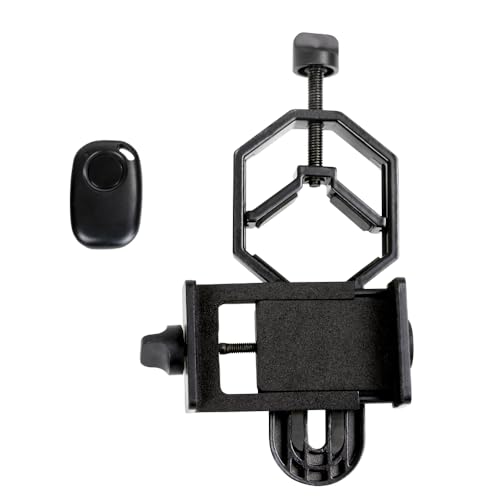
- Universal fit for many phones and eyepieces
- Bluetooth remote reduces vibration for cleaner shots
- Durable, compact design is easy to pack and carry
Best For: Beginners and casual observers who want simple smartphone capture through telescopes and binoculars.
Best for Variable Projection Control
Astromania Variable Projection Adapter Kit
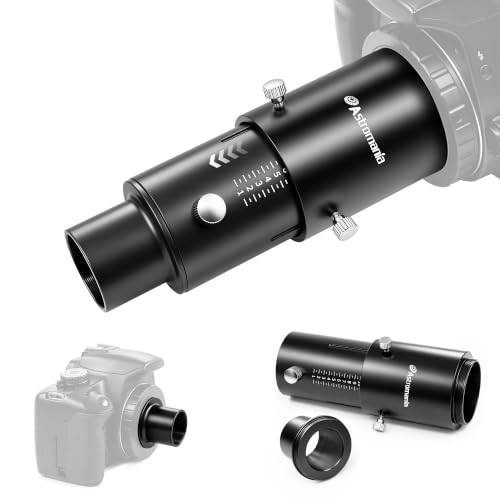
- 34mm scale helps fine-tune magnification and focus
- Sturdy anodized aluminum construction
- Fits 1.25-inch refractor and reflector telescopes
Best For: Beginners and hobbyists who want an adjustable adapter for Moon and planet imaging.
Best for Power & USB Integration
SVBONY SV241 Telescope Power Adapter Hub

- Combines power distribution and USB hub functionality
- Type-C and micro DC support for flexible setups
- Helps reduce cable clutter during outdoor imaging
Best For: Astrophotographers who want a compact power-and-USB hub for cleaner telescope rigs.
Best C-Mount Bridge
Alstar C-Mount to 1.25" Adapter

- C/CS-mount camera to 1.25-inch eyepiece fit
- Threaded interior helps reduce reflections
- Black anodized aluminum with filter compatibility
Best For: Observers using C-mount video cameras for simple telescope imaging.
Best Power Hub for Rig Control
SVBONY SV241 Pro Telescope Power Hub
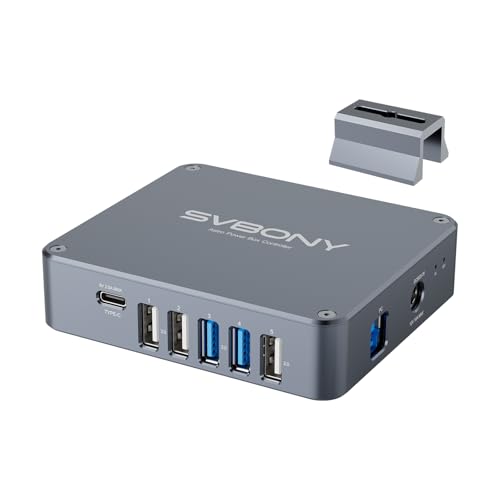
- 5 DC outputs, 4 USB ports, and 2 PWM channels
- NINA-compatible for direct control and monitoring
- Built-in electrical protection and dew-heater management
Best For: Astrophotographers who want an all-in-one control hub for a telescope rig.
Best for Prime-Focus & Projection
Astromania 1.25" Metal Photo Adapter
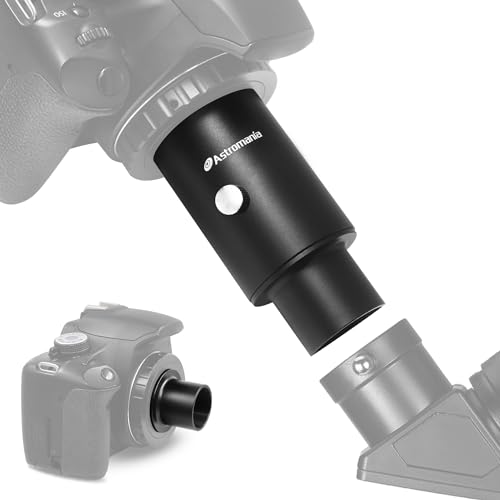
- Supports prime-focus and eyepiece-projection imaging
- Durable all-metal 1.25-inch construction
- Straightforward fixed-fit setup for telescope cameras
Best For: Telescope users who want a simple 1.25-inch adapter for basic camera astrophotography.
Best for Pentax-K Cameras – Astromania 1.25" T-Adapter Kit
If you shoot through a Pentax-K DSLR or SLR and need a simple way to connect to a 1.25-inch telescope, this Astromania kit is a practical pick among astrophotography adapter kits for telescopes. It combines the T-ring and 1.25-inch T-adapter in one metal set, making it a straightforward option for prime-focus moon, planet, and deep-sky imaging.
Best For: Pentax-K camera owners who want a solid, manual-focus adapter kit for 1.25-inch telescopes.
Pros:
- Includes both the Pentax-K T-ring and 1.25-inch T-adapter in one kit
- All-metal build feels sturdy for regular astrophotography use
- Fits standard 1.25-inch telescope focusers and accessories
- Hex wrench and grooved design make setup and removal easier
Cons:
- Only works with Pentax-K mount cameras, not other brands
- No electronic contacts, so focus and aperture must be adjusted manually
For Pentax users, this is a focused, no-frills solution that gets you connected quickly without extra parts. It stands out in astrophotography adapter kits for telescopes when compatibility with a 42mm Pentax-K mount is the main requirement.
Best for Precise Spacing – SVBONY SV119 Extension Tube Kit
If you need fine-tuned back focus control, the SVBONY SV119 is a practical pick among astrophotography adapter kits for telescopes. Its 5mm, 10mm, 15mm, and 30mm extension rings make it easier to dial in exact spacing for reducers, field flatteners, cameras, and eyepieces without replacing your whole setup.
Best For: Imaging setups that need adjustable M48 spacing for correct focus and image scale.
Pros:
- Multiple ring lengths let you combine spacers for exact spacing
- All-metal M48x0.75 construction feels sturdy and durable
- Helps solve back-focus and spacing issues with reducers/flatteners
Cons:
- Only useful if your gear uses M48x0.75 threads
- Not a complete adapter kit for every telescope/camera combination
For astrophotographers chasing precise optical spacing, this kit is a simple way to make incremental adjustments instead of guessing. It is especially useful when comparing astrophotography adapter kits for telescopes that prioritize flexibility over bundled complexity.
Best for Easy Smartphone Capture – Celestron Smartphone Adapter for Telescope
If you want a simple way to add phone imaging to your kit, this Celestron adapter is a practical pick for astrophotography adapter kits for telescopes. It clamps to common eyepieces, fits many phones with cases on, and keeps the setup straightforward for quick shots of the Moon, planets, and daytime wildlife.
Best For: Beginners and casual observers who want an easy, portable phone adapter for telescopes and other optics.
Pros:
- Fits a wide range of smartphones, including many recent iPhone, Galaxy, and Pixel models
- Works with eyepieces from 29mm to 45mm, including most 1.25" telescope eyepieces
- Metal frame and compact design make it sturdy enough for field use and easy to pack
- Simple alignment knobs help center the camera over the eyepiece
Cons:
- Manual alignment takes a little patience to get the phone camera perfectly centered
- It is an adapter only, so image quality still depends on your telescope and phone camera
For buyers comparing astrophotography adapter kits for telescopes, this one stands out for convenience rather than advanced features. It is a solid travel-friendly option when you want a reliable bridge between your smartphone and existing optics without extra complexity.
Best for Canon DSLR Prime Focus – SVBONY SV112 Camera Adapter Kit
If you shoot with a Canon DSLR and want one adapter that covers both prime-focus and eyepiece-projection setups, this SVBONY kit is a practical option to consider among astrophotography adapter kits for telescopes. It is designed for standard 1.25-inch telescope focusers, gives you a variable projection length for framing control, and is aimed at straightforward deep-sky imaging.
Best For: Canon EOS Rebel and other Canon DSLR users who want a flexible 1.25-inch telescope adapter for prime focus or projection work.
Pros:
- Supports both direct prime-focus imaging and variable eyepiece projection
- Fits standard 1.25-inch eyepiece ports and accepts eyepieces up to 42 mm
- Laser-engraved scale helps repeat settings for consistent framing
- Large grip ring makes it easier to handle in damp, dewy conditions
Cons:
- Not compatible with Canon EOS-M mirrorless cameras
- Best suited to Canon DSLR bodies, so it is less universal than some adapters
- Projection setup adds complexity compared with simple prime-focus adapters
Overall, the SVBONY SV112 is a solid choice if you want flexibility without buying separate adapters for different imaging styles. For buyers comparing astrophotography adapter kits for telescopes, its mix of prime-focus support and adjustable projection makes it especially useful for experimenting with framing and magnification.
Best for Easy Smartphone Digiscoping – Celestron Smartphone Adapter & Bluetooth Remote
If you want a simple way to start capturing moon shots, wildlife clips, or eyepiece views, this Celestron kit is a practical pick among astrophotography adapter kits for telescopes. It pairs a universal phone clamp with a Bluetooth shutter remote, so you can align your camera quickly and reduce shake when you press the shutter.
Best For: Beginners and casual observers who want a durable, travel-friendly smartphone adapter for telescopes, binoculars, and spotting scopes.
Pros:
- Universal fit works with many smartphones, including most cases, and eyepieces from 29mm to 45mm
- Bluetooth remote helps minimize vibration for sharper photos and steadier video
- Metal frame and compact build are well suited for field use and travel
- Compatible with telescopes, binoculars, monoculars, and microscopes for flexible use
Cons:
- Requires careful phone alignment to center the camera over the eyepiece
- Best suited to smartphone imaging, not dedicated camera astrophotography
- Fit can vary slightly depending on eyepiece shape and phone case thickness
For buyers comparing astrophotography adapter kits for telescopes, this Celestron model stands out for its easy setup, sturdy construction, and included remote. It’s a smart choice if you want dependable phone-based digiscoping without adding much bulk to your kit.
Best for Variable Projection Control – Astromania Variable Projection Adapter Kit
If you want more control over magnification and focus without swapping parts constantly, this Astromania adapter is a practical pick among astrophotography adapter kits for telescopes. It supports both prime focus and eyepiece projection, making it a flexible option for lunar and planetary imaging with 1.25-inch telescope setups.
Best For: Beginners and hobbyists who want a simple, adjustable adapter for higher-magnification Moon and planet shots.
Pros:
- Variable extension tube with 34mm scale for finer projection adjustment
- Anodized aluminum body feels sturdy and built for repeated use
- Full extinction-thread interior helps reduce stray reflections during shooting
- Works with refractor and reflector telescopes that use 1.25-inch eyepieces
Cons:
- Designed for 1.25-inch setups, so it is not a universal fit
- Eyepiece projection can take some trial and error to dial in
- More useful for lunar and planetary work than wide-field deep-sky imaging
For buyers comparing astrophotography adapter kits for telescopes, this one stands out for adjustability and beginner-friendly use rather than advanced features. It is a solid choice if you want a straightforward way to experiment with projection imaging and get sharper close-up views of the Moon and planets.
Best for Power & USB Integration – SVBONY SV241 Telescope Power Adapter Hub
If you want to streamline a field rig, the SVBONY SV241 is a practical pick among astrophotography adapter kits for telescopes because it combines power distribution with an integrated USB hub. That makes it easier to run cameras, mounts, and accessories from fewer cables while keeping everything organized at the scope.
Best For: Astrophotographers who want a compact power-and-USB hub for cleaner, more portable telescope setups.
Pros:
- Integrated USB hub helps reduce cable clutter at the mount.
- Micro DC and Type-C connectivity adds flexibility with common power sources.
- Useful for outdoor imaging setups that need multiple device connections.
- Compact all-in-one design can simplify rig packing and setup.
Cons:
- Not a full beginner kit by itself if you still need extra cables or adapters.
- May be overkill for very simple single-device telescope setups.
For imagers building a tidy, transportable rig, this unit stands out as a utility-focused choice in astrophotography adapter kits for telescopes. It is most appealing when you value fewer power accessories and a more organized setup over a bare-bones adapter.
Best C-Mount Bridge – Alstar C-Mount to 1.25" Adapter
If you’re comparing astrophotography adapter kits for telescopes, this Alstar piece is a straightforward way to fit a C- or CS-mount camera into a standard 1.25-inch eyepiece holder. It’s a practical, no-frills adapter for lunar viewing, basic planetary imaging, or even daytime digiscoping with compatible video cameras.
Best For: Users who need a simple C-mount to 1.25-inch telescope adapter for CCTV-style video cameras and entry-level astrophotography setups.
Pros:
- Fits C/CS-mount cameras into 1.25-inch telescope eyepiece holders
- Fully threaded inside to help reduce stray reflections
- Black anodized aluminum build feels sturdy and telescope-friendly
- Accepts standard 1.25-inch filters
Cons:
- Only useful if your camera uses a C-mount thread
- No added optics or fine-focus features
- Not a complete imaging kit on its own
For budget-minded imagers, this adapter covers one of the most common connection problems in astrophotography adapter kits for telescopes: mounting a camera securely at the eyepiece. It’s a solid fit-first accessory rather than a multi-part imaging solution.
Best Power Hub for Rig Control – SVBONY SV241 Pro Telescope Power Hub
If you want a cleaner, more reliable field setup, this power management box is a strong fit for astrophotography adapter kits for telescopes. It combines DC power distribution, USB control, and heating-band management in one compact unit, which can reduce cable clutter and simplify how you run your mount, camera, and accessories.
Best For: Astrophotographers who want an all-in-one power hub for a telescope rig, especially if they use NINA and need organized control over cameras, heaters, and accessories.
Pros:
- Combines 5 DC outputs, 4 USB ports, and 2 PWM channels in one compact box
- NINA-compatible for direct power control and status monitoring
- Built-in protection against overvoltage, undervoltage, and reverse polarity
- Includes accessories for field use, making setup easier out of the box
Cons:
- Does not support hot-swapping, so devices must be connected only when powered off
- IN DI protocol is not supported currently
- PWM1 auto-control is designed to work as intended and should not be manually adjusted
For users who need a neat, protective power center rather than a simple adapter, the SV241 Pro stands out in astrophotography adapter kits for telescopes because it centralizes power, USB, and dew control in a single portable hub.
Best for Prime-Focus & Projection – Astromania 1.25" Metal Photo Adapter
If you want a simple way to connect a camera to your telescope, this Astromania adapter is a practical pick among astrophotography adapter kits for telescopes. The fixed 1.25-inch metal design is aimed at steady camera mounting, and the extended cylinder gives you flexibility for both prime-focus and eyepiece-projection setups.
Best For: Telescope owners who want a straightforward, metal camera adapter for basic lunar, planetary, or deep-sky imaging with a 1.25-inch focuser.
Pros:
- Works with both prime-focus and eyepiece-projection astrophotography setups
- All-metal construction feels sturdy for repeated use
- Simple fixed-fit design is easy to understand and install
- Good option for 1.25-inch telescopes and accessories
Cons:
- Fixed design may be less flexible than more adjustable adapter kits
- Only suited to 1.25-inch telescope systems
- May not include the extra features some multi-piece kits offer
This is a focused, no-frills adapter rather than a full-featured kit, but that can be exactly what you want if you value simplicity and a solid metal build. For buyers comparing astrophotography adapter kits for telescopes, it stands out as a direct solution for getting a camera attached without unnecessary complexity.
How We Picked These Astrophotography Adapter Kits for Telescopes
We focused on compatibility, build quality, adjustment range, and how well each option supports real-world imaging needs. The best kits reduce flex, make setup easier, and help you achieve the correct back focus or phone alignment without turning every session into a trial-and-error project.
We also looked for accessories that solve common problems such as mismatched threads, spacing errors, unstable projection setups, and cable clutter around the mount.
Quick Comparison: Which Type Fits Your Setup?
If you use a DSLR or mirrorless camera, a T-ring or prime-focus adapter is usually the most direct path to the telescope. If you image with a smartphone, a clamp-style phone adapter is the simplest choice. If you are correcting optical spacing, extension tubes can be essential. And if your rig includes powered accessories, a telescope power hub may improve overall reliability.
Key Buying Factors for Astrophotography Adapter Kits for Telescopes
Compatibility and Thread Standards
Check your telescope focuser size, camera mount, and thread type before buying. Common standards include 1.25-inch eyepiece fittings, T-thread/T2 connections, and M48 spacing components. A kit is only useful if it matches the hardware you already own.
Focus Method and Imaging Style
Prime focus setups attach the camera directly to the telescope and are ideal for serious lunar, planetary, and many deep-sky targets. Eyepiece projection can help with high-magnification work, while smartphone adapters are best for casual imaging and quick sharing.
Spacing and Stability
In astrophotography, millimeters matter. Extension tubes and rigid adapters can help achieve proper sensor distance and reduce tilt or sag. Look for metal construction, secure locking points, and repeatable positioning if you plan to swap accessories often.
Power and Cable Management
For more advanced rigs, a powered hub can simplify your setup by reducing loose cables and improving accessory organization. This is especially useful if you run dew heaters, cameras, or other control devices at the same time.
Who Should Buy Which Astrophotography Adapter Kits for Telescopes?
Beginners usually get the best results from a simple smartphone adapter or a basic camera T-adapter kit. DSLR users should prioritize direct camera compatibility and a sturdy prime-focus connection. More advanced users, especially those fine-tuning back focus, should consider extension tube kits alongside their main adapter. If you want a cleaner, more efficient imaging station, a power management box can be a smart upgrade as your gear list grows.
In short, the best choice depends on your camera, your telescope, and how much control you want over spacing and setup speed. Start with the connection you need most, then add accessories that solve a specific problem rather than buying extra parts you may never use.