
Astrophotography demands a monitor that stays readable in the dark, handles fine focus, and helps you judge framing without guesswork.
Below, we’ve rounded up 10 field monitors for astrophotography that balance brightness, portability, and useful tools for night-sky shooting.
Best 10 Field Monitors for Astrophotography Picks for 2026
Best for Bright Outdoor Imaging
FEELWORLD LUT7 7" 2200nits Field Monitor

- 2200-nit screen remains easy to see outdoors.
- Includes waveform, histogram, focus assist, and LUT preview.
- Ships as a ready-to-use kit with battery, bag, cable, and tilt arm.
Best For: Astrophotographers and outdoor creators who need a bright, feature-rich monitor for easier focus and exposure checks.
Best Value Field Monitor
NEEWER F100 7" 450nit HDMI Monitor
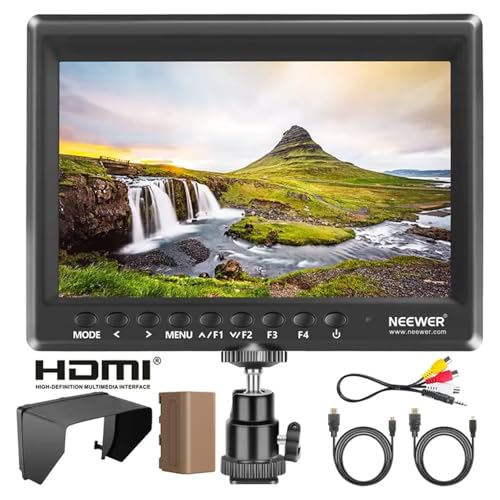
- Large 7-inch IPS display for clearer framing
- Peaking, histogram, and safe-frame tools included
- Battery, sunshade, and mounts come in the box
Best For: Astrophotographers who want an affordable external monitor for focusing and framing.
Best for Bright-Detailed Monitoring
FEELWORLD T10 10.1" FHD Touch Monitor

- 10.1-inch 1920 x 1200 touchscreen
- Waveform, histogram, false color, and 3D LUT support
- NP-F or DC power for field use
Best For: Astrophotographers who want a large, touch-friendly monitor with strong exposure tools.
Best Budget Monitoring Pick
FEELWORLD FW759 7" Field Monitor

- 7-inch IPS screen improves framing and focus checks
- Focus peaking, histogram, and false color add practical guidance
- Lightweight, compact design suits tripod and travel rigs
Best For: Beginners and budget buyers who want a simple external monitor for easier focus and exposure checks.
Best for Camera Control
VILTROX DC-550 PRO II 5.5" Monitor

- 1400-nit display for brighter outdoor visibility
- Direct camera control via USB-C or Wi‑Fi
- HDMI 2.0 4K@60 with waveform and LUT support
Best For: Astrophotographers and hybrid shooters who want a bright monitor with direct camera control and a full accessory kit.
Best for Bright Outdoor Focusing
FEELWORLD P6XL 6" 1200nit Monitor

- 1200-nit display for outdoor visibility
- Built-in battery for simpler mobile use
- Waveform and 3D LUT support for exposure checks
Best For: Outdoor shooters who need a lightweight monitor for astrophotography focus and exposure control.
Best Brightness for Outdoor Use
NEEWER F700 7" 2000nit Field Monitor

- 2000-nit screen stays readable outdoors
- Waveform, false color, HDR, and peak focus tools
- Includes 2 NP-F750 batteries for field use
Best For: Astrophotographers and outdoor shooters who need a very bright, tool-rich field monitor.
Best Bright Outdoor Pick
FEELWORLD F5 Prox 5.5" 1600nit Monitor

- 1600-nit brightness for strong outdoor visibility
- Waveform, histogram, false color, and focus peaking tools
- Includes battery, sunshade, cable, and carry bag
Best For: Outdoor shooters who want a compact, bright monitor for accurate focus and exposure checks.
Best Bright-Screen Value
VILTROX DC-550 5.5" HDMI Field Monitor

- 1200-nit display for easier outdoor viewing
- Waveform, focus assist, histogram, and LUT support
- HDMI in/out with NP-F, DC, and USB-C power options
Best For: Astrophotographers who want a compact, bright monitoring screen with useful exposure and focus tools.
Best for Budget-Friendly Monitoring
FEELWORLD S55 V3 6-inch 4K HDMI Monitor

- Waveform, histogram, false color, focus assist, and 3D LUT support
- 4K HDMI input/output with flexible power options
- Includes battery, bag, sunshade, and tilt arm
Best For: Beginners and budget-minded shooters who want a simple portable monitor for camera preview and focus checking.
Best for Bright Outdoor Imaging – FEELWORLD LUT7 7" 2200nits Field Monitor
If you need one of the most visible field monitors for astrophotography setups that also double for general outdoor shooting, the FEELWORLD LUT7 is built around brightness, touch control, and practical exposure tools. Its 2200-nit panel helps the screen stay readable in daylight, while waveform, histogram, focus assist, and LUT preview make it easier to judge framing and exposure when you’re working away from a studio.
Best For: Astrophotographers and outdoor creators who want a bright, easy-to-read monitor with useful focus and exposure aids.
Pros:
- 2200-nit brightness stays visible in strong ambient light.
- Waveform, histogram, focus assist, and LUT support improve monitoring accuracy.
- 7-inch Full HD touchscreen gives a larger, easier-to-use view than a camera rear screen.
- Includes battery, bag, cable, and tilt arm for a ready-to-shoot kit.
Cons:
- Bulkier than compact on-camera displays.
- Primarily a monitoring tool, so it does not add image quality by itself.
- Battery life will depend on how hard you run the bright panel.
For field monitors for astrophotography, the LUT7 stands out most when visibility matters more than size. It gives you a bright, practical screen with the kind of monitoring tools that help you confirm focus and exposure quickly before the night sky changes.
Best Value Field Monitor – NEEWER F100 7" 450nit HDMI Monitor
If you want a practical screen for field monitors for astrophotography, the NEEWER F100 gives you a large 7-inch display, peaking focus assist, histogram, and a sunshade without pushing into premium pricing. It is a useful pick for checking focus and framing on a telescope rig or camera setup when you need more visibility than a rear LCD.
Best For: Astrophotographers who want an affordable external monitor for focusing, framing, and outdoor viewing.
Pros:
- 7-inch IPS screen with 1280 x 800 resolution for easier framing
- Peaking, histogram, safe frames, and other helpful monitoring tools
- Includes battery, sunshade, and mounting accessories in the box
Cons:
- 450 nits is decent, but not ideal for very bright daylight use
- Bulkier than a small on-camera monitor for ultra-compact rigs
Overall, the F100 is a solid entry-level choice for field monitors for astrophotography when you want a bigger display and useful focus tools at a sensible price. It is not the brightest option, but the included accessories make it easy to put to work right away.
Best for Bright-Detailed Monitoring – FEELWORLD T10 10.1" FHD Touch Monitor
The FEELWORLD T10 is a practical pick for shooters who want a larger, brighter screen in a compact field package. For field monitors for astrophotography, its 10.1-inch display, 500-nit brightness, and waveform/false-color tools make it easier to frame, focus, and check exposure in the dark without constantly diving into your camera menus.
Best For: Astrophotographers and DSLR/mirrorless users who want a large touchscreen monitor with useful exposure-assist tools and flexible power options.
Pros:
- 10.1-inch 1920 x 1200 touchscreen gives plenty of room for framing and menu control
- Waveform, histogram, false color, focus assist, and 3D LUT support help with precise monitoring
- Aluminum housing plus NP-F or DC power support makes it workable for field setups
Cons:
- 500 nits is usable, but not class-leading for very bright outdoor daytime use
- Larger screen size adds bulk compared with smaller on-camera monitors
- Best features rely on HDMI-connected camera workflows rather than standalone use
As a budget-conscious large-screen option, the T10 gives you enough monitoring tools to simplify critical focus and exposure checks, which matters a lot for field monitors for astrophotography where small details can make or break a shot.
Best Budget Monitoring Pick – FEELWORLD FW759 7" Field Monitor
If you want a simple external display for framing and focus checks, the FEELWORLD FW759 is a practical entry-level choice among field monitors for astrophotography and general DSLR video work. Its 7-inch screen gives you more room to inspect your composition than a camera LCD, while the focus peaking, histogram, and false color tools help you spot issues before you hit record.
Best For: Beginners and budget-minded shooters who want a larger, lightweight monitor for tripod setups, travel rigs, and basic focus/exposure checks.
Pros:
- 7-inch 1280×800 IPS panel is easier to view than a small camera screen
- Focus peaking, histogram, false color, and overexposure warning aid precise setup
- Lightweight 300g design is easy to mount on compact rigs
- Includes sunshade and useful accessories for a ready-to-use package
Cons:
- 400 nits is decent indoors, but not especially bright for harsh daylight
- NP-F battery is not included, adding to the total setup cost
- Best suited to basic monitoring rather than advanced pro workflows
For field monitors for astrophotography, this model is most useful when you mainly need a bigger, clearer view for focusing and checking framing on a dark-site tripod setup. It’s not a high-brightness specialist, but it offers solid essentials at a friendly price.
Best for Camera Control – VILTROX DC-550 PRO II 5.5" Monitor
If you want a compact, daylight-readable screen with more than just basic framing tools, the VILTROX DC-550 PRO II is a strong pick among field monitors for astrophotography. Its 1400-nit panel, HDMI 2.0 4K@60 support, and touch controls make it practical for setup, focusing, and on-location monitoring when you need a bright, responsive display.
Best For: Astrophotographers and hybrid shooters who want a bright monitor with direct camera control and a full accessory kit.
Pros:
- 1400-nit screen is easier to see outdoors and in bright field conditions
- Camera control over USB-C or Wi‑Fi helps reduce menu diving
- HDMI 2.0 4K@60 passthrough offers smooth, low-lag monitoring
- Customizable waveform, vectorscope, RGB parade, and onion skin tools
Cons:
- 5.5-inch size is compact, so fine detail review is more limited
- Feature-rich interface may be more than casual users need
- Heavier than ultra-basic monitors once battery and mount are attached
For field monitors for astrophotography, this model stands out more for usability than pure simplicity: the bright display, touch workflow, and camera-control features make it easier to dial in focus and composition before the night gets dark.
Best for Bright Outdoor Focusing – FEELWORLD P6XL 6" 1200nit Monitor
If you need field monitors for astrophotography that stay visible in dim campsites, late-night sessions, and pre-dawn setups, the FEELWORLD P6XL is built around portability and visibility. Its 1200-nit high-brightness screen, built-in battery, and 4K HDMI support make it a practical on-camera display for checking focus, framing, and exposure when you are working away from a studio rig.
Best For: Outdoor shooters who want a lightweight, bright monitor for easier focus confirmation and exposure checks during astrophotography and other low-light work.
Pros:
- 1200-nit brightness helps the screen remain usable outdoors.
- Built-in battery reduces the need for extra power accessories.
- Touchscreen, waveform, and 3D LUT support improve monitoring and exposure control.
- Compact 6-inch size keeps it easy to pack for travel setups.
Cons:
- 6-inch screen may feel small if you prefer a larger preview.
- Best results depend on a solid HDMI camera setup.
- Focused more on monitoring features than advanced rigging extras.
For field monitors for astrophotography, the P6XL stands out most for its outdoor-friendly brightness and simple portable design. It is a sensible choice if you want a monitor that makes it easier to see critical details without adding much bulk to your kit.
Best Brightness for Outdoor Use – NEEWER F700 7" 2000nit Field Monitor
If you need field monitors for astrophotography that stay readable in bright ambient light, the NEEWER F700 stands out with a 2000-nit 7-inch IPS panel, touch controls, and a wide set of exposure tools. It is also practical for camera setups that need clean HDMI passthrough, headphone monitoring, and flexible power for longer sessions in the field.
Best For: Astrophotographers and outdoor shooters who want a very bright monitor with pro monitoring tools and dual-battery runtime.
Pros:
- 2000-nit display is easy to see outdoors and under mixed lighting
- Useful monitoring tools like waveform, zebras, false color, HDR, and peak focus
- Includes 2 NP-F750 batteries for longer field sessions
- 4K HDMI loop in/out plus custom 3D LUT upload support
Cons:
- Bulkier than smaller on-camera monitors
- Best results depend on external battery management for long nights
For field monitors for astrophotography, the F700’s main advantage is visibility: a bright panel and adjustable backlight make it easier to frame and review shots away from a desktop setup. If you want a feature-rich monitor that can handle outdoor work, it offers a strong mix of brightness, tools, and power flexibility.
Best Bright Outdoor Pick – FEELWORLD F5 Prox 5.5" 1600nit Monitor
If you need one of the more practical field monitors for astrophotography-style work, the FEELWORLD F5 Prox is a strong choice for bright, outdoor setups where you want a larger screen for framing, focus, and exposure checks. Its 1600-nit panel, touch controls, and monitoring tools make it easy to evaluate your image quickly when you’re working away from a studio display.
Best For: Creators who shoot outdoors and want a bright, portable monitor for focus and exposure confirmation on DSLR, mirrorless, or cinema rigs.
Pros:
- 1600-nit screen stays visible in daylight and harsh outdoor conditions
- Includes waveform, histogram, false color, focus peaking, and LUT preview
- Compact 5.5-inch size works well on rigs, cages, gimbals, and tripods
- Complete kit includes battery, sunshade, cable, and carry bag
Cons:
- 5.5-inch display may feel small if you prefer a larger on-set monitor
- Designed more for monitoring than for advanced multi-camera production workflows
For field monitors for astrophotography, the main appeal here is visibility and quick image evaluation in the dark or outdoors, though it is still primarily a video-monitoring tool rather than a specialist astronomy display. If you want a bright, travel-friendly monitor with solid exposure aids and a ready-to-use accessory bundle, this is an easy one to shortlist.
Best Bright-Screen Value – VILTROX DC-550 5.5" HDMI Field Monitor
If you want a compact monitor that stays readable outdoors, the VILTROX DC-550 is a strong fit for field monitors for astrophotography, especially when you need quick focus checks and exposure feedback at the telescope or camera rig.
Best For: Astrophotographers who want a bright, compact monitoring screen with useful exposure and focus tools without moving up to a larger pro display.
Pros:
- 1200-nit brightness helps the screen stay visible in dark-sky setups and mixed lighting.
- Includes waveform, false color, focus assist, histogram, and custom 3D LUT support.
- HDMI in/out plus headphone monitoring make it flexible for camera-to-monitor workflows.
- Triple power options, including NP-F, DC in, and USB-C power bank support, improve portability.
Cons:
- 5.5-inch screen is compact, so it may feel small for extended framing sessions.
- Resolution tops out at 1080p, even though it accepts 4K input.
- Included battery is useful, but serious field use may still require extras.
For field monitors for astrophotography, this model stands out more for brightness and practical monitoring tools than for size or ultra-high resolution. It’s a sensible pick if you want a portable screen that can help with focus and exposure checks during capture sessions.
Best for Budget-Friendly Monitoring – FEELWORLD S55 V3 6-inch 4K HDMI Monitor
If you want a practical external screen for field monitors for astrophotography-adjacent camera work, the FEELWORLD S55 V3 gives you a larger 6-inch view, HDMI input/output, and tools like focus assist and waveform monitoring. It’s a sensible pick for checking framing, focus, and exposure on a DSLR or mirrorless setup without spending more than you need.
Best For: Beginners and budget-minded shooters who want a simple, portable monitor for cameras, especially for video, vlogging, and other on-set preview work.
Pros:
- Waveform, vectorscope, histogram, false color, focus assist, and 3D LUT support
- 4K HDMI input/output and multiple power options for flexible setups
- Includes useful kit extras like a battery, bag, sunshade, and tilt arm
Cons:
- Brightness is modest for harsh daylight use
- Better suited to video monitoring than deep astrophotography-specific workflows
- Single 6-inch panel may feel small for some detailed framing tasks
This monitor is a strong value choice if you need dependable camera preview tools rather than a specialized astronomy display. For field monitors for astrophotography, it works best when your priority is portable focus and exposure checking in a compact, affordable package.
How We Picked the Best Field Monitors for Astrophotography
We focused on the features that matter most in the field: high brightness for outdoor visibility, reliable HDMI compatibility, sharp enough resolution for precise focus, and practical tools like focus peaking, waveform, false color, and 3D LUT support. We also considered size, weight, power options, and whether a monitor is easy to mount and use during long night sessions.
Quick Comparison
For astrophotography, the best choice often comes down to screen brightness and portability. Larger 7- to 10-inch panels make framing easier, while smaller 5.5- to 6-inch options are easier to pack for travel and reduce weight on compact rigs. If you shoot in very dark conditions, prioritize a brighter panel and a hood or sunshade for better contrast and less stray light.
Key Buying Factors for Field Monitors for Astrophotography
Brightness and Contrast
Even at night, ambient light from the moon, campsite, or nearby gear can wash out a weak display. A brighter monitor is easier to read and can make fine adjustments faster. Contrast and panel quality matter too, especially when inspecting star shape and edge detail.
Focus and Exposure Tools
Focus peaking helps confirm sharp stars, while waveform and false color are useful when you also shoot landscapes or tracked night scenes. These tools won’t replace your camera’s exposure settings, but they can speed up setup and reduce missed shots.
Resolution and Screen Size
Higher resolution makes it easier to judge detail, but screen size influences usability in the field. Larger screens are better if you work from a tripod or shared rig; smaller screens are better if you hike to your location or want a lighter kit.
Power and Cabling
Look for a monitor that fits your battery system and cable setup. Long sessions are common in astrophotography, so battery flexibility and secure HDMI connections are more valuable than flashy extras.
Who Should Buy Which Field Monitors for Astrophotography?
If you want the easiest night viewing, choose a high-brightness monitor with a larger screen and a hood. If you travel light, a compact 5.5- to 6-inch model is usually the better fit. If your workflow includes mirrorless video, timelapses, or mixed landscape use, prioritize touchscreen controls and advanced monitoring aids. In short, the best Field Monitors for Astrophotography are the ones that stay visible, help you focus quickly, and match the way you actually shoot.