
Choosing the right adapter can make the difference between a frustrating night and a clean, stable imaging setup. The best telescope camera adapter kits help you match your camera, eyepiece, and telescope with the proper spacing and thread compatibility.
Below, we focus on practical options for beginners and experienced astrophotographers alike, with an eye toward fit, flexibility, and ease of use.
Best 10 Telescope Camera Adapter Kits Picks for 2026
Best for Canon EOS Users
Astromania Canon EOS T-Ring & T-Adapter

- Includes both the T-ring and 1.25-inch telescope adapter
- All-metal build for durability and secure mounting
- Compatible with Canon EF-mount EOS SLR/DSLR cameras
Best For: Canon EOS photographers who want a simple adapter set for telescope astrophotography.
Best for Spacing Control
Telescope T2 Extension Tube Kit

- Stackable 3mm to 30mm lengths for precise spacing
- M42x0.75 threads on both ends for compatibility
- All-metal anodized aluminum build
Best For: Astrophotographers who need exact spacing tweaks for cameras or eyepieces.
Best for Canon Prime Focus
SVBONY SV112 Telescope Adapter Kit

- Supports Canon EOS/Rebel DSLR cameras
- Prime focus and variable eyepiece projection
- Fits 1.25-inch telescope eyepiece ports
Best For: Canon DSLR astrophotographers who want one adapter kit for both prime focus and eyepiece projection.
Best for E-Mount Cameras
E-Mount Telescope Adapter Ring Set

- Fits standard 1.25-inch telescope and microscope ports
- Connects Sony E-mount cameras through a T2 ring
- Manual-only setup with extension tube support
Best For: E-mount camera users who need a simple 1.25-inch telescope adapter.
Best for Canon DSLR Astrophotography
Variable Extension Telescope Camera Adapter

- Includes a T2 ring for Canon SLR/DSLR bodies
- Supports prime-focus and eyepiece-projection shooting
- Adjustable tube helps fine-tune magnification and framing
Best For: Canon DSLR owners who want a flexible telescope adapter for lunar and deep-sky photography.
Best for Deep-Sky Imaging
SVBONY SC571CC Cooled Camera Kit
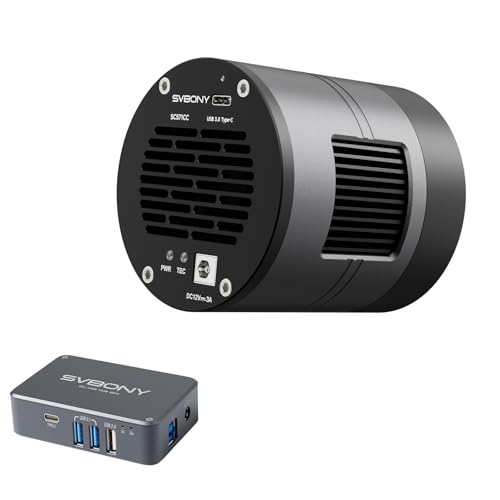
- 26MP APS-C sensor for high-detail deep-sky capture
- Dual-stage cooling reduces noise on long exposures
- Powered USB hub simplifies cable and device management
Best For: Astrophotographers who want an integrated cooled camera and power hub for deep-sky imaging.
Best for Microscope-to-Telescope Mounting
23.2mm to 1.25-inch Adapter Ring

- Connects 23.2mm and 1.25-inch/31.7mm formats
- Handy for microscope and camera mounting setups
- Simple, sturdy adapter for size conversion
Best For: Microscope and astronomy users who need a simple 23.2mm to 1.25-inch adapter for camera or eyepiece mounting.
Best for Moon & Planet Projection
Astromania Variable Projection Adapter Kit
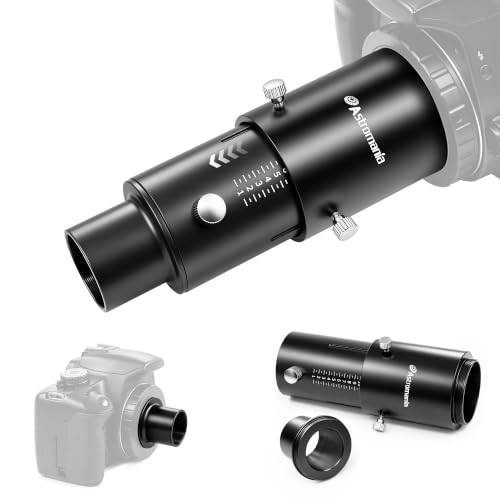
- Supports prime focus and eyepiece projection
- Adjustable 34mm scale for finer magnification control
- Durable anodized aluminum 1.25-inch design
Best For: Beginners and hobbyists photographing the Moon and planets through a 1.25-inch telescope setup.
Best for M42 Fit Adjustments

- Multiple spacer lengths for fine-tuning telescope setups
- M42x0.75 threaded ends for compatible accessories
- Aluminum alloy build with CNC machining for durability
Best For: Astronomical telescope users who need threaded M42 extension spacing.
Best for Flexible Prime Focus
SVBONY 1.25" Camera Adapter Kit

- Works for both prime focus and eyepiece projection
- Adjustable length for changing magnification and framing
- Fits standard 1.25-inch eyepiece ports
Best For: Astrophotographers who want a flexible adapter for both direct and projected imaging.
Best for Canon EOS Users – Astromania Canon EOS T-Ring & T-Adapter
If you’re comparing telescope camera adapter kits for Canon EOS bodies, this Astromania set is a straightforward, all-metal option that combines a T-ring and 1.25-inch T-adapter in one package. It’s built for EF-mount Canon SLR/DSLR cameras and standard 1.25-inch telescope focusers, making it a practical entry point for basic astrophotography.
Best For: Canon EOS owners who want a simple, compatible adapter set for attaching a DSLR to a 1.25-inch telescope.
Pros:
- Includes both the Canon EF T-ring and the 1.25-inch telescope adapter.
- All-metal construction feels durable and should hold up well over time.
- Works with standard 1.25-inch focusers and common telescope accessories.
- Simple threaded design keeps setup quick and secure.
Cons:
- Canon EF/EOS only, so it won’t fit other camera mounts.
- No electronic contacts, so aperture and focus must be managed manually.
For buyers who specifically need telescope camera adapter kits for Canon DSLR astrophotography, this Astromania bundle covers the essentials without adding unnecessary complexity. It’s best suited to users who value compatibility, metal construction, and a direct path from camera to telescope.
Best for Spacing Control – Telescope T2 Extension Tube Kit
If you need precise spacing to solve focus or back-focus issues, this T2 extension tube set is a practical add-on for telescope camera adapter kits. The mixed 3mm to 30mm lengths let you stack parts to dial in the exact distance your camera or eyepiece needs for astrophotography.
Best For: Astrophotographers and telescope users who need fine spacing adjustments for cameras or eyepieces.
Pros:
- Multiple tube lengths make it easy to build the exact spacing you need
- M42x0.75 threads on both ends for broad compatibility
- All-metal anodized aluminum construction for durability
- Useful for both camera and eyepiece spacing corrections
Cons:
- Only helpful if your setup needs T2/M42 spacing adjustment
- Not a complete adapter kit on its own
Overall, this is a flexible spacer set rather than a one-piece solution, which makes it a smart buy if you already know the spacing your rig requires. For telescope camera adapter kits, it stands out as a simple way to fine-tune focus without replacing your main hardware.
Best for Canon Prime Focus – SVBONY SV112 Telescope Adapter Kit
If you shoot through a Canon EOS DSLR and want a flexible entry into astrophotography, this is one of the more versatile telescope camera adapter kits to consider. It supports direct prime-focus imaging for a wider field of view, and it also adds variable eyepiece projection for dialing in more magnification when you want tighter framing.
Best For: Canon EOS and Rebel DSLR users who want one adapter kit that can handle both prime focus and variable eyepiece projection.
Pros:
- Works with Canon EOS and Rebel SLR/DSLR bodies for direct telescope connection
- Offers both prime-focus and 1.25-inch eyepiece projection shooting modes
- Variable length helps you adjust magnification and image size for framing
- Includes a 1.25-inch barrel with filter threading plus a grippy machined ring
Cons:
- Not compatible with Canon EOS-M mirrorless models
- Requires a telescope with a standard 1.25-inch eyepiece port
- More specialized than a simple camera-to-telescope adapter
For Canon DSLR owners who want flexibility without buying separate accessories, the SV112 is a practical pick among telescope camera adapter kits. Its dual-purpose design makes it useful for both wide deep-sky targets and higher-magnification framing, as long as your telescope uses a standard 1.25-inch eyepiece interface.
Best for E-Mount Cameras – E-Mount Telescope Adapter Ring Set
If you need a straightforward way to connect an E-mount camera to a standard 1.25-inch telescope or microscope, this adapter ring set is a practical option. It belongs in telescope camera adapter kits for users who want a simple mechanical fit without extra electronics.
Best For: E-mount shooters who want a manual adapter for 1.25-inch telescope and microscope imaging.
Pros:
- Fits standard 1.25-inch telescope and microscope eyepiece ports
- Works with Sony E-mount cameras via T2 ring connection
- Includes extension tube support for setup flexibility
- Simple, no-power design for basic astrophotography or digiscoping
Cons:
- No autofocus or electronic communication with the camera
- Manual aperture and focus adjustments are required
- Compatibility depends on using the correct E-mount camera setup
This is a solid pick if you want a basic, budget-friendly bridge between your camera and scope. Among telescope camera adapter kits, it stands out for its direct fit and simple setup rather than advanced imaging features.
Best for Canon DSLR Astrophotography – Variable Extension Telescope Camera Adapter
If you’re comparing telescope camera adapter kits for Canon DSLRs, this variable extension adapter is a practical pick for prime-focus and eyepiece-projection shooting. It gives you a straightforward way to connect a Canon SLR/DSLR body to a telescope, with adjustable spacing that helps you fine-tune magnification for lunar and deep-sky shots.
Best For: Canon DSLR owners who want a flexible telescope adapter for prime-focus imaging and eyepiece projection.
Pros:
- Fits Canon SLR and DSLR bodies with the included T2 ring
- Supports both prime-focus and eyepiece-projection photography
- Adjustable extension tube lets you tune image scale and framing
- Can hold eyepieces up to 38mm for more detailed close-up imaging
Cons:
- Not compatible with mirrorless cameras
- Works best only if you already use Canon DSLR gear
- More specialized than a simple universal phone-style adapter
For Canon users who want a dedicated adapter rather than a one-size-fits-all solution, this kit offers useful flexibility and solid astrophotography functionality. Among telescope camera adapter kits, it stands out for its adjustable eyepiece-projection setup and straightforward DSLR compatibility.
Best for Deep-Sky Imaging – SVBONY SC571CC Cooled Camera Kit
If you want telescope camera adapter kits that do more than just connect gear, this SVBONY bundle is built for serious deep-sky work. It pairs a cooled APS-C astrophotography camera with a compact powered USB hub, giving you a cleaner, more streamlined setup for long exposures, guiding, and accessory power management.
Best For: Astrophotographers who want an integrated cooled camera and power hub for reliable deep-sky imaging.
Pros:
- 26MP IMX571 APS-C sensor captures detailed stars and faint nebulae
- Dual-stage TEC cooling helps cut noise during long exposures
- SV241 hub adds multiple DC and USB ports for a neater rig
- Compatible with many telescope types, including APO, Newtonian, RC, and catadioptric scopes
Cons:
- More specialized and expensive than a basic adapter-only kit
- Requires careful power/input setup to avoid damage
- Overkill for casual lunar or planetary-only imaging
For buyers comparing telescope camera adapter kits, this one stands out because it bundles imaging and power distribution into a single outdoor-ready package. It is a strong fit if your priority is clean deep-sky data, reduced cable clutter, and a more dependable long-session workflow.
Best for Microscope-to-Telescope Mounting – 23.2mm to 1.25-inch Adapter Ring
If you are comparing telescope camera adapter kits for microscope-style imaging, this adapter ring is built for users who need to connect a 23.2mm eyepiece or C-mount setup to a 1.25-inch (31.7mm) interface. It is a practical accessory for bridging common optical sizes without overcomplicating the setup.
Best For: Microscope and astronomy users who need a simple 23.2mm to 1.25-inch adapter for camera or eyepiece mounting.
Pros:
- Fits common 23.2mm and 1.25-inch / 31.7mm mounting standards
- Useful for microscope accessory and camera adapter setups
- Sturdy build aimed at stable, repeatable mounting
- Compact ring design keeps the setup simple
Cons:
- Single adapter piece, not a full multi-piece kit
- Compatibility depends on matching thread and mount sizes
Overall, this is a straightforward option if your telescope camera adapter kits need a size-conversion piece rather than a more elaborate imaging bundle. It makes the most sense for buyers who already know their mount dimensions and want a direct, no-frills adapter.
Best for Moon & Planet Projection – Astromania Variable Projection Adapter Kit
If you want one of the more versatile telescope camera adapter kits for lunar and planetary work, this Astromania adapter is built to handle both prime focus and eyepiece projection shooting. The variable extension tube makes it easier to dial in magnification, while the 1.25-inch fit keeps it compatible with many common telescopes.
Best For: Beginners and hobbyists who want a simple, sturdy adapter for photographing the Moon and planets through a refractor or reflector telescope.
Pros:
- Works for both prime focus and eyepiece projection astrophotography
- Variable extension and 34mm scale help fine-tune magnification
- Anodized aluminum body feels durable and stable
- 1.25-inch connection fits many common telescope setups
Cons:
- Requires a compatible SLR camera and eyepiece setup
- Best suited to lunar and planetary imaging, not deep-sky convenience
- May take a little adjustment time to find the right projection length
This is a practical pick if you want more control than a basic adapter provides, especially for close-up sky shots. Among telescope camera adapter kits, it stands out for its adjustable projection design and beginner-friendly setup.
Best for M42 Fit Adjustments – M42 Extension Tube Kit
If you need a simple way to fine-tune spacing for telescope camera adapter kits, this M42 extension tube set gives you multiple lengths in one package. The aluminum-alloy tubes are CNC-machined for better fit and durability, and the range of sizes makes it easier to dial in the right optical distance for different setups.
Best For: Astronomical telescope users who need threaded M42 extension spacing for observation or adapter matching.
Pros:
- Includes multiple tube lengths: 3mm, 5mm, 7mm, 10mm, 12mm, 15mm, 20mm, and 30mm
- M42x0.75 threaded on both ends for compatible telescope and accessory setups
- Aluminum alloy construction with CNC machining for better precision and durability
- Easy to install and useful as a replacement or spacing solution
Cons:
- Only works with M42x0.75-compatible gear
- Not a full camera mounting solution by itself
- Better suited to spacing and extension than general-purpose photography
This is a practical accessory if your telescope camera adapter kits need extra threaded spacing rather than a more complex adapter chain. It’s especially useful for users who want several length options in one compact kit instead of buying individual spacers.
Best for Flexible Prime Focus – SVBONY 1.25" Camera Adapter Kit
If you want one of the more versatile telescope camera adapter kits for experimenting with both prime focus and eyepiece projection, this SVBONY kit is a practical pick. It fits standard 1.25-inch eyepiece ports and lets you change projection length for different framing and magnification needs.
Best For: Astronomers who want one adapter that can handle both direct prime-focus imaging and variable eyepiece-projection setups.
Pros:
- Supports both prime focus and eyepiece projection in one kit
- Variable extension helps fine-tune image size and framing
- Fits standard 1.25-inch telescope eyepiece ports
- Engraved scale and grip ring make setup easier and more repeatable
Cons:
- May need a barlow, extension tube, or other accessories for focus on some scopes
- Eyepieces must stay within the 42mm upper-body diameter limit
- Not a simple drop-in solution for every telescope type
For telescope camera adapter kits, this model stands out because it covers two common imaging methods without forcing you into a single fixed setup. That flexibility makes it especially useful for hobbyists who want to test different targets and magnifications without buying multiple adapters.
How We Picked These Telescope Camera Adapter Kits
We looked for Telescope Camera Adapter Kits that solve the most common real-world setup problems: secure mounting, compatible threading, useful extension lengths, and support for either prime focus or eyepiece-projection imaging. We also favored kits that cover popular camera and telescope formats, since a good adapter should reduce guesswork rather than add to it.
Build quality, ease of assembly, and the ability to fine-tune back focus all mattered. For buyers, that usually means less trial and error and a better chance of reaching focus without stacking unnecessary parts.
Quick Comparison: What These Kits Are Best for
Some Telescope Camera Adapter Kits are straightforward T-ring and T-adapter solutions for DSLR or mirrorless cameras, while others add variable projection tubes or interchangeable extension rings for more control. If you want the simplest path, look for a kit matched to your camera mount and telescope drawtube size. If you need flexibility, choose a variable-length kit that can help you dial in spacing for different eyepieces or imaging modes.
Key Buying Factors for Telescope Camera Adapter Kits
Camera Mount Compatibility
Start with your camera body mount, whether that is Canon EF, Sony E, or another system. A mismatch here makes the rest of the kit useless, so verify the mount first.
Telescope Side Fit and Threading
Most Telescope Camera Adapter Kits use standard threads such as M42x0.75 or a 1.25-inch barrel. Check whether your telescope accepts a 1.25-inch accessory, and confirm whether you need a direct thread connection or a slip-fit adapter.
Prime Focus Vs. Eyepiece Projection
Prime focus is usually the cleaner and simpler option for deep-sky imaging. Eyepiece projection can help with lunar and planetary shots, but it often requires more spacing and careful alignment. Choose a kit that supports the style you plan to use most often.
Extension Length and Focus Range
Extension tubes can help you reach focus, especially if your camera body sits too far from the focal plane. Variable or multi-piece extension kits are more adaptable, but a fixed-length adapter may be enough if your setup is already well matched.
Who Should Buy Which Telescope Camera Adapter Kits?
Beginners should usually start with a simple, camera-specific T-ring and telescope adapter kit to keep the setup manageable. Planetary shooters and users who want more distance control may prefer variable projection models. If you are building a more specialized imaging rig, look for Telescope Camera Adapter Kits with interchangeable rings, multiple extension lengths, and clear compatibility notes so you can expand later without replacing everything.