
Curious kids often want to know how things work, what lies beyond the backyard, and what might be hiding inside a rock. These Christmas gift ideas bring that curiosity into building, observing, reading, and playful experiments.
Use age, interests, and the kind of activity a child enjoys to find a gift that feels inviting long after the wrapping paper is gone.
16 Christmas Gift Ideas for Curious Kids to Consider in 2026
Motion and Circuit Builds
Snap Circuits Motion Electronics Kit

- Build more than 165 projects with over 50 parts.
- Explore motion, gears, pulleys, and circuits through hands-on builds.
- Color-coded pieces snap onto a grid; four AA batteries are required.
Best For: Ages 8 and up who want to explore how circuits power moving parts.
First Stargazing Outings
Celestron Travel Scope 70mm Telescope

- Designed for adults and kids to use together, with no-tool setup.
- Includes 20mm and 10mm eyepieces for wide and closer views.
- The scope and accessories pack into the included backpack.
Best For: Kids eager to look at the Moon or daytime scenery with an adult.
Guided Chemistry Activities
Thames & Kosmos Chemistry C500 Kit

- Introduces chemistry through 28 guided experiments.
- Explore acids and bases, fizzy reactions, and invisible ink.
- Includes a 48-page, full-color experiment manual.
Best For: Children ages 10–15 ready for guided experiments with adult supervision.
Dinosaur Dig Discovery
National Geographic Dinosaur Fossil Dig Kit
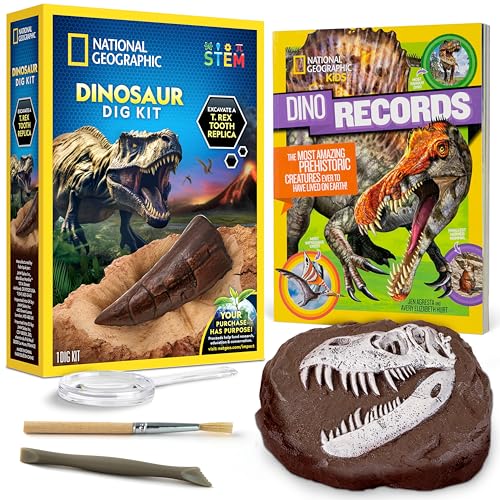
- Dig to uncover a replica T. rex tooth and a coprolite sample.
- Includes excavation tools and a full-color Dino Records book.
- The book shares facts about dinosaurs and fossil discoveries.
Best For: Kids ages 8 and up interested in dinosaurs, fossils, and discovery.
Build a Working Robot Arm

- Assemble a robotic arm with motors, boards, and wires.
- The tutorial guides a hands-on project in mechanical movement and circuits.
- No soldering is required; six AA batteries are needed but not included.
Best For: Kids ages 8 and up who like building and figuring out mechanisms.
Inventor Starter Builds
Hape Junior Inventor Experiment Kit
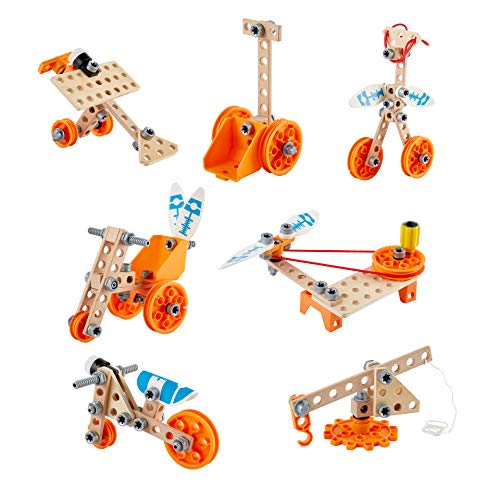
- The 57-piece set is recommended for ages 4 and up.
- Inspiration cards suggest builds such as a crane, cart, or robot on wheels.
- Children can use the pieces to make their own creations.
Best For: Younger children who enjoy making and adjusting simple creations.
A Visual Tour of Space
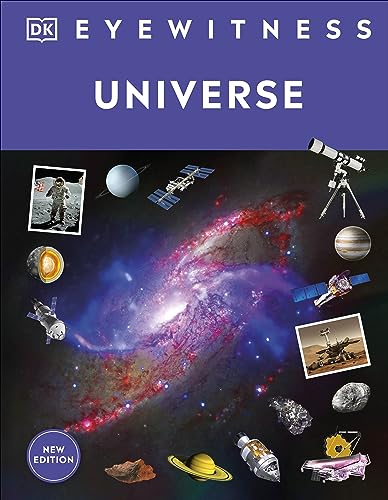
- Explores the Solar System, stars, galaxies, and space exploration.
- Uses photographs, illustrations, diagrams, and timelines.
- A 72-page reference book for readers ages 8–12.
Best For: Space-loving kids who enjoy vivid facts and images to explore.
Pocket-Sized Close-Ups
Carson MicroBrite Plus Microscope

- Offers 60x–120x magnification for prepared slides or everyday objects.
- Built-in LED illumination lights specimens for viewing.
- Compact handheld design suits portable exploration.
Best For: Kids who want to inspect leaves, fabric, and other specimens up close.
Geode Reveal Activity
National Geographic Break Open 10 Geodes

- Open ten natural geodes to reveal the crystals inside.
- Includes safety goggles, a magnifying glass, and a display stand.
- A full-color learning guide explains how geodes form.
Best For: Kids ages 8 and up who enjoy rocks, minerals, and discovery.
Snap-Together Circuit Projects
Snap Circuits Explorer SC-100 Kit

- Build more than 100 projects with snap-together components.
- Color-coded pieces and a project manual introduce basic circuitry.
- No extra tools are needed; batteries are required.
Best For: Kids ages 8 and up curious about switches, lights, and circuits.
Storytime Robot Building
Kids First: Robot Engineer Set

- Read a build-along story about two kids and an automated candy factory.
- Build ten simple, non-motorized robot and machine models.
- Reusable pieces feature moving parts, wheels, and gears.
Best For: Young children ages 3–7 who enjoy stories and beginner engineering.
Three Sea Creature Builds
LEGO Creator 3-in-1 Deep Sea Creatures
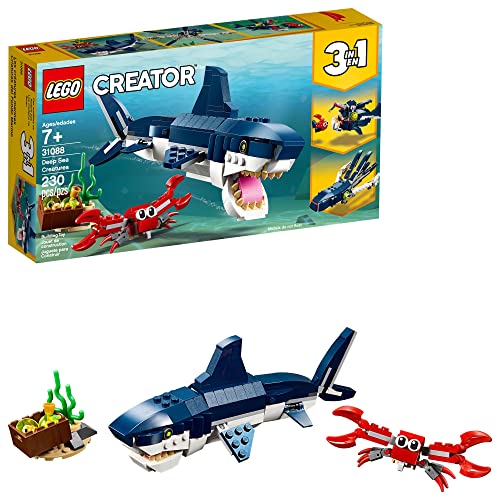
- Build a shark, a crab, or an angler fish with the set.
- The shark has an opening mouth and posable fins and body joints.
- Recommended for ages 7 and up; a whale build is available online.
Best For: Kids ages 7 and up fascinated by ocean life and rebuilding.
Outdoor Looking for Little Kids

- Focus-free binoculars have 2x magnification.
- A breakaway neck strap makes them easy to carry.
- Designed for outdoor exploring, including bird watching and park visits.
Best For: Young explorers ages 3 and up who like looking at nature.
Answers for Question-Askers

- Offers answers to more than 1,111 questions across many topics.
- Includes color photos, illustrations, trivia, and activities.
- A 224-page book described as a screen-free travel companion.
Best For: Kids ages 7–10 who enjoy browsing facts and finding answers independently.
Glow-In-The-Dark Marble Runs
National Geographic Glow-in-the-Dark Marble Run

- Build custom paths with bases, action pieces, and track pieces.
- Includes 15 glow-in-the-dark marbles and a storage bag.
- The learning guide covers motion, aerodynamics, and construction experiments.
Best For: Kids ages 8 and up who like testing paths and cause and effect.
Big Solar System Puzzle
Melissa & Doug Solar System Floor Puzzle

- The 48-piece puzzle shows the Sun, Moon, planets, and stars.
- Its assembled scene measures 2 by 3 feet and is designed for floor play.
- Wipe-clean pieces are sized for little hands; recommended for ages 3 and up.
Best For: Young space fans who enjoy visual challenges and family puzzle time.
Christmas Gift Ideas for Curious Kids: How to Choose
Christmas gift ideas for curious kids work well when they connect a child’s questions with something they can do. Start with the subjects they already bring up: space, animals, rocks, machines, or the natural world. Then consider how they like to explore. Some children prefer making and rebuilding; others enjoy reading, looking closely, or following a guided activity.
Match the activity to the child’s age and experience. A younger child may enjoy simple construction, a large floor puzzle, or binoculars for observing outdoors. Older children may be ready for more involved projects such as circuit builds, a microscope, a telescope, or guided chemistry experiments. Check the product’s stated age guidance and any listed requirements, such as batteries or adult supervision, before choosing.
Choose a Gift That Fits the Way They Explore
Hands-on kits give children a clear starting point and a chance to see how parts work together. Look for instructions or a learning guide when a child benefits from step-by-step direction. Open-ended building sets suit kids who like to invent their own designs and adjust them as they go. Observation gifts invite children to focus on details: a telescope can point attention toward the Moon and daytime scenery, while a pocket microscope brings small specimens into view. Books offer a quieter route into a topic and can be revisited at the child’s own pace.
Consider where the activity will happen, too. A puzzle or experiment kit is suited to indoor time, while binoculars or a portable telescope can encourage looking outdoors. Some gifts call for a shared start with a parent or other adult; that can be part of the appeal for a child who enjoys asking questions together.
Set a Budget That Includes What the Activity Needs
Prices vary across gifts, so decide on a comfortable spending range before comparing options. A book, puzzle, or compact observation tool may suit a modest budget, while a more involved science or building kit may cost more. Compare the experience each gift offers rather than judging by piece count alone: a guided activity, reusable construction pieces, or a reference book may provide different kinds of engagement.
Check what is included and what a child may need to use the gift. The product details may mention batteries, tools, or other requirements. For a kit intended to be used right away, make sure the necessary extras are already at home or can be added to the gift plan.
Make the Gift Feel Personal
Personalization can be as simple as choosing a gift that reflects a child’s current fascination. A dinosaur fan may be drawn to fossils; a young engineer may prefer building; a child who asks constant questions may enjoy a broad fact book. Think about the kinds of questions they ask and whether they like a quick activity, a longer project, or something they can explore in short sessions.
You can also pair the gift with a note that names the interest behind your choice: “For your next Moon questions” or “For the inventions you’ll build.” Keep any pairing practical and within the child’s age and the product’s stated use.
Last-Minute Christmas Buying Advice
When shopping close to Christmas, check current availability and delivery estimates directly with the retailer, since those details can change. If shipping timing is uncertain, a locally available book, puzzle, or compact gift may be easier to arrange. Keep the age guidance and included components in view, and avoid choosing a project that depends on supplies you cannot reasonably provide.
Finally, choose for the child rather than for an idealized activity schedule. A gift that matches an existing interest is more likely to invite a first look, a new question, and another round of discovery. With the right fit, Christmas can bring a child something enjoyable to explore well beyond the holiday.