
The best weather stations for beginners make local conditions easier to understand without requiring a complicated setup. This roundup compares ten accessible models with different combinations of sensors, displays, connectivity, and weather measurements.
Whether you want simple indoor and outdoor temperature readings or a fuller dashboard with wind, rain, pressure, and alerts, use the guide below to match features to your space, budget, and comfort with technology.
Best 10 Weather Stations for Beginners Picks for 2026
Best Wi-Fi Weather Station for Beginners
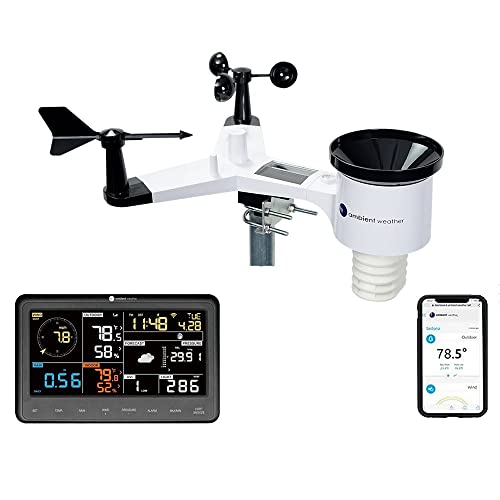
- Tracks temperature, wind, rain, UV, and solar radiation
- Offers Wi-Fi monitoring, alerts, and smart-home support
- Includes solar-powered sensor array and color LCD
Best For: Connected home and backyard weather monitoring
Easiest Setup for Beginners
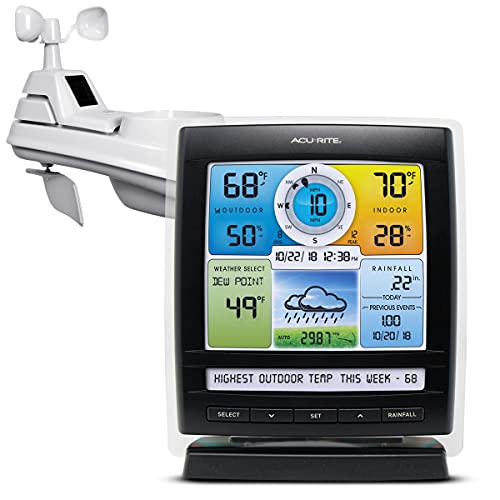
- Simple battery-powered sensor installation
- Displays over 55 weather data points
- Large color screen with adjustable brightness
Best For: First-time users wanting simple local monitoring
Best for Storm Awareness
AcuRite Iris Lightning Detection
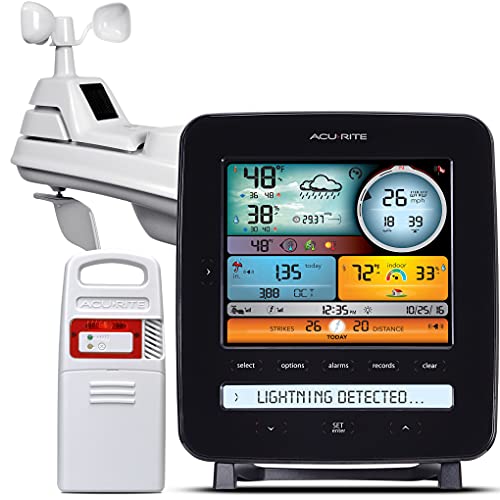
- Estimates distance to lightning-producing storms
- Counts lightning strikes by running, weekly, and monthly totals
- Monitors core indoor and outdoor weather conditions
Best For: Beginners who want added lightning information
Most Comprehensive
12-in-1 Wireless Weather Station

- 6.5-inch color display with adjustable backlight
- Tracks rain, wind, pressure, temperature, and humidity
- Wireless DIY setup with rainfall history
Best For: Gardeners and homeowners wanting detailed local weather data
Best Everyday Display
Newentor Wireless Weather Station

- Color screen combines weather data with clock functions
- Wall-powered always-on or battery-saving display modes
- Supports up to three wireless sensors
Best For: Households wanting weather readings plus an alarm clock
Best for Readability

- Large 7.6-inch high-contrast VA display
- Remote sensor includes its own 2-inch screen
- Atomic time, pressure trends, and up to 328-foot range
Best For: Users prioritizing clear displays and convenient whole-home monitoring
Best Beginner-Friendly Color Display
AcuRite Wireless Home Weather Station
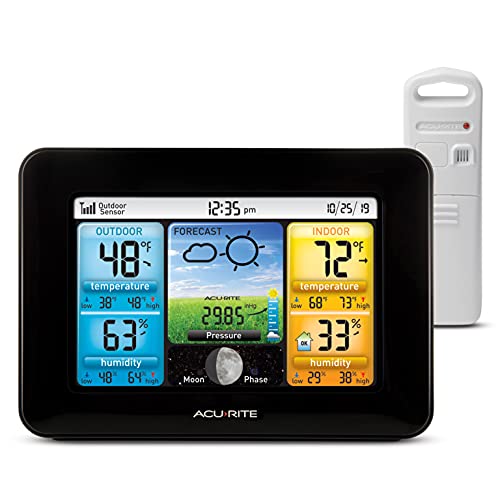
- Simple wireless sensor setup
- Color display with adjustable dimmer
- Tracks temperature, humidity, and pressure trends
Best For: First-time users wanting readable everyday weather data
Best Atomic Clock Combo
DreamSky Wireless Weather Station

- Large display with adjustable backlight
- Atomic clock with automatic DST
- Supports up to three outdoor sensors
Best For: Beginners wanting weather data and accurate time in one display
Best Solar-Assisted Monitoring
Indoor Outdoor Solar Weather Station

- Pre-paired sensor with 30-second updates
- Up to 328-foot wireless range
- Solar-assisted automatic backlight
Best For: Beginners wanting frequent readings and broader home coverage
Best Wi-Fi Weather Station for Beginners – Ambient Weather WS-2902
Ambient Weather WS-2902 Wi-Fi Smart Weather Station | With Wi-Fi Remote Monitoring and Alerts
Check Price On AmazonThe Ambient Weather WS-2902 is a strong choice for beginners who want weather stations for beginners with remote access and smart-home features. Its sensor array measures temperature, humidity, wind, rainfall, UV intensity, and solar radiation, while the color LCD console keeps readings easy to view.
Best For: Home users who want hyperlocal readings, Wi-Fi monitoring, alerts, and optional smart-home integration.
Pros:
- Measures a broad range of outdoor conditions, including UV and solar radiation.
- Supports Wi-Fi remote monitoring, customizable alerts, Alexa, Google Home, and IFTT.
- Solar-powered sensor array includes a readable color LCD display.
Cons:
- Wi-Fi features require setup on a 2.4 GHz network.
- Temperature accuracy is listed as plus or minus 1°C.
The WS-2902 goes beyond a basic thermometer by combining detailed backyard data with connected features. It is a practical beginner option if app-style access and automation matter as much as the local display.
Easiest Setup for Beginners – AcuRite Iris Color Screen
The AcuRite Iris is designed for straightforward use, making it a sensible pick among weather stations for beginners. Install the batteries, mount the wireless outdoor sensor, and use the large color screen to view temperature, humidity, wind, pressure, rainfall, and related indicators.
Best For: Beginners who prioritize simple installation, a large indoor display, and broad everyday weather information.
Pros:
- Setup involves batteries, mounting the sensor, and wireless synchronization.
- Displays more than 55 data points, including dew point, heat index, and pressure trends.
- Color LCD includes time, date, adjustable brightness, and a 12-hour personalized forecast.
Cons:
- Uses radio-frequency wireless connectivity rather than Wi-Fi remote monitoring.
- The listed lower temperature rating is 32°F.
This AcuRite model keeps the learning curve low while still offering more than basic temperature readings. Its large display and pre-calibrated setup suit households that want useful information without a connected weather platform.
Best for Storm Awareness – AcuRite Iris Lightning Detection
AcuRite Iris (5-in-1) Professional Weather Station with LCD Display and Lightning Detection (01022M)
Check Price On AmazonThe AcuRite Iris Lightning Detection station adds storm-focused information to the core features beginners expect from weather stations for beginners. Along with indoor and outdoor conditions, it estimates the distance to lightning-producing storms and tracks detected strikes over different time periods.
Best For: Households that want local weather readings plus lightning estimates, strike counts, and programmable alerts.
Pros:
- Provides estimated distance to lightning-producing storms.
- Tracks lightning strikes with running, weekly, and monthly totals.
- Measures temperature, humidity, wind, pressure, and rainfall on an illuminated color display.
Cons:
- It requires a powered indoor display and six AA batteries for the wireless sensor system.
- Temperature accuracy is listed as 1.11°C.
Lightning detection makes this model more specialized than a basic beginner station, but the display remains approachable with auto-dimming brightness, alerts, and a weather ticker. Choose it when storm awareness is a priority.
Best Value Feature Set – Sainlogic 12-in-1 Weather Station
The Sainlogic 12-in-1 is a feature-rich but straightforward option for people comparing weather stations for beginners. Its large display combines indoor and outdoor readings with rainfall history, pressure, wind, dew point, feels-like temperature, moon phase, calendar, and alarm-clock functions.
Best For: Beginners who want many readings on one large screen without Wi-Fi or app requirements.
Pros:
- Tracks temperature, humidity, pressure, wind, rainfall, dew point, feels-like temperature, and moon phase.
- Records hourly, daily, weekly, monthly, and cumulative rainfall.
- 6.5-inch display has high-contrast numbers and three backlight levels.
Cons:
- It does not provide Wi-Fi connectivity.
- The stated transmission range of up to 443 feet applies in open, unobstructed conditions.
This station packs substantial information into a beginner-friendly local display and offers a claimed temperature accuracy of ±0.2°C. It is a good fit for homes, gardens, farms, and other spaces where detailed readings matter more than remote access.
Most Comprehensive – 12-in-1 Wireless Weather Station
For shoppers comparing weather stations for beginners, this model offers a broad set of readings without requiring complicated installation. Its color display tracks temperature, humidity, rainfall, wind, pressure, and related data, while the wireless sensor connects to the indoor console after simple mounting.
Best For: Gardeners, homeowners, and small-farm users who want detailed weather monitoring and rainfall history.
Pros:
- Large 6.5-inch color LCD with adjustable backlight and oversized fonts.
- Monitors temperature, humidity, wind, barometric pressure, rainfall, dew point, and feels-like temperature.
- Records rainfall by hour, day, week, month, and cumulative total.
- Wireless sensor is designed for DIY installation and wide-area use.
Cons:
- Its extensive data set may feel more involved than necessary for basic temperature checks.
- The outdoor sensor requires a suitable fence, roof, or pole mounting location.
This is the strongest fit for beginners who want to grow into more detailed weather tracking. The large display and straightforward wireless setup keep it approachable, while the rainfall and wind measurements add useful depth for garden or property monitoring.
Best Everyday Display – Newentor Wireless Weather Station
If you want weather stations for beginners that also function as a household clock, the Newentor combines essential indoor and outdoor readings with a color screen, alarm features, and forecast information. It includes one wireless sensor and can support up to three sensors for monitoring additional locations.
Best For: Homes, bedrooms, and offices where an easy-to-read weather display and clock are equally useful.
Pros:
- Color LCD shows indoor and outdoor temperature and humidity, daily highs and lows, alerts, and forecast details.
- Wall power enables an always-on display, while battery mode provides a quick-glance energy-saving view.
- Supports up to three wireless sensors for multiple locations.
- Includes atomic time, dual alarms, snooze, moon phase, and barometric pressure information.
Cons:
- Only one remote sensor is included.
- Batteries are not included, and battery-only operation dims the screen after about 15 seconds.
- Its stated temperature accuracy is ±1.8°F, so it is aimed at household monitoring rather than precision measurement.
The Newentor is a practical starting point for beginners who prioritize convenience. Its always-on adapter mode works well in a living room or bedroom, while optional extra sensors make it more flexible if your monitoring needs expand.
Best for Readability – Atomic Clock Weather Station
Among weather stations for beginners, this model stands out for its large, high-contrast display and readable remote sensor. It provides temperature information, pressure trends, atomic time synchronization, and support for up to three sensors, making it a convenient choice for whole-home monitoring.
Best For: Seniors, families, and users who value clear screens, accurate timekeeping, and remote sensor visibility.
Pros:
- Large 7.6-inch VA display is designed for strong color contrast and easy reading.
- Remote sensor has its own 2-inch digital screen for checking readings away from the main unit.
- Atomic clock supports seven listed time zones and daily WWVB synchronization.
- Offers up to 328 feet of wireless pairing range and supports up to three remote sensors.
Cons:
- Atomic clock synchronization requires correct time-zone and daylight-saving settings.
- The supplied notes do not specify the full set of displayed weather measurements or power options.
This is a particularly approachable option when readability is the priority. The large main display and screen-equipped remote sensor reduce the need to walk back to the console, while pressure trends add a simple way to watch for changing weather.
Best Beginner-Friendly Color Display – AcuRite Wireless Home Weather Station
For shoppers comparing weather stations for beginners, this AcuRite model keeps setup straightforward while still providing useful at-a-glance information. Its wireless outdoor sensor tracks temperature, humidity, and pressure trends, while the color LCD adds forecast icons, moon phase, and high/low records.
Best For: First-time users who want a clear, colorful home display with essential indoor and outdoor readings.
Pros:
- Simple installation with two AA batteries in the outdoor sensor and an integrated hanger.
- Displays indoor and outdoor temperature, humidity, pressure trends, forecast icons, and moon phase.
- Adjustable display dimmer makes the color LCD easier to place around the home, office, or RV.
- Records high and low temperature and humidity readings and shows sensor signal strength.
Cons:
- Outdoor sensor batteries are not included.
- The forecast covers approximately the next 12 hours rather than a longer outlook.
- No warranty is listed in the supplied product details.
This is a practical entry point for beginners who value readable data over an unusually large feature set. The color display and straightforward wireless setup make everyday monitoring approachable.
Best Atomic Clock Combo – DreamSky Wireless Weather Station
Among weather stations for beginners, the DreamSky stands out by combining a large, colorful weather display with an atomic clock. It provides indoor and outdoor temperature and humidity, customizable high/low alerts, a 12-to-24-hour forecast, and automatic time and daylight-saving adjustments.
Best For: Beginners who want a weather station that also serves as a prominent, low-maintenance clock.
Pros:
- Large numbers and adjustable five-level backlight are designed for easy viewing from a distance.
- WWVB atomic timekeeping and automatic DST adjustment reduce manual clock resets.
- Supports up to three outdoor sensors, with one sensor included.
- Includes high/low temperature alerts, max/min records, USB charging, and battery backup.
Cons:
- The adapter is the primary power source; battery-only operation dims after about 10 seconds.
- Backup batteries are not included.
- The supplied details list temperature accuracy as ±1°C, which is less precise than some specialized instruments.
The large screen and automatic clock functions make this a friendly choice for a kitchen, office, nursery, or RV. Choose it if timekeeping and display visibility matter as much as weather monitoring.
Best Solar-Assisted Monitoring – Indoor Outdoor Solar Weather Station
This solar-assisted station is a useful option for beginners who want more detailed monitoring without a complicated installation. The pre-paired wireless sensor sends readings every 30 seconds, while the display combines temperature, humidity, pressure trends, comfort status, forecast information, and max/min records.
Best For: Beginners who want frequent updates, a longer wireless range, and automated display lighting.
Pros:
- Pre-paired sensor and included batteries support quick setup.
- Wireless range reaches up to 328 feet in open areas.
- Solar-assisted backlight automatically responds to low ambient light to help reduce battery use.
- Provides 12-hour forecasts, pressure history, comfort indicators, and 30-second updates.
Cons:
- The feature-rich display may take longer for a first-time user to learn than a basic thermometer.
- Solar assistance powers the backlight rather than replacing battery power entirely.
- The indoor operating range is listed as 14.2°F to 122°F, which may not suit every extreme environment.
With pre-paired components and an organized single-screen layout, this model keeps installation approachable while offering more context than a basic indoor/outdoor thermometer. Its automatic backlight and extended range are especially useful for monitoring spaces around a home.
How We Picked These Weather Stations for Beginners
We focused on stations that are practical for first-time buyers, emphasizing clear displays, straightforward sensor installation, useful core measurements, and accessible controls. The selection includes simple thermometer-and-clock units as well as more advanced 5-in-1 and 12-in-1 systems.
We also considered connectivity. A Wi-Fi model can make readings available remotely and support app or online weather tracking, while an offline station may be easier to configure and maintain. Product variety matters because beginners do not all need the same level of detail.
Quick Comparison
| Best For | Look For | Typical Choice |
|---|---|---|
| Simple temperature checks | Large display, reliable wireless sensor | Newentor, DreamSky, or basic wireless models |
| Detailed backyard monitoring | Rain, wind, humidity, pressure, and forecast data | AcuRite Iris or Sainlogic 12-in-1 |
| Remote access | Wi-Fi connectivity and compatible app or platform | Ambient Weather WS-2902 |
| Storm awareness | Lightning detection and pressure trends | AcuRite Iris 01022M |
| Timekeeping and travel | Atomic clock and multiple time-zone support | Atomic-clock wireless stations |
Key Buying Factors for Weather Stations for Beginners
Measurements and Sensor Range
Temperature and humidity are the essential starting points. If you garden, plan outdoor activities, or want to study changing conditions, consider rain gauges, wind-speed sensors, barometers, and forecast icons. A larger feature list is useful only if you will actually use the data.
Display and Readability
Check the screen size, viewing angle, backlight behavior, and whether key readings are visible at a glance. Color displays are often easier to scan, but a simpler monochrome screen may use less power and cost less.
Setup, Power, and Placement
Confirm the wireless range, battery requirements, mounting hardware, and recommended placement. Outdoor sensors need an unobstructed location, while rain and wind readings can be distorted by nearby walls, trees, roofs, or heat sources. Solar assistance can reduce battery changes but does not always eliminate them.
Connectivity and Maintenance
Wi-Fi adds remote monitoring but usually requires more setup and a dependable home network. Offline models are often better for users who want a self-contained display. Keep sensors clean, replace batteries as needed, and periodically compare readings with a trusted local source.
Who Should Buy Which Weather Stations for Beginners?
Choose a basic wireless thermometer station if you mainly want indoor and outdoor temperature, humidity, and time. It is the easiest route for apartments, bedrooms, offices, and casual household use.
Choose a multi-sensor AcuRite, Sainlogic, or similar station if you want a more complete backyard picture, including rainfall, wind, and atmospheric pressure. These models suit gardeners, hobbyists, and homeowners who enjoy tracking local patterns.
Choose the Ambient Weather WS-2902 if remote access and online data matter more than the simplest possible setup. Choose a lightning-equipped model if storm-related information is a priority. Finally, select an atomic-clock model when accurate time and multiple time zones are more important than advanced meteorological measurements.