
A reliable guide scope can make the difference between round stars and frustrating tracking errors in deep-sky astrophotography. The right model balances aperture, focal length, focus control, weight, and mounting compatibility with your main telescope and guide camera.
We’ve gathered 10 telescope guide scopes ranging from compact 30mm finders to larger 70mm designs, including options with helical focusers, diagonal accessories, and multi-use finder capabilities.
Best 10 Telescope Guide Scopes Picks for 2026
Compact Imaging Pick
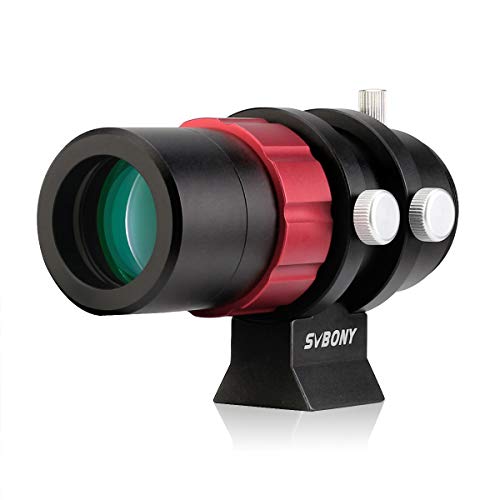
- 30mm f/4 wide-field optics
- 45mm back focus for easier adjustment
- Supports common autoguiding cameras
Best For: Lightweight deep-sky guiding setups
Premium Optical Choice

- 50mm f/4.8 APO doublet design
- ED glass for contrast-rich views
- Includes finder and V-style mounting options
Best For: Flexible guiding and astrograph setups
Versatile Focusing Pick
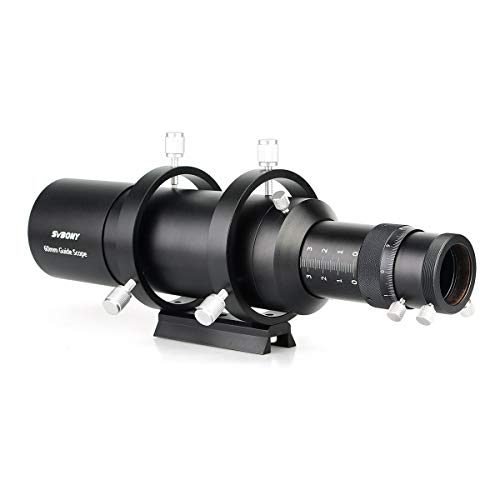
- 60mm aperture with helical focuser
- 8mm focus travel plus 35mm back-travel
- Can also serve as a finder scope
Best For: Flexible guiding and visual-finder use
Dual-Use Mini Pick

- 30mm f/4 achromatic optics
- Includes a 1.25-inch 90-degree diagonal
- Synta-style dovetail mounting base
Best For: Compact guiding plus comfortable visual finding
Precision Guide
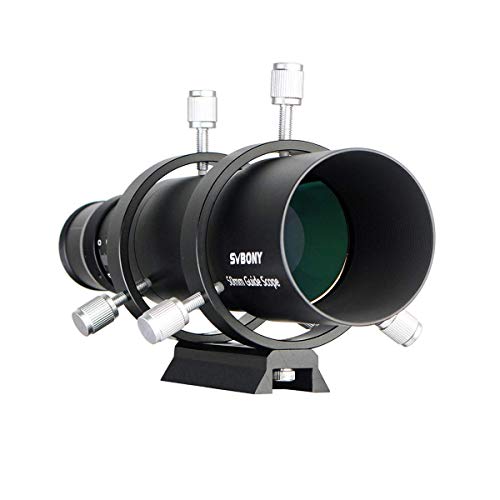
- 50mm optics for guiding and finder use
- 8mm helical focus with 30mm back-travel
- Includes rings and dovetail mounting bar
Best For: Astrophotographers seeking precise manual focusing and flexible mounting
Compact Tracking
SVBONY SV165 40mm Mini Guide Scope

- Designed for OTAs up to 700mm focal length
- 40mm multi-coated achromatic optics
- Scaled focuser and six-point guide ring
Best For: Compact guiding setups using shorter-focal-length telescopes
Wide-Range Finder

- 60mm optics with a 240mm focal length
- Wide 2.7-degree field for finding guide stars
- Includes rings and Synta-style mounting plate
Best For: Visual finding and autoguiding on telescopes up to about 1500mm
Precision 50mm Guide Scope

- 200mm focal length with fully multi-coated 50mm optics
- 40mm focusing range with 10mm micro-focus adjustment
- Includes clamps, dovetail plate, and adjustable dovetail weight
Best For: Compact guiding and visual finding on telescopes up to 1500mm
Long-Focal-Length Guide Scope
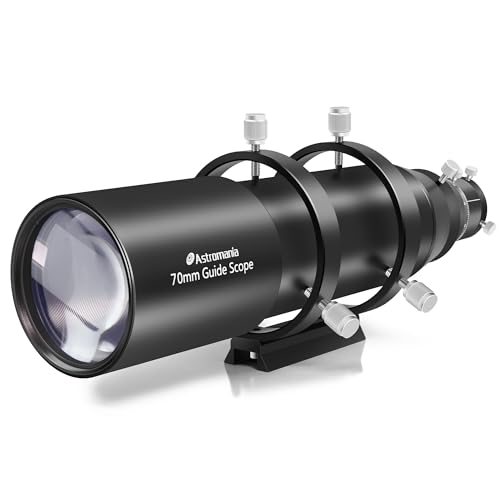
- 400mm focal length with a bright 70mm objective
- 90mm focusing range with helical micro-focus adjustment
- Supports 1.25-inch eyepieces and autoguiding cameras
Best For: Dedicated astrophotography setups prioritizing aperture and focal length
Versatile 50mm Guide Scope

- 200mm focal length with fully multi-coated optics
- 40mm helical-focuser adjustment range
- Includes rings, dovetail bar, and T-thread camera connection
Best For: Guiding and finding with flexible mounting and camera compatibility
Compact Imaging Pick – SVBONY SV165 30mm Guide Scope
The SVBONY SV165 is a compact option for telescope guide scopes when low weight and a wide field of view matter. Its 30mm f/4 achromatic optics, 45mm back focus, and included mounting rings are designed around common autoguiding cameras.
Best For: Deep-sky astrophotographers seeking a lightweight guide scope for SV305C Pro, ZWO, QHY, Orion, and similar guiding cameras.
Pros:
- Compatible with many mainstream autoguiding cameras through 1.25-inch and M42 interfaces.
- Wide-field f/4 optics and 45mm back focus support quick target acquisition and precise focusing.
- Nylon-tipped thumbscrews help prevent scratches while positioning the tube.
Cons:
- It cannot be used with a dielectric mirror star diagonal and will not focus in that setup.
- Some camera combinations may require additional focusing accessories.
- The image is inverted when used with an eyepiece.
Choose the SV165 when you want a small, practical guiding platform with broad camera compatibility. Verify your camera and focusing arrangement before purchase, especially if you plan to use accessories beyond the intended guide-camera setup.
Premium Optical Choice – Sky-Watcher EvoGuide 50DX
The Sky-Watcher EvoGuide 50DX is a 50mm apochromatic doublet among telescope guide scopes, pairing matched ED glass with a 242mm focal length. It also includes a finder stalk, tube rings, and a Vixen-style mounting plate for flexible installation.
Best For: Astrophotographers who want a lightweight, contrast-rich 50mm guide scope that can also adapt into a short-focal-length astrograph with an optional adapter.
Pros:
- Matched ED glass is designed to provide high-contrast views and dark backgrounds.
- Includes both a machined finder stalk and a V-style mounting rail for flexible mounting.
- Built-in T-threads support astrograph conversion with an optional adapter.
- The 1.25-inch helical focuser offers manual focusing control.
Cons:
- The astrograph adapter is optional and not included.
- At 2.7 pounds, it is heavier than the compact 30mm guide-scope options.
- Its 1.1-degree listed field of view is narrower than some mini guide scopes.
The EvoGuide 50DX is a versatile choice if optical quality and mounting flexibility are more important than minimum size. Its dual-purpose design gives experienced users room to expand beyond guiding.
Versatile Focusing Pick – SVBONY SV106 60mm Guide Scope
The SVBONY SV106 stands out among telescope guide scopes for its 60mm aperture and built-in helical focuser. The focuser preserves camera orientation while adjusting focus, and the scope can also work as a straight-through finder with an optional 1.25-inch eyepiece.
Best For: Astrophotographers who want precise focusing, extra back-travel, and a guide scope that can double as a visual finder.
Pros:
- The helical focuser provides 8mm of precise travel without rotating the field.
- A telescoping drawtube adds up to 35mm of back-travel for different autoguider setups.
- Supports threaded guide-camera attachment and compression-ring fitting.
- Can become a 9.6×60 finder with an optional 25mm eyepiece.
Cons:
- The optional eyepiece is needed for straight-through finder use.
- At 790g, it is relatively heavy for a guide scope.
- Compatibility is specifically described for autoguider cameras and certain female T-thread accessories.
The SV106 is a strong fit when focusing flexibility and dual-purpose use outweigh concerns about size and weight. Its non-rotating helical adjustment is particularly useful when maintaining a consistent guide-camera field matters.
Dual-Use Mini Pick – Astromania 30mm Guide Scope
The Astromania 30mm guide scope combines a compact f/4 optical tube with a 1.25-inch 90-degree diagonal. For telescope guide scopes buyers who also want comfortable visual aiming, it offers finder and guide-scope functionality in one package.
Best For: Users who want a compact guide scope that supports both autoguiding and right-angle visual observation.
Pros:
- Full multi-layer coating and achromatic optics are designed for bright, clear images with reduced reflections.
- Includes a 1.25-inch 90-degree diagonal for more comfortable visual viewing.
- 45mm back focus and f/4 optics support quick focusing and target acquisition.
- Synta-style dovetail compatibility suits finder bases from Sky-Watcher, GSO, Celestron, Vixen, and Orion.
Cons:
- A T2 extension adapter is required for guide cameras or DSLRs and is not specified as included.
- Manual three-step focusing may be less convenient than a continuously adjustable helical focuser.
- Camera and accessory compatibility should be checked before installation.
The Astromania is appealing for compact setups that alternate between guiding and visual finding. Its included diagonal and broad mounting compatibility add convenience, while the optional T2 adapter preserves a path to astrophotography use.
Precision Guide – SVBONY SV106 50mm Guide Scope
For astrophotographers comparing telescope guide scopes, the SVBONY SV106 stands out with a 50mm objective and a precise helical focuser. Its all-metal construction, adjustable rings, dovetail bar, and threaded camera connection make it a versatile choice for guiding and finder use.
Best For: Astrophotographers who want fine manual focusing and flexible mounting for guide cameras.
Pros:
- 8mm helical focus travel plus up to 30mm of drawtube back-travel.
- 50mm fully multi-coated optics provide a broad view for locating potential guide stars.
- Includes heavy-duty rings, a dovetail mounting bar, and six metal thumbscrews for aiming.
- Male T-threads support secure attachment of compatible guide cameras.
Cons:
- Manual focusing requires careful setup and adjustment.
- At 1.7 pounds, it may add more weight than a compact mini guide scope.
The SV106 is a practical option when focusing precision and mounting flexibility matter more than minimum size. Its included hardware also makes it easier to integrate into an existing telescope setup.
Compact Tracking – SVBONY SV165 40mm Mini Guide Scope
The SVBONY SV165 is a compact choice among telescope guide scopes, designed for optical tube assemblies with focal lengths up to 700mm. Its 40mm fully multi-coated achromatic optics, scaled front focuser, and adjustable six-point guide ring support repeatable alignment and focusing.
Best For: Owners of shorter-focal-length telescopes who need a lightweight mini guide scope with broad camera compatibility.
Pros:
- Suitable for telescope optical tubes with focal lengths within 700mm.
- Compatible with 1.25-inch and M42-threaded guide cameras, including SV305 Pro, Orion, ZWO, and QHY models.
- Front focuser scale helps repeat a previously established focus position.
- Six-point guide ring allows adjustment of the guide scope’s coaxial alignment.
Cons:
- Its recommended telescope focal-length range is more limited than larger guide scopes.
- Manual setup may require removing the red locking ring if a paired eyepiece cannot reach focus.
The SV165 prioritizes compactness and compatibility. It is a sensible fit for shorter optical tubes, especially when a scaled focuser and adjustable ring system are useful for repeatable guiding setups.
Wide-Range Finder – Astromania 60mm Guide Scope
For users comparing telescope guide scopes for both finding and autoguiding, this Astromania model combines a 60mm fully multi-coated objective with a helical focuser and wide-field design. The included rings, adjustable mounting hardware, and threaded camera connection support a flexible astrophotography setup.
Best For: Astrophotographers who want a larger guide scope that can also serve as a visual finder on telescopes up to about 1500mm focal length.
Pros:
- 60mm optics and a 240mm focal length provide a wide 2.7-degree field of view.
- Helical and scaled drawtube focusing provide up to 45mm of focusing range.
- Includes heavy-duty rings, Teflon inserts, and a Synta-style dovetail mounting plate.
- Supports visual finder use and direct connection to compatible female T-thread guide cameras.
Cons:
- The larger 60mm design may add more bulk and weight than a mini guide scope.
- Its manual alignment and focusing hardware require hands-on adjustment.
- Camera compatibility depends on having the appropriate female T-thread connection.
The Astromania 60mm is the most versatile option here for users who want one instrument to help locate objects visually and guide astrophotos. Its broad field and substantial focusing range are especially useful when setup flexibility is a priority.
Precision 50mm Guide Scope – Alstar Helical Focuser Kit
For anyone comparing telescope guide scopes, the Alstar 50mm model is a compact option that also works as a finder. Its 200mm focal length, fully multi-coated optics, and 40mm focusing range are suited to guiding and visual object location on telescopes up to 1500mm focal length.
Best For: Astrophotographers who want a compact 50mm guide scope with fine manual focusing and flexible finder-scope use.
Pros:
- Built-in helical focuser provides 40mm of total focus range, including 10mm of micro-focus adjustment.
- Fully multi-coated 50mm optics and 200mm focal length provide a bright, wide-field view for guide-star acquisition.
- Includes pipe clamps, a Synta-style dovetail plate, and an adjustable dovetail weight.
- All-metal anodized housing and locking features support a secure setup.
Cons:
- Manual focusing requires hands-on adjustment during setup.
- Its 50mm aperture is less light-gathering than the larger 70mm option in this roundup.
- The listed field of view is 1.17 degrees, so it may not be the widest finder view available.
The Alstar is a practical middle ground for users who need a portable guide-and-finder combination. Its helical focuser and included mounting hardware make it especially convenient for mobile astrophotography setups.
Long-Focal-Length Guide Scope – Astromania 70mm Deluxe
Among telescope guide scopes, the Astromania 70mm model stands out for its 400mm focal length and larger aperture. It is designed to place numerous potential guide stars in view while serving as both a visual finder and an autoguiding scope.
Best For: Astrophotographers who prefer a larger-aperture, long-focal-length guide scope with a broad adjustment range.
Pros:
- 400mm focal length and 70mm objective provide a bright optical system for finding guide stars.
- Built-in worm-focuser offers a 90mm focusing range, including 10mm of helical micro-focus adjustment.
- Accepts 1.25-inch eyepieces and autoguiding cameras while helping prevent camera or eyepiece rotation.
- Includes pipe clamps, a Synta-style mounting plate, and an adjustable dovetail weight.
Cons:
- At 2.5 pounds, it is heavier than the 50mm alternatives listed here.
- The longer 400mm focal length and larger body may be less convenient for compact mobile setups.
- Manual focusing and locking adjustments require more setup time than a simpler finder.
The 70mm Astromania is the choice for users who prioritize aperture and focal length over minimum weight. Its extensive focusing range and included hardware make it a capable, substantial addition to a dedicated astrophotography rig.
Versatile 50mm Guide Scope – Astromania Multi-Use Model
This Astromania model is one of the more flexible telescope guide scopes for users who want secure mounting and multiple connection options. Its 200mm focal length, fully multi-coated optics, helical focuser, and included rings support both autoguiding and visual finder use.
Best For: Astrophotographers who want a 50mm guide scope with direct T-thread camera compatibility and robust mounting hardware.
Pros:
- Helical focuser provides precise adjustment with a 40mm total focusing range.
- Male T-threads on the focuser collar allow direct attachment of compatible female T-thread guide cameras.
- Includes two heavy-duty rings, a Synta-style dovetail bar, Teflon inlays, and knurled thumb screws.
- 200mm focal length is specified for astrophotography telescopes up to 1500mm and also supports visual finding.
Cons:
- Manual focusing requires setup adjustments rather than powered or automated focus.
- The 50mm aperture offers less light-gathering capacity than the 70mm Astromania model.
- Compatibility benefits from checking the guide camera’s female T-thread specification before purchase.
The Astromania 50mm is a strong all-purpose option when mounting security and camera connection flexibility matter. Its supplied rings and dovetail bar reduce the need for additional mounting accessories.
How We Picked These Telescope Guide Scopes
We compared these Telescope Guide Scopes by looking at the specifications that matter most in real observing and imaging setups: aperture, focal ratio, focusing design, optical configuration, mounting practicality, and overall versatility. Compact 30mm and 40mm models can reduce weight on smaller mounts, while 50mm to 70mm scopes generally provide more light-gathering capacity and flexibility for guide-camera pairing.
We also considered whether each scope is designed primarily for guiding or can serve as a finder scope. Helical focusers, included diagonals, and multi-use designs can make a model more adaptable, but they may also add weight or complexity.
Quick Comparison
- Best for lightweight setups: 30mm and 40mm f/4 guide scopes.
- Best all-around range: 50mm models with adjustable or helical focusing.
- Best for added flexibility: 60mm and 70mm multi-use finder-guide scopes.
- Best for easier focusing: Models with helical or double-helical focusers.
- Best for portability: Short-tube mini guide scopes with simple mounting.
Key Buying Factors for Telescope Guide Scopes
Aperture and Focal Length
A larger aperture can improve light collection and make it easier for a guide camera to find suitable stars, but it usually increases size and weight. For many computerized mounts, a compact 30mm to 50mm scope is sufficient. Check the guide scope’s focal length alongside your camera’s pixel size and the imaging telescope’s focal length to ensure an appropriate guiding scale.
Focusing System
Stable, precise focus is essential. Helical focusers allow fine adjustments and can be more convenient than sliding drawtubes. Double-helical designs may offer smoother control, while simpler focusers can be lighter and quicker to set up. Look for a locking mechanism or another way to prevent focus drift during long exposures.
Weight and Mounting
Every accessory contributes to a mount’s payload and balance. Confirm the scope’s mounting rings, dovetail, or threaded connection will work with your existing guide-scope bracket. A lightweight model is often the safer choice for portable mounts, even when a larger scope offers more optical capacity.
Compatibility and Versatility
Verify that the rear connection accepts your guide camera or intended eyepiece. Multi-use models and included diagonals can be useful for visual finding, but dedicated guiding setups may benefit from a simpler, rigid optical path.
Who Should Buy Which Telescope Guide Scopes?
Choose a 30mm or 40mm model if you use a lightweight mount, a short-focal-length imaging telescope, or need the smallest practical setup. Choose a 50mm guide scope for a balanced option that suits many beginner and intermediate astrophotography systems. Choose a 60mm or 70mm model if you want additional light-gathering capacity, a wider range of guide-camera choices, or a guide scope that can also function as a finder. Before buying, prioritize secure mounting and focusing stability over aperture alone.