
A dependable guide scope can make a noticeable difference in astrophotography, especially when accurate tracking and easy mounting matter. The best compact telescope guide scopes balance aperture, focal length, focus control, and low weight without overloading the main telescope.
This roundup compares 10 options ranging from lightweight 30mm and 40mm mini guidescopes to larger 70mm models with more adjustable focusing hardware. Use the buying guide below to narrow the choices by setup, imaging goals, and budget.
Best 10 Compact Telescope Guide Scopes Picks for 2026
Best Compact Pick
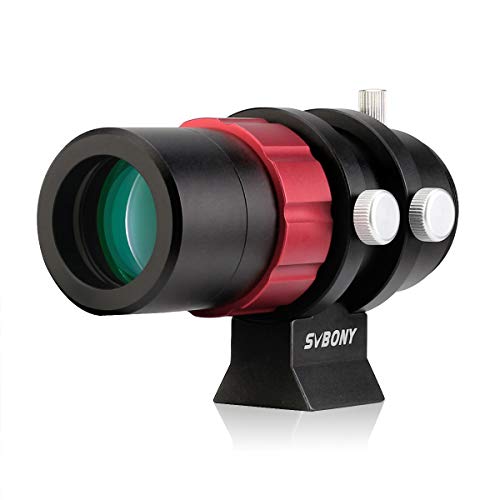
- Compact 30mm f/4 design
- 1.25-inch and M42 interfaces
- 45mm back focus
Best For: Lightweight guide-camera astrophotography setups
Best APO Option

- 50mm f/4.8 APO doublet
- ED glass for contrast-rich views
- Includes finder stalk and Vixen plate
Best For: Guiding, visual observing, and expandable astrophotography
Best Adjustable Mini

- 40mm fully multi-coated optics
- Scaled front focuser
- Six-point adjustable guide ring
Best For: OTAs up to 700mm needing alignment flexibility
Best Large-Aperture Finder

- 60mm aperture with 240mm focal length
- Helical focuser with fine adjustment
- Includes rings and dovetail hardware
Best For: Astrophotography rigs up to 1500mm focal length
Best Helical-Focus Value
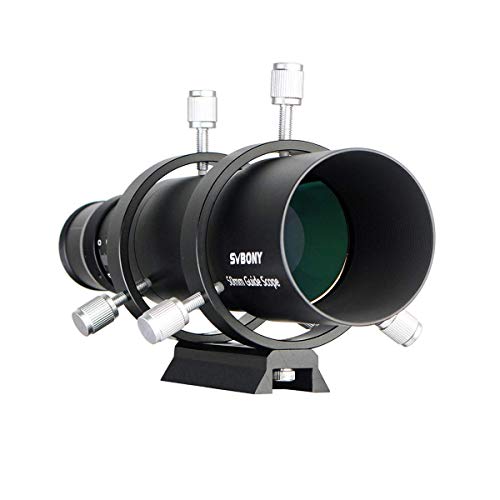
- 8mm helical fine focus with locking thumbscrew
- Includes rings and dovetail mounting bar
- 50mm multi-use guide scope with T-thread support
Best For: Astrophotographers seeking precise focus in a compact 50mm setup
Best Compact 60mm Kit

- 60mm fully multi-coated optical system
- 48mm dual-helical focusing range
- Works as a guide scope or finder scope
Best For: Mobile users wanting a versatile 60mm guide-and-finder kit
Best Large-Aperture Option
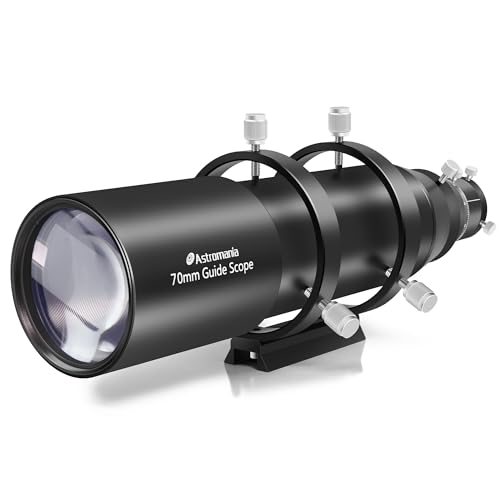
- 70mm aperture with 400mm focal length
- Double-helical focuser with micro-focus control
- Includes clamps and Synta-style mounting plate
Best For: Astrophotographers wanting maximum aperture and a dual-purpose finder
Flexible Focusing Pick
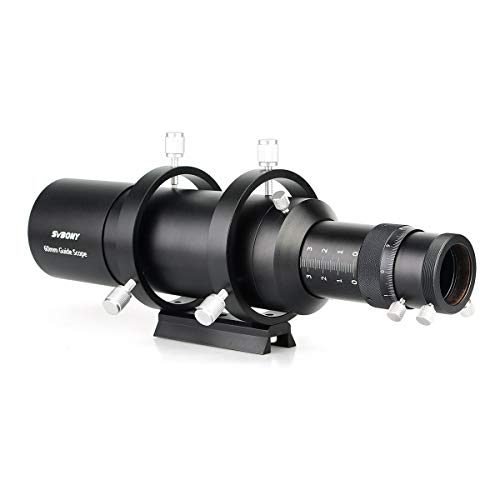
- 60mm aperture for guide-star visibility
- Non-rotating helical focuser
- Works as guide scope or finder
Best For: Astrophotographers wanting a versatile dual-purpose scope
Portable Precision Choice

- 50mm aperture with 200mm focal length
- 40mm total focusing range
- Includes dovetail plate and pipe clamps
Best For: Mobile guiding and visual-finder setups
Complete Mounting Kit

- Includes rings and dovetail bar
- 40mm combined focus range
- Direct T-thread camera attachment
Best For: Users wanting a ready-to-mount guiding package
Best Compact Pick – SVBONY SV165 30mm Guide Scope
For shoppers comparing compact telescope guide scopes, the SVBONY SV165 is a lightweight 30mm option designed for compatible auto-guiding cameras. Its f/4 optics, 45mm back focus, and adjustable mounting rings make it practical for quick target acquisition and repeatable setup.
Best For: Compact deep-sky astrophotography setups using SVBONY, ZWO, QHY, Orion, or compatible guide cameras.
Pros:
- 1.25-inch and M42 interfaces support several mainstream guide cameras.
- Fully multi-coated 30mm achromatic optics provide a wide field of view.
- Nylon-tipped thumbscrews help reduce scratching while positioning the scope.
- 45mm of back focus allows precise focus adjustments.
Cons:
- Some cameras may require additional accessories for focusing.
- It cannot be used with a dielectric mirror star diagonal for focusing.
- The image is inverted when used with an eyepiece.
This is a sensible compact choice when low weight, broad compatibility, and a wide field matter more than a larger aperture.
Best APO Option – Sky-Watcher EvoGuide 50DX
The Sky-Watcher EvoGuide 50DX stands out among compact telescope guide scopes for its 50mm apochromatic doublet design and versatile mounting hardware. Its lightweight refractor format supports guiding, visual observing, and optional astrograph use.
Best For: Users who want a compact guide scope with APO optics, flexible mounting, and a path toward low-focal-length astrophotography.
Pros:
- Matched ED glass is designed for contrast-rich views.
- Includes a finder stalk and Vixen-style mounting plate.
- Built-in T-threads allow astrograph conversion with an optional adapter.
- Includes a 1.25-inch helical focuser and 242mm focal length.
Cons:
- The optional astrograph adapter is not included.
- At 2.7 pounds, it is heavier than smaller mini guide scopes.
- Its field of view is narrower than the 30mm and 40mm options listed here.
The EvoGuide 50DX is a stronger fit for buyers who value optical refinement and expandability over the smallest possible footprint.
Best Adjustable Mini – SVBONY SV165 40mm Guide Scope
The 40mm SVBONY SV165 is a practical entry in compact telescope guide scopes for optical tube assemblies with focal lengths up to 700mm. It combines fully multi-coated optics with a scaled front focuser, extension tubes, and a six-point guide ring for alignment control.
Best For: Shorter-focal-length telescope setups that need adjustable alignment and repeatable manual focusing.
Pros:
- Suitable for telescope focal lengths within 700mm.
- 1.25-inch and M42 interfaces support compatible SVBONY, ZWO, QHY, and Orion cameras.
- Front focuser scale helps repeat focus positions.
- Six-point guide ring allows adjustment of guide-scope coaxiality.
Cons:
- Some eyepiece and camera combinations may need focus adjustment or extension tubes.
- The product is intended for manual focusing rather than automated focus control.
- Its compatibility guidance is limited to OTAs within 700mm focal length.
Choose this model when alignment flexibility and a marked focuser are more useful than the absolute minimum size.
Best Large-Aperture Finder – Astromania 60mm Guide Scope
For astrophotographers seeking compact telescope guide scopes with more aperture, the Astromania 60mm model adds a helical focuser, 240mm focal length, and sturdy mounting hardware. It is designed for both visual finder use and autoguiding on telescopes up to 1500mm focal length.
Best For: Larger astrophotography rigs that need a versatile finder-guide scope with precise manual focusing and broad mounting compatibility.
Pros:
- 60mm aperture and 240mm focal length suit telescopes up to 1500mm focal length.
- Helical focuser provides fine adjustments without rotating the camera or eyepiece.
- Includes guide rings, a dovetail mounting bar, and Synta-style mounting plate.
- Teflon inlays help protect the telescope tube during clamping.
Cons:
- Its larger 60mm format is less compact than mini guide scopes.
- Manual focusing requires adjustment at the focuser and drawtube.
- Mounting hardware and robust construction may add weight to a portable setup.
This is the most versatile option here for users who want one scope to serve as both a wide-field finder and an autoguiding platform.
Best Helical-Focus Value – SVBONY SV106 50mm Guide Scope
For compact telescope guide scopes, the SVBONY SV106 offers a practical balance of aperture, portability, and focusing control. Its 50mm objective, 8mm helical fine-focus travel, and additional drawtube back-travel make it a versatile choice for astrophotographers using compatible guide cameras.
Best For: Astrophotographers who want a compact 50mm guide scope with precise, low-flexure focusing and flexible mounting options.
Pros:
- Built-in helical focuser provides precise adjustments without image rotation.
- Includes guide rings and a 3.5-inch dovetail mounting bar.
- Supports compatible cameras through male T-threads and 1.25-inch camera compatibility.
- Metal construction and locking thumbscrew help secure the focus setting.
Cons:
- The 50mm aperture is smaller than the 60mm and 70mm alternatives in this roundup.
- At 1.7 pounds, it may still add noticeable weight to a lightweight setup.
The SV106 is a strong compact option when focusing precision and straightforward mounting matter more than maximum aperture. Its included hardware also helps simplify setup.
Best Compact 60mm Kit – Alstar 60mm Guide Scope
Among compact telescope guide scopes, the Alstar 60mm kit stands out for combining a larger aperture with a portable, multi-use design. Its 240mm focal length, fully multi-coated optics, and dual helical focuser support both guiding and visual finder use.
Best For: Mobile astronomers and astrophotographers who want one compact scope for guide-camera use, object finding, and optional 1.25-inch eyepiece viewing.
Pros:
- 60mm aperture gathers ample light for guiding and locating objects.
- Dual helical focuser offers up to 48mm of focusing range, including 10mm of micro-focus.
- Includes a Synta-style dovetail plate and matching pipe clamps.
- Compression-ring and T-thread compatibility help accommodate cameras and eyepieces.
Cons:
- At 2 pounds, it is heavier than the 50mm SVBONY option.
- Its 1.04-degree listed field of view may be less expansive than a shorter-focal-length finder.
The Alstar is a well-rounded choice for users who value versatility. It provides more aperture than a 50mm guide scope while retaining a compact design and useful mounting hardware.
Best Large-Aperture Option – Astromania 70mm Guide Scope
For compact telescope guide scopes with a larger objective, the Astromania 70mm model pairs bright wide-field optics with a substantial 400mm focal length. Its double-helical focusing system and included mounting hardware make it suitable for both visual finding and astrophotography setups.
Best For: Astrophotographers who prioritize a 70mm aperture, long focal length, and a guide scope that can also accept a 1.25-inch eyepiece.
Pros:
- 70mm objective and 400mm focal length provide a bright optical system for finding guide stars.
- Worm-driven double-helical focuser includes a brass compression ring and micro-focus control.
- Includes matching pipe clamps and a Synta-style mounting plate.
- Can function as both a guide scope and a finder scope.
Cons:
- At 2.5 pounds, it is the heaviest option in this selection.
- The larger 400mm focal length and size may be less convenient for highly portable rigs.
The Astromania favors optical capacity and focusing range over minimum weight. It is a sensible pick for users whose mount can handle the added 70mm scope and who want a dual-purpose instrument.
Flexible Focusing Pick – SV106 60mm Guide Scope
For compact telescope guide scopes, the SVBONY SV106 stands out as a versatile option with a 60mm aperture and built-in helical focuser. Its non-rotating focus adjustment, T-thread compatibility, and ability to work as a finder scope make it practical for both guiding and visual use.
Best For: Astrophotographers who want one scope for autoguiding and straight-through finder use.
Pros:
- 60mm aperture provides a useful field for locating potential guide stars.
- Helical focuser offers 8mm of precise travel without rotating the attached camera or eyepiece.
- Telescoping drawtube adds up to 35mm of back-travel, reducing the need for extension tubes.
- Can accept compatible 1.25-inch eyepieces and cameras for multi-use operation.
Cons:
- At about 790g, it may be heavier than very minimal guide-scope setups.
- Manual focusing requires hands-on adjustment during setup.
- Some accessories require female T-threads or compatible 1.25-inch fittings.
The SV106 is a strong choice when flexibility matters more than the smallest possible footprint. Its secure threaded options and broad focusing range are especially useful for users switching between guiding and finder duties.
Portable Precision Choice – Alstar 50mm Deluxe Guidescope
The Alstar 50mm is a practical entry in compact telescope guide scopes, combining a 200mm focal length with fully multi-coated optics and a built-in helical focuser. Its included Synta-style dovetail plate and pipe clamps simplify installation on compatible telescope setups.
Best For: Mobile observing and astrophotography setups that need a compact, adjustable guide-and-finder scope.
Pros:
- 50mm aperture and 200mm focal length provide bright, wide-field views.
- 40mm total focus range includes 10mm of micro-focusing adjustment.
- Brass compression ring and dual thumbscrews help secure cameras or eyepieces.
- Includes a Synta-style mounting plate and pipe clamps for convenient installation.
Cons:
- Its 1.17-degree listed field of view is narrower than some wide-field finder designs.
- The included mounting hardware may add weight to a lightweight imaging rig.
- Manual focusing requires setup time before imaging.
With its all-metal construction, mounting hardware, and extended focus range, the Alstar offers a balanced package for users who want dependable guiding and finder performance without assembling a separate accessory system.
Complete Mounting Kit – Astromania 50mm Guide Scope
The Astromania 50mm guide scope is a complete compact telescope guide scopes package for visual finding and autoguiding. It includes a helical focuser, guide rings, a Synta-style dovetail bar, and T-thread compatibility, making it suited to users who want the main mounting pieces included.
Best For: Astrophotographers seeking a ready-to-mount guide scope with adjustable rings and non-rotating focusing.
Pros:
- Includes two guide rings and a Synta-style dovetail mounting bar.
- Helical focuser and drawtube provide a 40mm total focusing range.
- Teflon ring inlays help reduce scratches and pressure marks on telescope tubes.
- Male T-threads support direct attachment of compatible guide cameras.
Cons:
- At roughly 1.3 pounds, the complete assembly may be substantial for small mounts.
- Ring compatibility is specified for telescope tubes from 43mm to 68mm.
- Manual alignment and focusing still require hands-on setup.
The Astromania is appealing when included hardware is a priority. Its adjustable rings, mounting bar, compression-ring focuser, and direct camera-thread option create a more complete installation package than a bare optical tube.
How We Picked These Compact Telescope Guide Scopes
We focused on guide scopes that are practical for portable astrophotography rigs and compatible with common guide-camera workflows. The comparison considers aperture, focal ratio, optical design, focusing mechanism, mounting convenience, and overall versatility. Models with helical focusers receive particular attention because precise focus is important for reliable star detection and guiding.
Specifications and included accessories can vary by seller or package, so confirm the exact mounting rings, dovetail compatibility, camera thread, and focuser design before ordering.
Quick Comparison
| Guide scope type | Main advantage | Best suited to |
|---|---|---|
| 30mm–40mm mini scope | Lowest weight and compact size | Small portable imaging rigs |
| 50mm guide scope | Balanced aperture, weight, and flexibility | Most general astrophotography setups |
| 60mm guide scope | More light-gathering capacity and adjustment | Larger guide cameras or demanding targets |
| 70mm guide scope | Maximum aperture among these options | Users prioritizing versatility and reach |
Key Buying Factors for Compact Telescope Guide Scopes
Aperture and Focal Length
Larger apertures can gather more light, but they also add weight and may require sturdier mounting. A 30mm or 40mm model is often sufficient for a lightweight setup, while 50mm to 70mm options can provide more flexibility. Compare the guide scope’s focal length with your guide camera and imaging telescope rather than choosing by aperture alone.
Focusing Control
A fixed or simple sliding focus can be quick to use, but a helical focuser generally allows finer adjustment. Double-helical designs may offer additional control, though they can be heavier and more complex. Look for a focus lock or another way to prevent movement after calibration.
Mounting and Rigidity
Guiding accuracy depends on more than optical quality. Any flexure between the guide scope and imaging telescope can introduce errors. Check whether the scope includes rings, a finder shoe, or a dovetail plate, and use a rigid mounting arrangement suited to your telescope.
Guide Camera Compatibility
Verify the rear thread, adapter arrangement, and clear optical path for your camera. A guide scope that can also function as a finder may be useful, but camera fit and secure attachment should take priority.
Who Should Buy Which Compact Telescope Guide Scopes?
Choose a 30mm or 40mm mini scope if portability, low weight, and fast setup are your main priorities. A 50mm model is the safest all-around choice for many beginners and intermediate imagers because it balances size with useful light-gathering capability. Consider a 60mm or 70mm option if you use a larger guide camera, need more framing flexibility, or want a multi-use finder and guidescope. Whichever model you choose, prioritize rigid mounting and dependable focus over maximum aperture alone.