
The right eyepiece can make faint nebulae, sprawling star clusters, and distant galaxies easier to frame and study. This roundup compares 10 telescope eyepieces for deep-sky viewing across wide-field, mid-power, zoom, and accessory-kit options.
Use the guide below to match focal length, field of view, eye relief, and barrel size to your telescope and observing style.
Best 10 Telescope Eyepieces for Deep Sky Viewing Picks for 2026
Ultra-Wide Deep-Sky Pick

- 82° ultra-wide field of view
- Fully multi-coated, parfocal optics
- Retractable eyecup with filter-threaded barrel
Best For: Immersive lunar and deep-sky viewing
Flexible Magnification Choice
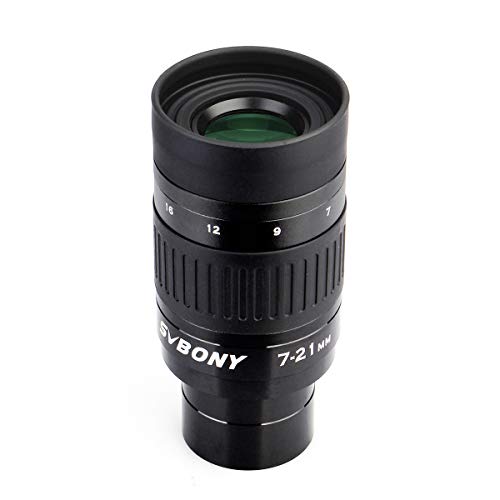
- 7–21mm adjustable focal length
- Fully multi-coated six-element design
- Comfortable 16.3–18mm eye relief
Best For: Convenient variable-magnification observing
Balanced Mid-Power Option

- 60° field of view
- Six-element fully multi-coated optics
- Comfortable twist-up rubber eyeguard
Best For: Mid-power planetary and general observing
Wide-Field Scanning Value
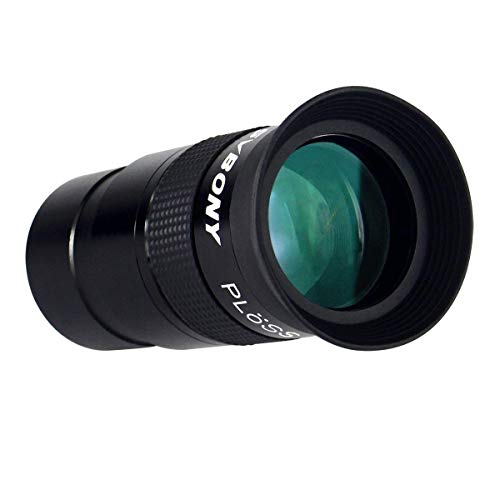
- 40mm focal length with 40° field of view
- Four-element fully multi-coated optics
- Fold-down eyeguard and filter thread
Best For: Broad lunar, cluster, and nebula viewing
Expansive Star-Field Pick

- 32mm focal length for broad views
- 4-element Plossl optical design
- Filter-threaded 1.25-inch barrel
Best For: Sweeping wide star fields and larger deep-sky targets
Versatile Deep-Sky Value

- 50-degree wide-field viewing
- Fully multi-coated 4-element optics
- Long eye relief with filter threading
Best For: Star clusters, nebulae, larger objects, and lunar viewing
Balanced Magnification Pick

- 15mm focal length for closer views
- 4-element Plossl optical design
- Comfortable, filter-ready 1.25-inch build
Best For: Adding moderate magnification to a deep-sky eyepiece set
Versatile Starter Kit
Celestron Eyepiece, Barlow & Filter Accessory Kit

- Five 1.25-inch Plössl eyepieces from 6mm to 32mm
- 2x Barlow plus Moon and planetary filters
- Foam-lined metal case with room to expand
Best For: Beginners building a flexible telescope accessory collection
Enhanced Detail Pick
Celestron X-Cel LX 12mm Eyepiece

- 60-degree field of view
- Six-element fully multi-coated lens system
- Adjustable eyeguard and filter-threaded 1.25-inch barrel
Best For: Observers wanting a comfortable single 12mm upgrade
Budget Balance Choice

- Affordable four-element Plössl design
- Comfortable foldable rubber eyecup
- Filter-threaded 1.25-inch barrel with blackened lens edges
Best For: Budget-minded observers adding a straightforward 12mm eyepiece
Ultra-Wide Deep-Sky Pick – Celestron Luminos 15mm
For telescope eyepieces for deep sky viewing, the Celestron Luminos 15mm stands out with an 82° apparent field of view. Its fully multi-coated optics, parfocal design, and retractable eyecup make it a practical mid-power option for expansive lunar and deep-sky views.
Best For: Observers who want a wide, immersive view of deep-sky targets and the Moon.
Pros:
- Very wide 82° field of view
- Fully multi-coated optics and parfocal design
- Retractable eyecup and rubber grip support comfortable handling
- 1.25-inch barrel is threaded for filters
Cons:
- Fixed 15mm focal length offers no zoom flexibility
- Heavier than some compact eyepieces at 12 ounces
The Luminos 15mm is a strong choice when broad framing matters more than changing magnification. Its sturdy construction and generous viewing angle make it especially appealing for deep-sky sessions.
Flexible Magnification Choice – SVBONY SV135 7–21mm Zoom
The SVBONY SV135 is a versatile option among telescope eyepieces for deep sky viewing because its 7–21mm zoom range replaces several fixed focal-length eyepieces. Its six-element, four-group fully multi-coated design and 40°–57° field of view support adjustable observation of nebulae, clusters, planets, and lunar targets.
Best For: Beginners and observers who want to adjust magnification without swapping eyepieces.
Pros:
- Adjustable 7–21mm focal length
- Fully multi-coated six-element optical design
- 18mm–16.3mm eye relief can suit eyeglass wearers
- Standard 1.25-inch barrel fits compatible telescopes
Cons:
- Field of view narrows from 57° to 40° across the zoom range
- Manual zooming is less specialized than using dedicated fixed eyepieces
This zoom eyepiece prioritizes convenience and adaptability. It is a sensible starter accessory for users who want to explore different magnifications before building a larger eyepiece collection.
Balanced Mid-Power Option – Celestron X-Cel LX 18mm
The Celestron X-Cel LX 18mm offers a balanced 60° field of view for observers comparing telescope eyepieces for deep sky viewing and planetary use. Its six-element fully multi-coated lens system, pop-up rubber eyeguard, and filter-threaded 1.25-inch barrel provide practical features for regular visual observing.
Best For: Observers seeking a comfortable mid-power eyepiece for planetary and general telescope viewing.
Pros:
- 60° field of view offers a balanced viewing area
- Six-element fully multi-coated optical system
- Twist-up rubber eyeguard improves comfort and contrast
- Rubber grip and filter-threaded 1.25-inch barrel
Cons:
- Designed with planetary viewing as a primary focus
- Fixed 18mm focal length provides no magnification adjustment
The X-Cel LX 18mm is a well-rounded choice for users who want a comfortable, moderate-width view rather than an ultra-wide design. Its mid-power focal length can complement a wider-field or higher-power eyepiece.
Wide-Field Scanning Value – SVBONY 40mm Plossl
With a 40mm focal length and 40° apparent field of view, the SVBONY Plossl is a useful choice among telescope eyepieces for deep sky viewing when broad lunar views, star clusters, and cloudy nebulae are the priority. Its four-element fully multi-coated optics, blackened interior, and standard 1.25-inch barrel support straightforward visual observation.
Best For: Wide-field scanning of the Moon, medium-sized star clusters, nebulae, and other deep-sky targets.
Pros:
- 40mm focal length for broad-field viewing
- Four-element fully multi-coated optical design
- Blackened interior helps reduce stray light
- Fold-down rubber eyeguard and filter thread included
Cons:
- Fixed focal length does not provide magnification flexibility
- 40° field of view is narrower than ultra-wide eyepiece designs
This 40mm Plossl is best used as a low-power scanning eyepiece. Its durable metal construction, carrying case, and eyeglass-friendly fold-down guard add practical value for routine observing.
Expansive Star-Field Pick – Celestron Omni 32mm
For wide-field telescope eyepieces for deep sky viewing, the Celestron Omni 32mm is designed to frame expansive star fields and larger celestial targets. Its 4-element Plossl design, blackened lens edges, and filter-ready 1.25-inch barrel make it a practical, budget-friendly option for visual astronomy.
Best For: Sweeping broad star fields and viewing larger deep-sky objects.
Pros:
- 32mm focal length supports expansive star-field views.
- 4-element Plossl optics are offered at an affordable price.
- Rubber eyecup can fold down for eyeglass wearers.
- Threaded 1.25-inch barrel accepts standard filters.
Cons:
- Its 1.25-inch barrel limits compatibility to telescopes accepting that size.
- The supplied notes do not specify the eyepiece’s field-of-view measurement.
The Omni 32mm is a sensible starting point when your priority is a broad, comfortable view rather than high magnification. Celestron also includes a 2-year US warranty and unlimited support from US-based experts.
Versatile Deep-Sky Value – Astromania 25mm Plossl
The Astromania 25mm is a versatile choice among telescope eyepieces for deep sky viewing, combining a stated 50-degree field of view with a 4-element, fully multi-coated Plossl design. It is suited to larger celestial objects, star clusters, nebulae, and general lunar viewing through telescopes with a 1.25-inch focuser.
Best For: Beginners and experienced observers seeking one flexible eyepiece for star clusters, nebulae, and larger objects.
Pros:
- 25mm focal length and approximately 50-degree field of view suit larger objects.
- Fully multi-coated, 4-element optics are designed for bright, sharp images and color correction.
- Long eye relief and a fold-down rubber eyeguard accommodate eyeglass wearers.
- Includes filter threading and protective dust caps.
Cons:
- Compatibility is limited to telescopes with a 1.25-inch focuser.
- It is a fixed-mount, manually focused eyepiece rather than a zoom model.
With its moderate focal length and wide stated field, this Astromania model offers a practical balance for observers who want one eyepiece for several visual targets. Its lightweight aluminum body and included dust caps also make it convenient for storage and travel.
Balanced Magnification Pick – Celestron Omni 15mm
The Celestron Omni 15mm provides a more moderate focal length for observers building a set of telescope eyepieces for deep sky viewing. Its 4-element Plossl design, rubber eyecup, blackened lens edges, and filter-ready 1.25-inch barrel support comfortable visual observation with reduced internal reflections.
Best For: Adding more magnification to a deep-sky eyepiece collection while retaining Plossl simplicity.
Pros:
- 15mm focal length offers a step up from longer-focal-length eyepieces.
- 4-element Plossl optical design keeps the format straightforward and affordable.
- Rubber eyecup can be folded down for eyeglass use.
- Blackened lens edges help prevent internal reflections, and the barrel accepts filters.
Cons:
- Its 1.25-inch barrel requires a compatible focuser.
- The supplied notes do not provide a field-of-view specification.
The Omni 15mm is a useful complement to a wider 25mm or 32mm eyepiece when you want a closer view without moving to a more complex design. Celestron backs it with a 2-year US warranty and unlimited support from US-based experts.
Versatile Starter Kit – Celestron Eyepiece, Barlow & Filter Accessory Kit
For shoppers seeking telescope eyepieces for deep sky viewing, this all-in-one 1.25-inch kit offers several focal lengths for testing different magnifications. The included 32mm, 17mm, 13mm, 8mm, and 6mm Plössl eyepieces cover low to high power, while the 2x Barlow adds flexibility.
Best For: Beginners who want a broad, organized accessory collection for exploring different magnifications.
Pros:
- Includes five Plössl eyepieces with 52-degree fields of view.
- 2x Barlow lens doubles the magnification of the included eyepieces and other 1.25-inch eyepieces.
- Comes with a Moon Filter, planetary filters, and a protective foam-lined metal case.
Cons:
- The large kit may include accessories beyond the needs of shoppers seeking only one deep-sky eyepiece.
- Its 6mm and 8mm eyepieces may be more useful for high-power viewing than broad deep-sky targets.
This is a practical value choice when versatility and organization matter more than building a minimal setup. The range of focal lengths lets you compare views and expand your collection later.
Enhanced Detail Pick – Celestron X-Cel LX 12mm Eyepiece
The Celestron X-Cel LX 12mm is a focused option for telescope eyepieces for deep sky viewing when you want a single mid-power eyepiece. Its six-element, fully multi-coated design and 60-degree field of view are paired with a comfortable adjustable eyeguard.
Best For: Observers who want a dedicated 12mm eyepiece with a wider field of view and comfortable handling.
Pros:
- Six-element, fully multi-coated optical system with a 60-degree field of view.
- Pop-up rubber eyeguard can improve comfort and contrast.
- Textured rubber grip and filter-threaded 1.25-inch barrel support convenient use.
Cons:
- Only one 12mm focal length is included, so additional eyepieces may be needed for a broader range.
- Its 1.25-inch format should be matched with a telescope that accepts that barrel size.
Choose this model if you prefer a more refined single-eyepiece upgrade instead of a multi-piece kit. The adjustable eyeguard and grippy exterior are useful details for repeated observing sessions.
Budget Balance Choice – Celestron Omni 12mm Eyepiece
For an affordable entry into telescope eyepieces for deep sky viewing, the Celestron Omni 12mm uses a straightforward four-element Plössl design. It combines a compact 1.25-inch barrel with a rubber eyecup and filter threads for uncomplicated observing.
Best For: Budget-conscious observers seeking a simple 12mm eyepiece for balanced Moon and deep-sky use.
Pros:
- Four-element Plössl optical design at an affordable price.
- Rubber eyecup can be left up or folded down for eyeglass wearers.
- Blackened lens edges and a matte aluminum barrel help reduce internal reflections.
Cons:
- It offers a narrower, simpler feature set than the X-Cel LX 12mm.
- Its fixed 12mm focal length does not provide the range of a multi-eyepiece kit.
The Omni 12mm is a sensible choice when you want a dedicated, low-cost eyepiece without extra accessories. Its practical design and filter compatibility make it an easy addition to a basic 1.25-inch setup.
How We Picked the Best Telescope Eyepieces for Deep Sky Viewing
We focused on commonly used 1.25-inch eyepieces covering a practical range of focal lengths, from expansive 40mm and 32mm views to higher-power 12mm and 15mm options. The selection includes Plossl designs, wide-angle models, a zoom eyepiece, and a complete accessory kit so beginners and experienced observers can compare different approaches.
Our priorities were useful magnification ranges, field-of-view potential, optical versatility, compatibility with typical amateur telescopes, and value for observing targets such as open clusters, nebulae, galaxies, and globular clusters. Actual performance depends on the telescope, sky conditions, and the observer’s eyes.
Quick Comparison
| Option | Best suited to | Key consideration |
|---|---|---|
| 40mm and 32mm eyepieces | Large star fields and extended nebulae | Low magnification and wide exit pupil |
| 25mm and 18mm eyepieces | General-purpose deep-sky observing | Balanced framing and brightness |
| 15mm and 12mm eyepieces | Compact nebulae, globulars, and detail | Requires steadier tracking and skies |
| 7–21mm zoom | Flexible magnification changes | Field of view varies by setting |
| Accessory kit | New observers building a collection | Convenience over specialized performance |
Key Buying Factors for Telescope Eyepieces for Deep-Sky Viewing
Focal Length and Magnification
Magnification equals the telescope’s focal length divided by the eyepiece focal length. Longer focal lengths produce brighter, wider views that suit large nebulae and star fields. Shorter focal lengths can reveal more structure in globular clusters and smaller deep-sky targets, but they also magnify atmospheric turbulence and tracking errors.
Field of View
A wider apparent field makes it easier to frame sprawling objects and gives stars more room around the target. It can also be more comfortable for manual tracking. Keep in mind that the true field depends on both the eyepiece and telescope, and a wide apparent field does not automatically guarantee sharpness across the entire view.
Eye Relief and Viewing Comfort
Eye relief matters during long observing sessions and is especially important for eyeglass wearers. Plossl eyepieces can provide strong value, but shorter focal lengths may have tighter eye relief. Designs with more generous eye relief are often easier to use comfortably.
Barrel Size and Telescope Compatibility
Confirm that your focuser or diagonal accepts a 1.25-inch barrel. Also check whether the eyepiece’s focal length is appropriate for your telescope’s aperture and focal ratio. Very low magnification can produce an overly large exit pupil on some instruments, while excessive magnification may result in a dim or unstable image.
Who Should Buy Which Telescope Eyepieces for Deep Sky Viewing?
Choose a 32mm or 40mm model if you prioritize bright, expansive views of open clusters, large nebulae, and dense Milky Way regions. A 25mm or 18mm eyepiece is a sensible general-purpose choice for observers who want one versatile deep-sky focal length. Move to 15mm or 12mm when you already have a low-power eyepiece and want more detail on compact targets.
A zoom is useful for beginners, travel setups, and observers who want to adjust magnification without changing eyepieces. An accessory kit can be convenient for starting from scratch, although dedicated eyepieces may offer a better long-term upgrade path. Whichever option you choose, dark skies and careful focus often make a larger difference than a small change in eyepiece specifications.