
Artificial skyglow can wash out faint stars, reduce contrast, and make night-sky images look flat. The right filter can improve visibility by selectively reducing portions of the light spectrum produced by common outdoor lighting.
This roundup covers telescope, camera-lens, and square-format options, including broadband, UHC, L-Pro, didymium, and natural-night designs. Before buying, match the filter to your equipment, thread or holder size, and observing or photography goals.
Best 10 Light Pollution Filters Picks for 2026
Urban Nebula Contrast
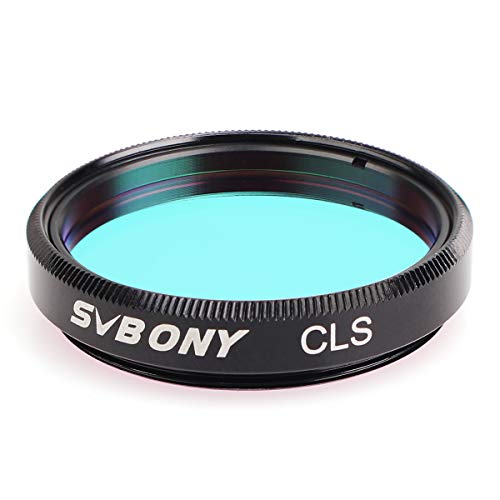
- 90% transmission of listed major nebula emission lines
- Targets specified sodium and mercury light-pollution wavelengths
- Coated 1.25-inch filter for compatible cameras and telescopes
Best For: Urban deep-sky observing and astrophotography
Nightscape Clarity Pick
K&F CONCEPT 67mm Natural Night Filter

- Reduces light pollution for clearer night-sky images
- Slim frame helps limit vignetting
- 28-layer coated optical glass has no stated color cast
Best For: 67mm camera lenses used for night photography
Suburban Nebula View
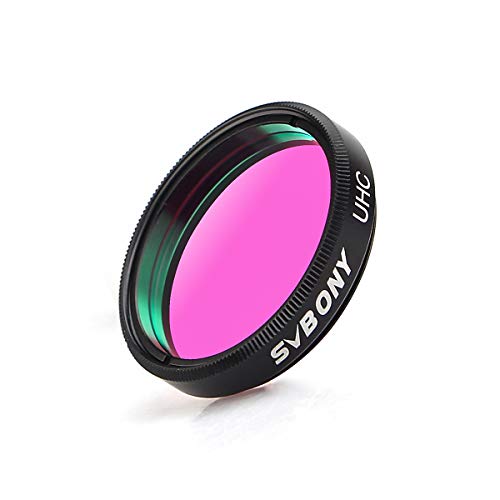
- Selectively reduces artificial-light wavelengths
- Darkens sky background around emission nebulae
- Standard 1.25-inch telescope filter thread
Best For: Telescope nebula viewing from city or suburban skies
Astrophotography Upgrade

- Multi-bandpass design for astrophotography
- Approximately 90% transmission at major nebula lines
- Black anodized aluminum cell helps suppress reflections
Best For: Astrophotography with compatible 2-inch equipment
Best Telescope LPR Filter
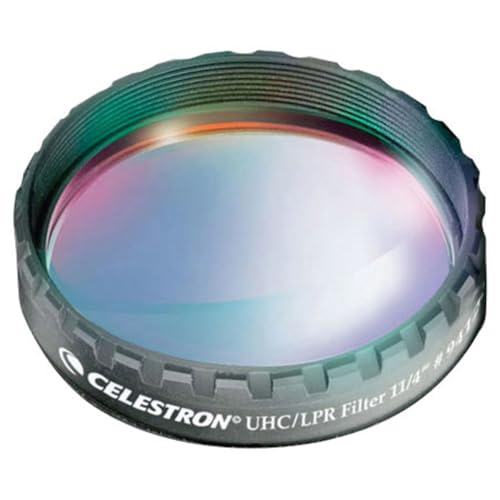
- Reduces selected artificial-light wavelengths
- Enhances nebula contrast and sky darkness
- Fits standard 1.25-inch telescope threads
Best For: Visual telescope observing in light-polluted areas
Best 49mm Camera Filter
Hoya Starscape Astrophotography

- Cuts yellow-orange night-light wavelengths
- Boosts star-to-sky contrast
- Slim frame suits wide-angle lenses
Best For: 49mm-lens astrophotography and urban night scenes
Best Square Night Filter
K&F Concept 100x100mm Natural Night

- Reduces common night-sky wavelengths
- Uses coated optical glass
- Fits several holder and lens systems
Best For: Holder-based night and astrophotography
Glass Cokin P Option

- 84 x 98 mm square format for Cokin P
- Optical glass with no color cast stated
- Includes a plastic flip case
Best For: Cokin P holders and square-filter setups
Urban Night Specialist
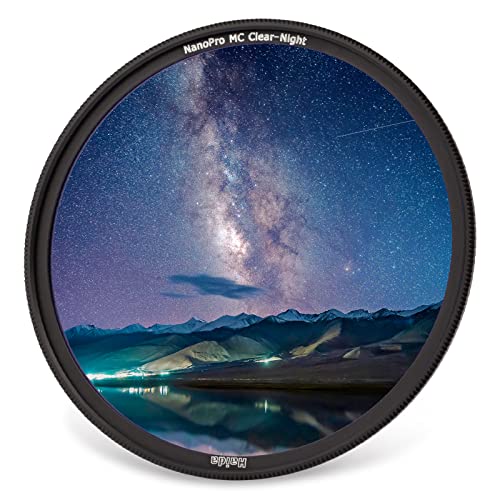
- Reduces artificial-light appearance in night images
- Multi-coated optical glass with nano coating
- Slim aluminum ring and storage case included
Best For: 77mm lenses used for urban night-sky photography
Compact Lens Fit
Walking Way Natural Night Filter

- 49mm screw-in filter for nighttime photography
- Neodymium glass with 28 coating layers
- Water-repellent, scratch-resistant, oil-proof coatings
Best For: 49mm lenses used for stars, cityscapes, and night scenes
Urban Nebula Contrast – SVBONY 1.25-inch CLS Filter
For observers and photographers comparing light pollution filters, this SVBONY CLS model is designed to reduce artificial urban light while preserving key nebula emission lines. Its 1.25-inch format suits compatible telescope and camera setups.
Best For: Deep-sky visual observing and astrophotography from urban or suburban locations with compatible color CCD cameras, unmodified DSLRs, or 1.25-inch accessories.
Pros:
- Transmits 90% of the listed major nebula emission lines, including Ha, OIII, SII, and H-beta.
- Lists just 0.1% transmission for specified artificial-light emission lines such as sodium and mercury wavelengths.
- Ion-assisted deposition coating is designed for durability, scratch resistance, and wavelength stability during temperature changes.
Cons:
- Compatibility is limited to the 1.25-inch thread and listed camera or telescope setups.
- It is not water resistant.
This is a specialized CLS option for users who want strong stated suppression of common artificial-light wavelengths without giving up substantial transmission at important nebula lines. Confirm your equipment accepts a 1.25-inch filter before buying.
Nightscape Clarity Pick – K&F CONCEPT 67mm Natural Night Filter
This K&F CONCEPT filter is a camera-focused choice for photographers seeking light pollution filters for night cityscapes, stars, and clearer night skies. Its 67mm thread fits cameras and lenses with the matching diameter.
Best For: Night-sky and city-night photography with 67mm camera lenses, especially when a slim, no-color-cast filter is preferred.
Pros:
- Designed to reduce light pollution while maintaining a clear, natural-looking image without color cast.
- Ultra-slim 0.15-inch frame helps minimize vignetting on wide-angle and telephoto lenses.
- Optical glass has 28 multilayer coatings on both sides and is described as waterproof, oil-resistant, and scratch resistant.
Cons:
- Only fits lenses with a 67mm filter diameter.
- It is intended for camera lenses rather than telescope eyepieces.
With its slim construction and broad protective coating package, this is a practical option for lens-based night photography. Check the lens thread size carefully, particularly if using step-up or step-down rings.
Suburban Nebula View – SVBONY 1.25-inch UHC Filter
This SVBONY UHC model is among the more telescope-specific light pollution filters in this roundup. It selectively reduces certain artificial-light wavelengths to darken the sky background and improve emission-nebula contrast.
Best For: Telescope users observing emission nebulae from city or suburban skies, with potential use in astrophotography through compatible 1.25-inch accessories.
Pros:
- Designed to reduce artificial-light wavelengths and improve emission-nebula contrast.
- Works for both celestial observation and astrophotography according to the supplied specifications.
- Standard 1.25-inch filter thread attaches to compatible eyepieces and accessories.
- Optical glass lens and aluminum frame provide a sturdy, purpose-built construction.
Cons:
- Its 1.25-inch barrel limits compatibility to matching telescope accessories.
- It is not water resistant.
This UHC filter is a straightforward choice when the priority is boosting nebula contrast rather than using a general camera-lens filter. Verify that your eyepiece or accessory has a standard 1.25-inch filter thread.
Astrophotography Upgrade – Optolong 2-inch L-Pro Filter
The Optolong L-Pro is a 2-inch, multi-bandpass option for photographers evaluating light pollution filters for astrophotography. It uses sharp roll-offs at listed light-pollution emission lines while maintaining approximately 90% transmission at major nebula emission lines.
Best For: Astrophotographers using standard camera lenses or other compatible 2-inch equipment who want a multi-bandpass filter with high stated nebula-line transmission.
Pros:
- Multi-bandpass design is intended specifically for astrophotography.
- Provides precise, sharp roll-off at light-pollutant emission lines.
- Offers approximately 90% transmission at major nebula emission lines.
- Multi-layer anti-reflection coating and a black anodized aerospace-grade aluminum cell help manage reflections.
Cons:
- Requires a compatible 2-inch, 48mm-thread setup.
- It is not water resistant.
- The supplied notes do not specify compatibility with telescope eyepieces beyond standard compatible equipment.
This is the most photography-oriented choice here for users who need a larger filter format and a carefully defined multi-bandpass profile. Confirm the 48mm thread and mounting arrangement before ordering.
Best Telescope LPR Filter – Celestron UHC/LPR 1.25-Inch
For telescope users comparing light pollution filters, the Celestron UHC/LPR filter is designed to selectively reduce wavelengths associated with artificial lighting. Its 1.25-inch format fits telescopes and cameras with standard 1.25-inch or 31.75mm threads.
Best For: Visual telescope observing under light-polluted skies, especially when a darker sky background and enhanced nebula contrast are priorities.
Pros:
- Designed to reduce selected artificial-light wavelengths.
- Supports enhanced nebula contrast and a darker sky background.
- Multi-coated optical glass with high light sensitivity.
- Includes a two-year limited warranty.
Cons:
- Limited to 1.25-inch or 31.75mm-compatible equipment.
- Made primarily for visual use rather than general camera-lens photography.
- It is not water resistant.
This is a straightforward choice for observers who want a compact LPR filter for compatible telescope eyepieces. Confirm your equipment’s thread size before buying.
Best 49mm Camera Filter – Hoya Starscape Astrophotography
The Hoya Starscape is one of the light pollution filters aimed specifically at night photographers. Its Didymium glass cuts unwanted yellow-orange wavelengths from sodium and mercury-vapor lighting while supporting contrast and color in astrophotography and urban night scenes.
Best For: DSLR and camera users shooting stars, Milky Way scenes, auroras, time-lapses, and city landscapes with 49mm lenses.
Pros:
- Reduces yellow-orange light pollution and skyglow.
- Didymium glass helps improve star-to-sky contrast.
- Multi-coated construction provides 97% or higher light transmission.
- Slim frame is designed to help avoid vignetting on wide lenses.
Cons:
- Compatible with 49mm camera lenses rather than telescope eyepieces.
- Its usefulness depends on having the correct lens thread size.
- It is a specialized filter for night photography, not a general-purpose daylight filter.
Choose this model when your priority is in-camera improvement for night photographs and your lens uses a 49mm thread. The slim, lightweight frame is especially practical for wide-angle setups.
Best Square Night Filter – K&F Concept 100x100mm Natural Night
The K&F Concept Natural Night filter is a square-format option for photographers using a compatible holder system. Among light pollution filters, it stands out for its 100x100mm optical glass, double-sided nano coating, and broad compatibility with several common holder sizes.
Best For: Night photography, architectural scenes, and astrophotography with 52mm-to-82mm lens systems and Lee, Cokin, Nisi, or similar holders.
Pros:
- Designed to reduce common night-sky light-pollution wavelengths.
- Supports improved contrast, clarity, and scene color.
- Double-sided nano coating is waterproof and scratch resistant.
- Square design works with multiple lens-holder systems.
Cons:
- Requires a compatible square filter holder.
- Less convenient than a direct screw-in filter for quick lens changes.
- The 100x100mm format may be larger than needed for some setups.
This filter makes sense for photographers who already use a square holder system or want one filter that can serve several lens sizes. Check holder compatibility before purchasing.
Glass Cokin P Option – ICE LiPo Didymium Filter
ICE LiPo Didymium Light Pollution Filter for Cokin P Optical Glass 84mm x 98mm
Check Price On AmazonIf you use a Cokin P holder, this ICE LiPo didymium filter offers a purpose-built way to manage artificial light in night photography. Its optical-glass construction and stated lack of color cast make it a practical option for photographers who want a broadband light pollution filter in a square format.
Best For: Cokin P users seeking a square optical-glass filter for night photography.
Pros:
- Fits Cokin P holders and measures 84 x 98 mm.
- Uses optical glass for the filter element.
- Designed as a broadband light pollution filter with no color cast stated.
- Includes a plastic flip case with a clear cover.
Cons:
- It is a single-purpose, square filter rather than a screw-in lens filter.
- The filter has no coating listed in the supplied specifications.
- It is not water resistant.
This is a straightforward choice when your camera system already uses Cokin P accessories. The included case adds convenient storage, while the lack of a listed coating means you should handle and clean the glass carefully.
Urban Night Specialist – Haida Clear-Night 77mm Filter
Haida’s Clear-Night filter is a 77mm screw-in option for reducing the appearance of artificial light in night-sky images and video. It is designed to absorb yellow wavelengths associated with sodium-vapor lamps while using coated optical glass for clarity and color fidelity.
Best For: Night-sky photographers and videographers using lenses with a 77mm filter thread.
Pros:
- Designed to reduce the visual impact of urban light pollution.
- Optical glass has multi-coated anti-reflection surfaces.
- Nano coating helps water and oil bead for easier cleaning.
- Ultra-slim 3.07mm aluminum alloy ring keeps the design lightweight.
Cons:
- Compatible only with cameras and lenses using a 77mm thread.
- It is not listed as water resistant, despite the water-beading coating.
- Users must verify the lens thread size before ordering.
The Clear-Night is a well-equipped choice for urban night work, especially if you value a slim frame and easier maintenance. Confirm the 77mm marking on your lens before purchase, since filter-thread compatibility is essential.
Compact Lens Fit – Walking Way Natural Night Filter
The Walking Way Natural Night filter is a 49mm screw-in light pollution filter aimed at night-sky, cityscape, and astrophotography. Its neodymium optical glass and extensive multi-coating are intended to preserve clear, natural-looking images while reducing unwanted urban lighting.
Best For: Photographers with 49mm lenses shooting stars, city scenes, or other nighttime subjects.
Pros:
- Designed to reduce light pollution from streetlamps, signs, and billboards.
- Uses HD neodymium glass with stated high light transmission and no chromatic aberration.
- Features 28 layers of anti-reflective and protective coatings.
- Coatings are described as water repellent, scratch resistant, and oil proof.
Cons:
- Compatible with 49mm filter threads only.
- The product information uses both “49mm” and a 77mm-symbol instruction, so buyers should carefully verify the actual lens size.
- It is a single filter rather than a broader accessory kit.
This filter stands out for its protective coating package and compact 49mm format. It can suit photographers who want one filter for several nighttime subjects, but checking the lens-thread marking is particularly important because the supplied listing text contains inconsistent size references.
How We Picked the Best Light Pollution Filters
We organized these Light Pollution Filters by intended use, optical format, filter design, and compatibility. Telescope filters generally use 1.25-inch or 2-inch barrels, while camera filters rely on lens threads or a square holder system. We also considered whether each filter is intended for visual observing, astrophotography, general night photography, or a combination of uses.
Because no filter can remove every source of skyglow, priority went to options that clearly identify their wavelength-reduction approach, glass or coating construction, and supported equipment. A filter’s value depends heavily on matching its design to the target and the surrounding lighting conditions.
Quick Comparison
- For 1.25-inch telescopes: Consider the SVBONY CLS, SVBONY UHC, or Celestron UHC/LPR options.
- For larger telescope accessories: The Optolong 2-inch L-Pro provides a wider format for compatible focusers, diagonals, and adapters.
- For camera lenses: Look at the threaded K&F CONCEPT, HOYA STARSCAPE, Haida Clear-Night, or Walking Way filters.
- For square holders: The K&F CONCEPT 100x100mm and ICE LiPo Cokin P filter suit systems designed for rectangular optical filters.
Key Buying Factors for Light Pollution Filters
Filter Type and Intended Target
Broadband and natural-night filters are usually the more versatile choices for wide-field photography and general night scenes. UHC-style filters are more selective and can increase contrast around emission nebulae, but they may produce less natural results on stars, galaxies, or daytime subjects. L-Pro designs typically aim for a balanced compromise between contrast and color retention.
Size and Mounting Compatibility
Check the exact connection before ordering. Telescope eyepiece filters are commonly specified by barrel diameter, such as 1.25 or 2 inches. Camera filters use the lens’s front-thread diameter, not the focal length. Square filters require a matching holder and adapter ring.
Coatings, Glass, and Color Behavior
Multicoated or nano-coated glass can help with transmission, reflections, and durability, but coatings do not make an incompatible filter useful. Didymium and other specialized designs can alter color balance, so review sample results and plan to correct white balance or color in post-processing when necessary.
Local Sky Conditions
Filters work best against specific sources of artificial light and cannot replace a genuinely dark location. Bright LED lighting, moonlight, haze, and light pollution across a broad spectrum may limit their effect. Avoid relying on a filter for observing targets that emit little of the wavelengths it passes.
Who Should Buy Which Light Pollution Filters?
Visual telescope observers should start with a compatible 1.25-inch broadband or UHC filter, depending on whether versatility or nebula contrast matters most. Astrophotographers using larger optical trains should consider a 2-inch filter if their accessories support it. Wide-field and nightscape photographers should choose a threaded filter that matches the largest lens they plan to use, or a square system for easier lens sharing. Traveling photographers may prefer a compact, multicoated natural-night filter, while users seeking maximum flexibility should prioritize reliable sizing and neutral color over the strongest possible contrast effect.