
Long exposures reveal far more detail in the Milky Way, star fields, and deep-sky subjects than a stationary tripod can capture—but Earth’s rotation quickly turns stars into trails. A motorized star tracker compensates for that movement, allowing sharper exposures with more usable detail.
We selected 10 options ranging from compact camera trackers for travel and nightscapes to equatorial mounts with polar scopes, counterweights, and GoTo control. The right choice depends on your camera weight, portability needs, alignment workflow, and intended exposure length.
Best 10 Star Trackers for Long Exposure Photography Picks for 2026
Best Overall
Sky-Watcher Star Adventurer 2i Pro Pack
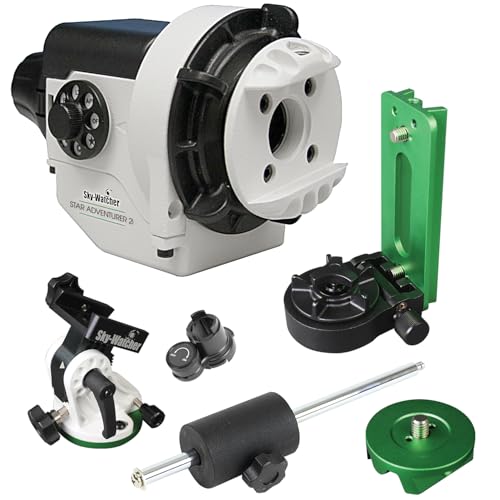
- Wi-Fi smartphone control via SAM Console
- Supports wide-field and telescopic use
- Includes an equatorial base
Best For: Versatile nightscape and astronomy photography
Best Open-Source Design
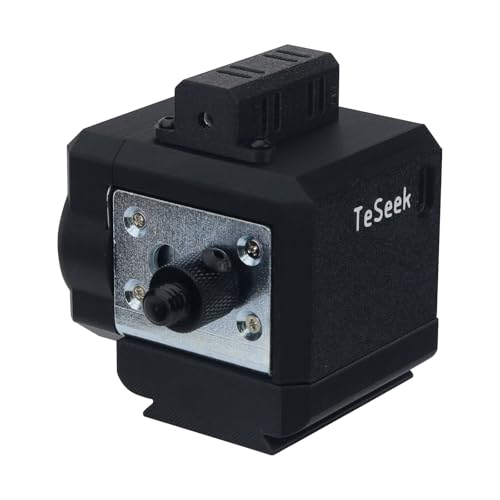
- Offers custom rotation speeds
- Works without a dedicated app
- Supports USB-C power-bank operation
Best For: DIY-oriented astrophotography and time-lapse setups
Best Lightweight Option
Sky-Watcher Star Adventurer Mini

- Weighs just 1.5 pounds
- Supports setups up to 6.6 pounds
- Includes polar scope and equatorial base
Best For: Portable DSLR and mirrorless nightscape photography
Best Simple Camera Mount
iOptron SkyTracker Pro Camera Mount

- Supports payloads up to 6.6 pounds
- Includes a polar scope and padded bag
- Offers four tracking modes
Best For: Straightforward camera-based tracking setups
Backcountry Pick
SLIK ECH-630 Compact Star Tracker
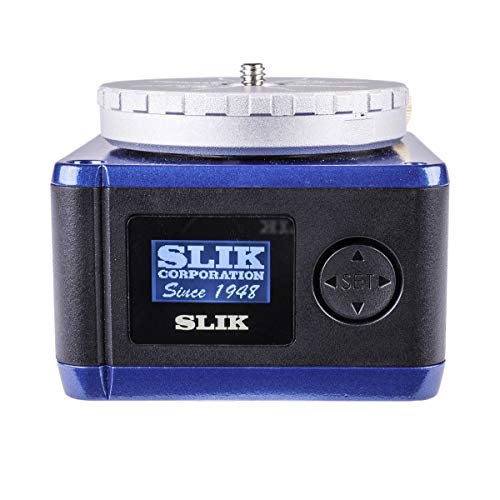
- Celestial, lunar, solar, and time-lapse speeds
- Lightweight 22.4-ounce design
- Up to 20 hours on four AA batteries
Best For: Backpacking photographers needing flexible tracking modes
Polar-Scope Mount
iOptron SkyTracker Pro Camera Mount
- Polar scope included
- 6.6-pound maximum capacity
- Designed for tripod mounting
Best For: Existing tripod users wanting an adjustable camera mount
Smartphone-Controlled Pick
Sky-Watcher Star Adventurer Mini

- Wi-Fi control through the SynScan app
- Includes polar scope and illuminator
- 6.6-pound payload with up to 24-hour AA runtime
Best For: Portable DSLR and mirrorless nightscape photography
Flexible Open-Source Pick
TeSeek Equatorial Star Tracker

- Custom stellar, moon, and rotation speeds
- Northern- and southern-hemisphere support
- App-free, USB-C powered operation
Best For: Photographers wanting customizable tracking and time-lapse use
Portable GoTo Upgrade
Sky-Watcher Star Adventurer GTi

- Full GoTo performance
- Built-in Wi-Fi and illuminated polar scope
- Includes counterweight bar and 5-pound counterweight
Best For: Users wanting a feature-rich portable GoTo mount
Heavy-Duty Alignment Choice
TeSeek Tracker with Latitude Base

- All-metal CNC latitude adjustment base
- Listed 15 kg base load capacity
- Custom speeds and hemisphere switching
Best For: Photographers wanting sturdier latitude adjustment and flexible tracking
Best Overall – Sky-Watcher Star Adventurer 2i Pro Pack
The Sky-Watcher Star Adventurer 2i Pro Pack is a capable choice for photographers comparing star trackers for long exposure photography. Its motorized platform supports wide-field astrophotography, while Wi-Fi control, a modular design, and the included equatorial base make it adaptable for nightscapes, time-lapse work, and compatible telescopic setups.
Best For: Photographers wanting a versatile, Wi-Fi-enabled tracker for Milky Way scenes, eclipses, and other wide-field astronomical subjects.
Pros:
- Supports wide-field astrophotography, time-lapse video, and telescopic use.
- Wi-Fi enables smartphone control through Sky-Watcher’s free SAM Console app.
- Included deluxe equatorial base helps with polar-alignment positioning.
- Works with existing photographic tripods through its modular design.
Cons:
- At 7 pounds, it is less travel-friendly than the Star Adventurer Mini.
- Its modular setup may require more preparation than a simpler camera mount.
The 2i Pro Pack is a strong all-around option when flexibility matters more than minimum weight. It is especially appealing for photographers who want smartphone control and room to expand beyond basic nightscape shooting.
Best Open-Source Design – PETG-CF Equatorial Mount
This PETG-CF equatorial mount offers an unusual, app-free approach for photographers evaluating star trackers for long exposure photography. It supports stellar, lunar, and custom rotation speeds, works in both hemispheres, and can also function as a time-lapse gimbal head when paired with suitable camera accessories.
Best For: Technically minded photographers who want custom rotation settings, USB-C power, and an open-source mount design.
Pros:
- Supports stellar speed, moon speed, custom rotation speed, and northern or southern hemisphere use.
- Requires no app and is ready to use when powered on.
- Can run from a power bank through its USB-C port.
- Functions as a time-lapse gimbal head and accepts a standard quick-release clamp.
Cons:
- A ball head is required to connect a camera.
- A separate 1/4-to-3/8-inch screw sleeve may be needed for many ball heads.
- It has no built-in battery and requires a USB A-to-C power cable.
This mount stands out for customization and app-free operation, but its connection and power requirements deserve attention before purchase. It is best suited to users comfortable assembling a camera-support system around the mount.
Best Lightweight Option – Sky-Watcher Star Adventurer Mini
The Sky-Watcher Star Adventurer Mini is a compact option for photographers seeking star trackers for long exposure photography on the go. It weighs 1.5 pounds, supports most DSLR and mirrorless camera setups up to 6.6 pounds, and includes a polar scope, equatorial base, and declination bracket for a more complete portable setup.
Best For: Backpacking and travel photographers who prioritize low weight, mobile power, and compatibility with DSLR or mirrorless cameras.
Pros:
- Lightweight 1.5-pound tracker fits easily in a camera bag or backpack.
- Supports most DSLR and mirrorless camera setups up to 6.6 pounds.
- Includes a polar scope, equatorial base, and declination bracket.
- Offers Wi-Fi smartphone control through the free SynScan app.
Cons:
- AA batteries and the 5V mini-USB power source are not included.
- Counterweights are not included for the declination-bracket setup.
- Its 6.6-pound payload is more limited than heavier-duty configurations.
The Star Adventurer Mini is a practical choice when portability is the priority. Its included alignment accessories and flexible power options make it convenient for mobile nightscape work, provided your camera setup stays within its payload rating.
Best Simple Camera Mount – iOptron SkyTracker Pro Camera Mount
The iOptron SkyTracker Pro is a straightforward camera mount for photographers comparing star trackers for long exposure photography. It provides automatic right-ascension tracking, a 6.6-pound payload, a polar scope, and several tracking modes for sidereal, sky-and-landscape, solar, and lunar photography.
Best For: Camera users who want a dedicated tracking mount with multiple speed modes and a relatively simple control approach.
Pros:
- Supports camera loads up to 6.6 pounds or 3 kilograms.
- Offers sidereal, half-speed, solar, and lunar tracking modes.
- Includes a polar scope and padded bag.
- Uses automatic right-ascension tracking and charges through Micro USB.
Cons:
- This listing is for the mount only.
- It is not water resistant.
- Maximum shutter speed is listed as 30 seconds.
The SkyTracker Pro is a sensible fit for photographers who value focused camera tracking without a broader accessory bundle. Its polar scope and multiple tracking modes add flexibility, but buyers should plan for any additional support hardware needed for their camera.
Backcountry Pick – SLIK ECH-630 Compact Star Tracker
The SLIK ECH-630 is a compact option for star trackers for long exposure photography, with selectable speeds for celestial, lunar, solar, and time-lapse work. Its 22.4-ounce design and 20-hour battery life make it practical for photographers who travel light.
Best For: Backpacking and backcountry photographers who want multiple tracking modes in a lightweight unit.
Pros:
- Supports celestial, lunar, solar, and time-lapse photography speeds.
- Compact 22.4-ounce design suits backpacking.
- Runs for up to 20 hours on four AA batteries.
- LCD menu provides simple controls; an optional micro-adjustment head can assist polar alignment.
Cons:
- The micro-adjustment head for easier polar alignment is optional.
- The supplied notes do not indicate that a tripod or camera head is included.
Choose the ECH-630 when portability and operating flexibility matter more than an all-in-one kit. Its modest weight and long AA-battery runtime are especially useful away from power outlets.
Polar-Scope Mount – iOptron SkyTracker Pro Camera Mount
The iOptron SkyTracker Pro is a camera mount for star trackers for long exposure photography, featuring a polar scope and a stated 6.6-pound maximum capacity. Because this listing is for the mount only, plan your supporting equipment around the camera and tripod you already use.
Best For: Photographers who want a dedicated camera mount with polar alignment hardware and an existing tripod setup.
Pros:
- Includes a polar scope for alignment.
- Supports up to 6.6 pounds.
- Adjustable design mounts to a tripod.
- Alloy steel and aluminum construction.
Cons:
- This package is mount only, so additional supporting gear may be needed.
- It is not water resistant.
- An optional balance weight kit is suggested for payloads over 3 pounds.
The SkyTracker Pro makes sense for users building a modular setup around their existing tripod and camera accessories. Check your total payload and consider the optional balance kit when approaching the higher end of its capacity.
Smartphone-Controlled Pick – Sky-Watcher Star Adventurer Mini
The Sky-Watcher Star Adventurer Mini is a portable choice among star trackers for long exposure photography, combining motorized night-sky tracking with smartphone control. Its included polar scope, 6.6-pound payload rating, and compact 1.5-pound body suit mobile nightscape work.
Best For: DSLR and mirrorless photographers who want portable tracking, app control, and support for nightscapes, time-lapses, and panoramas.
Pros:
- Wi-Fi enabled for control through the free SynScan app.
- Includes a polar scope and illuminator for alignment with Polaris.
- Supports up to 6.6 pounds and accepts a ball head through the included adapter.
- Runs up to 24 hours on AA batteries, with a 5V mini-USB input for external power.
Cons:
- It is not water resistant.
- A ball head is not listed as included; the package includes an adapter for attaching one.
- Using smartphone control requires a compatible Android or iOS device and the SynScan app.
The Star Adventurer Mini is a strong fit for photographers who value a compact, connected setup. Its polar scope, long battery runtime, and broad camera compatibility make it versatile for travel-based night-sky shooting.
Flexible Open-Source Pick – TeSeek Equatorial Star Tracker
For photographers comparing star trackers for long exposure photography, this compact TeSeek equatorial mount offers adjustable tracking without requiring an app. It supports stellar, moon, and custom rotation speeds, plus northern- and southern-hemisphere operation.
Best For: Camera users who want a compact, power-bank-ready tracker with customizable speeds and time-lapse capability.
Pros:
- Supports stellar, moon, and custom rotation speeds.
- Works in both northern and southern hemispheres.
- Can function as a gimbal head for time-lapse photography.
- Uses a 38mm quick-release base and USB Type-C power.
Cons:
- No built-in battery; a power source and USB-A-to-C cable are required.
- A separate ball head is required to connect a camera.
- A 1/4-to-3/8-inch screw sleeve may be needed for some ball heads.
Its app-free operation and customizable rotation make it an adaptable option, but buyers should plan for the extra ball-head hardware and external power requirements.
Portable GoTo Upgrade – Sky-Watcher Star Adventurer GTi
Among star trackers for long exposure photography, the Sky-Watcher Star Adventurer GTi stands out for its full GoTo performance in a portable package. The mount head includes built-in Wi-Fi, a counterweight system, and an illuminated polar scope.
Best For: Astrophotographers seeking a compact, battery- or externally powered GoTo mount for DSLR, mirrorless, or smartphone setups.
Pros:
- Provides full GoTo performance in a compact mount head.
- Includes built-in Wi-Fi.
- Built-in polar scope has an illuminator.
- Includes a counterweight bar and 5-pound counterweight.
Cons:
- Dovetail for mounting a DSLR or mirrorless camera is not included.
- Listed weight is 6.9 kg, making it less minimal than smaller tracker designs.
- Requires batteries or external power.
This is the most feature-oriented option in the group, especially for users who value GoTo and Wi-Fi, though the missing dovetail and heavier setup add purchasing and portability considerations.
Heavy-Duty Alignment Choice – TeSeek Tracker with Latitude Base
Equatorial Mount Star Tracker with Latitude Adjustment Base for Astrophotography
Check Price On AmazonFor photographers evaluating star trackers for long exposure photography, this TeSeek model adds an all-metal CNC-machined latitude adjustment base to the same customizable tracking platform. It supports stellar, moon, and custom speeds, with a listed 15 kg base load capacity.
Best For: Camera users who prioritize a sturdy latitude-adjustment base and want a tracker that can also handle gimbal-style time-lapse work.
Pros:
- Includes an all-metal, anodized latitude adjustment base.
- Lists a 15 kg load capacity for the base.
- Supports northern- and southern-hemisphere operation and custom speeds.
- Can be powered by a power bank and used as a time-lapse gimbal head.
Cons:
- No built-in battery.
- A separate ball head is required for camera connection.
- The base uses a 3/8-inch bottom thread, while the tracker output is 1/4 inch; an adapter sleeve may be needed.
The metal latitude base makes this the more substantial TeSeek choice, but compatibility checks are important because the camera connection still requires a ball head and possibly a thread adapter.
How We Picked the Best Star Trackers for Long Exposure Photography
We compared these mounts by the features that matter most in real-world astrophotography: tracking capability, payload support, polar-alignment tools, portability, power options, setup complexity, and overall flexibility. The list includes compact trackers for DSLR and mirrorless cameras, as well as larger equatorial systems designed for heavier lenses or more advanced imaging.
Because product configurations can vary, verify whether a listing includes a tripod, ball head, polar scope, counterweight, latitude base, or GoTo controller before buying. “Mount only” packages may require additional accessories to become a complete shooting system.
Quick Comparison
| Best For | Look For | Typical Advantage |
|---|---|---|
| Travel and nightscapes | Compact body, simple controls, low weight | Fast setup and easy transport |
| Longer lenses | Higher payload capacity and counterweight support | Improved balance and tracking stability |
| Beginner astrophotography | Polar scope, latitude adjustment, straightforward alignment | Less guesswork during setup |
| Advanced imaging | Equatorial tracking, GoTo control, accessory compatibility | More precise framing and expansion potential |
Key Buying Factors for Star Trackers for Long Exposure Photography
Payload and Balance
Check the stated payload against your camera, lens, ball head, mounting plate, and any counterweight. Staying comfortably below the maximum capacity generally improves stability and tracking performance, especially with long or front-heavy lenses.
Polar Alignment
A built-in or included polar scope can make alignment faster and more accurate. Latitude adjustment bases are particularly useful when your tripod head does not provide smooth, precise positioning. Poor alignment can produce field rotation or elongated stars even when the tracker is running correctly.
Tracking Modes and Run Time
Look for sidereal tracking for stars, plus lunar or solar modes if you photograph those subjects. Battery life and power compatibility also matter for remote sessions; some compact trackers run on standard batteries, while others may favor USB or external power.
Portability and Controls
A compact tracker is easier to carry and often better for wide-angle nightscapes. Larger mounts offer greater capacity and more control but add weight, setup time, and sometimes the need for a sturdier tripod. GoTo systems can simplify locating targets, although they typically require more careful setup.
Who Should Buy Which Star Trackers for Long Exposure Photography?
Choose a compact Sky-Watcher Star Adventurer Mini or SLIK tracker if you prioritize travel, panoramas, time-lapse work, or wide-angle nightscapes. These designs suit photographers who want a lightweight system without committing to a full equatorial setup.
The Star Adventurer 2i, iOptron SkyTracker Pro, and similar equatorial camera mounts are better choices for DSLR or mirrorless users who need more dependable tracking with moderate lenses. Prioritize a package with a polar scope and the accessories you actually need.
For heavier setups, longer focal lengths, or future expansion, consider a mount with a counterweight, latitude base, or GoTo functionality. The Star Adventurer GTi and comparable equatorial mounts demand more from your tripod and alignment technique, but they offer a stronger foundation for serious deep-sky photography.