
The best sleeping bags balance warmth, packed size, comfort, and weather protection without adding unnecessary weight to your camping kit. This roundup compares 10 options for backpacking, family camping, cold-weather trips, and casual outdoor use.
Use the buying guide below to match a bag’s temperature rating, shape, insulation, and fit to the conditions you expect to encounter.
Best 10 Sleeping Bags Picks for 2026
Best All-Season Value

- 50–77°F comfort range for mild-weather camping
- About 3 pounds with compression sack
- Waterproof shell and machine-washable design
Best For: Casual camping, backpacking, and family trips
Best for Big-and-Tall Winter Camping
Coleman Heritage 10°F Sleeping Bag

- 10°F rating for cold-weather camping
- 40-by-84-inch size fits users up to 6 feet 7 inches
- Flannel lining and machine-washable construction
Best For: Tall adults, winter camping, and car camping
Best Spacious Cold-Weather Pick
HiZYNICE XXL Flannel Sleeping Bag

- Roomy 90-by-39-inch size for tall and side sleepers
- 30°F comfort rating with 15°F limit rating
- Converts into a blanket and is machine washable
Best For: Big-and-tall adults, side sleepers, and cabin stays
Best Lightweight Travel Design
Portable 3-Season Sleeping Bag
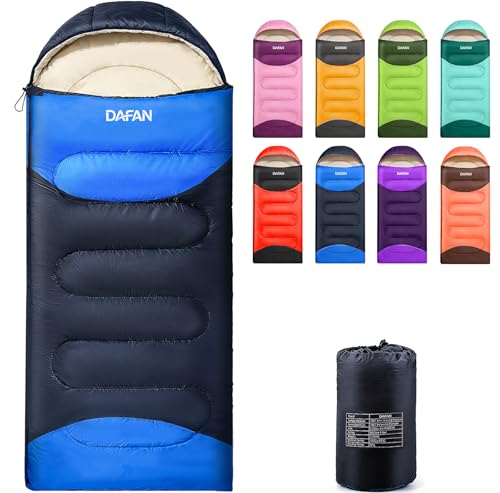
- 1.35 kg weight with compact compression sack
- 50–68°F comfort range for mild-weather trips
- Blanket-opening zipper and foot-end ventilation
Best For: Backpacking, travel, sleepovers, and three-season camping
Deep-Cold Protection

- Rated for temperatures as low as 0°F
- Big-and-tall mummy design
- Machine washable with 5-year warranty
Best For: Winter camping and cold-weather sleepers up to 6 ft. 2 in.
Easy-Care Comfort
PTEROMY Machine-Washable Sleeping Bag

- 87-inch length suits users up to 6–7 feet
- Machine washable with hollowfiber filling
- Pocket, hood drawstring, and ventilation zipper
Best For: Tall campers and frequent-use outdoor trips
Portable Adventure Option
Sportneer 3-Season Sleeping Bag

- 3–4-season design with 50–80°F comfort
- Two-way zipper supports foot ventilation
- Roomy 87-by-31.5-inch rectangular shape
Best For: Camping, hiking, and recreational backpacking
Best All-Season Value – MalloMe 3-Season Sleeping Bag
For campers who want versatile sleeping bags without a bulky setup, the MalloMe offers a practical balance of warmth, portability, and easy care. Its 50–77°F rating suits spring, summer, fall, and cool-weather trips, while the included compression sack simplifies transport.
Best For: Casual camping, backpacking, family trips, and campers seeking a lightweight everyday sleeping bag.
Pros:
- Lightweight design weighs about 3 pounds and includes a compression sack.
- Waterproof outer shell and synthetic fill help provide insulation in damp conditions.
- Machine washable and easy to wipe clean.
- Snag-resistant double-sided zipper, drawstring headrest, and securing strap add convenience.
Cons:
- Its 50–77°F rating is not intended for severe winter conditions.
- Rectangular single-person design may be less compact than a mummy-style bag.
The MalloMe is a flexible choice for mild-weather adventures and occasional indoor use. Choose it for portability and maintenance simplicity rather than deep-cold performance.
Best for Big-and-Tall Winter Camping – Coleman Heritage 10°F Sleeping Bag
The Coleman Heritage is one of the more substantial sleeping bags in this roundup, combining a roomy 40-by-84-inch profile with insulation rated to 10°F. Its cotton cover, flannel liner, and five pounds of Holofill 808 insulation emphasize warmth and comfort for cold-weather camping.
Best For: Tall adults, winter camping, hunting trips, and anyone prioritizing warmth and interior space over low weight.
Pros:
- Large size accommodates campers up to 6 feet 7 inches tall.
- 10°F rating and five pounds of Holofill 808 insulation support cold-weather use.
- Soft flannel liner and heavy-duty cotton cover provide a comfortable, durable feel.
- Machine washable and covered by a five-year limited warranty.
Cons:
- At 8.9 pounds, it is considerably heavier than backpacking-oriented sleeping bags.
- Its large packed size may be inconvenient for lightweight travel.
This Coleman is built for warmth, generous proportions, and campsite comfort. It makes more sense for car camping or stationary use than for long-distance backpacking.
Best Spacious Cold-Weather Pick – HiZYNICE XXL Flannel Sleeping Bag
The HiZYNICE XXL is designed for sleepers who dislike restrictive sleeping bags. Its 90-by-39-inch shape provides extra room for tall or side sleepers, while the 30°F comfort rating, 15°F limit, and 0°F extreme rating make it suited to colder camping when used appropriately.
Best For: Big-and-tall adults, side sleepers, cabin and RV stays, and campers wanting a bag that can also become a blanket.
Pros:
- Oversized 90-by-39-inch design fits adults up to 6 feet 7 inches tall.
- 100% cotton flannel lining offers a soft, cozy sleeping surface.
- Two-way zipper supports ventilation and can open the bag into a blanket.
- Water-resistant shell, compression sack, and machine-washable construction add practicality.
Cons:
- Its seven-pound weight is less suitable for minimalist backpacking.
- The stated 30°F comfort rating is warmer than its 0°F extreme rating; users should plan around the comfort rating.
The HiZYNICE stands out for space and versatility rather than ultralight portability. It is a strong option when flannel comfort and room to move matter most.
Best Lightweight Travel Design – Portable 3-Season Sleeping Bag
This lightweight sleeping bag is made for mild-weather travel, with a 50–68°F comfort range and a compact compression profile. The two-way zipper, foot-end ventilation, water-repellent shell, and included sack make it a practical choice for hiking, camping, road trips, and sleepovers.
Best For: Spring-to-fall backpacking, travel, sleepovers, and campers who want a portable bag with flexible ventilation.
Pros:
- Weighs 1.35 kg and compresses to approximately 39 × 26 × 10 cm.
- Two-way zipper opens the bag into a blanket, while the foot zipper improves ventilation.
- 190T tear-resistant polyester shell is water-repellent and breathable.
- Machine-washable lining and compression sack support convenient use and storage.
Cons:
- The 50–68°F comfort range is not designed for freezing conditions.
- The listed three-month warranty is shorter than some competing options.
For mild adventures, this model offers a useful combination of compact packing and adaptable ventilation. It is better suited to three-season travel than cold-weather camping.
Deep-Cold Protection – Coleman North Rim 0°F
For campers choosing sleeping bags for genuinely cold conditions, the Coleman North Rim is built around a below-0°F temperature rating and a mummy shape that helps retain warmth. Its big-and-tall design, adjustable hood, and draft tube make it a practical option for winter camping.
Best For: Cold-weather campers up to 6 feet 2 inches tall who want a warm mummy-style sleeping bag.
Pros:
- Rated for temperatures as low as 0°F.
- Coletherm hollow polyester insulation balances warmth and weight.
- Thermolock draft tube and adjustable hood help limit heat loss.
- Machine washable and backed by a 5-year limited warranty.
Cons:
- Its mummy shape may feel more restrictive than an envelope bag.
- The 0°F-oriented design is more specialized than a mild-weather sleeping bag.
Choose this model when warmth is the priority. The roomy 82-by-32-inch dimensions and ventilation-adjustable hood add comfort, while the no-snag zipper supports easier use in camp.
Lightweight Three-Season Value – 3.3 lb Waterproof Sleeping Bag
These sleeping bags are aimed at campers who want a portable, budget-conscious option for moderate conditions. The rectangular design fits users up to 5 feet 11 inches, while the waterproof outer fabric, compression sack, and 3.3-pound weight suit camping, hiking, and travel.
Best For: Three-season camping, casual outdoor trips, and families seeking a compact sleeping bag for moderate temperatures.
Pros:
- Lightweight 3.3-pound pack weight with a compression bag included.
- Waterproof and breathable polyester outer cover helps resist dampness.
- Drawstring hood and foot zipper provide useful warmth and ventilation adjustments.
- Rectangular 31.5-by-86.6-inch design offers room for most campers up to 5 feet 11 inches.
Cons:
- Its stated design range of 50°F to 68°F is not intended for severe cold.
- It is less suitable for taller campers than the listed 5-foot-11-inch limit.
This is a versatile choice for mild-weather adventures and backup use. The compact packed size is convenient, but shoppers should match it to the stated moderate-temperature range rather than winter conditions.
Soft Envelope Comfort – REDCAMP Cotton Flannel
For shoppers comparing sleeping bags for comfort-focused camping, the REDCAMP envelope bag pairs a soft flannel liner with rebounded hollow cotton-fiber insulation. Multiple filling options let campers select a warmer configuration, while the two-way zipper can connect two compatible bags.
Best For: Adults up to 6 feet tall who prefer a roomy envelope sleeping bag for camping and spring-to-mild cold-weather use.
Pros:
- Soft flannel construction and hollow cotton-fiber insulation emphasize comfort.
- Available with 2-, 3-, 4-, or 6-pound filling options.
- Two-way zipper allows compatible bags to be attached together.
- Includes a compression sack and internal storage pocket.
Cons:
- The listed 2-pound version is intended for warmer conditions than the heavier fills.
- At about 4 pounds for the specified version, it is less focused on ultralight packing.
- The envelope shape may provide less heat-conserving fit than a mummy bag.
This model makes sense for campers who value softness, space, and configuration flexibility. Select the filling level according to expected temperatures, since the supplied comfort ranges vary significantly by insulation amount.
Versatile 3-Season Pick – Oaskys Camping Sleeping Bag
For campers seeking practical sleeping bags for spring, summer, and fall, the Oaskys model combines a weather-resistant polyester shell with a comfortable rectangular design. Its compression sack and adjustable hood make it a convenient choice for camping, hiking, and travel.
Best For: Adults who want a portable, weather-resistant sleeping bag for mild three-season adventures.
Pros:
- Designed for 50–80°F comfort conditions.
- Waterproof, breathable, anti-tearing outer fabric helps resist dampness.
- Adjustable hood and separated bottom zipper provide added warmth and ventilation.
- Includes a compression sack with straps for easier carrying and storage.
Cons:
- The listed comfort range is better suited to mild conditions than severe cold.
- At approximately 3 pounds, it may not be the lightest option for minimalist backpacking.
Choose this Oaskys sleeping bag if weather resistance, flexible ventilation, and straightforward portability matter more than ultralight weight.
Easy-Care Comfort – PTEROMY Machine-Washable Sleeping Bag
The PTEROMY is a practical option for shoppers who want sleeping bags that are comfortable, portable, and easy to maintain. Its hollowfiber cotton filling and spun-cotton lining are designed to retain warmth after machine washing, while the long 87-inch design accommodates users up to 6–7 feet tall.
Best For: Tall campers and travelers who prioritize machine-washable construction and convenient features.
Pros:
- Provides a stated 50–80°F comfort range for spring, summer, and fall use.
- Machine-washable construction is designed to resist filling clumping.
- Includes a hood drawstring, inner Velcro pocket, and ventilating bottom zipper.
- Compression bag supports space-saving transport and storage.
Cons:
- The supplied details list a winter season designation despite the stated three-season temperature range.
- Its approximately 3-pound weight may be more noticeable on longer backpacking trips.
With its generous length and washable construction, this PTEROMY sleeping bag is especially appealing for frequent users who want simpler cleanup between outdoor trips.
Portable Adventure Option – Sportneer 3-Season Sleeping Bag
The Sportneer gives campers a balanced set of features for spring, summer, and fall outings. These sleeping bags use polyester construction, a two-way zipper, and an adjustable hood, while the included carry bag helps keep transport simple for camping, hiking, and backpacking.
Best For: Adults and older children seeking a portable rectangular sleeping bag with flexible foot ventilation.
Pros:
- Designed for 3–4-season versatility with a stated 50–80°F comfort range.
- Two-way bottom zipper lets users free their feet or increase ventilation.
- Adjustable hood drawstring helps retain warmth around the head.
- Full-size 87-by-31.5-inch shape accommodates a range of body sizes.
Cons:
- At about 3.3 pounds, it is not the lightest choice for weight-conscious backpackers.
- The supplied notes do not specify a waterproof rating for the outer fabric.
This Sportneer sleeping bag is a sensible middle-ground pick for recreational campers who value adaptable zipper access, a roomy fit, and easy portability.
How We Picked These Sleeping Bags
We selected these Sleeping Bags across several common use cases rather than focusing on one design. The lineup includes lightweight three-season bags for backpacking, insulated cold-weather models for low temperatures, roomy rectangular options for comfort, and machine-washable choices for frequent family camping.
We considered stated temperature ratings, insulation and shell materials, packed size, weight, zipper design, hood and draft protection, sizing, water resistance, and practical care requirements. Because temperature ratings are not perfectly comparable across brands, treat them as planning guidelines and use a properly rated sleeping pad underneath your bag.
Quick Comparison
| Best For | Look For | Featured Types |
|---|---|---|
| Backpacking | Low weight, compact compression sack | Lightweight mummy and rectangular bags |
| Cold weather | Lower temperature rating, hood, draft collar | 0°F and 10°F insulated designs |
| Comfort camping | Roomy cut, soft lining, generous length | Big-and-tall and envelope bags |
| Family use | Easy cleaning, simple zipper, versatile rating | Washable three-season options |
Key Buying Factors for Sleeping Bags
Temperature Rating
Choose a bag based on the lowest conditions you realistically expect, not the warmest forecast. A colder-rated bag offers more protection, while a summer or mild three-season model may be lighter and less restrictive. Women, cold sleepers, and anyone camping at elevation may prefer additional warmth.
Shape, Size, and Insulation
Mummy bags retain heat efficiently but feel narrower around the legs and shoulders. Rectangular and oversized bags provide more room for changing position, layering, or sharing space, but usually weigh more. Synthetic insulation handles damp conditions well and is generally easier to clean; down is lighter and more compressible but needs careful moisture management.
Weight, Packed Size, and Weather Protection
For backpacking, compare both listed weight and compressed dimensions. Look for a water-resistant shell, reliable zipper, insulated draft tube, and a hood when cold-weather performance matters. A compression sack can reduce bulk, but do not store synthetic or down insulation compressed for long periods.
Who Should Buy Which Sleeping Bags?
Backpackers: Choose a lightweight three-season model with a compression sack and a packed size that leaves room for other essentials.
Cold-weather campers: Prioritize a low temperature rating, hood, draft protection, and enough room for base layers. Pair the bag with an insulated sleeping pad.
Families and casual campers: A washable synthetic bag with a forgiving temperature range and straightforward zipper is often the easiest choice.
Tall or larger sleepers: Look for big-and-tall or XXL sizing before comparing insulation. A bag that fits poorly can lose warmth and reduce comfort regardless of its rating.