
The best science experiment sets turn screen-free play into hands-on discovery, giving kids practical ways to explore chemistry, physics, geology, biology, and engineering.
We compared 10 science experiment sets under $50 for age range, experiment variety, included materials, educational value, and the kind of play each kit encourages.
Best 10 Science Experiment Sets Under 50 Picks for 2026
Best Magic-Science Blend
National Geographic Science Magic Kit

- 100-plus magic tricks and experiments
- Includes materials and an additional experiment booklet
- Designed for ages 8 and up; no batteries required
Best For: Kids who enjoy STEM activities with a magic-themed twist
Best Earth Science Variety
Discovery Planet Earth Science Kit
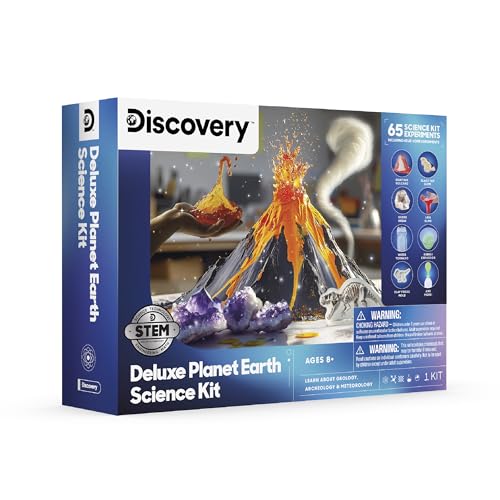
- Includes 65 earth-science experiments and activities
- Covers volcanoes, fossils, crystals, weather, and slime
- Includes project tools, ingredients, and an instruction guide
Best For: Kids ages 8 and up who enjoy earth and environmental science
Best Organized Home Lab
Science Can 50+ Experiment Set

- Includes a station for organizing lab tools
- Offers 50-plus chemistry and physics activities
- Includes goggles and an illustrated step-by-step manual
Best For: Children who like structured, lab-style STEM projects
Best for Younger Experimenters

- Includes more than 60 hands-on experiments
- Designed for children ages 4 and up
- Comes with tools, materials, goggles, and an illustrated manual
Best For: Young children beginning hands-on STEM exploration with a parent
Most Complete Science Variety
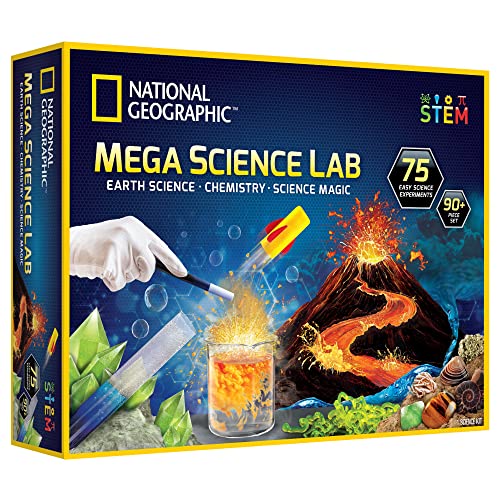
- Three-in-one earth science, chemistry, and magic kit
- Includes 75 experiments and real specimens
- Recommended for ages 8 and up
Best For: Kids who want a wide range of hands-on science activities
Best for Circuit Building

- 66 snap-together electronics components
- No soldering or extra tools required
- Manual features over 1,200 project possibilities
Best For: Young builders exploring circuits and electrical engineering
Best Hands-On Lab Variety

- Includes 80 guided laboratory experiments
- Comes with goggles, gloves, tools, and materials
- Features rainbow, volcano, and balloon activities
Best For: Young scientists who enjoy guided lab-style experiments
Best Color Chemistry Pick
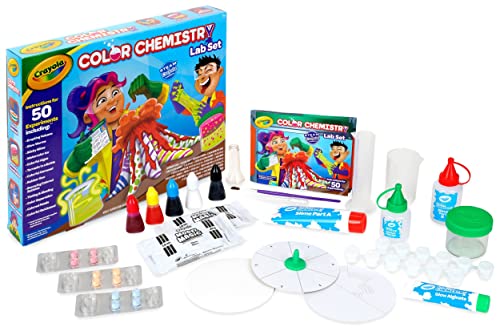
- 50 experiments with a color and chemistry theme
- Developed by Crayola scientists
- Safe and nontoxic components for ages 7+
Best For: Color-focused STEM activities for kids ages 7 and up
Best Variety for Younger Kids

- 50+ experiments across chemistry and physics
- Includes 58 parts and a messy mat
- No batteries required; safety tested and nontoxic
Best For: Varied, play-based science learning at home
Best for Chemistry Reactions
Discovery Super Reactions Science Kit

- 66 activities, including 26 guided experiments
- Includes volcano mold, test tubes, and ingredients
- Covers reactions, pH, slime, and gas expansion
Best For: Reaction-focused chemistry fun for ages 8 and up
Best Magic-Science Blend – National Geographic Science Magic Kit
For shoppers comparing science experiment sets under 50, this National Geographic kit stands out by combining hands-on STEM activities with magic-themed experiments. It includes materials for 20 magic experiments plus a booklet featuring more than 85 additional ideas, and it requires no batteries.
Best For: Kids ages 8 and up who enjoy science activities with a magic-trick twist.
Pros:
- Offers 100-plus tricks and experiments in total.
- Includes materials for 20 experiments and a bonus booklet with 85-plus additional activities.
- Supports STEM learning without requiring batteries.
- Backed by Blue Marble’s U.S. support team and manufacturer service.
Cons:
- The magic-focused theme may be less suitable for children seeking earth science or biology activities.
- The recommended age starts at 8, so it is not designed for younger children.
This is a strong pick when variety and presentation matter, particularly for a child who likes performing tricks while learning basic science concepts. Its broad experiment count also makes it useful for repeated play.
Best Earth Science Variety – Discovery Planet Earth Science Kit
Among science experiment sets under 50, this Discovery Planet Earth kit is a practical choice for children drawn to geology, weather, chemistry, and archaeology. It combines 25 hands-on experiments with 40 at-home activities, including volcanoes, fossils, crystals, slime, snow, and tornado simulations.
Best For: Kids ages 8 and up who want broad earth-science exploration at home.
Pros:
- Provides 65 experiments and activities across several science topics.
- Includes projects involving volcanoes, fossils, crystals, weather, slime, and erosion.
- Supplies tools and materials such as a volcano mold, excavation bricks, crystal powder, plaster, and instant snow.
- Supports home labs, science fairs, and family activities.
Cons:
- Adult supervision is recommended, especially for younger users.
- Its broad topic mix may be less focused than a dedicated chemistry or lab kit.
The kit’s strongest advantage is variety: children can move from geology and archaeology to weather and chemistry without needing a separate set. It is a good fit for families looking for many project directions in one box.
Best Organized Home Lab – Science Can 50+ Experiment Set
For families comparing science experiment sets under 50, this Science Can kit offers a more structured lab-style setup. Its station organizes test tubes, beakers, and instruments, while the 50-plus activities cover chemical reactions, crystals, light, and sound.
Best For: Kids ages 8 to 12 who benefit from an organized, independent experiment station.
Pros:
- Includes a dedicated lab station with holders for tools and glassware-style components.
- Offers more than 50 projects across chemistry, light, sound, and crystal activities.
- Comes with a full-color, step-by-step guide designed for independent learning.
- Includes safety goggles and a light-up magic cup; the cup uses one AAA battery, not included.
Cons:
- The AAA battery for the light-up cup must be supplied separately.
- The lab station may require more storage space than a basic experiment kit.
- Adult guidance may still be useful despite the child-friendly instructions.
This set is especially appealing when organization and repeated use are priorities. The built-in station gives experiments a more authentic lab feel and helps keep the included equipment together between projects.
Best for Younger Experimenters – Melican 60+ Science Kit
For shoppers seeking science experiment sets under 50 for younger children, the Melican kit offers more than 60 approachable activities. Projects include volcanoes, dinosaur-egg excavation, milk animation, lava lamps, and other chemical reactions, with materials, tools, goggles, and a manual included.
Best For: Children ages 4 and up exploring simple STEM activities with parent assistance.
Pros:
- Offers more than 60 experiments for a relatively broad activity range.
- Includes age-appropriate themes such as volcanoes, dinosaur discoveries, lava lamps, and milk animation.
- Provides experimental materials, tools, safety goggles, and an illustrated guide.
- Encourages observation, questioning, problem-solving, and critical thinking.
Cons:
- The supplied notes recommend carrying out activities with parental assistance.
- It is primarily chemistry-themed, so it may offer less coverage of physics or earth science.
- The included-components details specifically identify the manual, while individual material quantities are not listed.
This kit is a sensible entry point for younger children who need visually engaging, straightforward activities. Parents should plan to participate, both to help with instructions and to support safe handling of the experiments.
Most Complete Science Variety – Mega Science Lab
For shoppers comparing science experiment sets under 50, the National Geographic Mega Science Lab stands out for combining earth science, chemistry, and science magic in one large kit. Designed for ages 8 and up, it includes 45 experiments plus a guide with 30 additional activities using common household items.
Best For: Kids ages 8 and up who want a broad mix of hands-on STEM activities and collectible specimens.
Pros:
- Combines three themes: earth science, chemistry, and science magic.
- Includes volcano, crystal, fossil, bubbling-reaction, and water experiments.
- Comes with real rock, mineral, and crystal specimens.
- Offers 75 total experiments when the bonus guide is included.
Cons:
- The recommended age is 8 and up, so it may be too advanced for younger children.
- At 5.7 pounds, it is relatively substantial to store or carry.
This is a strong choice when variety matters most. Its three-in-one format gives children several ways to explore science rather than focusing on just one topic.
Best for Circuit Building – Electronics Exploration Kit
Among science experiment sets under 50, this electronics exploration kit is a practical pick for children interested in circuits and simple engineering. Its 66 color-coded parts snap onto a plastic grid without soldering or extra tools, and the included manual presents more than 1,200 project possibilities.
Best For: Children ages 6 and up who enjoy building electronic projects and learning basic circuitry through play.
Pros:
- Includes 66 parts for creating a wide range of electronic projects.
- Color-coded, numbered pieces are designed for no-tool assembly.
- Teaches circuitry while encouraging creativity and problem-solving.
- Offers screen-free STEM play and projects such as a flying saucer and alarm.
Cons:
- Its focus is electronics rather than chemistry, biology, or earth science.
- The many project possibilities may require adult help for younger children.
This kit makes the most sense for budding engineers. The snap-together design lowers the barrier to getting started while keeping the activities centered on practical circuit concepts.
Best Hands-On Lab Variety – 80-Experiment Science Kit
This 80-experiment lab kit is a useful option for shoppers seeking science experiment sets under 50 for children ages 6 and up. It combines goggles, gloves, test tubes, droppers, measuring tools, pigments, and chemical materials with guidance cards that explain experiment steps and scientific principles.
Best For: Kids ages 6 and up who enjoy role-playing as scientists and performing guided chemistry-style demonstrations.
Pros:
- Provides 80 guided laboratory-style experiments.
- Includes protective accessories such as goggles and gloves.
- Offers a broad collection of measuring, mixing, and experiment tools.
- Activities include rainbow rain, volcanoes, fountains, and bottle-blowing balloons.
Cons:
- The manufacturer-recommended age range is presented inconsistently in the supplied details.
- Many activities use chemical materials, so children may need close adult supervision.
With its extensive accessory selection and step-by-step guidance, this kit is geared toward children who enjoy structured experiments and scientist-themed play. It offers especially strong activity variety for its format.
Best Color Chemistry Pick – Crayola Color Chemistry Set
For shoppers comparing science experiment sets under 50, the Crayola Color Chemistry Set stands out with 50 guided activities focused on color and chemistry. It includes 16 out-of-the-box experiments and 34 more in-depth projects for kids ages 7 and up.
Best For: Kids who enjoy color-based chemistry activities and creative STEM learning.
Pros:
- Includes instructions for 50 science experiments.
- Projects were developed by Crayola scientists.
- Components are described as safe and nontoxic.
- Supports critical thinking and problem-solving through STEM activities.
Cons:
- Recommended for ages 7 and up, so it may not suit younger children.
- The set centers primarily on color chemistry rather than a broad range of science topics.
Choose this kit if you want a clearly themed experiment set with a large activity count and a strong focus on exploring color through chemistry.
Best Variety for Younger Kids – Smartivity Magic Science Kit
Among science experiment sets under 50, the Smartivity Magic Science Kit offers broad coverage across chemistry and physics. Its 50-plus experiments explore topics such as density, polymers, air pressure, magnetism, electricity, and optics, with materials for hands-on play at home.
Best For: Children ages 4 to 8 who benefit from varied, play-based science activities and longer-term engagement.
Pros:
- Includes more than 50 experiments and step-by-step instructions.
- Covers both chemistry and physics concepts.
- Includes 58 parts and a messy mat for cleaner activities.
- Requires no batteries and is described as nontoxic and safety tested.
Cons:
- The supplied details list different age guidance: the title says ages 4–8, while the manufacturer recommendation says 6–14.
- Many experiments may require adult help, especially for younger children.
This is a flexible choice for families seeking an all-in-one activity kit with many science themes and enough material to support extended play.
Best for Chemistry Reactions – Discovery Super Reactions Science Kit
For families comparing science experiment sets under 50, the Discovery Super Reactions Science Kit is geared toward energetic chemistry demonstrations. It combines 26 guided activities with 40 bonus ideas using household items, covering reactions, pH, states of matter, and gas expansion.
Best For: Kids ages 8 and up who are excited by volcanoes, slime, bubbling reactions, and other chemistry-focused projects.
Pros:
- Offers 66 experiments and activity ideas in total.
- Includes tools and ingredients such as test tubes, food coloring, and a volcano mold.
- Explores acid-base reactions, pH indicators, states of matter, and gas expansion.
- Features engaging projects involving glow lava, slime, and fizzy reactions.
Cons:
- Recommended for ages 8 and up.
- Some of the 40 bonus ideas use household items not included in the kit.
- Adult supervision is advised for the experiments.
This kit makes the most sense for children who prefer visibly dramatic results and want a chemistry lab experience built around reactions, color changes, and hands-on making.
How We Picked the Best Science Experiment Sets Under 50
We focused on kits that offer genuine hands-on activities rather than simple demonstrations or primarily decorative components. Our comparison considered the number and variety of experiments, the usefulness of included tools and materials, age guidance, clarity of instructions, and whether the activities can support repeat play.
We also looked for a useful mix of learning styles. The lineup includes broad science labs, chemistry and reaction kits, geology-focused activities, color experiments, electronics projects, and beginner-friendly sets for younger children. Because prices and package contents can change, check the current listing before buying.
Quick Comparison
| Best For | Look For |
|---|---|
| Broad science exploration | Large experiment collections covering multiple subjects |
| Chemistry fans | Reaction, color, crystal, slime, and volcano activities |
| Engineering-minded kids | Electronics parts, circuit-building, and open-ended projects |
| Younger scientists | Simple procedures, larger components, and close adult supervision |
| Gift shopping | Ages-appropriate packaging, varied activities, and complete starter materials |
Key Buying Factors for Science Experiment Sets Under $50
Age and Supervision
Age labels are a starting point, not a guarantee that a child can work independently. Younger children generally need an adult to measure materials, read instructions, and manage cleanup. Confirm whether goggles, household ingredients, batteries, or additional supplies are required.
Experiment Variety and Repeat Value
A high experiment count is useful only when the activities are meaningfully different and use materials efficiently. Kits with reusable tools, open-ended building, or instructions for variations may provide more lasting value than a larger number of one-time demonstrations.
Subject and Learning Style
Choose a broad lab for a child who enjoys sampling different science topics. Reaction and color kits suit children who prefer immediate visual results, while circuit sets are better for builders who enjoy troubleshooting and creating their own projects. Geology kits can be a strong choice for children interested in rocks, fossils, crystals, and natural processes.
Materials, Instructions, and Cleanup
Look for clearly illustrated steps, explanations of why an experiment works, and a sensible storage system. Slime, powders, dyes, and chemical reactions can be messy, so a washable work surface and an adult-led cleanup plan are worthwhile. Avoid assuming that every advertised experiment can be completed solely with the contents of the box.
Who Should Buy Which Science Experiment Sets Under 50?
For a first all-purpose science gift, choose a kit with experiments across several subjects and a broad age-appropriate activity range. For children who repeatedly request volcanoes, slime, crystals, or color changes, a focused chemistry or reactions set may keep them more engaged. Budding engineers should get an electronics exploration kit with reusable circuit components and project ideas.
For younger children, prioritize simple instructions, manageable steps, and active adult participation over the highest experiment count. Older children may benefit from kits that explain the underlying science and allow them to modify or extend each project. Whichever option you choose, match the kit to the child’s interests, available supervision, and tolerance for mess—not just the number printed on the package.