
The right science kit can turn a middle-school lesson into a hands-on investigation. These sets cover chemistry, physics, genetics, earth science, and broad STEM activities, with options for different ages, interests, and experience levels.
We selected 10 kits that emphasize guided experiments, usable lab materials, clear instructions, and meaningful opportunities to practice observation, measurement, and scientific reasoning.
Best 10 Science Experiment Sets for Middle School Students Picks for 2026
Best Overall Chemistry Lab
Chem C1000 Beginner Chemistry Set

- 125 experiments with an 80-page color manual
- Real lab equipment, goggles, and seven chemicals
- Covers chemistry, electrochemistry, fluids, and more
Best For: Middle school students ready for a deeper, supervised chemistry experience
Best for Electricity Projects
EUDAX Electricity and Magnetism Lab Kit
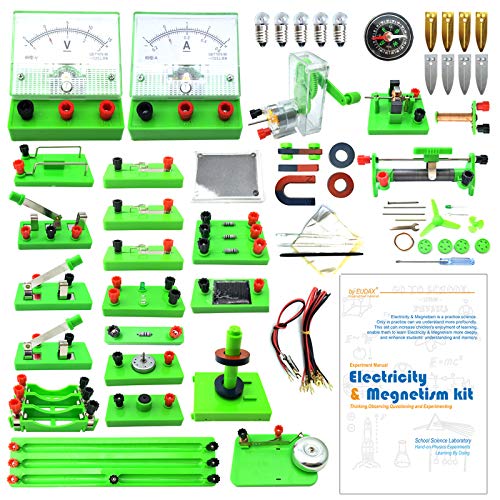
- Explores circuits, magnets, and electromagnetism
- Includes 79 listed components and a color manual
- Batteries are required but not included
Best For: Hands-on students interested in building physics and electronics projects
Best Compact Chemistry Starter

- 28 guided introductory chemistry experiments
- Includes beakers, test tubes, chemicals, and pipettes
- Covers acids, bases, gases, and invisible ink
Best For: Beginning chemists who want a compact, guided introduction
Best for Variety and Wow Factor
National Geographic Amazing Chemistry Set

- 15 supplied-material experiments plus 85 bonus ideas
- Includes test tubes, beakers, and pipettes
- Features crystals, color changes, and glowing projects
Best For: Younger learners who want colorful chemistry activities and variety
Best for Genetics Explorers

- 20 guided genetics and DNA experiments
- Includes DNA model and lab-style tools
- Recommended for ages 10–16
Best For: Focused genetics and DNA learning
Best for Earth Science Variety
National Geographic Earth Science Kit

- More than 15 experiments and activities
- Includes volcano, crystals, tornadoes, and geologic digs
- Full-color guide explains the science
Best For: Shared Earth science exploration
Best for Experiment Variety

- Includes 150 guided science experiments
- Covers chemistry, physics, Earth science, and more
- Illustrated manual and kid-friendly tools included
Best For: Long-term at-home experiment variety
Classic Chemistry Pick

- 45 guided chemistry activities
- Includes volcano, geyser, and rocket projects
- Illustrated instructions for STEM learning
Best For: Beginners seeking an accessible, chemistry-focused starter kit
Physics Lab Pick

- More than 50 physics experiments
- Includes 55 circuit and magnetism components
- Storage case and illustrated explanations
Best For: Teens exploring circuits, electricity, and electromagnetism
Biggest Variety Pick

- More than 135 combined experiments
- Includes colorful and hands-on activities
- Step-by-step guide with bonus booklet
Best For: Families seeking variety and shared science activities
Best Overall Chemistry Lab – Chem C1000 Beginner Chemistry Set
For students ready to move beyond simple kitchen activities, this Thames & Kosmos set is one of the most substantial science experiment sets for middle school students. It combines 125 guided experiments with real lab equipment, seven chemicals, and an 80-page illustrated manual covering chemistry, fluids, electrochemistry, and more.
Best For: Curious middle school students who want an extensive, structured introduction to laboratory chemistry and have adult supervision available.
Pros:
- Includes 125 hands-on experiments across 10 themed chapters.
- Provides genuine lab-style equipment, safety goggles, and seven included chemicals.
- Explains the science behind activities such as chromatography, crystal growing, electrolysis, and invisible ink.
- Includes detailed safety, first-aid, labeling, and disposal guidance.
Cons:
- Adult supervision is required.
- The chemistry-focused format may be more involved than younger children need.
With its unusually broad experiment range and professional-style components, the Chem C1000 is a strong long-term choice for families seeking depth rather than a handful of demonstrations.
Best for Electricity Projects – EUDAX Electricity and Magnetism Lab Kit
This EUDAX kit gives science experiment sets for middle school students a practical physics angle, focusing on circuits, magnets, and electromagnetism. It includes 56 electricity pieces, 21 magnetism pieces, repair tools, a color manual, and a storage bag for building hands-on models.
Best For: Students interested in physics who enjoy assembling circuits, testing electrical principles, and exploring magnetism.
Pros:
- Supports projects involving series and parallel circuits, fruit batteries, and Ohm’s law.
- Includes magnetism activities such as electromagnets, an electric bell, and a hand-crank generator.
- Provides 79 listed items, a color manual, tools, and storage.
- Offers a hands-on way to explore electricity and magnetism rather than only reading about them.
Cons:
- Three AA batteries are required but not included.
- The supplied guidance targets grades 9–11, so some middle school students may need extra help.
This is a particularly useful pick for learners who prefer building and troubleshooting over chemical reactions, though buyers should plan to supply the required batteries.
Best Compact Chemistry Starter – Chem C500 Science Kit
The Thames & Kosmos Chem C500 is a more compact option among science experiment sets for middle school students. Its 28 guided experiments introduce acids and bases, fizzy reactions, invisible ink, and interactions among solids, liquids, and gases through a 48-page full-color guide.
Best For: Beginners ages 10–15 who want a manageable first chemistry kit with clear instructions and classic demonstrations.
Pros:
- Includes 28 structured chemistry experiments.
- Explores colorful acid-base effects, foaming reactions, and invisible ink.
- Provides beakers, test tubes, chemicals, stoppers, pipettes, and a full-color manual.
- Its smaller format is easier to store than a larger laboratory set.
Cons:
- Offers fewer experiments and less equipment than the Chem C1000.
- The set focuses primarily on introductory chemistry rather than multiple science fields.
Choose the C500 when simplicity and a lower-complexity introduction matter more than maximum experiment variety. It covers foundational chemistry concepts without overwhelming a first-time learner.
Best for Variety and Wow Factor – National Geographic Amazing Chemistry Set
For families seeking engaging science experiment sets for middle school students, this National Geographic kit emphasizes visual results and accessible activities. It includes materials for 15 featured chemistry experiments plus a bonus guide with 85 additional projects using common household items.
Best For: Younger middle school learners who enjoy colorful, fast-moving chemistry activities and want many follow-up projects.
Pros:
- Advertises more than 100 total experiments, including household-material activities.
- Includes materials for 15 featured experiments, such as crystal growing and color-changing reactions.
- Uses hands-on tools including test tubes, beakers, and pipettes.
- Features engaging projects such as glowing test tubes, bouncy balls, and glowing worms.
Cons:
- Only 15 experiments include the supplied kit materials; the 85 bonus activities use household items.
- Its recommended age begins at 8, so advanced middle school students may find the chemistry less extensive.
This set is a good choice when excitement, accessibility, and a large idea bank are priorities. It delivers plenty to try, but students seeking more formal laboratory depth may prefer a Thames & Kosmos chemistry kit.
Best for Genetics Explorers – Genetics & DNA Lab
For shoppers comparing science experiment sets for middle school students, the Thames & Kosmos Genetics & DNA Lab offers a focused introduction to cells, chromosomes, inheritance, and DNA. Its 48-page, full-color manual guides learners through 20 experiments, including isolating plant DNA and assembling a DNA model.
Best For: Students ages 10–16 who want a focused, hands-on genetics and DNA learning experience.
Pros:
- Explores DNA, biological inheritance, cells, and chromosomes.
- Includes equipment such as test tubes, a funnel, pipette, petri dish, and DNA model.
- Full-color manual provides guidance for 20 experiments.
Cons:
- Its genetics-focused theme may be narrower than broad, multi-topic kits.
- Recommended for ages 10–16, so it may not suit younger children.
This is a strong pick when the goal is depth rather than sheer experiment count. The included DNA model, worksheets, and lab-style tools support both visual learning and practical investigation.
Best for Earth Science Variety – National Geographic Earth Science Kit
Among science experiment sets for middle school students, this National Geographic Earth Science Kit stands out for its broad activity mix. It includes more than 15 experiments and activities, such as water tornadoes, an erupting volcano, crystal growing, and two geologic dig kits, with a full-color Learning Guide explaining the science.
Best For: Families, friends, or classmates who want a shareable introduction to multiple Earth science topics.
Pros:
- Offers more than 15 Earth science experiments and activities.
- Combines volcano, crystal-growing, tornado, and geologic dig projects.
- Detailed, full-color guide explains the concepts behind the activities.
Cons:
- The manufacturer recommends it for ages 8 and up, so advanced students may want more specialized content.
- Its broad format may provide less depth in any single Earth science topic.
This kit is well suited to group discovery and varied at-home learning. Its combination of hands-on projects and explanatory material makes it a practical choice for students who enjoy trying different types of Earth science activities.
Best for Experiment Variety – UNGLINGA 150 Experiments Kit
For families seeking science experiment sets for middle school students with plenty of repeat-use ideas, the UNGLINGA 150 Experiments Kit covers chemistry, physics, Earth science, surface tension, and more. A step-by-step illustrated manual supports projects using the included tools and materials along with some common household items.
Best For: Children ages 8 and up who want a large assortment of guided STEM activities for home, weekends, and school breaks.
Pros:
- Provides 150 experiments across several science topics.
- Includes kid-friendly lab tools and materials, including goggles.
- Illustrated, step-by-step manual is designed for easy following.
Cons:
- Some projects require regular household items in addition to the kit contents.
- The wide topic range may offer less depth than a specialized lab set.
This kit prioritizes quantity and variety, making it useful for ongoing experimentation rather than a single themed unit. It can also support shared parent-child activity time, provided shoppers are comfortable supplying some household materials.
Classic Chemistry Pick – 45-Experiment Chemistry Set
For shoppers comparing science experiment sets for middle school students, this National Geographic chemistry kit offers a focused introduction to reactions through 45 hands-on activities. The illustrated guide covers projects such as a volcano, geyser, rocket, and other fizzy experiments while introducing basic chemistry and safe laboratory practices.
Best For: Beginners who want a chemistry-centered kit with clearly illustrated instructions and familiar reaction-based projects.
Pros:
- Includes 45 experiments, including volcano, geyser, rocket, and chemical-reaction activities.
- Kid-friendly instructions combine illustrations with explanations of the reactions.
- Supports hands-on STEM learning and safe experiment procedures.
Cons:
- Its stated recommended age begins at 8, so older students may find the activities less advanced.
- The set is focused primarily on chemistry rather than covering several science disciplines.
This is a practical choice for families seeking an accessible chemistry starter kit with a recognizable science theme and a manageable number of guided activities.
Physics Lab Pick – Electricity and Magnetism Kit
Among science experiment sets for middle school students, this Mysterystone kit stands out for its concentration on electricity and magnetism. It includes more than 50 do-it-yourself experiments, 55 components, and an illustrated manual covering circuits, electromagnets, magnetic switches, LED light control, and Joule’s first law.
Best For: Students ages 13–18 who want a more specialized, hands-on introduction to physics, circuits, and electromagnetism.
Pros:
- Offers more than 50 experiments across electricity and magnetism topics.
- Includes 55 items, including circuit, LED, magnetic-switch, and electromagnet modules.
- The illustrated manual explains both what to do and why the experiments work.
- A solid storage case keeps the components organized and portable.
Cons:
- The manufacturer recommends it for ages 13–18, making it less suitable for younger students.
- Its physics specialization may be limiting for shoppers seeking chemistry, biology, or earth-science activities.
Choose this kit when the student is specifically interested in building circuits and exploring magnetic effects; its component-focused format is better suited to guided physics practice than broad science exploration.
Biggest Variety Pick – Ultimate 135+ Experiment Kit
For families wanting a broad range of science experiment sets for middle school students, the Doctor Jupiter Ultimate kit provides more than 135 combined activities and bonus experiments using household items. Projects include color changes, glowing water, underwater volcanoes, potions, and other guided investigations, with supplies separated into leak-proof bottles.
Best For: Children ages 8 and up who enjoy variety, repeated experimenting, and parent-child science activities.
Pros:
- Includes more than 135 experiments when the main and bonus booklets are combined.
- Covers varied activities such as changing colors, glowing water, and underwater volcanoes.
- Step-by-step instructions and illustrations support independent or shared use.
- Leak-proof bottles and included tools help organize the supplied materials.
Cons:
- The kit’s 650-gram weight and compact format may mean many activities rely on household items or the included ingredients in small quantities.
- The broad assortment is less specialized than a dedicated electricity, magnetism, or chemistry lab kit.
This is the strongest match for shoppers prioritizing sheer activity count and variety, especially when an adult wants to participate and supplement the kit with common household materials.
How We Picked the Best Science Experiment Sets for Middle School Students
We focused on kits that offer more than one quick demonstration. Each selection provides a substantial activity count or a focused lab experience, along with instructions designed to help students follow a question, test an idea, and interpret results. We also considered subject coverage, included equipment, stated age range, supervision needs, and whether the activities can support classroom enrichment, homeschooling, or independent weekend learning.
Because middle-school abilities vary, the list includes both approachable starter kits and more specialized sets. Chemistry-focused options suit students who enjoy reactions and materials science, while electricity, magnetism, DNA, and earth science kits provide different ways to explore STEM concepts.
Quick Comparison
- Best for a broad chemistry introduction: Thames & Kosmos Chem C1000 or National Geographic Amazing Chemistry Set.
- Best for structured, focused chemistry: Thames & Kosmos Chem C500.
- Best for electricity and magnetism: EUDAX School Physics Labs or Mysterystone Electricity and Magnetism Kit.
- Best for genetics: Thames & Kosmos Genetics & DNA Lab.
- Best for earth science: National Geographic Earth Science Kit.
- Best for maximum activity variety: UNGLINGA 150 Experiments or Doctor Jupiter Ultimate Science Experiments Kit.
Key Buying Factors for Science Experiment Sets for Middle School Students
Age and Difficulty
Check the manufacturer’s age guidance, then consider the student’s reading level, patience, and prior experience. A kit with many activities is not automatically the best choice if the instructions are too advanced or the experiments require extensive adult help.
Subject Focus
Choose a focused kit when a student already loves chemistry, circuits, or biology. A mixed STEM set is usually more flexible for families who want to sample several branches of science before committing to one.
Materials and Refill Needs
Review what is included and what must be supplied at home. Look for reusable equipment, clearly labeled components, and experiments that use ordinary household materials without requiring difficult-to-find chemicals or tools.
Instruction Quality and Safety
A strong manual explains the procedure, expected observations, and scientific concept behind each activity. Adult supervision is especially important for chemistry, heat, glassware, batteries, magnets, and any activity involving liquids or small parts. Always follow the included safety guidance.
Who Should Buy Which Science Experiment Sets for Middle School Students?
Choose a comprehensive chemistry set for a student who wants a traditional lab experience and can work carefully through sequential instructions. Select an electricity and magnetism kit for a hands-on learner who prefers building circuits and seeing immediate results. Genetics and DNA is a good fit for students curious about biology and heredity, while earth science works well for learners interested in rocks, weather, geology, and the planet.
For siblings or families seeking variety, a high-count general STEM kit offers the broadest activity mix, though individual experiments may be less deep. Whichever option you choose, the best Science Experiment Sets for Middle School Students are those that match the learner’s interests, provide clear guidance, and encourage students to record observations rather than simply follow steps.