
The best robotics sets for high school students make abstract coding, electronics, and mechanical engineering tangible. The right kit can turn a weekend project into a structured path toward sensors, motors, programming, and autonomous behavior.
This roundup compares ten hands-on options across Arduino, Raspberry Pi, robot arms, cars, tanks, and walking robots. Use the buying guide below to match each platform with the student’s experience, workspace, and learning goals.
Best 10 Robotics Sets for High School Students Picks for 2026
Best Expandable Platform
mBot Ultimate 10-in-1 Robot Kit

- Builds 10 different robot models
- Supports mBlock, Arduino, and Raspberry Pi
- Durable aluminum-alloy construction
Best For: Students ages 12+ who want a robotics platform that grows with their skills
Best Electronics Foundation

- Includes 35+ guided electronics projects
- Comes with 200+ components and sensors
- Uses a high-I/O Arduino-compatible Mega board
Best For: Students learning Arduino electronics, sensors, and prototyping
Best Robotic Arm
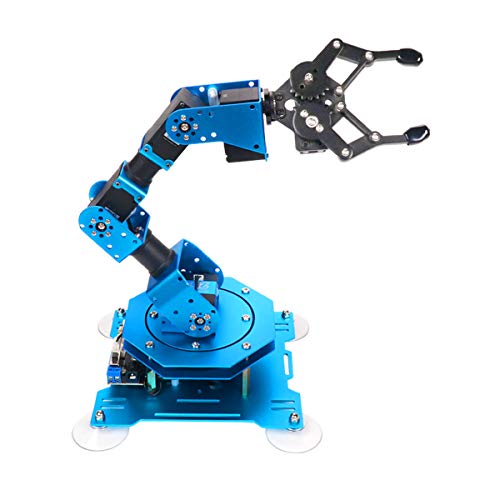
- Six-axis metal robotic arm
- Intelligent servos provide feedback
- Supports app, PC, mouse, and wireless control
Best For: Students exploring robotic manipulation and programmed arm movement
Best Interactive Tank
ELEGOO Conqueror Robot Tank Kit
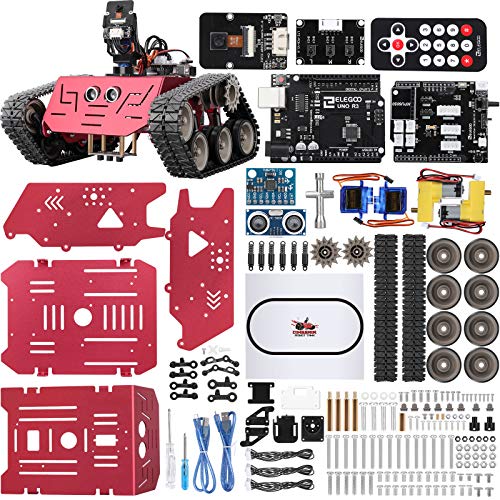
- Five driving and navigation modes
- Includes Wi-Fi FPV camera
- Moves from block coding to Arduino IDE
Best For: Students building mobile robots and experimenting with navigation
Best Advanced Walking Robot

- Six-legged design with three motors per leg
- Camera and ultrasonic sensor included
- Python code and phone or computer control
Best For: High school makers with a compatible Raspberry Pi
Best for Robotic Arm Programming

- Arduino-compatible Atmega328 platform
- Five-axis arm with digital servos
- Expansion ports for sensors and modules
Best For: Older students exploring open-source robotics
Best Beginner Robot Car

- Arduino-compatible build-and-drive project
- Camera, line tracking, and obstacle avoidance
- Battery, guided wiring, and example programs included
Best For: Beginners, classrooms, and coding clubs
Best Desktop Robotic Arm
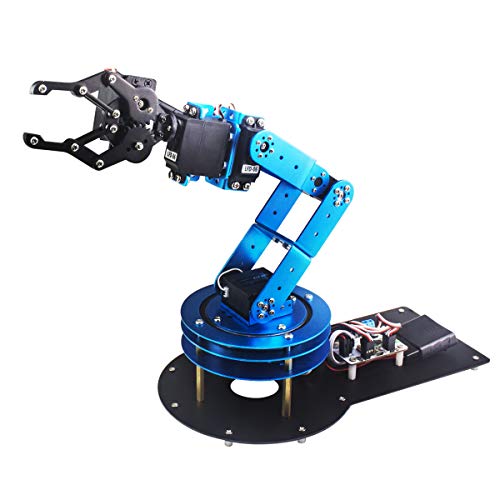
- Six-axis desktop arm for grasping and transport projects
- Metal frame with high-torque servos and stable base
- PC, app, wireless handle, and Arduino-compatible control
Best For: Tabletop robotics and programming practice
Best Modular STEM Build

- Build a car, tank, arm car, or arm tank
- ESP32 controller works with Arduino and Scratch
- Includes 16 tutorials plus app and remote control
Best For: Versatile teen STEM projects and guided learning
Best Programmable Arm Car

- 5DOF metal-gear arm on a mobile robot platform
- Mecanum wheels enable omnidirectional movement
- Arduino, Python, and Blockly programming support
Best For: Advanced mobile robotics and coding projects
Best Expandable Platform – mBot Ultimate 10-in-1 Robot Kit
For high school students who want robotics sets that can grow with their skills, the Makeblock mBot Ultimate offers ten buildable robot models, including a robotic arm and remote-controlled tank. Students can begin with drag-and-drop coding in mBlock before progressing to Arduino IDE or Python with a Raspberry Pi.
Best For: Aspiring engineers and coders ages 12 and up who want a reusable platform for mechanical builds, sensors, and increasingly advanced programming.
Pros:
- Supports 10 different robot configurations.
- Works with mBlock, Arduino, and Raspberry Pi.
- Includes durable aluminum-alloy structural parts.
- Supports motors, servos, sensors, and advanced projects such as machine vision.
Cons:
- Requires six AA batteries, which are not included.
- Its broad feature set may be more than beginners need initially.
The mBot Ultimate is a strong long-term choice when the goal is to move from guided construction into open-ended robotics projects. Its multiple models and hardware compatibility give students room to keep experimenting as their coding and engineering abilities develop.
Best Electronics Foundation – ELEGOO Mega 2560 Starter Kit
The ELEGOO Mega 2560 is one of the more electronics-focused robotics sets for high school students, pairing an Arduino-compatible Mega board with more than 200 components and 35-plus guided projects. It is designed for learning through sensors, displays, motors, RFID, and other programmable modules.
Best For: Students, coding clubs, and makers who want a structured introduction to Arduino electronics and progressively more complex circuit-based projects.
Pros:
- Includes 35-plus guided lessons and 200-plus components.
- Mega 2560 provides 54 digital I/O pins, 15 PWM outputs, and 16 analog inputs.
- Includes sensors, displays, motors, a servo, breadboard, and storage case.
- Projects can be modified by changing thresholds, timing, displays, and motor behavior.
Cons:
- It focuses on electronics and prototyping rather than a prebuilt mobile robot.
- The large component assortment may require careful organization.
This kit is a practical choice for students who want to understand the electronics behind robotics. Its tutorials provide a clear starting path, while the Mega board and extensive component selection support custom experiments beyond the included lessons.
Best Robotic Arm – Hiwonder xArm1S 6-DOF Kit
For students interested in manipulation and motion, the Hiwonder xArm1S provides a focused alternative to general robotics sets for high school students. Its six-axis metal arm supports grasping, object transport, custom actions, graphical programming, and control through a PC, app, mouse, or wireless controller.
Best For: Learners who want hands-on experience with robotic-arm movement, servo feedback, action editing, and tabletop programming projects.
Pros:
- Six-axis design enables varied arm movements and custom actions.
- Intelligent servos provide position, voltage, and temperature feedback.
- Can grasp objects weighing up to 500 grams.
- Supports PC, phone app, mouse, and wireless controller operation.
Cons:
- Its specialized arm format offers less variety than a multi-model construction kit.
- The supplied details identify it as a tabletop indoor project rather than a mobile robot.
The xArm1S is best when the learning objective centers on robotic manipulation rather than general vehicle building. Its metal structure, feedback-capable servos, and several control methods make it suitable for demonstrating programmed movements and creative arm applications.
Best Interactive Tank – ELEGOO Conqueror Robot Tank Kit
The ELEGOO Conqueror combines a metal tracked chassis with an UNO R3 controller, camera, sensors, and several driving modes. Among robotics sets for high school students, it stands out for hands-on navigation projects, including FPV driving, obstacle avoidance, line tracking, and auto-follow experiments.
Best For: Students who want a mobile robot with visible, interactive results and a path from visual block coding to Arduino IDE programming.
Pros:
- Offers five interactive modes, including FPV, line tracking, and obstacle avoidance.
- Wi-Fi camera provides live first-person video to a compatible phone.
- Includes UNO R3, metal chassis, tracks, sensors, motors, servos, battery, and tools.
- Supports visual programming in the ElegooKit app and Arduino IDE.
Cons:
- The tank-style build is more focused than a general-purpose robotics platform.
- FPV operation requires a compatible phone.
This kit offers a compelling balance of assembly, coding, and immediate robot behavior. Students can start with app-based control and then adjust motor speeds, sensor thresholds, and navigation logic in Arduino IDE as their programming confidence increases.
Best Advanced Walking Robot – Big Hexapod Robot Kit
For students seeking robotics sets for high school students with substantial programming and mechanical-building potential, the Freenove Big Hexapod offers a challenging Raspberry Pi project. Its six legs, camera-equipped rotating head, ultrasonic sensor, and multiple control options make it a strong choice for hands-on STEM exploration, though assembly and extra hardware are required.
Best For: High school makers who already have a compatible Raspberry Pi and want to explore walking robots, Python programming, sensors, camera functions, and remote control.
Pros:
- Six legs with three motors per leg support complex walking and balancing projects.
- Includes a camera and ultrasonic distance sensor for interactive experiments.
- Offers detailed online tutorials, complete Python code, and phone or computer control.
Cons:
- Raspberry Pi and battery are not included.
- Assembly is required, and some Raspberry Pi models need extra parts.
- The tutorial is digital rather than printed.
This is an ambitious kit for students ready to combine mechanical assembly, Python, computer vision, and sensor-based robotics. Verify the Raspberry Pi and battery requirements before buying.
Best for Robotic Arm Programming – miniArm 5DOF Robot Arm
The miniArm is one of the more development-focused robotics sets for high school students, using an Arduino-compatible platform and open-source programs. Its five-axis arm, knob controller, Bluetooth module, and expansion ports give students room to study motion control and build more advanced sensor projects.
Best For: Older students and beginning adult makers interested in Arduino programming, robotic-arm control, and future sensor expansion.
Pros:
- Atmega328 platform supports Arduino programming and open-source development.
- Five-axis arm includes high-precision digital servos and a six-channel knob controller.
- Expansion ports support additional sensors and modules, including ESP32 Cam and ultrasonic options.
Cons:
- The starter kit does not include the listed ultrasonic, touch, acceleration, or ESP32 Cam modules.
- It is recommended for ages 17 and up.
- Its advanced hardware may be less suitable for first-time builders seeking a simple project.
Choose this kit when programming and customization matter more than a quick build. Buyers should confirm which version and expansion components are included before planning a project.
Best Beginner Robot Car – ELEGOO UNO R3 Smart Robot Car
For beginners comparing robotics sets for high school students, the ELEGOO UNO R3 Smart Robot Car provides a guided way to build, code, and drive a working vehicle. Its camera, line-tracking and ultrasonic sensors, Arduino compatibility, rechargeable battery, and app or remote control create a broad introduction to robotics.
Best For: Students, coding clubs, classrooms, and first-time builders who want an approachable robot-car project with several driving and sensing modes.
Pros:
- Includes the UNO R3 board, camera and Wi-Fi module, sensors, motors, remote, and rechargeable battery.
- Supports FPV video, line tracking, obstacle avoidance, app control, and IR remote control.
- Keyed connectors, illustrated instructions, and example programs help beginners get started.
Cons:
- First-time builders may need adult guidance during assembly.
- The kit is focused on a robot car rather than a multi-legged or articulated robot.
- Creative projects require modifying the included Arduino examples.
This is the most approachable option of the three for learning core electronics, Arduino coding, sensors, and control logic. It also offers enough features for classroom challenges and custom driving experiments.
Best Desktop Robotic Arm – LewanSoul LeArm 6DOF Kit
For students seeking robotics sets for high school students that emphasize mechanical construction and programming, the LewanSoul LeArm is a focused desktop option. Its metal structure, six-axis movement, graphical programming software, and multiple control methods support hands-on experimentation with grasping, transport, and custom actions.
Best For: High school students, engineering learners, and makers interested in building and programming a tabletop robotic arm.
Pros:
- Six degrees of freedom enable varied arm movements and creative projects.
- Metal brackets, high-torque servos, and industrial-grade bearings provide a stable structure.
- Supports PC, app, mouse, wireless handle, and Arduino-compatible control.
- Includes tutorials and simple programming software for guided learning.
Cons:
- Its desktop arm format is less suited to mobile or outdoor robotics projects.
- Power comes from an AC adapter, and batteries are not included or required.
- The manufacturer recommends it for ages 14 and up, so it may be advanced for younger beginners.
The LeArm is a strong choice when the goal is understanding robotic-arm structure, servo control, and programming rather than building a vehicle. Its stable metal platform and varied control options make it suitable for demonstrations and repeatable tabletop experiments.
Best Modular STEM Build – ACEBOTT 4-in-1 Robot Arm Tank
This ACEBOTT kit stands out among robotics sets for high school students who want several build paths in one package. Students can assemble a robot car, tracked tank, robotic-arm car, or combined arm tank, then explore coding with an ESP32 controller through Arduino- and Scratch-compatible projects.
Best For: Teens who want a versatile vehicle-based kit for guided assembly, coding practice, and indoor or outdoor exploration.
Pros:
- Four configurations encourage repeated rebuilding and experimentation.
- The 5DOF arm can grab, lift, and place objects.
- Rubber tank tracks are designed for grass, gravel, slopes, and carpet.
- Includes 16 guided tutorials, HD assembly videos, app control, and IR remote control.
Cons:
- The kit is oriented toward vehicle builds, so it may be less focused than a dedicated robotic arm.
- Tutorials and code downloads are accessed through the manufacturer’s online resources.
- The supplied details list a plastic material type rather than a primarily metal construction.
Choose this ACEBOTT model when variety and guided learning matter most. Its modular designs give students multiple ways to practice mechanics, electronics, and programming while keeping the experience accessible for independent or classroom use.
Best Programmable Arm Car – ACEBOTT 5DOF Mecanum Robot
For robotics sets for high school students that combine coding, mobility, and manipulation, this ACEBOTT robot car offers a feature-rich project platform. Its ESP32 controller, 5DOF arm, Mecanum wheels, sensors, and support for Arduino, Python, and Blockly give students several ways to explore robot control.
Best For: Teens and adults interested in programming a mobile robot with omnidirectional movement, obstacle avoidance, and an articulated arm.
Pros:
- Five metal-gear servo axes support grabbing, lifting, and placing objects.
- Mecanum wheels enable forward, sideways, diagonal, and rotational movement.
- Supports Arduino, Python, and Blockly programming with an ESP32 controller.
- Includes sensors, app and infrared remote control, follow mode, and pre-burned necessary program.
Cons:
- Batteries are not included.
- The many movement and programming features may be more complex than a basic starter kit.
- Assembly is required before students can use the completed robot.
This model is a good fit for students ready to move beyond simple drive robots. The combination of omnidirectional navigation and a working arm creates opportunities for more advanced demonstrations, while the pre-burned program and paper manual can shorten the setup process.
How We Picked These Robotics Sets for High School Students
We selected kits that offer meaningful opportunities to build, program, troubleshoot, and expand a working robot. The lineup includes beginner-friendly Arduino project bundles, mobile platforms, multi-axis robotic arms, and more advanced Raspberry Pi robots. We also considered documentation, programming flexibility, component variety, and whether the hardware supports projects beyond the first build.
Because included parts and software can vary by seller or revision, check the current product listing for board versions, required tools, operating-system support, and whether batteries, power supplies, or a computer are included.
Quick Comparison
| Best For | Recommended Type | What to Look For |
|---|---|---|
| First electronics projects | Arduino starter kit | Clear tutorials, broad component selection, and beginner examples |
| Driving and sensor experiments | Robot car or tank | Motor control, ultrasonic sensing, camera support, and expansion ports |
| Mechanical design | Robotic arm | Degrees of freedom, servo quality, programming options, and payload limits |
| Advanced autonomy | Raspberry Pi walking robot | Computer vision, app control, sensor integration, and Linux compatibility |
Key Buying Factors
Experience and Learning Curve
Arduino kits are often the most approachable starting point, but a large component bundle can still feel overwhelming without guided lessons. Robot arms and hexapods typically require more patience because mechanical assembly, calibration, and coordinated motion are part of the learning process.
Programming Ecosystem
Look for compatibility with the student’s preferred tools. Arduino-based sets commonly use the Arduino IDE and C/C++, while some models add Scratch, Blockly, Python, mobile apps, or PC software. Raspberry Pi kits can offer richer computer-vision and Linux projects, but they usually demand more setup.
Project Variety and Expansion
A kit with sensors, motors, servos, a camera, and accessible expansion pins can support multiple projects. Consider whether the student can replace parts, add modules, or reuse the controller in future builds rather than finishing one demonstration and putting the kit away.
Build Quality and Practical Requirements
Metal arms may provide durability but can be heavier and harder to assemble. Lightweight cars are easier to modify, while walking robots involve more calibration. Confirm workspace, battery requirements, assembly tools, computer needs, and the availability of manuals or code examples before buying.
Who Should Buy Which Robotics Sets for High School Students?
Choose the ELEGOO Mega starter kit for a student who wants a broad foundation in circuits and Arduino programming. The UNO Smart Robot Car or Conqueror Tank is a better fit for learners motivated by movement, remote control, and sensor-based navigation.
For mechanical engineering and coordinated motion, consider a 5DOF or 6DOF arm from Hiwonder, LewanSoul, ACEBOTT, or a comparable open-source platform. These are especially suitable for students interested in servos, inverse-kinematics concepts, and automation. ACEBOTT’s combined arm-and-car formats can work well for younger or newer builders who want more than one project style.
More experienced students seeking computer vision, self-balancing behavior, or advanced sensing should look at the Freenove Raspberry Pi hexapod. Finally, the Makeblock mBot Ultimate is a strong all-around choice when guided, varied builds and a polished educational experience matter more than maximum programming depth.