
A crowded bench does not mean you have to compromise on measurement capability. The best oscilloscopes for small workbenches balance bandwidth, channel count, controls, and useful connectivity without consuming more space than necessary.
This roundup compares 10 compact-friendly options, from straightforward desktop digital scopes to multifunction instruments that combine oscilloscope, multimeter, and signal-generator features.
Best 10 Oscilloscopes for Small Workbenches Picks for 2026
High-Bandwidth Bench Pick
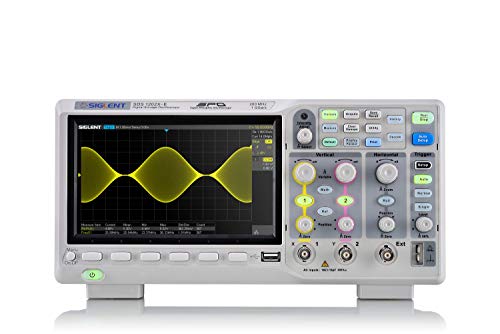
- 200 MHz bandwidth and 1 GSa/s sampling
- Up to 14 Mpts record length
- Serial-bus triggering and decoding
Best For: Small benches needing bandwidth and protocol analysis
Economy Two-Channel Choice

- 150 MHz bandwidth and two channels
- Arbitrary waveform output
- 14 trigger modes with serial decoding
Best For: Budget-focused embedded, communications, and education work
Compact All-in-One Pick

- Oscilloscope, multimeter, and DDS generator
- 250 MS/s sampling with 50 MHz bandwidth
- Battery powered with about four hours of life
Best For: Portable automotive and space-saving bench work
Four-Channel Workbench Pick

- Four channels with 100 MHz bandwidth
- 1 GSa/s sampling and 14 Mpts memory
- 7-inch display with serial decoding
Best For: Multi-signal embedded and mixed-signal troubleshooting
Most Versatile
FNIRSI 2C53T 3-in-1 Oscilloscope

- 50 MHz, two-channel oscilloscope
- Built-in multimeter and signal generator
- Compact 400 g handheld design
Best For: Small benches needing multiple test tools in one unit
Best Desktop Performance
RIGOL DS1202Z-E 200MHz Oscilloscope

- 200 MHz bandwidth and 1 GSa/s sampling
- 7-inch display with deep memory
- Serial decode and LAN connectivity
Best For: Embedded and electronics debugging on a compact desktop bench
Best Function-Generator Combo

- 150 MHz, two-channel oscilloscope
- 1 GS/s sampling and 8M memory
- Integrated 25 MHz arbitrary waveform generator
Best For: Small desktop benches needing scope and signal generation
Deep-Capture Bench Scope

- 100 MHz, two channels, and 1 GSa/s sampling
- Deep memory with high waveform capture rate
- Serial decoding plus USB and LAN connectivity
Best For: Embedded debugging and longer waveform captures
Portable Multifunction Scope

- 350 MHz, two channels, and 1 GSa/s sampling
- FFT, frequency response analyzer, and DDS generator
- Battery-powered 7-inch touchscreen design
Best For: Compact benches and field troubleshooting
Four-Channel Workbench Scope

- Four analog channels with 100 MHz bandwidth
- 1 GSa/s sampling and 24 Mpts memory
- Optional MSO upgrade connector and included software bundle
Best For: Multi-signal debugging on a compact bench
High-Bandwidth Bench Pick – Siglent SDS1202X-E
For oscilloscopes for small workbenches, the Siglent SDS1202X-E combines a 200 MHz bandwidth with two channels and a compact 5.5-pound design. Its serial-bus tools and up to 14 Mpts of record length make it practical for embedded and mixed-signal troubleshooting.
Best For: Small benches needing strong bandwidth and protocol-analysis features.
Pros:
- 200 MHz bandwidth with real-time sampling up to 1 GSa/s
- Up to 14 Mpts record length
- Supports triggering and decoding for IIC, SPI, UART/RS232, CAN, and LIN
Cons:
- Only two channels
- Its 10 x 15 x 17-inch listed dimensions may require careful bench planning
This is a capable choice when bandwidth and serial-bus support matter more than having four inputs. Check the available bench space before buying.
Economy Two-Channel Choice – Hantek DSO2D15
The Hantek DSO2D15 is a cost-conscious option for oscilloscopes for small workbenches. It offers 150 MHz bandwidth, two channels, arbitrary waveform output, and a range of trigger and serial-protocol functions for general commissioning and educational work.
Best For: Budget-minded users working on communications, embedded systems, or education projects.
Pros:
- 150 MHz bandwidth with two channels
- Arbitrary waveform output
- Fourteen trigger modes and five serial-protocol trigger/decode options
Cons:
- Two channels provide less simultaneous coverage than four-channel models
- Listed package weight is 6.33 pounds, so it is not the lightest option
Its feature set is well suited to varied bench tasks without moving into a higher-cost instrument category. It is a sensible fit when economy and built-in waveform functions are priorities.
Compact All-in-One Pick – FNIRSI 2C53P 3-in-1
For a space-limited work area, the FNIRSI 2C53P combines a two-channel, 50 MHz oscilloscope with a multimeter and DDS signal generator. Its handheld format, 4.3-inch touchscreen, and battery power make it especially convenient for portable or crowded small-workbench setups.
Best For: Automotive, portable, and space-conscious testing that benefits from multiple functions in one instrument.
Pros:
- Three-in-one oscilloscope, 19999-count multimeter, and DDS generator
- 250 MS/s sampling, 4.3-inch touchscreen, X-Y mode, and FFT analysis
- Built-in 4000 mAh battery with about four hours of battery life
Cons:
- 50 MHz bandwidth is lower than the bench scopes in this roundup
- Battery life is listed at about four hours
- Two channels may limit simultaneous measurements
This is the most space-efficient and versatile option here, particularly when a separate multimeter and signal generator would clutter the bench. Choose a traditional bench scope instead if higher bandwidth is the primary requirement.
Four-Channel Workbench Pick – Siglent SDS1104X-U
Siglent Technologies SDS1104X-U 100MHz Super Phosphor Digital Oscilloscopes 4 Channels
Check Price On AmazonThe Siglent SDS1104X-U is a strong candidate for oscilloscopes for small workbenches when four-channel visibility is more useful than maximum bandwidth. It provides 100 MHz bandwidth, up to 1 GSa/s sampling, a 14 Mpts record length, and a large 7-inch display.
Best For: Engineers who need to compare several signals at once on a compact digital bench scope.
Pros:
- Four channels for monitoring multiple signals simultaneously
- Up to 1 GSa/s sampling and 14 Mpts record length
- Standard serial-bus triggering and decoding for IIC, SPI, UART, CAN, and LIN
- 7-inch, 800 × 480 TFT-LCD display
Cons:
- 100 MHz bandwidth is lower than the SDS1202X-E’s 200 MHz rating
- Four-channel operation may be more than needed for simple two-signal tasks
Choose this model when channel count and a clear display are central to your workflow. Its bus-decoding support also gives it useful flexibility for embedded-system troubleshooting.
Most Versatile – FNIRSI 2C53T 3-in-1 Oscilloscope
For compact workspaces, the FNIRSI 2C53T combines a two-channel, 50 MHz oscilloscope with a multimeter and signal generator in one handheld unit. Its 2.8-inch display, 3000 mAh battery, storage case, and Type-C connectivity make it a practical option when bench space is limited.
Best For: Hobbyists, automotive electronics work, schools, and small workbenches that benefit from several test tools in one device.
Pros:
- Three-in-one design with oscilloscope, 19999-count multimeter, and signal generator.
- 50 MHz bandwidth, 250 MSa/s sampling, automatic measurements, and waveform storage.
- Portable 400 g design with built-in battery and included probes and case.
Cons:
- The 2.8-inch screen is smaller than a desktop oscilloscope display.
- The signal generator output is limited to 50 kHz.
This is a space-saving choice for general troubleshooting and portable testing. Choose it when flexibility and low bench footprint matter more than a large display or advanced desktop capture features.
Best Desktop Performance – RIGOL DS1202Z-E 200MHz Oscilloscope
The RIGOL DS1202Z-E is a full-size digital oscilloscope for small workbenches where deeper analysis and a larger screen are priorities. It provides two channels, 200 MHz bandwidth, up to 1 GSa/s sampling, and up to 24 Mpts of memory for longer waveform captures.
Best For: Embedded troubleshooting, electronics debugging, education labs, and users who need serial-bus tools and desktop connectivity.
Pros:
- 200 MHz bandwidth with two analog channels and an external trigger input.
- 7-inch WVGA display and up to 30,000 waveforms per second for spotting glitches.
- Supports recording and playback plus RS232/UART, I2C, and SPI trigger and decoding functions.
- USB Host, USB Device, LAN, and AUX interfaces support bench integration.
Cons:
- Its desktop dimensions require more bench space than a handheld instrument.
- It is less convenient for portable testing than battery-powered designs.
Among oscilloscopes for small workbenches, this model makes sense when the available space can accommodate a desktop unit and the work demands deeper memory, rapid capture, and protocol troubleshooting.
Best Function-Generator Combo – Hantek DSO2D15 Oscilloscope
The Hantek DSO2D15 pairs a two-channel, 150 MHz desktop oscilloscope with a one-channel waveform generator. For a small workbench, that combination can reduce the number of separate instruments while retaining a 1 GS/s sampling rate and 8M memory depth.
Best For: Bench users who want a desktop oscilloscope with an integrated waveform generator for general electronics testing.
Pros:
- 150 MHz bandwidth, two oscilloscope channels, and 1 GS/s sampling.
- Integrated one-channel waveform generator with a 25 MHz arbitrary waveform generator specification.
- Fourteen trigger modes and 32 automatic measurements with statistics.
Cons:
- The supplied notes do not list serial-bus decoding or LAN connectivity.
- At 4.2 pounds and desktop-sized dimensions, it is less portable than a handheld unit.
This is a practical middle ground for a compact bench: it offers more bandwidth than entry-level handheld designs and adds signal generation without requiring another box. Consider it when integrated test capability is more important than maximum memory depth.
Deep-Capture Bench Scope – RIGOL DS1102Z-E
For oscilloscopes for small workbenches, the RIGOL DS1102Z-E offers a practical balance of capability and bench connectivity. Its 100 MHz bandwidth, two analog channels, 1 GSa/s sampling, and deep memory support both everyday debugging and longer waveform captures.
Best For: Electronics debugging, embedded bring-up, education labs, and users who want strong capture and documentation features.
Pros:
- 24 Mpts standard memory, or 12 Mpts with both channels, for longer captures.
- Up to 30,000 wfms/s capture rate and intensity-graded display help expose glitches, jitter, and noise.
- Serial decoding for RS232/UART, I2C, and SPI, plus USB and LAN connectivity.
Cons:
- Only two analog channels are included.
- At 8.83 pounds, it is less portable than a handheld design.
The DS1102Z-E is a solid choice when a compact bench needs deep memory, protocol tools, and remote connectivity more than maximum channel count.
Portable Multifunction Scope – FNIRSI DPOS350P 350MHz 4-in-1
The FNIRSI DPOS350P is a versatile option for oscilloscopes for small workbenches where one instrument needs to cover several tasks. Along with a 350 MHz, two-channel oscilloscope, it combines FFT analysis, a frequency response analyzer, and a DDS signal generator in a battery-powered 3.56-pound package.
Best For: Small benches, field work, EMI checks, filter tuning, loop-stability testing, and users who value an all-in-one instrument.
Pros:
- 350 MHz bandwidth, 1 GSa/s sampling, 50,000 wfms/s refresh, and a 7-inch touchscreen.
- Integrated FFT spectrum analysis with waterfall views and harmonic markers.
- Includes a frequency response analyzer and DDS generator with up to 50 MHz output range.
- 8000 mAh battery, USB-C charging, and storage for waveforms and screenshots support portable use.
Cons:
- Its 47 Kpts memory depth is much smaller than deep-memory bench scopes.
- The two-channel design limits simultaneous signal monitoring.
The DPOS350P makes a strong space-saving case by combining measurement, analysis, and signal-generation tools, especially for engineers who move between bench and field work.
Four-Channel Workbench Scope – Rigol DS1104Z Plus 4-Channel
For oscilloscopes for small workbenches, the Rigol DS1104Z Plus is a useful upgrade when monitoring several signals matters. It provides four analog channels, 100 MHz bandwidth, 1 GSa/s sampling, and 24 Mpts memory in a relatively light 4.4-pound design.
Best For: Multi-signal debugging, mixed-signal projects, and bench users who may later want optional logic-analysis capability.
Pros:
- Four analog channels make simultaneous signal comparison easier.
- 24 Mpts memory supports deeper waveform captures.
- Up to 30,000 wfms/s capture rate helps reveal intermittent behavior.
- Built-in BND-MSO/DS1000Z software bundle and connector support an optional MSO upgrade.
Cons:
- The 100 MHz bandwidth is lower than the FNIRSI model in this roundup.
- Logic analysis requires the optional MSO upgrade.
The DS1104Z Plus is the practical pick when four-channel visibility is more valuable than handheld portability or broader integrated analysis functions.
How We Picked the Best Oscilloscopes for Small Workbenches
We focused on specifications that matter when bench space, budget, and workflow are limited: physical footprint, bandwidth, channel count, sampling rate, memory depth, display usability, and extra measurement functions. We also included both conventional desktop oscilloscopes and multifunction handheld-style instruments, since a small workbench may benefit from combining several tools in one enclosure.
Bandwidth ratings range from 50MHz to 350MHz in this selection. That variety makes it easier to match the instrument to your work instead of paying for performance you will rarely use. Models with four channels can simplify mixed-signal debugging, while two-channel scopes generally take up less space and cost less.
Quick Comparison
- Best balance of capability and size: Siglent SDS1202X-E or RIGOL DS1202Z-E.
- Best for four-channel measurements: Siglent SDS1104X-U or RIGOL DS1104Z Plus.
- Best multifunction options: FNIRSI 2C53P and FNIRSI 2C53T.
- Best for higher bandwidth: FNIRSI DPOS350P, rated up to 350MHz.
- Best budget-oriented choices: Hantek DSO2D15 and the related DSO2D15 two-in-one model.
Key Buying Factors for Oscilloscopes for Small Workbenches
Bandwidth and Sampling Rate
Choose bandwidth based on the fastest signals you expect to examine, not simply the highest number available. A 100MHz or 200MHz scope suits many repair, embedded, audio, power, and hobby electronics tasks. Higher bandwidth can preserve more detail on fast edges, but it may increase cost and should be paired with an appropriate sampling rate.
Channel Count and Memory
Two channels are enough for many voltage-versus-time checks, component comparisons, and serial-bus observations. Four channels are more useful when correlating multiple rails, clock and data lines, or input and output signals. Deeper memory helps capture longer events and inspect more detail after acquisition.
Size, Controls, and Connectivity
Measure the space between your monitor, power supplies, soldering equipment, and test area before buying. A compact scope is only useful if its controls and display remain comfortable to operate. Also check probe quality, USB or other connectivity, waveform storage, decoding support, and whether the user interface suits your experience level.
Multifunction Value
Integrated multimeters and signal generators can save valuable bench space and reduce cable clutter. They are especially attractive for portable troubleshooting or basic prototyping. However, a dedicated desktop scope may offer a larger display, more convenient controls, and a smoother workflow for frequent waveform analysis.
Who Should Buy Which Oscilloscopes for Small Workbenches?
Choose a two-channel 100MHz or 200MHz model if you want a versatile primary scope for a compact electronics bench. Select a four-channel instrument if your projects regularly involve several simultaneous signals or power rails. A multifunction FNIRSI model makes sense when portability and tool consolidation matter more than a traditional desktop interface. If you work with faster digital edges or need extra headroom, consider the higher-bandwidth DPOS350P, while budget-conscious beginners may prefer a Hantek option.
Before ordering, confirm included probes, warranty coverage, software compatibility, and the latest specifications from the manufacturer. The best choice is the one that fits your available space and typical measurements while leaving enough performance headroom for the projects you plan to build next.