
Long-exposure astrophotography becomes much easier when a motorized star tracker compensates for Earth’s rotation. The right model can help your camera capture sharper stars, richer Milky Way detail, and cleaner deep-sky images without requiring a full observatory setup.
This roundup compares portable camera trackers, GoTo equatorial mounts, and motorized telescope systems across portability, payload capacity, tracking features, power options, and ease of use.
Best 10 Motorized Star Trackers Picks for 2026
Best Modular Tracker
Sky-Watcher Star Adventurer 2i Pro Pack
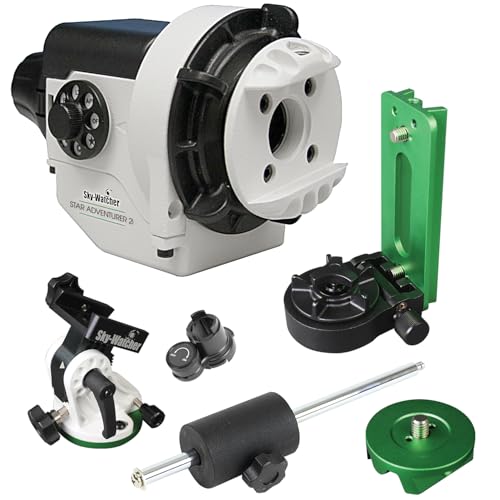
- Wi-Fi smartphone control
- Supports photography and telescope use
- Equatorial base aids polar alignment
Best For: Flexible nightscape and wide-field astrophotography
Best Beginner Telescope
Celestron AstroMaster 130EQ-MD

- 130mm Newtonian reflector
- Automatic RA motor tracking
- Includes eyepieces and red-dot finder
Best For: New observers seeking a complete motorized telescope
Best Lightweight Tracker
SLIK ECH-630 Compact Star Tracker
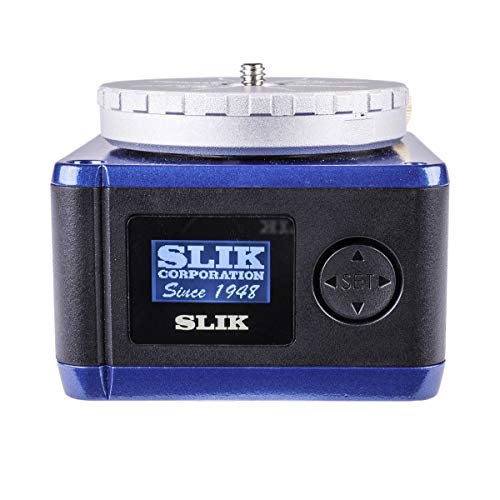
- Weighs about 22.4 ounces
- Up to 20-hour battery life
- Celestial, lunar, solar, and time-lapse modes
Best For: Backpacking and lightweight night-sky photography
Best Compact Camera Mount
iOptron SkyTracker Pro Camera Mount

- 6.6-pound listed payload
- Automatic RA tracking
- Includes polar scope and padded bag
Best For: Camera and cellphone users needing a portable tracking mount
Best Portable Pick
Sky-Watcher Star Adventurer Mini

- 1.5-pound portable tracking platform
- Wi-Fi SynScan app control
- 6.6-pound camera payload
Best For: Traveling photographers shooting nightscapes and wide-field astrophotography
Best Advanced Mount
Explore Scientific iEXOS-100-2 PMC-Eight

- Eight-CPU PMC-Eight control system
- Dual-axis worm gears with belt drives
- ExploreStars GoTo app control
Best For: Tablet-controlled equatorial observing and astrophotography setups
Best Complete Mini Kit
Sky-Watcher Star Adventurer Mini Pro Pack

- Includes equatorial base and DEC bracket
- Wi-Fi SynScan app control
- 1.5-pound tracker with 6.6-pound payload
Best For: Portable camera tracking with included alignment and positioning accessories
Open-Source Pick

- Custom stellar, lunar, and rotation speeds
- App-free operation with power-bank support
- Doubles as a time-lapse gimbal head
Best For: Portable astrophotography and time-lapse users
GoTo Upgrade
Sky-Watcher Star Adventurer GTi Mount

- Full GoTo performance in a compact package
- Built-in Wi-Fi and illuminated polar scope
- Includes bar and 5 lb counterweight
Best For: Portable users who want GoTo control
Heavy-Duty Base
TeSeek Tracker with Latitude Platform

- All-metal CNC latitude adjustment base
- Stated 15 kg load capacity
- Custom speeds and hemisphere switching
Best For: Heavier camera and astrophotography setups
Best Modular Tracker – Sky-Watcher Star Adventurer 2i Pro Pack
The Sky-Watcher Star Adventurer 2i Pro Pack is a versatile choice among motorized star trackers for photographers who want portable tracking with room to expand. Its modular design supports wide-field astrophotography, time-lapse video, and telescopic use, while built-in Wi-Fi enables smartphone control through the SAM Console app.
Best For: Nightscape photographers who want a portable, Wi-Fi-enabled tracker that can work with existing photographic tripods.
Pros:
- Supports Milky Way, eclipse, and other astronomical photography.
- Wi-Fi allows smartphone control through the free SAM Console app.
- Deluxe equatorial base assists with polar alignment.
- Modular design works for wide-field photography, time-lapse video, and telescopic use.
Cons:
- At 7 pounds, it is heavier than compact tracker heads.
- Its broader feature set may be more than casual photographers need.
The Star Adventurer 2i stands out when flexibility matters. It is a strong fit for users who want one motorized platform for several astrophotography styles rather than a tracker limited to a single setup.
Best Beginner Telescope – Celestron AstroMaster 130EQ-MD
The Celestron AstroMaster 130EQ-MD combines a 130mm Newtonian reflector with an equatorial mount and motorized tracking. For shoppers comparing motorized star trackers and beginner telescope packages, it offers a complete observing setup with manual slow-motion controls and automatic right-ascension tracking.
Best For: Beginners who want a full telescope package for observing planets and deep-sky objects with automatic tracking.
Pros:
- 130mm optics provide useful light-gathering capacity.
- Included RA motor automatically follows centered objects.
- Two eyepieces and a StarPointer red-dot finderscope are included.
- No-tool setup and a two-year US warranty support first-time users.
Cons:
- At 17 pounds, it is less portable than tracker-only camera mounts.
- The motor drive requires a 9V alkaline battery.
- Manual focus and manual pointing controls remain part of the setup.
This is not a bare camera tracker; it is a complete telescope and mount system. Choose it when visual astronomy and beginner-friendly operation matter more than a lightweight astrophotography platform.
Best Lightweight Tracker – SLIK ECH-630 Compact Star Tracker
The SLIK ECH-630 is one of the more travel-friendly motorized star trackers in this roundup. Weighing 22.4 ounces and running for up to 20 hours on four AA batteries, it is designed for photographers who need celestial, lunar, solar, or time-lapse speeds without carrying a larger tracking platform.
Best For: Backcountry and travel photographers prioritizing low weight, simple controls, and extended battery operation.
Pros:
- Compact 22.4-ounce design suits backpacking.
- Offers celestial, lunar, solar, and time-lapse speeds.
- LCD menu provides straightforward control.
- Runs up to 20 hours on four AA batteries.
Cons:
- Optional SMH-250 head is needed for easier polar alignment.
- Its maximum recommended load varies by the listed configuration, so setup weight should be checked carefully.
The ECH-630 makes the most sense when portability is the deciding factor. Its multiple speed modes add flexibility, while the optional adjustment head may be useful for photographers seeking more convenient polar alignment.
Best Compact Camera Mount – iOptron SkyTracker Pro Camera Mount
The iOptron SkyTracker Pro is a compact motorized camera mount with automatic right-ascension tracking and a listed payload of up to 6.6 pounds. It supports sidereal, half-speed, solar, and lunar modes, making it a practical option for photographers comparing motorized star trackers for camera and cellphone use.
Best For: Camera users who want a compact tracking mount with multiple speed modes, a polar scope, and USB charging.
Pros:
- Supports payloads up to 6.6 pounds.
- Offers sidereal, half-speed, solar, and lunar tracking modes.
- Includes automatic RA tracking and a polar scope.
- Charges through Micro USB and includes a padded bag.
Cons:
- Mount-only package may require compatible support equipment.
- It is not water resistant.
- Charging to 80% takes about five hours.
The SkyTracker Pro is a balanced choice for photographers who want more capacity than an ultralight tracker while keeping the system relatively compact. Its mount-only configuration means you should account for the rest of your camera support setup.
Best Portable Pick – Sky-Watcher Star Adventurer Mini
The Sky-Watcher Star Adventurer Mini is a lightweight choice among motorized star trackers for photographers who want a portable platform for nightscapes, eclipses, time-lapse work, and wide-field astrophotography. Its Wi-Fi smartphone control, polar scope, and 6.6-pound payload capacity make it practical for many DSLR and mirrorless camera setups.
Best For: Portable nightscape and wide-field astrophotography with DSLR or mirrorless cameras.
Pros:
- Weighs just 1.5 pounds and fits easily in a camera bag or backpack.
- Wi-Fi control works through the free SynScan app on compatible Android and iOS devices.
- Includes a ball-head adapter and illuminated polar scope for flexible mounting and alignment.
- AA batteries can provide up to 24 hours of mobile power, with 5V mini-USB input available.
Cons:
- It is not water resistant.
- A ball head is not included.
Choose this model when portability and straightforward camera tracking matter more than a heavier telescope-oriented setup. Its compact design and app control are especially useful for travel-focused astrophotography.
Best Advanced Mount – Explore Scientific iEXOS-100-2 PMC-Eight
The Explore Scientific iEXOS-100-2 PMC-Eight is a more feature-focused option for buyers comparing motorized star trackers with equatorial mounts. Its dual-axis worm gears, belt-driven stepper motors, and eight-CPU PMC-Eight system are designed for responsive operation, while ExploreStars app control supports alignment, navigation, and object selection.
Best For: Users seeking a GoTo equatorial mount and app-controlled setup for telescope-based observing or astrophotography.
Pros:
- PMC-Eight system uses eight independent CPUs for defined control functions.
- Dual-axis worm gears and quiet belt-driven stepper motors support precise movement.
- ExploreStars app is available for Apple, Android, and Windows tablets.
- Clutched RA and declination axes help with balancing and repositioning.
Cons:
- The mount requires a tablet-compatible control device for its app features.
- It uses a polar alignment sight hole rather than an included polar scope.
This is the strongest fit for shoppers who want a more capable equatorial platform with GoTo functionality rather than the smallest possible travel tracker. The included tripod and app-based controls add convenience for a more involved observing setup.
Best Complete Mini Kit – Sky-Watcher Star Adventurer Mini Pro Pack
The Sky-Watcher Star Adventurer Mini Pro Pack adds an equatorial base and declination bracket to the compact Star Adventurer Mini platform. For photographers comparing motorized star trackers, this package provides a portable 1.5-pound tracker with Wi-Fi control, a polar scope, and a 6.6-pound payload capacity for many DSLR and mirrorless camera configurations.
Best For: Photographers who want a compact tracker kit with included alignment and positioning accessories.
Pros:
- Includes a deluxe equatorial base for positioning during polar alignment.
- Includes a declination bracket for fine camera positioning and balance.
- Wi-Fi smartphone control is available through the free SynScan app.
- Supports most DSLR and mirrorless cameras up to a listed 6.6-pound payload.
Cons:
- AA batteries or a 5V mini-USB power source are required and not included.
- Counterweights for the declination bracket are not included.
The Pro Pack is a sensible upgrade over a bare tracker when you want more positioning flexibility in the box. It remains highly portable while offering accessories that make camera balancing and polar alignment more practical.
Open-Source Pick – TeSeek Gimbal Star Tracker
This compact option among motorized star trackers uses an ESP32S dual-core controller and supports stellar, lunar, and custom rotation speeds. It is designed for straightforward setup without an app and can also serve as a gimbal head for time-lapse photography.
Best For: Photographers who want a portable, app-free tracker with customizable motion settings.
Pros:
- Supports stellar speed, moon speed, custom rotation speed, and hemisphere switching.
- Works with a power bank through its USB Type-C port.
- Includes a 38mm quick-release baseplate for compatible gimbals.
- Can double as a gimbal head for time-lapse photography.
Cons:
- Does not include a built-in battery.
- Requires a ball head to connect a camera.
- Power requires a USB-A-to-C cable; USB-C-to-C is prohibited.
This tracker is a practical fit when customizable speeds and simple operation matter more than an integrated battery or complete camera-mounting setup. Check your ball-head thread compatibility before buying.
GoTo Upgrade – Sky-Watcher Star Adventurer GTi Mount
The Sky-Watcher Star Adventurer GTi is a full GoTo motorized star tracker built for portable astrophotography. Its mount head kit includes a counterweight bar and 5 lb counterweight, along with built-in Wi-Fi and an illuminated polar scope.
Best For: Astrophotographers seeking full GoTo performance in a portable mount package.
Pros:
- Provides full GoTo performance in a compact design.
- Includes built-in Wi-Fi for convenient control.
- Features a built-in polar scope with illuminator.
- Includes a counterweight bar and 5 lb counterweight.
Cons:
- Dovetail for mounting a DSLR or mirrorless camera is not included.
- At 6.9 kg, it is heavier than a minimalist tracker setup.
- Requires batteries or an external power source.
This is the most feature-oriented choice in the group, especially for users who want GoTo functionality and Wi-Fi. Budget for the missing dovetail and confirm that the mount’s power and weight requirements suit your kit.
Heavy-Duty Base – TeSeek Tracker with Latitude Platform
Equatorial Mount Star Tracker with Latitude Adjustment Base for Astrophotography
Check Price On AmazonThis TeSeek model combines the same customizable motorized star tracker functions with an all-metal CNC latitude adjustment base. Its stated 15 kg load capacity and hemisphere switching make it a flexible option for astrophotography setups that need more substantial support.
Best For: Users who need a tracker with an adjustable metal base and a higher stated load capacity.
Pros:
- Includes an all-metal CNC latitude adjustment base.
- Supports stellar, lunar, and custom rotation speeds.
- Lists a 15 kg load capacity.
- Can operate from a power bank and work as a time-lapse gimbal head.
Cons:
- Has no built-in battery.
- Requires a ball head for camera connection.
- Uses a 3/8-inch bottom thread and may require additional mounting hardware.
The adjustable metal base makes this the more support-focused TeSeek option, while its app-free controls keep operation simple. Verify the complete mounting chain, including the ball head and thread adapters, before placing an order.
How We Picked the Best Motorized Star Trackers
We selected these 10 models to cover the main ways photographers and beginners use motorized tracking. The lineup includes compact trackers for DSLR nightscapes, systems with polar scopes for more accurate alignment, and heavier equatorial mounts designed for telescopes or larger imaging rigs.
Our comparison emphasizes tracking capability, payload support, portability, alignment tools, power requirements, control options, and practical setup. We also considered whether each mount is best suited to wide-field landscape astrophotography, time-lapse work, planetary viewing, or more demanding deep-sky imaging.
Quick Comparison
| Best for | Look for | Typical choice |
|---|---|---|
| Portable DSLR nightscapes | Low weight, simple controls, battery operation | Compact camera tracker |
| Longer exposures | Polar scope, stable base, accurate sidereal tracking | Tracker with alignment accessories |
| GoTo astrophotography | Computerized object finding and equatorial tracking | GoTo EQ mount |
| Motorized telescope viewing | Stable tripod, counterweight, and telescope compatibility | Motorized telescope mount |
Key Buying Factors for Motorized Star Trackers
Payload and Balance
Check the stated payload before adding a camera, lens, ball head, guidescope, or telescope. Stay below the maximum rating when possible, and balance the setup carefully with a counterweight. A mount that is technically compatible but overloaded may produce vibration, trailing, or unreliable tracking.
Alignment and Tracking Modes
A polar scope or latitude adjustment base can make alignment faster and more precise. Sidereal tracking is essential for stars, while lunar, solar, panoramic, and time-lapse modes are useful for specialized shooting. GoTo control adds convenience by helping locate and follow selected objects.
Portability and Setup
Compact trackers are easier to carry to dark locations but generally support less weight. Larger equatorial mounts offer greater stability and expansion potential, though they require more transport space, setup time, and careful leveling.
Power and Controls
Battery-powered units are convenient in the field, while mounts with external power inputs may be better for long sessions. Review whether control is handled through physical switches, a handset, a mobile app, or computer software, and confirm that the required accessories are included.
Who Should Buy Which Motorized Star Trackers?
Choose a compact tracker if you mainly shoot Milky Way landscapes, star fields, or time-lapses with a DSLR or mirrorless camera. These models prioritize portability and quick setup.
Choose a tracker with a polar scope or latitude base if you want longer exposures and more repeatable alignment without moving to a full-size observatory mount.
Choose a GoTo equatorial mount if you use a telescope, heavier camera rig, or want computerized object locating. These systems are more capable but need a sturdier tripod, counterweight, and more setup discipline.
Before buying, confirm the mount’s payload rating, included accessories, tripod requirements, power source, and compatibility with your camera or telescope. Those details usually matter more than maximum advertised tracking speed.