
A monocular with a smartphone adapter can bring distant subjects closer without the bulk of a camera and telephoto lens. But a bundled adapter does not guarantee sharp photos: steady mounting, usable optics, and a good fit with your phone matter just as much.
These 10 options range from portable 12x models to products advertised with much higher magnification. Use the comparison and buying tips below to find a setup that suits where—and how—you plan to shoot.
Best 10 Monoculars with Smartphone Adapters Picks for 2026
Flexible Tripod Pick

- 12x magnification; 56mm objective
- BAK4 prism and fully multi-coated optics
- Phone holder, adjustable tripod, and case
Best For: Outdoor viewing with an adjustable tripod
Large Objective Pick

- 12x magnification; 60mm objective
- BAK4 prism listed
- Phone adapter, adjustable tripod, and case
Best For: Buyers prioritizing a 60mm objective
Wet-Weather Pick
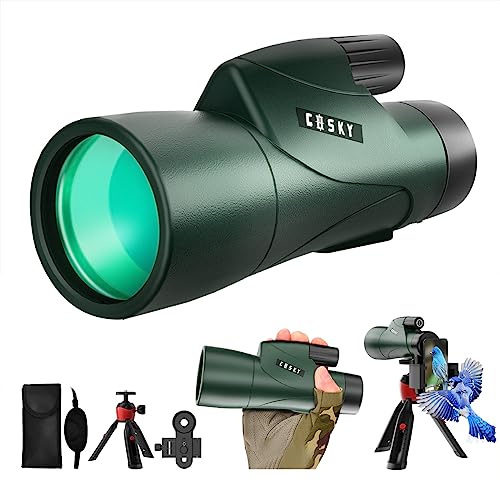
- 12x magnification; 55mm objective
- IPX7 waterproof and nitrogen-filled
- Phone adapter; tripod listed in bullets
Best For: Bird watching in damp conditions
Portable Outdoor Pick

- 15.8-ounce listed weight
- IPX7 waterproof; BAK4 prism
- Phone adapter and tripod included
Best For: Travel and hiking in changeable weather
Weather-Ready Pick

- IP67-rated, nitrogen-filled body
- BAK4 prism and coated optics
- Phone adapter and mini tripod included
Best For: Outdoor viewing in changeable weather
Simple Carry Pick

- Compact, one-handed design
- Multi-layer optical coatings
- Confirm adapter inclusion before buying
Best For: Straightforward handheld outdoor viewing
Complete Photo Kit
PhysioPhyx Monocular Telescope

- Phone holder and tripod included
- BAK4 prism with FMC lens
- Twist-up eyecup and rubber grip
Best For: Casual phone photos of wildlife and scenery
Complete Kit Pick

- Tripod, holder, strap, and bag
- BAK4 prism and manual focus
- Lens-size specifications conflict
Best For: Travelers seeking a bundled phone-mounting kit
Rubber-Grip Pick

- Non-slip rubber exterior
- Phone adapter and tripod included
- Focus details need verification
Best For: Handheld outdoor viewing with a grippy body
Flexible Tripod Pick – OXK Optics 12×56 Monocular
Among monoculars with smartphone adapters, this OXK Optics 12×56 stands out for its included tripod, which offers two angle settings and three length settings. It is a practical setup for bird watching, travel, and other outdoor viewing when you want to try phone photography.
Best For: Outdoor viewers who want an adjustable tripod and carrying case included.
Pros:
- 12x magnification and a 56mm objective lens for viewing distant subjects.
- BAK4 prism and fully multi-coated optics.
- Includes a smartphone holder, adjustable tripod, hand strap, and travel case.
Cons:
- At 12x, handheld shake may make photos harder to frame; the tripod is the better option for longer sessions.
- The listed two-pound weight may be less appealing if you prioritize a light pack.
Choose this one for the adjustable support and bundled accessories. Allow time to align your phone with the eyepiece before taking photos.
Large Objective Pick – Pankoo 12×60 Monocular
If a larger objective lens is your priority among monoculars with smartphone adapters, the Pankoo 12×60 is worth considering. It pairs 12x magnification and a 60mm objective with an included phone holder and adjustable tripod for bird watching or sightseeing.
Best For: Buyers seeking a 60mm objective and a ready-to-use phone-and-tripod bundle.
Pros:
- 60mm objective lens and 25mm eyepiece.
- BAK4 prism and lens coatings are listed for the optics.
- Includes a smartphone adapter, adjustable tripod, and portable case.
Cons:
- The supplied specifications disagree on the coating: the bullets say fully multi-coated, while the details say fully coated.
- No waterproof rating is specified in the supplied notes.
This is a straightforward choice if you want the larger listed objective and included mounting gear. Check the current listing if a particular coating specification matters to you.
Wet-Weather Pick – Gosky PIPER 12×55 Monocular
For shoppers comparing monoculars with smartphone adapters for outdoor use, the Gosky PIPER 12×55 adds an IPX7 waterproof, nitrogen-filled body. Its included phone adapter and tripod give you a steadier option for capturing distant birds or wildlife at 12x.
Best For: Bird watchers and hikers who expect rain or changing temperatures.
Pros:
- 12x magnification with a listed 352-foot field of view at 1,000 yards.
- 55mm objective, BAK4 prism, and fully multi-coated optical surfaces.
- IPX7 waterproof construction, nitrogen filling, tripod, and phone adapter.
Cons:
- The tripod appears in the product bullets, but not in the supplied box-contents list; verify what’s included before ordering.
- Phone photos still require careful adapter alignment.
The weather protection makes this the strongest fit here for damp conditions. Confirm the current package contents if the tripod is essential to your setup.
Portable Outdoor Pick – Adasion MW6 12×56 Monocular
The Adasion MW6 is a portable option among monoculars with smartphone adapters, pairing 12x magnification with a 56mm objective and a listed weight of 15.8 ounces. A phone adapter and tripod are included for steadier viewing and image capture on hikes or trips.
Best For: Travelers who want a relatively light 12×56 monocular with wet-weather protection.
Pros:
- BAK4 prism and fully multi-coated lenses.
- IPX7 waterproof, nitrogen-filled design.
- Includes a smartphone adapter and tripod; listed weight is 15.8 ounces.
Cons:
- Phone camera alignment needs careful adjustment.
- It is not intended for complete darkness or true night-vision use.
This is a useful balance of portability, mounting accessories, and stated waterproofing. Use the tripod when you need a steadier 12x view or are lining up a phone shot.
Weather-Ready Pick – Scotar 12×50 Monocular Kit
Among monoculars with smartphone adapters, the Scotar 12×50 is a practical choice for outdoor use: it pairs a phone mount and mini tripod with an IP67-rated, nitrogen-filled body.
Best For: Bird watching and nature observation in changeable weather.
Pros:
- 12x magnification and a 50 mm objective lens.
- BAK4 prism with phase and dielectric coatings; fully multi-coated optics.
- Includes a smartphone adapter, mini tripod, and pouch.
- IP67 dust and water protection, plus fog-resistant construction.
Cons:
- Listed at 1.9 pounds, so it is not the lightest option for carrying all day.
- Manual focus and 12x magnification may take a steady hand without the tripod.
Its clearest advantage is the combination of specified weather protection and a complete phone-photography kit. Use the included tripod when framing shots at 12x.
If you are comparing monoculars with smartphone adapters, this ASxmhGo model is listed with one in its title, while its feature notes focus on straightforward handheld viewing. The notes highlight multi-layer optical coatings, manual focus, and a compact, one-handed design.
Best For: Buyers who prioritize simple handheld observation and want to confirm the phone-mount contents before ordering.
Pros:
- Multi-layer coatings are intended to reduce glare and stray light.
- Sealed construction is described as waterproof and fogproof.
- Designed for comfortable one-handed carrying and uncomplicated focusing.
Cons:
- The supplied contents do not explicitly list a smartphone adapter, despite its mention in the title.
- No tripod is specified in the supplied notes.
This is the less clearly documented phone-photography option of the three. Check the seller’s current package listing if an adapter is essential to your purchase.
For shoppers seeking monoculars with smartphone adapters in one package, the PhysioPhyx kit includes a phone holder and tripod alongside the monocular. Its BAK4 prism and FMC lens are paired with a rubber-armored body for outdoor handling.
Best For: Casual wildlife and scenery photos using a phone-mounted monocular.
Pros:
- Includes a smartphone holder, tripod, pouch, cleaning cloth, and manual.
- BAK4 prism and FMC lens are specified for brighter, higher-contrast viewing.
- Twist-up eyecup accommodates viewing with or without eyeglasses.
- Rubber armor provides a non-slip grip.
Cons:
- Listed at 1.4 pounds, adding weight to a hiking bag.
- The supplied notes do not specify a waterproof rating.
Choose this one for its clearly listed phone-and-tripod accessories rather than an assumed weather rating. The included tripod is especially useful when composing phone images.
Adjustable Eyecup Pick – PhysioPhyx 80×100 Monocular
Among monoculars with smartphone adapters, this PhysioPhyx model pairs a phone mount and tripod with a stated 80x magnification and 100 mm objective lens. Its twist-up eyecup is a useful detail if you switch between viewing with and without glasses.
Best For: Outdoor observers who want a phone-ready monocular with adjustable eyecup positioning.
Pros:
- Includes a quick-positioning smartphone adapter and tripod.
- BAK-4 prism and fully multi-coated lenses are specified.
- Adjustable eyecup supports viewing with or without glasses.
Cons:
- The listing does not specify phone models or case compatibility.
- The stated 80x magnification is likely to make handheld shake more noticeable; use the included tripod for steadier viewing.
This is a practical package for bird watching or travel if eyecup comfort matters, but check that the adapter fits your phone before buying.
Complete Kit Pick – PhysioPhyx H23 Monocular
If you prefer monoculars with smartphone adapters that arrive with their carrying accessories, the PhysioPhyx H23 includes a phone holder, retractable tripod, strap, lens covers, and storage bag. It is marketed for bird watching, hiking, and travel, with a BAK4 prism and manual focus.
Best For: Travelers who want a phone-mounting kit with a strap and storage bag.
Pros:
- Accessory bundle includes a tripod, phone holder, strap, covers, and bag.
- Retractable tripod can help steady phone-mounted viewing.
- Twist-up eyecup accommodates viewing with or without glasses.
Cons:
- The listing calls the lens 100 mm in its description but gives 8 cm in the specifications; confirm the actual size if it matters to you.
- Phone-model and case compatibility are not specified.
Its included accessories make it convenient to pack, though the conflicting objective-lens figures are worth checking before purchase.
Rubber-Grip Pick – Mulamoy Phone-Ready Monocular
This Mulamoy option stands out among monoculars with smartphone adapters for its non-slip rubber exterior. It comes with a phone adapter and tripod for recording distant subjects, while its listed optics include a BAK-4 prism and fully multi-coated lenses.
Best For: Wildlife or scenery watchers who prioritize a grippy handheld body and included tripod.
Pros:
- Non-slip rubber exterior provides a secure handhold.
- Includes a smartphone adapter and tripod.
- BAK-4 prism and fully multi-coated lenses are specified.
Cons:
- The notes mention smooth focus adjustment, but the specifications list auto focus; verify how focusing works.
- The phone adapter is described as fitting most smartphones, without specific fit dimensions.
Consider it for its grip and included mounting accessories, but clarify the focus mechanism and phone fit before ordering.
How We Picked These Monoculars with Smartphone Adapters
We focused on the features shoppers can compare across these 10 listings: stated magnification and objective size, included phone adapters and tripods, advertised prism and lens coatings, portability, and weather-resistance claims. This is a buying comparison, not a hands-on optical test. Treat listed specifications as a starting point and check current product details, phone compatibility, and return terms before ordering.
Quick Comparison
The 12×50 to 12×60 options are the more straightforward starting point for everyday viewing. At 12x, hand shake is still noticeable, but a tripod can make phone photos easier to frame. The Gosky 12×55 and Adasion 12×56 listings identify familiar accessory or optical features, while the 12×50 listing emphasizes waterproofing and prism coatings; confirm whether a phone adapter is included with that specific package.
The five products labeled 80×100 target shoppers drawn to high-power claims. Do not assume those numbers will translate into a sharper, closer smartphone image. Compare actual field of view, focusing ease, mounting stability, and sample images where available.
Key Buying Factors for Monoculars with Smartphone Adapters
Usable Magnification and Stability
More magnification makes small movements more visible and narrows the view, which can make birds or moving wildlife harder to track. A stable tripod or other support is especially useful for phone photography. If handheld viewing is your priority, favor a comfortable grip and manageable weight over the largest advertised power.
Phone Fit and Alignment
Check that the adapter accommodates your phone’s width and camera position, particularly if you use a thick case or a multi-camera phone. A clamp that holds alignment without pressing buttons is more useful than an adapter that is merely included. Expect to adjust the phone until the circular view is centered, then use the phone’s main camera and avoid excessive digital zoom.
Optics, Light, and Weather Protection
Objective size can affect light gathering, but coatings, prism quality, and overall design also matter. Terms such as BAK4 and FMC describe components or coatings; they are not proof of image quality on their own. For damp outings, look for a clearly stated waterproof rating and fogproof construction rather than assuming all outdoor models offer the same protection.
Who Should Buy Which Monoculars with Smartphone Adapters?
For hiking and casual birding: Start with a portable 12x model and prioritize comfortable focusing and an adapter you will actually carry. For phone photos: Choose a package with a suitable tripod and a clamp confirmed to fit your device. For wet-weather trips: Give a verified waterproof rating priority, and check accessory inclusion separately. For maximum advertised reach: Consider an 80×100-labeled option only after reviewing credible sample images and return terms; a steadier, easier-to-align monocular may produce better results in practice.