
Choosing among the best laser engravers for metal jewelry means balancing material compatibility, marking detail, speed, and workspace. The right machine can help you personalize rings, bracelets, pendants, and other small pieces with cleaner, more repeatable results.
This roundup compares 10 selected engravers across fiber, infrared, diode, and dual-laser designs, with options for beginners, small businesses, makers, and higher-volume jewelry production.
Best 10 Laser Engravers for Metal Jewelry Picks for 2026
Best Hybrid Pick

- 20W fiber and diode lasers
- Portable 6.02kg design
- Metal, wood, acrylic, and jewelry work
Best For: Mobile sellers and mixed-material customization
Best Countertop Option

- Standalone 3.5-inch touchscreen
- 1064nm infrared laser for metal
- Compact approximately 3kg design
Best For: Gift shops and beginner-friendly counter personalization
Best for Jewelry Businesses

- 20W 1064nm fiber laser
- Two marking lenses included
- LightBurn and EzCad2 compatible
Best For: Dedicated jewelry shops needing flexible marking coverage
Best Compact Surface Marker

- 1064nm infrared surface marking
- 3.5-inch smart touchscreen
- Compact desktop workspace footprint
Best For: Small studios marking jewelry, tags, and custom gifts
Best Overall

- 20W fiber laser marks gold, silver, and other metals
- Dual-laser setup supports 3D embossing and varied materials
- Fast 10,000mm/s operation with camera-assisted workflows
Best For: Jewelry businesses needing metal performance and material versatility
Best for Deep Metal Engraving

- 30W fiber laser supports deep metal engraving
- Marks over 90 colors on stainless steel and titanium
- 15,000mm/s speed with 8K resolution claims
Best For: Metal makers seeking deep engraving and color marking
Best Portable Pick
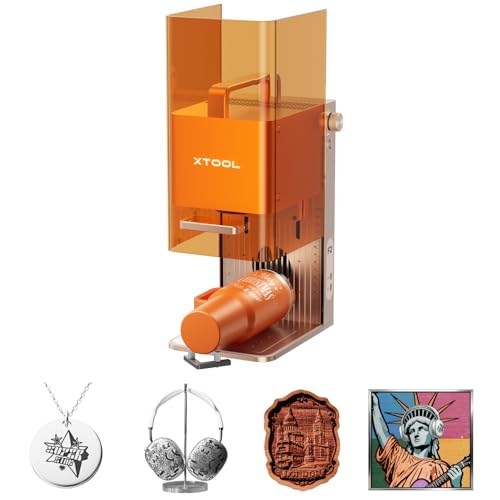
- 5W IR laser enables vivid metal color marking
- 50MP camera supports precise small-piece alignment
- Compact 10-pound enclosed design suits on-site work
Best For: Pop-ups, stores, and small-batch jewelry personalization
Best for Large Jewelry Batches

- Large bed supports batch engraving and bigger projects
- 600mm/s speed and 40W power support high productivity
- Enclosed design includes multiple safety protections
Best For: Jewelry businesses and makers handling varied, high-volume projects
Best Dual-Laser Jewelry Pick

- 1.2W infrared laser marks bare metal jewelry
- HD camera supports precise placement and alignment
- Compact enclosed design offers app and offline batch control
Best For: Small jewelry businesses and beginners working with varied materials
Best Camera-Guided Starter

- Smart camera previews placement before engraving
- 10W laser handles engraving and selected cutting tasks
- Includes enclosure, honeycomb bed, tools, and materials
Best For: Beginners and hobbyists seeking guided setup for small projects
Best Hybrid Pick – LaserPecker LP5
If you need laser engravers for metal jewelry that can also handle broader craft work, the LaserPecker LP5 combines a 20W fiber laser with a 20W diode laser. It is designed for fast personalization, fine detail, and portable use, with claimed speeds up to 10,000mm/s and 0.0027mm precision.
Best For: Mobile sellers, craft-fair businesses, and shops offering jewelry and mixed-material customization.
Pros:
- Dual fiber-and-diode setup supports metal jewelry plus wood, leather, and acrylic projects.
- Portable 6.02kg design is suited to kiosks, markets, and mobile workshops.
- Supports 3D grayscale work and claims the ability to cut up to 0.5mm brass or titanium.
Cons:
- At 23.2 pounds, it is portable but heavier than the smallest desktop options.
- Its broader capabilities may be more than needed for metal-only surface marking.
The LP5 is the most versatile choice here for sellers who want one machine for jewelry personalization and general craft production. Its dual-laser design and portable format are especially useful when customer orders need to be completed quickly.
Best Countertop Option – AlgoLaser Pixi 1064nm
For straightforward laser engravers for metal jewelry, the AlgoLaser Pixi emphasizes compact, customer-facing personalization. Its 1064nm infrared laser, touchscreen controls, and built-in designs let you prepare names, dates, and simple artwork without requiring a PC for every project.
Best For: Gift shops, retail counters, and beginners creating personalized metal tags, nameplates, and small keepsakes.
Pros:
- 3.5-inch touchscreen and AlgoOS support standalone operation.
- Includes AlgoType, AlgoSketch, and more than 300 built-in designs.
- Compact approximately 3kg body is easy to move between a counter and market table.
Cons:
- Its 0.04 x 0.05mm spot and compact format are aimed at small metal projects rather than large workpieces.
- Computer-designed artwork may still require compatible LightBurn or LaserGRBL software.
The Pixi is a practical choice when ease of use and customer involvement matter more than industrial throughput. Its standalone touchscreen workflow makes it well suited to on-the-spot personalization in a small retail space.
Best for Jewelry Businesses – ComMarker B4 20W Fiber Laser
The ComMarker B4 is a dedicated 20W fiber machine for buyers comparing laser engravers for metal jewelry and other metal goods. It supports LightBurn and EzCad2, includes two lenses for different marking areas, and is specified for materials such as gold, silver, aluminum, copper, and stainless steel.
Best For: Jewelry businesses and makers who need software flexibility, larger marking coverage, and a desktop or handheld setup.
Pros:
- 20W, 1064nm fiber laser is designed for jewelry and a broad range of metals.
- Two included lenses provide 110 x 110mm and 200 x 200mm marking areas.
- Supports LightBurn, EzCad2, rotary use, and speeds up to 15,000mm/s.
Cons:
- At 37.9 pounds, it is substantially less portable than the compact Pixi models.
- The computer-based workflow may require more setup than a touchscreen-only engraver.
The B4 is a strong fit for a dedicated jewelry workspace where marking range and software compatibility are priorities. Its two-lens package adds flexibility for both smaller jewelry pieces and broader tags or products.
Best Compact Surface Marker – AlgoLaser Pixi
This AlgoLaser Pixi is a compact infrared option for laser engravers for metal jewelry when the task is clean surface marking rather than cutting or deep engraving. Its 1064nm laser and 3.5-inch smart touchscreen are intended for jewelry, tags, nameplates, keychains, and other small personalization projects.
Best For: Home studios, small creative workspaces, and makers focused on detailed surface marks on metal.
Pros:
- 1064nm infrared laser is designed for fine marking on suitable metals and selected dark plastics.
- Touchscreen and AlgoOS allow projects to be previewed and started without constant PC use.
- Compact desktop format fits home studios and small business workspaces.
Cons:
- It is not intended for wood cutting, deep engraving, or large-scale cutting.
- Reflective metals may require slower speeds or marking spray for darker, more consistent results.
- Safe operation requires appropriate goggles and a well-ventilated workspace.
The Pixi makes sense for makers who want a small, focused metal-marking machine rather than a general-purpose laser cutter. Its stated surface-marking focus helps set realistic expectations for jewelry and gift personalization.
Best Overall – xTool F1 Ultra Dual Laser
For shoppers comparing laser engravers for metal jewelry, the xTool F1 Ultra stands out for combining a 20W fiber laser with a 20W diode laser. Its fiber laser handles metals including gold, silver, copper, stainless steel, brass, and titanium, while the diode laser expands the machine’s usefulness to wood, acrylic, leather, glass, and more.
Best For: Jewelry businesses and makers who want high-speed metal engraving plus broader material versatility and optional batch-production support.
Pros:
- 20W fiber laser engraves a wide range of metals, including precious metals.
- Supports 3D embossing, deep engraving, and high-resolution work across a 220mm × 220mm area.
- 16MP camera, enclosed design, smoke extraction, fire alarm, and emergency stop support in-store customization.
- Reaches speeds up to 10,000mm/s and can support batch workflows with the separately available conveyor.
Cons:
- The Auto Conveyor is sold separately.
- Its Class 4 laser classification requires careful attention to the included safety features and operating requirements.
- At 43.8 pounds, it is less portable than compact desktop alternatives.
The F1 Ultra is the most versatile choice here for a growing jewelry operation that also wants to personalize nonmetal products. Its larger work area, dual-laser setup, and production-focused features justify considering it when throughput matters.
Best for Deep Metal Engraving – GWEIKE G2 Pro 30W Fiber
The GWEIKE G2 Pro is a focused option among laser engravers for metal jewelry, using a 30W 1064nm fiber laser for detailed marking, deep engraving, and 3D embossing on metals. It also adds color-marking capability for stainless steel and titanium, making it suited to distinctive jewelry and metal-product designs.
Best For: Makers and businesses prioritizing deep metal engraving, color marking, and high-speed production in a compact fiber-laser platform.
Pros:
- 30W fiber laser is designed for deep engraving and detailed metal work.
- Supports more than 90 colors on metals such as stainless steel and titanium.
- 15,000mm/s claimed speed, 8K resolution, and accuracy up to 0.001mm target fine results.
- Electric lift column, red-light preview, LightBurn support, Wi-Fi, and USB simplify setup and workflow.
Cons:
- The 150mm × 150mm engraving area is smaller than the xTool F1 Ultra’s listed workspace.
- It is a Class 4 laser, so users must follow appropriate safety practices.
- The product is more specialized for fiber-laser metal work than for cutting or broad material processing.
Choose the G2 Pro when deep engraving and colorful metal marking are more important than a dual-laser system. Its compact, detachable design and strong speed claims make it appealing for focused jewelry personalization and metal-product work.
Best Portable Pick – xTool F2 Dual Laser
For portable laser engravers for metal jewelry, the xTool F2 pairs a 5W infrared laser with a 15W diode laser in a compact, enclosed machine. The infrared laser is intended for vivid, dark color marking and deep metal work, while the diode laser handles 3D embossing and thicker materials.
Best For: Jewelry sellers, pop-up vendors, and small-batch makers who need camera-assisted personalization in workshops, stores, fairs, or markets.
Pros:
- 5W IR laser supports deep, dark, vivid color marking on metal.
- 50MP camera provides workspace visualization and claimed alignment accuracy up to 0.1mm on small pieces.
- Speeds up to 6,000mm/s and optional Slide Extension support small-batch work.
- Fully enclosed, leak-proof design, built-in fan, and optional purifier support indoor or on-site use.
Cons:
- The 5W infrared laser has less listed power than the fiber lasers in the other two machines.
- The Slide Extension, RA3, and purifier are optional accessories.
- The supplied notes do not specify a dedicated engraving-area size.
The F2 is a practical choice when portability, fast setup, and accurate placement matter most. It is especially attractive for on-site personalization, though users seeking maximum fiber-laser power for deep metal work may prefer a larger dedicated fiber machine.
Best for Large Jewelry Batches – xTool S1 40W Rotary Bundle
If you need laser engravers for metal jewelry alongside larger craft projects, the xTool S1 40W Rotary Bundle stands out for its large work area, high speed, and included rotary capability. Its 40W laser is designed for demanding cutting and engraving work, while Pin-point Positioning supports detailed placement on precious items and curved surfaces.
Best For: Jewelry makers and small businesses that also need high-throughput engraving, oversized projects, or rotary work.
Pros:
- Large 23.93-by-15.16-inch bed supports batch projects, including multiple dog tags.
- Up to 600mm/s engraving speed helps improve productivity.
- Enclosed Class 1 design includes flame sensors, lid-open protection, and an emergency stop.
- Auto-focus, XCS software, material settings, and tutorials make setup easier for beginners.
Cons:
- At 86.8 pounds, it is less convenient to move than a compact desktop machine.
- The 40W power and large format may be more than occasional jewelry projects require.
This is the strongest choice here for makers who want jewelry capability without limiting themselves to small items. Its size, rotary bundle, automation, and safety features make it better suited to a dedicated workspace than a portable hobby setup.
Best Dual-Laser Jewelry Pick – Carverall A1 Pro
For makers comparing laser engravers for metal jewelry, the Carverall A1 Pro is notable because it combines a 7W blue diode laser with a 1.2W infrared laser. The infrared laser is intended for bare stainless steel, aluminum, brass, and jewelry, while the blue laser expands the machine’s usefulness to wood, leather, acrylic, glass, and coated metals.
Best For: Beginners, craft vendors, and small businesses that want one compact machine for jewelry, tags, coated materials, and general crafts.
Pros:
- Dual-laser setup handles both common craft materials and bare metal jewelry.
- Built-in HD camera supports alignment and claims 0.01mm precision for detailed work.
- Fully enclosed Class 1 design includes lid-open and tilt protection, air assist, and exhaust.
- App, computer, tablet, and phone control is available, with LightBurn and LaserGRBL compatibility.
Cons:
- The 3.94-by-3.94-inch work area is suited to small items rather than large projects.
- The infrared laser head must be swapped manually when changing material types.
- Some capabilities, such as tumbler engraving, require optional accessories.
The A1 Pro is the most directly focused option for metal jewelry in this group because its infrared laser is designed for bare metals. Its compact footprint and camera-assisted workflow are appealing for small workspaces, though the limited work area favors individual pieces and small batches.
Best Camera-Guided Starter – BlazeX M3 10W
The BlazeX M3 10W is a practical option among laser engravers for metal jewelry when accurate design placement matters. Its smart camera previews artwork on the material, while the 0.01mm precision claim is aimed at detailed engraving on metal and glass. The bundle also includes an enclosure, honeycomb bed, tool kit, and 13 engraving materials.
Best For: Beginners and hobbyists who prioritize camera-guided positioning, an included starter bundle, and a compact enclosed setup.
Pros:
- Smart camera helps preview designs and reduce placement errors and material waste.
- 10W laser supports engraving on metal and glass and cutting on wood and acrylic.
- Starter bundle includes an enclosure, honeycomb bed, tools, and 13 materials.
- Class 1 safety features include lid-open and tilt shutoff, plus fan-based exhaust.
Cons:
- The supplied notes do not specify an infrared laser for bare-metal marking.
- Rotary engraving, air assist, and purification require additional accessories.
- Its feature set is oriented toward small DIY projects rather than high-volume production.
The M3 is a sensible starter choice if camera alignment and included accessories are more important than specialized metal-laser hardware. Buyers focused specifically on bare metal jewelry should verify material compatibility and marking requirements before choosing it over a dual-laser model.
How We Picked the Best Laser Engravers for Metal Jewelry
We focused on the features that matter most when marking jewelry: laser wavelength, stated power, precision, speed, work area, camera or touchscreen controls, software support, and versatility across metals and other materials. Fiber and 1064nm infrared lasers are generally the most relevant for direct marking on metals, while dual-laser models can add useful capability for wood, leather, coated materials, and other nonmetal projects.
We also considered workflow. A camera, rotary compatibility, on-machine controls, LightBurn support, and portable or enclosed designs can make production easier, but each adds a different type of value. Always confirm the manufacturer’s material and thickness specifications before purchasing.
Quick Comparison
| Best For | Recommended Type | What to Prioritize |
|---|---|---|
| Fine metal personalization | Fiber or 1064nm infrared | Spot size, focus control, software, rotary support |
| Mixed-material crafting | Dual fiber/diode or IR/diode | Material range, camera alignment, switching convenience |
| Higher-volume work | 20W–30W fiber | Galvo speed, repeatability, cooling, usable work area |
| Small studios and beginners | Compact IR or diode/IR model | Setup, safety features, guided controls, price |
Key Buying Factors for Laser Engravers for Metal Jewelry
Laser Type and Metal Compatibility
For stainless steel, brass, aluminum, titanium, and similar jewelry materials, a fiber or 1064nm infrared source is usually the strongest starting point. Check whether the machine can engrave bare, anodized, plated, or coated surfaces, because results can vary substantially. A diode laser may work on some coated metals but is not automatically suitable for direct bare-metal marking.
Power, Detail, and Speed
Higher wattage can improve throughput and help with deeper marks, but it does not alone guarantee finer detail. Look at claimed spot size, resolution, pulse control, and the manufacturer’s sample settings. For names, dates, logos, and small graphics, accurate focusing and stable motion are often more important than maximum speed.
Jewelry Workflow and Accessories
A rotary attachment is valuable for rings, bracelets, and cylindrical pieces. A camera can simplify positioning on irregular items, while an enclosed enclosure or compatible exhaust system can improve safety and cleanliness. Confirm the included lens, maximum marking area, and whether additional lenses or fixtures are sold separately.
Software and Safety
Choose software you can use comfortably and verify compatibility with your operating system. LightBurn support may appeal to experienced users, while touchscreen or app-based controls can shorten setup for beginners. Use proper ventilation, eye protection where required, and the manufacturer’s safety procedures; reflective metals demand particular care.
Who Should Buy Which Laser Engravers for Metal Jewelry?
Choose a compact infrared model if you mainly need simple personalization on small metal pieces and want an approachable desktop workflow. A 20W fiber engraver is a better fit for jewelry sellers, makers, and small shops that need faster marking and more control over production. A 30W fiber system makes sense for heavier workloads, larger batches, or users who value speed and deeper marking capability.
Pick a dual-laser machine if your projects extend beyond metal jewelry into wood, leather, coated materials, or decorative crafts. Larger-format laser cutters are better for users who need a broad bed for mixed projects rather than a dedicated jewelry workstation. Before buying, match the machine’s marking area, accessories, software, and safety setup to the pieces you actually plan to produce.