
A globe can turn geography into a hands-on activity, giving children a clearer sense of continents, oceans, countries, and the wider world. The best models balance readable maps with age-appropriate features that encourage exploration.
We compared 10 globes for children across interactive learning tools, illuminated designs, durable classroom options, and simple spinning models to help you choose the right fit for your child, space, and budget.
Best 10 Globes for Children Picks for 2026
Best Illuminated Globe
SMART WALLABY 9-inch Kids World Globe

- Political map and illuminated 88-constellation mode
- Includes constellation guide and geography card game
- Compact desktop design with LED lighting
Best For: Homeschooling, classrooms, and combined geography and astronomy learning
Best Video Learning Globe
LeapFrog Magic Adventures Globe
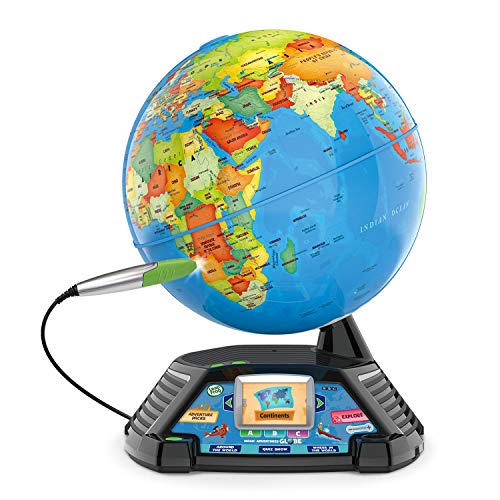
- Built-in 2.8-inch video screen and stylus
- BBC videos, facts, animations, and geography games
- Recommended for ages 5 to 12
Best For: Screen-supported geography and world-culture learning
Best AR Globe
PlayShifu Orboot Earth Interactive Globe

- Augmented-reality app with 1,000+ facts
- Interactive games, quizzes, and STEM activities
- Includes passport, stickers, and visa stamps
Best For: App-supported exploration for children ages 4 to 10
Best Writable Globe
13-inch HD Waterproof World Globe

- Large 13-inch map with 200+ countries and regions
- Wipe-clean surface for notes and routes
- Stable rotating ABS stand for repeated practice
Best For: Reusable geography practice at home or in classrooms
Best Interactive Pick

- 48 touch points explore animals, landmarks, languages, and food
- Three modes include Exploration, Music, and Find-It
- Light-up design with world music for ages 3 and up
Best For: Young children who enjoy hands-on, sound-based learning
Best Traditional Globe

- Colorful political map shows countries, capitals, and boundaries
- Rotates for hands-on regional exploration
- Removable base suits home, classroom, or office display
Best For: Screen-free geography practice and everyday reference
Best AR Learning Globe
PlayShifu Orboot Earth Explorer

- App-enabled globe offers 400+ wonders and 1,000 facts
- Includes games, quizzes, quests, and 60+ constellations
- Comes with a Magic stylus and activity accessories
Best For: Tech-oriented STEM learning for children ages 4 and up
Best Compact Classroom Globe
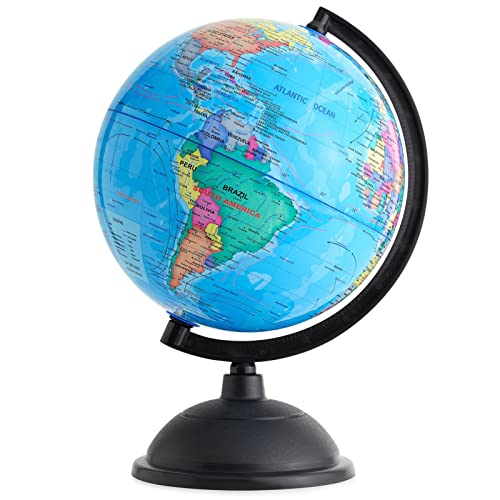
- Rotating 8-inch world map
- Compact plastic design for desks
- Shows countries, continents, and oceans
Best For: Small classrooms, desks, and introductory geography learning
Best Illuminated Globe for Learning

- Day and night illuminated modes
- Metal base supports frequent rotation
- Writable, wipe-clean surface
Best For: Interactive home or classroom geography lessons
Best Budget-Sized Learning Globe

- Detailed map with capitals and borders
- 360-degree rotating plastic stand
- Lightweight size for small desks
Best For: Students and children needing a compact starter globe
Best Illuminated Globe – SMART WALLABY 9-inch Kids World Globe
For families looking for globes for children that can support both geography and astronomy lessons, this 9-inch SMART WALLABY model offers a versatile desktop design. Its political map, illuminated constellation mode, spinning format, flags, and geography card game provide several ways to explore the world.
Best For: Homeschooling, classrooms, and children who enjoy geography plus night-sky learning.
Pros:
- Combines a political world map with an illuminated display of 88 constellations.
- Includes a constellation guide and interactive geography card game for hands-on STEM learning.
- Sturdy base, easy-to-read details, and LED lighting allow it to function as a study tool or nightlight.
Cons:
- At 9 inches, the map has less viewing area than larger desktop globes.
- The illuminated feature requires maintenance or bulb replacement according to the user manual.
This is a strong choice when you want more than a standard map globe. The constellation mode and included activities add variety, while the compact size suits desks, shelves, and learning spaces.
Best Video Learning Globe – LeapFrog Magic Adventures Globe
Among globes for children, the LeapFrog Magic Adventures Globe stands out for its built-in 2.8-inch video screen and stylus-based activities. Designed for ages 5 to 12, it extends beyond countries and capitals with BBC videos, facts, games, and topics such as animals, habitats, landmarks, and world cultures.
Best For: Children ages 5 to 12 who prefer guided, screen-supported interactive learning.
Pros:
- Uses a stylus, touchscreen video content, facts, and animations to make exploration interactive.
- Covers geography alongside animals, habitats, landmarks, cultures, oceans, mountains, and more.
- Includes three games featuring quizzes, races around the world, and mystery-solving activities.
Cons:
- Requires four AA batteries for regular use.
- The 2.8-inch screen is relatively small for video viewing.
- Its interactive features may be more complex than those of a traditional globe.
This model is a good fit for children who learn well through questions, videos, and guided play. It offers broad subject coverage, though parents should plan for battery replacement after the included demo batteries are used.
Best AR Globe – PlayShifu Orboot Earth Interactive Globe
The PlayShifu Orboot Earth is one of the more technology-focused globes for children, using augmented reality through a free app to add facts, games, quizzes, and interactive discoveries. Its 10-inch globe is designed for ages 4 to 10 and includes travel-themed accessories that encourage imaginative exploration.
Best For: Ages 4 to 10, homeschool activities, classrooms, and children who enjoy app-based exploration.
Pros:
- Provides access to more than 1,000 facts about animals, places, cultures, and monuments.
- Supports geography, problem-solving, memory, quizzes, and interactive STEM learning.
- Includes a passport, visa stamps, sticker booklet, and boarding passes for imaginative play.
Cons:
- Interactive features depend on the free Orboot app and a compatible device.
- App-based play may be less suitable for families seeking a screen-free globe.
- The globe is made of plastic, so it may not offer the same feel as a traditional classroom globe.
Orboot Earth is especially appealing when active play and digital content are priorities. The travel accessories add a hands-on layer, while the app expands the educational content well beyond printed map labels.
Best Writable Globe – 13-inch HD Waterproof World Globe
For shoppers comparing globes for children for repeated practice, this 13-inch model offers a large, writable surface rather than app-based interaction. Its map identifies more than 200 countries and regions, islands, and ocean currents, while the waterproof coating lets children or teachers add notes and wipe them clean.
Best For: Desk-based geography practice, classroom instruction, and families wanting a durable, reusable map.
Pros:
- Large 13-inch size provides more room to examine geographic details.
- Waterproof coated surface supports writing capitals, travel routes, and lesson notes with a marker.
- Stable 360-degree rotating stand is designed to resist shaking and toppling during use.
- High-quality printing is described as fade-proof and resistant to drops and scratches.
Cons:
- It does not include built-in lighting, an app, games, or other electronic features.
- Markers and cleaning supplies are not listed among the included components.
- The 13-inch size requires more desk or shelf space than compact globes.
This globe is a practical pick for children who benefit from writing and revising what they learn. Its larger surface and stable base make it useful for guided lessons, while the wipe-clean coating supports repeated practice.
Best Interactive Pick – LeapFrog LeapGlobe
The LeapFrog LeapGlobe is a strong choice for families looking for globes for children that combine hands-on geography with lights, sounds, and games. Its touch points and multiple modes introduce landmarks, animals, languages, food, and world music for children ages 3 and up.
Best For: Young children who learn best through interactive play and audio activities.
Pros:
- Features 48 touch points covering animals, landmarks, languages, and foods.
- Includes Exploration, Music, and Find-It modes for varied play.
- Rainbow light effects and world music make geography engaging.
- Compact design measures about 12.2 inches high and includes demo batteries.
Cons:
- Requires two AA batteries, with fresh batteries recommended for regular use.
- Plastic construction may offer less traditional map detail than a classroom globe.
This is the most activity-focused option in the group, making it particularly appealing when entertainment and early learning are equally important.
Best Traditional Globe – KISEER 8-Inch World Globe
The KISEER 8-Inch World Globe offers a straightforward option for shoppers seeking globes for children with a conventional rotating map. Its political map identifies countries, capitals, continents, boundaries, oceans, islands, rivers, and deserts in a colorful format.
Best For: Home study areas, classrooms, or children who need a simple geography reference.
Pros:
- Detailed political map includes countries, capitals, and physical features.
- Rotating design encourages children to explore regions by hand.
- Removable base and frame support classroom demonstrations or display.
- Eight-inch diameter balances visibility with convenient storage.
Cons:
- Does not include electronic sounds, lights, games, or companion activities.
- Plastic base and globe provide a more basic presentation than feature-rich models.
Choose this model when you want a traditional, screen-free globe that can support geography lessons without batteries or app setup.
Best AR Learning Globe – PlayShifu Orboot Earth Explorer
The PlayShifu Orboot Earth Explorer is designed for families comparing globes for children with app-enhanced learning. Children can scan the 10-inch globe with a compatible device to explore more than 400 wonders and 1,000 facts, while games, quizzes, and constellation activities add variety.
Best For: Children ages 4 and up who enjoy technology-supported STEM activities.
Pros:
- Companion app brings the globe to life through augmented reality.
- Includes more than 400 wonders, 1,000 facts, games, quizzes, and quests.
- Constellation mode highlights more than 60 constellations.
- Includes a Magic stylus, passport, stamp, sticker book, panels, and USB cable.
Cons:
- A compatible device is required but is not included.
- The app-based experience may involve more setup than a standard globe.
- The supplied map type is listed as a star map, so buyers should review the product format for their intended lessons.
This is the most feature-rich choice for interactive discovery, especially for children who are motivated by augmented reality, challenges, and space-themed exploration.
Best Compact Classroom Globe – 8-Inch Juvale World Globe
For families or classrooms looking for globes for children, the 8-inch Juvale World Globe offers a compact way to explore countries, continents, and oceans. Its rotating design encourages hands-on learning, while the plastic construction and small footprint suit desks, shelves, and other limited spaces.
Best For: Compact desks, classrooms, and children beginning to explore world geography.
Pros:
- Rotating design supports interactive geography learning.
- Displays countries, continents, and oceans on a colorful world map.
- Compact 8-inch size is easy to transport and store.
- Plastic globe and stand are designed for frequent handling.
Cons:
- The smaller size provides less map area for close-up study.
- Plastic construction may feel less substantial than metal-base models.
This Juvale globe is a practical introductory choice when portability and space-saving design matter most. It combines a child-friendly rotating format with a decorative look suitable for classrooms or desks.
Best Illuminated Globe for Learning – 12-Inch Day-and-Night Globe
This 12-inch illuminated globe stands out among globes for children by combining a detailed political map with day and night modes. It marks more than 200 countries and regions, and its sturdy metal base is designed to support frequent rotation during lessons or independent exploration.
Best For: Children and adults who want a larger teaching globe that also works as a night-light-style display.
Pros:
- Day and night modes add an illuminated globe-lamp function.
- Marks more than 200 countries and regions, islands, and ocean currents.
- 12-inch diameter provides a larger learning surface.
- Waterproof coating allows marker annotations that can be wiped clean.
- Metal bracket and stainless-steel base are built for stability.
Cons:
- At 1.77 kg, it is less portable than smaller plastic globes.
- The larger metal-base design requires more desk space.
Choose this model when interactive features are a priority. Its illumination, writable surface, and stable construction give it more teaching versatility than a basic decorative globe, though the added size and weight make it better suited to a permanent display area.
Best Budget-Sized Learning Globe – 6-Inch Geographic World Globe
For shoppers seeking globes for children at a smaller scale, this 6-inch geographic model provides a straightforward introduction to world geography. Its printed map includes countries, capitals, borders, and water bodies, while the 360-degree rotating plastic stand supports simple learning games.
Best For: Students, children’s rooms, and small desks that need an affordable educational display.
Pros:
- Includes countries, capitals, water bodies, and continental and regional borders.
- 360-degree rotation encourages hands-on exploration.
- Lightweight 200 g design is easy to move.
- Bright colors and black stand work as classroom or room decor.
Cons:
- The 6-inch diameter offers limited detail compared with larger globes.
- Plastic stand and base may feel less substantial than metal alternatives.
- The supplied notes do not indicate illumination or a writable surface.
This globe makes sense for basic geography practice where size and portability matter more than advanced features. It is easy to rotate, display, and move between rooms, making it a useful starter globe for a child’s desk or study area.
How We Picked the Best Globes for Children
We focused on the features that matter most in everyday use: map readability, construction quality, ease of rotation, educational value, age suitability, and the amount of space each globe requires. We also considered whether a model works without technology, needs an app or batteries, or adds useful features such as lighting, touch controls, augmented reality, writable surfaces, games, or included learning materials.
Because children learn in different ways, this list includes both traditional desk globes and technology-enhanced options. A simple globe may be best for repeated independent use, while an interactive model can provide guided facts, quizzes, and visual demonstrations.
Quick Comparison
- Best for interactive learning: Choose an electronic or AR globe with touch points, app content, games, or narrated facts.
- Best for visual appeal: Illuminated globes can double as attractive night lights or room decor while revealing additional map details.
- Best for writing and demonstrations: A writable surface suits classrooms, homeschooling, and children who learn by labeling or drawing.
- Best for younger children: Prioritize large lettering, sturdy stands, simple controls, and clear age guidance.
- Best for limited budgets: A rotating, non-electronic globe provides core geography practice without batteries or setup.
Key Buying Factors for Globes for Children
Age and Learning Level
Look for simplified labeling and tactile features for preschoolers, while older children may benefit from political borders, geographic details, quizzes, and app-based exploration. Always check the recommended age, especially when a globe includes small accessories.
Map Clarity and Size
A larger globe generally offers easier-to-read country names and more room for borders, capitals, and physical features. Smaller models are convenient for desks and shelves, but their labels may be harder for young readers to see.
Interactive Features
Touch controls, augmented reality, and built-in games can make learning engaging, but check whether the required app is compatible with your device and whether content requires an internet connection, registration, or ongoing updates.
Build Quality and Stability
Choose a secure base, smooth rotation, and materials that can withstand frequent handling. For classrooms or active playrooms, a heavier stand and scratch-resistant surface may matter more than decorative details.
Lighting and Power
Illumination improves visibility and can make a globe more appealing at night. Confirm whether it uses batteries, USB power, or a wall adapter, and check that the light is appropriate for the intended location.
Who Should Buy Which Globes for Children?
Choose a classic rotating globe if you want an affordable, low-maintenance introduction to geography. An illuminated model is a good choice for children who enjoy visual discovery or need a desk accessory that works as decor. Families seeking structured, technology-assisted learning should consider an interactive electronic or AR globe, particularly when a child enjoys quizzes, facts, and guided exploration.
For homeschooling and classroom activities, a larger globe or writable model offers more flexibility for lessons and demonstrations. If portability and shelf space are priorities, an eight- or nine-inch globe may be the practical compromise. The best choice is ultimately the one your child can read, handle, and use independently.