
Finding a dependable wind meter does not require a professional-grade budget. The best anemometers under $100 can measure wind speed, airflow, temperature, and sometimes humidity for HVAC work, outdoor recreation, drone flights, and home projects.
This roundup compares ten handheld models with different strengths, from simple wind-speed checks to CFM measurement, data logging, USB export, and wider measurement ranges.
Best 10 Anemometers Under 100 Picks for 2026
Best Budget Outdoor Pick
TopTes TS-301 Digital Anemometer
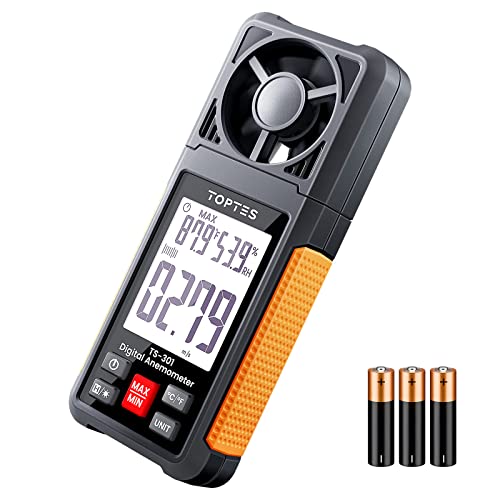
- Large 2.26-inch backlit display
- Six wind-speed measurement units
- Measures temperature and humidity
Best For: Outdoor activities and quick airflow checks
Best for HVAC Data Logging
BTMETER BT-846A CFM Anemometer

- Measures CFM and CMM airflow
- Stores and exports 600 data groups
- Extendable separated wind sensor
Best For: HVAC troubleshooting and air balancing
Best Simple Multi-Reading Meter
Mcbazel 3-in-1 Handheld Anemometer

- Shows speed, temperature, and Beaufort level
- Five selectable wind-speed units
- MAX, MIN, AVG, and data hold
Best For: Basic outdoor monitoring and HVAC spot checks
Best Professional HVAC Value
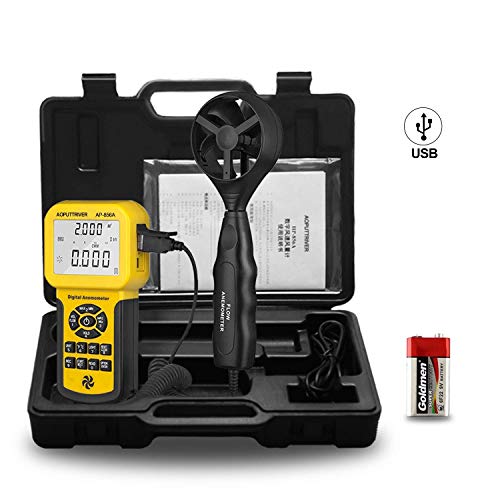
- Direct CFM/CMM airflow measurement
- 600-record USB data logging
- Extendable probe for ducts and vents
Best For: HVAC diagnostics and airflow reporting
Best Compact Pick
BTMETER BT-816B Handheld Anemometer

- Wind speed, temperature, and wind-chill readings
- Backlit LCD with max, average, and current modes
- Lightweight 53 g design for portable use
Best For: Outdoor users who want a small, easy-to-carry wind meter
Best HVAC Pick
Kethvoz KE-846A CFM Air Flow Meter

- Measures wind speed, temperature, and CFM/CMM airflow
- Two-meter split sensor helps reach overhead vents
- Stores 600 measurement groups for later review
Best For: HVAC work, duct testing, and airflow balancing
Best Versatile Pick
HoldPeak 866B Digital Anemometer

- Wind speed, temperature, wind chill, and max/min/average modes
- Tripod hole and hand strap for flexible handling
- Includes batteries, pouch, lanyard, and screwdriver
Best For: Outdoor activities with occasional HVAC or vent checks
Best Overall Value
BTMETER BT-100 Handheld Anemometer

- Measures wind speed, temperature, and wind chill
- Tripod-ready design with carry case and batteries
- Useful for HVAC, drones, shooting, and outdoor activities
Best For: Versatile home, HVAC, and outdoor wind checks
Best for Easy Readings
Digital Anemometer with CFM Display

- Large backlit screen for outdoor readability
- Shows CFM and CMM without manual calculation
- Adds temperature and humidity measurements
Best For: HVAC and outdoor users prioritizing simple, visible readings
Best for Extended Measurements
VEVOR Split Handheld Anemometer

- Measures wind speeds up to 100.8 mph
- Includes remote sensor cord and USB data connection
- Adds wind chill, statistics, backlight, and IP44-rated meter housing
Best For: Feature-focused HVAC, construction, and outdoor measurement work
Best Budget Outdoor Pick – TopTes TS-301 Digital Anemometer
If you want anemometers under 100 for everyday outdoor activities and basic airflow checks, the TopTes TS-301 is a practical choice. Its large backlit display, six wind-speed units, and compact design make readings easy to view and carry.
Best For: Sailing, drone flying, golf, hiking, and quick indoor airflow checks.
Pros:
- Large 2.26-inch backlit LCD screen is easy to read.
- Measures wind speed in six units, including mph, knots, and m/s.
- Also measures temperature and relative humidity.
- Includes three AAA batteries, a storage pouch, and a three-year warranty.
Cons:
- Temperature and humidity sensors may need at least 30 minutes to adjust to a new environment.
- Automatic shutoff occurs after 10 minutes of inactivity.
The TS-301 offers a well-rounded feature set in a lightweight handheld format. It is better suited to portable recreational use and general checks than detailed HVAC data logging.
Best for HVAC Data Logging – BTMETER BT-846A CFM Anemometer
Among anemometers under 100, the BTMETER BT-846A stands out for HVAC users who need airflow calculations and stored measurements. It supports CFM and CMM readings, offers a separated extendable sensor, and can store 600 groups of data for later review.
Best For: HVAC troubleshooting, vent testing, air balancing, and dust-collection checks.
Pros:
- Measures wind velocity, temperature, and airflow in CFM or CMM.
- Stores up to 600 groups of measurements and supports PC export.
- Extendable separated sensor helps with readings in vents and ducts.
- Provides current, maximum, minimum, average, and two-thirds maximum readings.
Cons:
- Its 1.7-pound weight is less convenient for casual pocket carry.
- Temperature measurement is limited to 32°F–113°F.
- Includes a one-year warranty.
With its airflow-area input and data-storage features, the BT-846A is designed more for practical HVAC work than recreational wind watching. The replaceable sensor can also help extend its service life.
Best Simple Multi-Reading Meter – Mcbazel 3-in-1 Handheld Anemometer
For shoppers comparing anemometers under 100, the Mcbazel 3-in-1 model keeps the essentials straightforward. It displays wind speed, temperature, and Beaufort wind level, while its backlit double-line screen shows speed and temperature together.
Best For: Sailing, fishing, HVAC spot checks, and users who want quick wind-level readings.
Pros:
- Combines wind speed, temperature, and Beaufort scale readings.
- Supports m/s, km/h, knots, ft/s, and mph.
- Includes MAX, MIN, AVG, and data-hold functions.
- Lightweight design includes a backlight, low-battery indicator, and auto shutoff.
Cons:
- AAA batteries are not included.
- Does not list CFM/CMM airflow measurement or PC data export.
The Mcbazel is a compact option for users who value clear, simultaneous wind and temperature readings. Its feature set fits everyday monitoring, though professional HVAC data collection may require a more specialized meter.
Best Professional HVAC Value – AOPUTTRIVER AP-856A CFM Meter
The AOPUTTRIVER AP-856A is one of the more capable anemometers under 100 for HVAC measurement and documentation. It directly calculates CFM or CMM after duct-area input, stores up to 600 records, and connects to a Windows PC for data analysis.
Best For: HVAC diagnostics, building inspections, duct testing, and professional airflow reports.
Pros:
- Measures airflow up to 999,900 CFM/CMM after entering cross-sectional area.
- Stores 600 measurement sets and supports USB export to Windows PC software.
- Offers MAX, MIN, AVG, and two-thirds MAX analysis functions.
- Detachable extendable probe reaches into ducts and vents.
Cons:
- PC software compatibility is specified for older Windows versions through Windows 10.
- Temperature range is limited to 32°F–113°F.
- Less compact than a basic recreational wind meter.
The AP-856A is a strong fit when airflow documentation matters as much as the live reading. Its USB logging, extendable probe, and direct CFM/CMM calculations make it more suitable for structured HVAC work than casual outdoor use.
Best Compact Pick – BTMETER BT-816B Handheld Anemometer
If you want anemometers under 100 for quick outdoor checks, the BTMETER BT-816B is a compact option with wind speed, temperature, and wind-chill readings. Its backlit display and one-handed design make it practical for low-light measurements.
Best For: Outdoor activities, basic HVAC checks, sailing, shooting, climbing, and portable temperature-and-wind monitoring.
Pros:
- Measures wind speed from 0.2 to 67 mph and displays temperature and wind chill.
- Offers current, maximum, and average readings with multiple speed units.
- Lightweight 53 g design with a backlit LCD, lanyard, and one-year warranty.
Cons:
- Does not provide the advanced CFM data logging features of the split-sensor models.
- Its small body may be less convenient for users who prefer a larger professional meter.
The BT-816B is a sensible choice when portability and straightforward wind readings matter most. Wind chill and temperature support add useful context for outdoor planning, while the simple controls keep routine measurements quick.
Best HVAC Pick – Kethvoz KE-846A CFM Air Flow Meter
Among anemometers under 100, the Kethvoz KE-846A stands out for HVAC-focused work. Its separated sensor reaches up to 2 meters, while the meter calculates air volume in CFM or CMM for duct, vent, and airflow-balancing tasks.
Best For: HVAC technicians, air-vent balancing, AC troubleshooting, dryer vents, and woodshop dust-collection checks.
Pros:
- Measures air speed up to 45 m/s and air volume from 0 to 999,900 CFM.
- Split sensor extends up to 2 meters for overhead or hard-to-reach airflow measurements.
- Stores up to 600 groups of readings and includes a data-freeze function for review.
- Provides max, min, average, multiple units, temperature readings, and a backlit display.
Cons:
- At 0.9 kg, it is substantially heavier than compact handheld anemometers.
- Its HVAC-oriented controls may be more than casual outdoor users need.
The KE-846A is the most task-specific choice here. If your measurements involve duct dimensions, CFM calculations, or elevated vents, the split probe and memory functions offer practical advantages over simpler wind meters.
Best Versatile Pick – HoldPeak 866B Digital Anemometer
The HoldPeak 866B is a versatile option among anemometers under 100, combining wind speed, temperature, wind chill, and basic CFM support in a handheld format. A tripod mount, hand strap, and waterproof carrying pouch make it adaptable for outdoor and light HVAC use.
Best For: Drone flying, boating, surfing, golf, shooting, sailing, and users who want both outdoor readings and occasional vent checks.
Pros:
- Measures wind speed from 0.67 to 67.1 mph with stated accuracy of ±2% of readings.
- Includes max, min, and average modes, unit switching, temperature, wind chill, and backlight.
- Tripod hole and hand strap support steadier or safer measurements.
- Includes two AAA batteries, a protective pouch, screwdriver, lanyard, and one-year warranty.
Cons:
- CFM calculations require using wind speed and duct cross-sectional area rather than an integrated airflow-volume display.
- At 200 g, it is heavier than the BTMETER BT-816B.
The 866B is a strong all-around pick for users moving between outdoor activities and occasional HVAC measurements. Its mounting options and included accessories add flexibility, while the broad range of display modes keeps it useful beyond simple wind-speed checks.
Best Overall Value – BTMETER BT-100 Handheld Anemometer
For shoppers comparing anemometers under 100, the BTMETER BT-100 is a compact, versatile option for checking wind speed, temperature, and wind chill. It supports five speed units, includes a carry case and batteries, and can be mounted on a tripod for hands-free readings.
Best For: HVAC airflow checks, drone and RC activities, shooting, sailing, and general outdoor wind measurements.
Pros:
- Measures wind speed from 0.67 to 67.1 mph with a stated accuracy of ±2% of readings.
- Displays wind temperature and wind chill, with Celsius and Fahrenheit options.
- Includes a tripod mount, backlit LCD, neck strap, carry bag, and two AAA batteries.
- Eight vanes and two temperature sensors help detect low airflow in ducts and vents.
Cons:
- Temperature measurement is limited to -10° to 60°C (14° to 113°F).
- CFM requires using the supplied airflow formula rather than a dedicated automatic CFM display.
The BT-100 offers a strong balance of portability and practical HVAC features. Its tripod compatibility and included accessories add flexibility for repeated or hands-free measurements.
Best for Easy Readings – Digital Anemometer with CFM Display
This digital anemometer is a practical pick among anemometers under 100 when clear viewing and straightforward airflow readings matter. Its large backlit screen displays wind speed in six units, along with CFM, temperature, and humidity.
Best For: Users who want an easy-to-read meter for HVAC work, boating, wind sports, drone flying, and other outdoor activities.
Pros:
- Large backlit LCD is designed for easier outdoor viewing.
- Displays airflow in CFM and CMM without requiring manual calculation.
- Measures wind speed in six units, including m/s, km/h, ft/s, ft/min, knots, and mph.
- Also measures wind temperature from 32° to 113°F and relative humidity from 0.0% to 99.9% RH.
Cons:
- The supplied notes do not specify measurement accuracy.
- Its temperature range is narrower than some meters designed for colder conditions.
The main advantage here is convenience: automatic CFM/CMM display, humidity readings, data hold, and configurable backlight and shutdown settings make this a user-friendly choice for routine checks.
Best for Extended Measurements – VEVOR Split Handheld Anemometer
For buyers seeking anemometers under 100 with a broad measurement range and extra data features, the VEVOR Split Handheld Anemometer stands out. It measures wind velocity, temperature, airflow, and wind chill, while its split design and 6.6-foot extendable cord help reach measurement points.
Best For: Outdoor weather observation, HVAC work, construction, agriculture, navigation, and model-aircraft activities.
Pros:
- Measures wind speeds up to 100.8 mph and temperatures from 14° to 140°F.
- Offers six speed units plus Beaufort scale support and MAX/MIN/AVG/CU readings.
- Includes an LED backlight, IP44 rating for the meter, low-battery alert, and automatic shutdown.
- USB connectivity supports transferring data to a Windows 7, XP, or 10 PC.
Cons:
- The stated wind-speed accuracy is 5% + 0.5 m/s, which is less precise than some competing specifications.
- The IP44 rating excludes the vane unit.
- At about 2 pounds, it is less lightweight than typical pocket anemometers.
The VEVOR is the most feature-heavy option of the three, particularly for users who need a higher maximum wind-speed range, statistics, a remote sensor connection, and computer-based data handling.
How We Picked the Best Anemometers Under 100
We focused on practical value rather than headline features alone. The selected meters were evaluated for measurement range, stated accuracy, airflow and wind-speed modes, display readability, portability, battery convenience, and useful extras such as temperature, humidity, data hold, maximum readings, data storage, and computer export.
Because these instruments serve different users, the list includes compact meters for recreational checks as well as HVAC-oriented models designed to calculate CFM. Always verify the manufacturer’s specifications for accuracy, response time, and included accessories before purchase.
Quick Comparison
| Best For | Look For | Typical Useful Feature |
|---|---|---|
| HVAC testing | CFM and airflow modes | USB export or data logging |
| Outdoor activities | Wide wind-speed range | Backlit display and wind chill |
| Drones and sailing | Fast readings and portability | Compact handheld design |
| Home projects | Simple controls and clear display | Temperature and humidity readings |
Key Buying Factors for Anemometers Under 100
Measurement Range and Units
Choose a range that matches the environment you will test. Low-speed sensitivity matters for fans and gentle breezes, while a higher maximum is useful for sailing, roof work, and exposed outdoor conditions. Check whether the meter supports MPH, meters per second, knots, feet per minute, and kilometers per hour.
Airflow, CFM, and Accuracy
Wind speed and airflow are related but not identical. HVAC users should choose a model that calculates CFM or includes an area-setting function. Accuracy can vary with probe position, duct shape, turbulence, and temperature, so treat inexpensive meters as practical testing tools rather than laboratory instruments.
Display, Controls, and Logging
A large backlit screen is helpful in dim mechanical rooms or outdoors. Data hold and maximum or average readings make one-person testing easier. If you need records for service calls, prioritize onboard storage or USB export instead of relying on handwritten readings.
Build and Power
Look for a protected sensor, comfortable grip, automatic shutoff, and readily available batteries. A split probe can help reach ducts or confined spaces, while an integrated design is usually lighter for recreational use.
Who Should Buy Which Anemometers Under 100?
HVAC technicians and maintenance teams should prioritize CFM calculation, airflow modes, data logging, and PC export. Drone pilots, sailors, and outdoor users will generally value portability, quick readings, a broad range, and a readable backlight more than advanced logging. Homeowners and hobbyists can save money with a straightforward wind meter that adds temperature or humidity without complex menus. If you need documented measurements for professional reports, select the model with the strongest storage and export features in this roundup.