
The best engineering building sets for homeschool turn abstract STEM concepts into projects children can build, test, revise, and explain. The right kit can support lessons in physics, structures, mechanics, design thinking, and problem-solving without making learning feel like a worksheet.
This roundup compares ten options across different ages, interests, and teaching styles—from simple machines and bridges to motorized models, architectural structures, and open-ended construction. Use the guide below to match each set with your homeschool goals, available time, and the learner’s experience level.
Best 10 Engineering Building Sets for Homeschool Picks for 2026
Best Structural Model Variety
Engino Structures, Buildings & Bridges
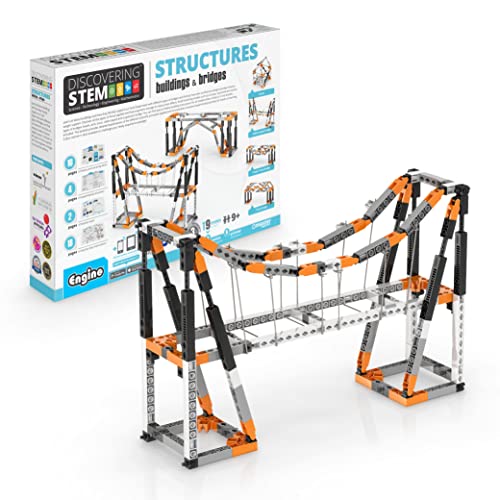
- Builds nine house, pyramid, and bridge models
- Includes theory, experiments, and a quiz
- Multi-directional snap-fit system supports 3D designs
Best For: Homeschool learners ages 9+ studying structural engineering
Best for Simple Machines
T&K Simple Machines Physics & Engineering Set

- Includes 26 model-building exercises
- Covers all six classic simple machines and gears
- Spring scale supports hands-on force measurements
Best For: Homeschool physics lessons for ages 8+
Best for Collaborative Bridge Lessons
K’NEX Education Intro to Structures

- Builds 13 types of real-world bridge replicas
- Includes teacher guidance, lessons, and experiments
- 207 pieces and a storage tray support group use
Best For: Grades 3–5 homeschool bridge and structures projects
Best for Younger Builders
Learning Resources City Engineering & Design
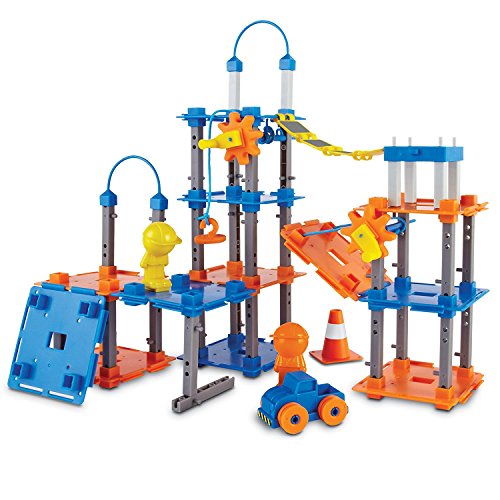
- Designed for ages 5–8 and early STEM learning
- Activity cards guide the engineering design process
- 89 pieces support towers, bridges, and city structures
Best For: Young homeschool learners building early design and problem-solving skills
Structural Engineering Pick

- Build 20 structural models
- Explores force, load, compression, and tension
- Includes 285+ pieces and a 36-page manual
Best For: Ages 8–14 studying structural engineering
Metal Mechanics Choice

- 236-piece metal construction kit
- Includes updated step-by-step instructions
- Builds dexterity and problem-solving skills
Best For: Ages 8+ exploring hands-on mechanical building
Early STEM Favorite
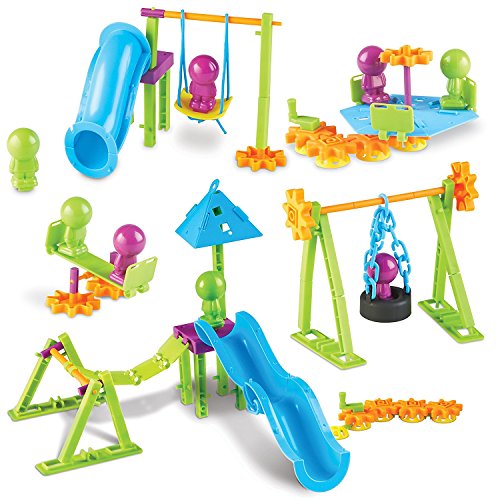
- 104-piece playground-themed building set
- Includes challenge cards and worksheets
- Supports guided and open-ended play
Best For: Ages 5–12 beginning homeschool engineering
Architectural Design Lab

- Build 26 structure and building models
- Includes a 44-page full-color manual
- Explores trusses, arches, domes, and steel frames
Best For: Ages 8+ studying architecture and structural engineering
Powered Builder Workshop
107-Piece Motorized Erector Set

- Build 10 robot, aircraft, and vehicle designs
- Includes a motor, tools, wheels, and 107 parts
- Comes with instructions and a storage box
Best For: Younger learners exploring motorized STEM builds
Heavy Equipment Engineering Lab
7-in-1 Vehicle Engineering Set

- Build seven construction vehicle models
- Includes 180 metal and plastic pieces
- Encourages problem-solving and teamwork
Best For: Ages 8+ who enjoy manual construction vehicle projects
Best Structural Model Variety – Engino Structures, Buildings & Bridges
For families seeking engineering building sets for homeschool, this Engino kit offers a focused introduction to structural design. Children ages 9 and up can build nine models, including houses, pyramids, and several bridge types, while using the included theory, experiments, and quiz materials.
Best For: Homeschool learners ages 9+ who want guided lessons on bridges, buildings, and structural engineering.
Pros:
- Builds nine real-world structure models, including truss, arch, suspension, and cable-stayed bridges.
- Includes instructions, theory pages, experiments, a quiz book, and a free app.
- Snap-fit components connect in multiple directions for more complex 3D builds.
- Designed by an engineer and teacher, with a two-year limited warranty.
Cons:
- Recommended for ages 9 and up, so it may be too advanced for younger learners.
- Focuses primarily on structures and bridges rather than a broad range of engineering topics.
With its combination of construction projects and supporting educational content, this is a strong choice when a homeschool curriculum needs both hands-on building and explicit structural concepts.
Best for Simple Machines – T&K Simple Machines Physics & Engineering Set
This Thames & Kosmos set is a practical option for engineering building sets for homeschool when the lesson focus is physics and mechanical advantage. Designed for ages 8 and up, it uses 26 model-building exercises to explore gears and all six classic simple machines.
Best For: Homeschool students ages 8+ learning how levers, pulleys, gears, and other simple machines affect force and motion.
Pros:
- Covers wheels and axles, levers, pulleys, inclined planes, screws, and wedges.
- Includes a spring scale for measuring changes in force direction and magnitude.
- A 32-page illustrated manual provides step-by-step builds and scientific explanations.
- Modular pieces are compatible with other Thames & Kosmos construction, physics, and engineering kits.
Cons:
- The set requires reading and following a fairly structured manual.
- Its focus is mechanical physics rather than buildings or architectural structures.
The force-measuring spring scale makes this more than a construction activity: learners can build a model, test it, and connect the result to a physics concept.
Best for Collaborative Bridge Lessons – K’NEX Education Intro to Structures
For homeschool groups or sibling projects, the K’NEX Education Intro to Structures set provides 207 pieces for building and comparing 13 bridge designs. It combines classic rods, connectors, and stems with construction instructions, a teacher’s guide, and standards-aligned educational materials.
Best For: Grades 3–5 learners studying bridge types, structural design, and real-world engineering through shared projects.
Pros:
- Builds 13 bridge replicas, including truss, arch, cantilever, beam, suspension, and cable-stayed designs.
- Includes a teacher’s guide, building instructions, lesson plans, and experiments.
- Two to three students can work on one set, supporting collaborative learning.
- Portable storage tray with a snap-on lid helps organize the pieces.
Cons:
- The materials are geared toward grades 3–5 rather than older, more advanced students.
- Its primary emphasis is bridges, although buildings and towers can also be created.
This is a particularly useful classroom-style selection for homeschoolers who want guided, standards-connected bridge activities and enough pieces for group construction.
Best for Younger Builders – Learning Resources City Engineering & Design
Younger homeschool students can explore engineering concepts with this 89-piece city-themed set. Designed for ages 5–8, it combines guided activity cards with open-ended building, allowing children to design towers, bridges, and other city structures while practicing an age-appropriate engineering process.
Best For: Preschool and early elementary homeschool learners developing problem-solving and introductory design skills.
Pros:
- Activity cards introduce the steps ask, imagine, plan, create, and improve.
- Supports both guided challenges and independent city-building projects.
- Designed for young engineers ages 5–8.
- Includes 89 pieces, cards, and stickers for indoor home or classroom use.
Cons:
- Introduces basic engineering concepts rather than advanced structural theory.
- Its city theme may be less suitable for learners seeking physics or mechanical-engineering models.
This set works well as an early hands-on entry point into engineering building sets for homeschool, especially when the goal is to build planning, creativity, and problem-solving habits.
Structural Engineering Pick – Bridges & Skyscrapers
For families comparing engineering building sets for homeschool, this intermediate Thames & Kosmos kit offers a focused way to explore structural design. Children can build 20 models while investigating force, load, compression, tension, and building materials.
Best For: Homeschool learners ages 8–14 who are ready for guided structural engineering and mechanical physics activities.
Pros:
- Supports 20 different bridge and skyscraper-style models.
- Includes more than 285 interchangeable plastic building pieces.
- Comes with a 36-page illustrated experiment manual and assembly guide.
Cons:
- Its intermediate skill level may be challenging for younger or beginner builders.
- The focus is specifically structural engineering rather than open-ended general construction.
This is a strong choice when you want a structured homeschool lesson around loads and forces, with enough models and written guidance to support repeat practice.
Metal Mechanics Choice – 236-Piece Erector Set
This metal Erector set is a practical option for engineering building sets for homeschool, combining step-by-step model building with hands-on problem solving. Its manual construction format lets children follow directions or experiment with their own designs.
Best For: Builders ages 8 and up who want a reusable metal construction kit emphasizing dexterity, creativity, and mechanical thinking.
Pros:
- Includes 236 metal pieces for model-building activities.
- Supports fine motor skills, hand-eye coordination, logical thinking, and problem solving.
- Provides updated step-by-step assembly instructions and requires no batteries.
- Can encourage teamwork and collaborative building.
Cons:
- The supplied notes do not specify the number of included models.
- Metal construction may require more careful handling than plastic building sets.
Choose this kit if your homeschool plans benefit from a tactile, traditional erector-set experience and learners are comfortable working through detailed assembly steps.
Early STEM Favorite – Playground Engineering Set
For younger learners seeking engineering building sets for homeschool, this Learning Resources kit combines playground-themed construction with open-ended design. Children can follow blueprints, use challenge cards, or invent their own builds in a screen-free activity.
Best For: Children ages 5–12 who are beginning to explore engineering, construction, problem solving, and fine motor skills.
Pros:
- Includes 104 pieces for playground-style engineering builds.
- Offers challenge cards, an activity guide, and reproducible worksheets.
- Supports both guided blueprint activities and open-ended building.
- Works for independent or small-group use at home or in the classroom.
Cons:
- The playground theme may be less suitable for learners seeking advanced engineering concepts.
- Recommended use is limited to manual, screen-free building without batteries or electronic features.
This set is a good starting point for homeschool STEM because its age range, activity materials, and repeatable build-and-rebuild format make engineering approachable for younger children.
Architectural Design Lab – Architectural Engineering
For families looking for engineering building sets for homeschool, this architectural kit offers a structured introduction to trusses, arches, domes, and other structural elements. Children ages 8 and up can build 26 models while exploring architectural design and modern building materials.
Best For: Homeschool lessons focused on structures, planning skills, architectural design, and hands-on STEM learning.
Pros:
- Includes projects covering basic structures and scaled-down real-world buildings.
- Flexible pieces are designed to mimic steel frames.
- Comes with a 44-page, full-color manual and supports original designs.
- Plastic parts are compatible with other Thames & Kosmos engineering and physics kits.
Cons:
- Recommended for ages 8–14, so it may not suit younger learners.
- Projects require building one model at a time rather than using multiple complete kits.
This is a strong choice when you want engineering building sets for homeschool that connect construction play with real architectural concepts and guided study.
Powered Builder Workshop – 107-Piece Motorized Erector Set
This motorized set is a flexible option among engineering building sets for homeschool, combining 107 parts with an electric motor for hands-on vehicle and machine projects. The instructions outline 10 designs, including robots, helicopters, planes, cars, and trucks.
Best For: Younger homeschool learners who benefit from accessible vehicle-themed builds, motorized motion, and creative STEM activities.
Pros:
- Offers 10 design options with an electric motor for moving models.
- Includes blocks, wheels, nuts, bolts, a wrench, and screwdriver.
- Comes with an instruction manual and sturdy storage box.
- Non-toxic ABS plastic and TPR components are described as lead-, BPA-, and phthalate-free.
Cons:
- Only one model can be built at a time.
- The motor requires batteries, which are not specified as included.
- The broad age claims may make adult guidance useful for younger children.
Its combination of guided builds, moving parts, and storage makes this a practical choice for short, repeatable homeschool engineering activities.
Heavy Equipment Engineering Lab – 7-in-1 Vehicle Engineering Set
For hands-on engineering building sets for homeschool, this 180-piece construction vehicle kit focuses on manual assembly and problem-solving. Children ages 8 and up can build seven models, including a forklift, dump truck, crane, backhoe, bulldozer, claw truck, and farm vehicle.
Best For: Ages 8–12 and up who enjoy construction vehicles, mechanical assembly, teamwork, and manual STEM projects.
Pros:
- Provides seven construction-themed model options from 180 pieces.
- Supports logical thinking, problem-solving, hand-eye coordination, and teamwork.
- Uses a combination of metal and non-toxic ABS plastic.
- Suitable for family or group building activities.
Cons:
- Has no motor, so models operate manually.
- Building one model at a time may limit simultaneous project work.
- The supplied item dimensions are not informative for judging the finished model size.
This set fits homeschoolers who prefer construction equipment and tactile assembly over powered features, with enough model variety to support repeated lessons.
How We Picked These Engineering Building Sets for Homeschool
We focused on kits that connect construction with meaningful STEM concepts rather than offering only decorative building. The selection includes sets for structural engineering, simple machines, bridges, skyscrapers, playground design, architectural modeling, and motorized mechanisms.
We also considered age guidance, project variety, the likelihood of repeat use, component types, and how easily an adult can connect activities to a broader homeschool lesson. A strong set should encourage children to plan, build, test, identify weaknesses, and improve a design.
Quick Comparison
| Best For | Look For |
|---|---|
| Early builders | Larger components, simple instructions, and short projects |
| Elementary STEM lessons | Guided models involving bridges, structures, or simple machines |
| Advanced learners | More pieces, varied models, and opportunities for independent design |
| Mechanics enthusiasts | Gears, motors, moving parts, or functional mechanisms |
| Shared family use | Reusable parts, multiple projects, and open-ended building |
Key Buying Factors for Engineering Building Sets for Homeschool
Age, Skill Level, and Supervision
Choose a set that is challenging without creating unnecessary frustration. Younger children generally benefit from larger parts and highly visual instructions, while older students may prefer metal components, technical diagrams, or less-prescribed projects. Check small-part warnings and plan supervision when tools, motors, or intricate assemblies are involved.
Learning Objectives
Match the kit to the lesson you want to teach. Bridge and skyscraper sets can demonstrate load distribution, compression, tension, and stability. Simple-machine kits support lessons on force, motion, leverage, and mechanical advantage. Motorized sets add circuitry or energy-transfer concepts, but they may require batteries and more troubleshooting.
Project Variety and Reusability
Count the number of suggested models, but also consider whether the parts support original designs. A kit with fewer guided builds may offer more long-term value if children can redesign structures or combine components for new challenges.
Materials and Organization
Plastic parts are often lighter and easier for younger builders, while metal construction sets can provide a more realistic assembly experience. Storage matters for homeschool use: small fasteners and connectors are easier to manage when the kit includes compartments or a practical sorting system.
Who Should Buy Which Engineering Building Sets for Homeschool?
Choose a simple-machines set for a focused physics unit, a bridge or structural-engineering kit for lessons on stability and forces, and an architectural set for students who enjoy modeling buildings. Families seeking broad, repeatable construction activities should prioritize versatile sets with multiple models and open-ended options. Motorized or metal sets are better suited to children ready for more detailed assembly and hands-on troubleshooting.
Before buying, compare the recommended age with the child’s patience, fine-motor skills, and independent-working ability. The best choice is not necessarily the largest kit; it is the one that fits your lesson plans and gives the learner enough success, challenge, and freedom to keep building.