
The best digital compound microscopes combine traditional high-magnification optics with cameras, screens, or computer connectivity, making it easier to observe, record, and share specimens.
This roundup compares 10 options across student use, home science, laboratory work, and advanced imaging so you can choose the right balance of optics, controls, camera quality, and value.
Best 10 Digital Compound Microscopes Picks for 2026
Best Value Lab Pick
AmScope B120 Binocular Microscope
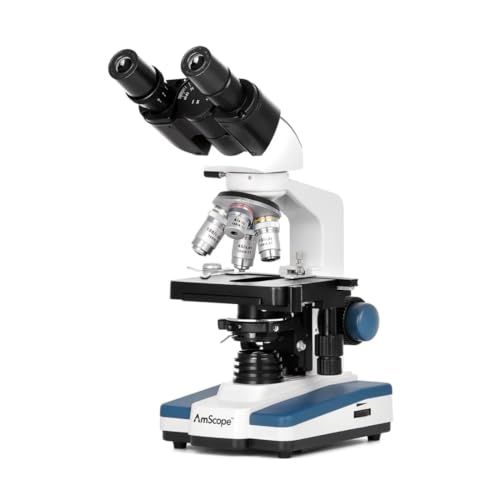
- 40X–2500X magnification
- 5MP USB camera and software
- Bright LED binocular viewing
Best For: Students, educators, and professionals needing digital documentation
Best Family STEM Kit
TOMLOV DM301 Pro Digital Microscope

- 7-inch IPS display
- 8MP photos and 1080P video
- Slides and accessories included
Best For: Families, homeschoolers, and beginner science learners
Best Portable Display Model
AmScope DM300HD Digital Microscope
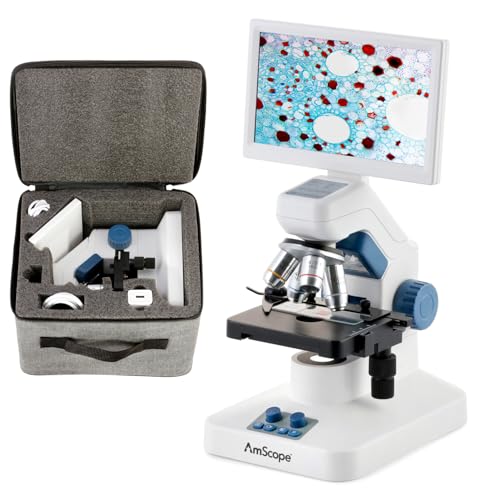
- 7-inch IPS display with HDMI output
- Rechargeable battery and carrying case
- Precise X-Y mechanical stage
Best For: Teachers and mobile users needing flexible group viewing
Highest Magnification Pick
Woehrsh Trinocular Laboratory Microscope

- 40X–5000X magnification
- Trinocular head with electronic eyepiece
- Extensive laboratory accessory kit
Best For: Experienced users and laboratory-style biological work
Best Value Binocular Digital Microscope
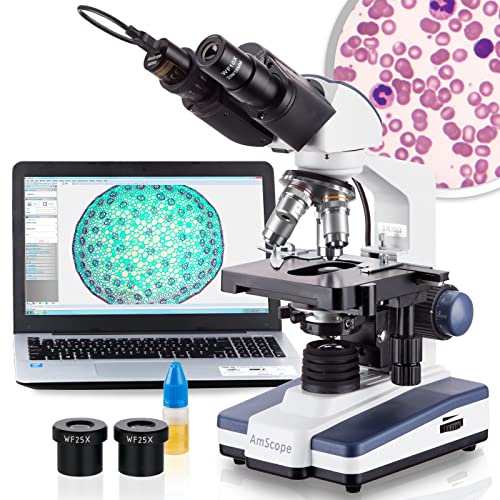
- 40X–2500X magnification range
- Includes 1.0 MP USB camera
- Binocular viewing with LED illumination
Best For: Students, educators, and budget-conscious lab users
Best Portable Wi-Fi Digital Microscope
Skybasic Wireless Handheld Microscope

- Wi-Fi and USB connectivity
- Eight adjustable LED lights
- Portable 2 MP photo and video capture
Best For: Casual users, children, and outdoor exploration
Best Dual-Illumination Compound Microscope
Herwicm 40X–2500X Binocular Microscope

- Binocular wide-angle eyepieces
- Top and bottom LED lighting
- Mechanical stage with coaxial focus
Best For: Beginners, students, and hobbyists learning slide microscopy
Most Versatile
Andonstar AD266S Digital Microscope

- Five lenses for biology, coins, and soldering
- 2160P HDMI video with 7-inch display
- Includes X-Y stage, slides, software, and 32GB card
Best For: Multi-purpose home labs, education, collecting, and electronics repair
Best Research-Ready Option
SWIFT SW350T Trinocular Microscope

- 2.0MP camera supports simultaneous viewing and imaging
- Research-style 40X-2500X achromatic optics
- Windows/Mac software includes measurement and EDF tools
Best For: Lab reports, STEM education, clinics, and advanced biological study
Best for Straightforward Learning
PalliPartners Trinocular Microscope

- 40X-2000X range for routine biological observation
- Trinocular design supports camera-based documentation
- Dual LED lighting and coarse/fine focus controls
Best For: Home science, classrooms, children, and basic laboratory use
Best Value Lab Pick – AmScope B120 Binocular Microscope
For shoppers comparing digital compound microscopes for school, laboratory, or clinic use, the AmScope B120 combines binocular viewing with a 5MP USB camera and image-analysis software. Its 40X–2500X range and LED illumination make it a versatile corded option for detailed slide work.
Best For: Students, educators, and professionals who want a traditional binocular compound microscope with digital imaging.
Pros:
- Broad 40X–2500X magnification range.
- 5MP USB camera supports image capture and analysis.
- Bright, daylight-balanced LED illumination with a fly-eye lens.
- Includes a 3D stage and interactive software kit.
Cons:
- Corded operation limits portability.
- Requires a compatible laptop for the USB camera experience.
The B120 is a strong choice when optical microscope handling matters as much as digital documentation. It offers more conventional lab ergonomics than screen-first models, while still providing useful computer connectivity.
Best Family STEM Kit – TOMLOV DM301 Pro Digital Microscope
The TOMLOV DM301 Pro is a user-friendly choice among digital compound microscopes, with a 7-inch IPS display, built-in camera, wireless app support, and included slides. Its screen-based design lets children and adults observe together without relying on eyepieces.
Best For: Families, homeschoolers, and classrooms seeking an approachable microscope kit with built-in viewing and sharing features.
Pros:
- 7-inch adjustable IPS display provides comfortable group viewing.
- Captures 8MP photos and 1080P video.
- Wi-Fi app support works with iOS and Android devices.
- Includes prepared and blank slides plus accessories.
Cons:
- One-year manufacturer warranty is shorter than some competing models.
- Maximum magnification is lower than the AmScope B120 and trinocular model.
With its ready-to-use accessories, wireless sharing, and up to three hours of operation, the DM301 Pro is designed for accessible science exploration. It is particularly practical when several viewers need to see the specimen at once.
Best Portable Display Model – AmScope DM300HD Digital Microscope
For buyers who want digital compound microscopes with flexible viewing options, the AmScope DM300HD pairs a 7-inch IPS display with HDMI, USB-C, Wi-Fi, and app connectivity. Its movable X-Y stage, rechargeable battery, and carrying case make it suitable for demonstrations as well as mobile observation.
Best For: Teachers, hobbyists, and field users who need a screen-based microscope with precise slide positioning and multiple output options.
Pros:
- Double-layer mechanical stage supports precise X-Y movement.
- 2MP camera records Full HD photos and video.
- Rechargeable battery enables portable use.
- Includes HDMI cable, 32GB microSD card, slides, and carrying case.
Cons:
- 2MP imaging is lower resolution than the TOMLOV DM301 Pro’s 8MP camera.
- Its screen-first design does not provide the traditional binocular eyepiece experience.
The DM300HD stands out for connectivity and portability. Its stage controls and HDMI output are useful for classroom projection, while the battery and case make it easier to move between work areas.
Highest Magnification Pick – Woehrsh Trinocular Laboratory Microscope
This Woehrsh trinocular microscope is a laboratory-oriented option for shoppers comparing digital compound microscopes with advanced optical flexibility. It combines a 40X–5000X range, achromatic objectives, dual coaxial focusing, and an electronic eyepiece with a broad accessory kit.
Best For: Experienced users, teaching laboratories, veterinary settings, and biological experiments requiring high magnification and trinocular expansion.
Pros:
- 40X–5000X magnification range offers extensive viewing flexibility.
- Trinocular head and electronic eyepiece support digital observation.
- 195 achromatic objectives are designed for clearer, higher-resolution imaging.
- Includes extensive slides, specimens, tools, and protective packaging.
Cons:
- Corded design is less convenient for portable use.
- The broad manual controls and accessories may be more than beginners need.
- Supplied notes list a 240-volt power specification, so buyers should verify compatibility.
The Woehrsh model is the most equipment-focused choice in this group. Its trinocular architecture and high stated magnification favor serious laboratory or instructional work, while the included kit helps users begin experimenting immediately.
Best Value Binocular Digital Microscope – AmScope B120C-E1
If you want digital compound microscopes for classroom work, basic laboratory use, or clinic applications, the AmScope B120C-E1 combines binocular viewing with a 1.0 MP USB camera. Its 40X–2500X range and LED illumination give it useful flexibility for observing and documenting prepared slides.
Best For: Students, educators, and professionals seeking an economical binocular compound microscope with Windows image capture.
Pros:
- Broad 40X–2500X magnification range for educational and laboratory tasks
- Binocular Siedentopf head supports comfortable viewing
- Daylight-balanced LED illumination with a specialized fly-eye lens
- Included 1.0 MP USB camera and Windows microscopy software support image capture and analysis
Cons:
- The included camera is limited to 1.0 MP resolution
- USB camera compatibility is specified for Windows rather than a broad range of devices
- Corded operation reduces portability
The B120C-E1 is a practical choice when traditional compound-microscope optics matter more than wireless convenience. It offers a strong feature set for the price, particularly for users who want to record observations on a Windows computer.
Best Portable Wi-Fi Digital Microscope – Skybasic Wireless Handheld Microscope
For quick inspections and on-the-go exploration, this Skybasic model is one of the more convenient digital compound microscopes alternatives, though it is a handheld digital magnifier rather than a traditional compound microscope. Wi-Fi connectivity lets it send images to Android and iOS devices, while USB supports Windows and Mac computers.
Best For: Children, hobbyists, and casual users examining plants, insects, minerals, and other objects at home or outdoors.
Pros:
- Wireless connection to Android and iOS devices, plus USB support for Windows and Mac
- Portable handheld design with an adjustable stand
- Eight adjustable LEDs help illuminate inspection subjects
- One-button photo and video capture with a 2 MP CMOS sensor
Cons:
- It is a fixed-focus-style magnifying device, not a traditional professional compound microscope
- Sharpness depends on maintaining a 3–60 mm focal distance
- Computer and mobile setup may require app, camera, or privacy-setting adjustments
This is the most flexible option for casual digital viewing and sharing, especially when portability and phone compatibility are priorities. Serious biology work should favor a conventional compound microscope instead.
Best Dual-Illumination Compound Microscope – Herwicm 40X–2500X Binocular Microscope
This Herwicm model suits buyers comparing digital compound microscopes for introductory biology and hands-on observation, although the supplied details do not list an included digital camera. It provides binocular viewing, wide-angle eyepieces, dual LED lighting, and a mechanical stage for more controlled slide work.
Best For: Adults, students, beginners, and hobbyists who want a traditional binocular compound microscope with flexible illumination.
Pros:
- Advertised 40X–2500X magnification with WF10x and WF25x eyepieces
- Top and bottom LED lighting support different observation needs
- Coaxial coarse and fine focusing controls allow more precise adjustment
- Two-layer mechanical stage includes a spiral moving scale for positioning samples
Cons:
- No digital camera or image-capture software is listed in the supplied details
- Its stated maximum magnification specifications are inconsistent, so buyers should verify the listing carefully
- Corded design is less convenient for mobile use
The Herwicm emphasizes comfortable binocular observation and physical controls rather than built-in digital documentation. It is a reasonable beginner-focused option, but users specifically seeking computer-connected imaging may need to add a compatible camera.
Most Versatile – Andonstar AD266S Digital Microscope
For shoppers comparing digital compound microscopes, the Andonstar AD266S stands out as a flexible all-in-one system. It combines biological viewing with coin inspection and soldering support, while its 2160P HDMI output, 7-inch screen, multiple lenses, and included slides make it suitable for varied projects.
Best For: Families, students, hobbyists, and users who want one microscope for biological specimens, collectibles, and electronics repair.
Pros:
- Includes five lenses covering biological, coin, and soldering applications.
- Offers 2160P video, HDMI connectivity, a 7-inch display, and a 32GB card.
- Metal stand, X-Y stage, adjustable lighting, prepared slides, and measurement software support detailed work.
Cons:
- The extensive lens and accessory setup may require more setup than a dedicated microscope.
- Its highest magnification ranges depend on the included high-magnification lenses and digital zoom.
This is the strongest choice when versatility matters more than a traditional laboratory-only design. Its combination of imaging, accessories, and work-oriented stand makes it useful across education, inspection, and repair tasks.
Best Research-Ready Option – SWIFT SW350T Trinocular Microscope
Among digital compound microscopes, the SWIFT SW350T is aimed at users who need a conventional research-style compound microscope with digital documentation. Its trinocular head, achromatic objectives, mechanical stage, and Windows/Mac software support structured observation and lab reporting.
Best For: University students, educators, clinics, laboratories, and advanced hobbyists working with biological specimens or prepared slides.
Pros:
- Includes a 2.0MP USB camera with a dedicated trinocular port for simultaneous viewing and imaging.
- Provides four achromatic objectives, 40X-2500X magnification, and 10X/25X eyepieces.
- Offers a solid-metal body, double-layer mechanical stage, Abbe condenser, and coarse/fine focusing.
- Includes Windows and Mac software with measurement, image stitching, and EDF features.
Cons:
- Its laboratory-focused design may be more equipment than casual users need.
- The camera connects through USB 2.0 rather than a direct HDMI display output.
The SW350T is the most suitable pick for repeatable slide work and digital documentation. Its ergonomic head, mechanical controls, and analysis software make it better aligned with formal coursework and laboratory-style workflows than general-purpose inspection.
Best for Straightforward Learning – PalliPartners Trinocular Microscope
The PalliPartners 40X-2000X model offers a straightforward entry into digital compound microscopes for home learning, classroom activities, and basic biological observation. Its trinocular design supports camera connection while the double-layer stage, dual LED illumination, and separate focus controls keep operation practical.
Best For: Adults, children, classrooms, and hobbyists seeking basic slide observation with digital capture capability.
Pros:
- Provides a 40X-2000X adjustable magnification range for routine specimen viewing.
- Trinocular head allows eyepiece observation while connecting a camera or imaging device.
- Double-layer stage, dual LED lighting, and coarse/fine focus controls support flexible use.
Cons:
- The supplied notes describe it for basic inspection and foundational research rather than advanced laboratory analysis.
- Camera capability is noted in the specifications, but the notes do not detail included camera software or accessories.
This model makes sense for buyers prioritizing approachable operation and shared viewing over extensive analytical features. It covers common educational needs while leaving room for digital documentation through its trinocular port and 5MP camera specification.
How We Picked the Best Digital Compound Microscopes
We compared these models by examining their intended users, optical magnification ranges, objective and eyepiece configurations, stage design, illumination, camera or display features, and overall ease of use. We also considered whether each microscope is better suited to prepared slides, biological specimens, classroom demonstrations, electronics inspection, or general hobby work.
Magnification claims can be misleading, so we placed greater emphasis on optical quality, mechanical stability, focusing precision, and useful image output than on the highest number printed on the box. Models with trinocular heads or included cameras received additional consideration for documentation and live viewing.
Quick Comparison
| Best For | Features to Prioritize | Recommended Type |
|---|---|---|
| Students and families | Simple controls, built-in screen, durable stage | Digital display microscope |
| Classrooms | Shared viewing, camera output, stable mechanics | Binocular or trinocular digital model |
| Biology and prepared slides | Achromatic objectives, substage lighting, fine focus | Compound microscope with camera |
| Advanced users and labs | Mechanical stage, trinocular port, high-quality optics | Research-style trinocular model |
| Portable inspection | Wireless output, adjustable stand, compact design | Handheld digital microscope |
Key Buying Factors for Digital Compound Microscopes
Optical Magnification and Objectives
Look for a useful objective set rather than relying only on advertised maximum magnification. Common combinations such as 4X, 10X, 40X, and 100X support progressively closer examination of prepared slides. Total magnification is determined by multiplying objective power by eyepiece power, while digital zoom enlarges an image without adding optical detail.
Camera, Screen, and Connectivity
A built-in display is convenient for group viewing and quick observations. USB cameras are more useful when you want to capture images on a computer, while HDMI models can provide low-latency viewing on a monitor. Check the camera resolution, software compatibility, storage options, and whether the camera can be used independently of the eyepieces.
Stage and Focusing Controls
A two-layer mechanical stage makes it easier to position a slide precisely than simple stage clips. Coaxial coarse and fine focus controls are especially valuable at higher powers. For frequent use, prioritize a rigid stand, smooth focus movement, and a stable stage over decorative accessories.
Illumination and Specimen Compatibility
Compound microscopes typically use transmitted LED illumination for prepared slides and transparent specimens. Adjustable brightness and a condenser help produce a clearer, more evenly lit image. A model with both transmitted and reflected lighting may be more versatile for opaque samples.
Who Should Buy Which Digital Compound Microscopes?
Choose a student-focused digital model for family learning, school projects, and occasional slide viewing. A built-in screen and straightforward controls reduce the setup required.
Choose a binocular or trinocular microscope with a camera for classrooms, serious hobbies, and users who want to observe through eyepieces while recording images. Trinocular designs are particularly practical for continuous camera use.
Choose a research-style model when mechanical precision, higher-quality optics, and long sessions matter more than portability. These microscopes are the better fit for advanced biology work and laboratory-style use.
Choose a handheld wireless microscope only when portability and inspection convenience outweigh true compound-microscope performance. It can be useful for surfaces, objects, and quick demonstrations, but it is not a direct substitute for a transmitted-light compound model used with prepared slides.