
You don’t need a telescope to enjoy the Moon, bright star clusters, and sweeping views of the night sky. A portable pair of binoculars is easier to pack, quicker to set up, and often more inviting for a spontaneous look upward.
These five picks cover different ways to observe: low-power, ultra-wide viewers for scanning constellations and 7x to 20x models for a closer look. The best choice depends on what you want to see—and how steadily you can hold it.
Best 5 Compact Astronomy Binoculars Picks for 2026
Widest Constellation View
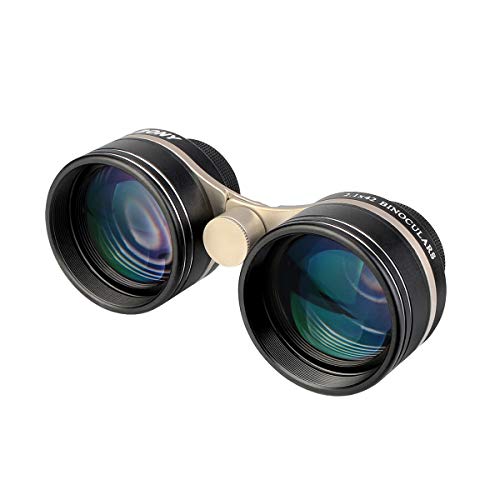
- 26° field of view
- Fully multi-coated 42mm objectives
- Individual eyepiece focus
Best For: Sweeping constellations and star fields
High-Power Multiuse Pick

- 20x magnification
- 50mm objectives and BAK4 Porro prisms
- 0.89 kg; do not immerse
Best For: Distant viewing across stargazing and outdoor activities
Pocketable Sky Sweeper
Celestron SkyMaster Gemini 2x40
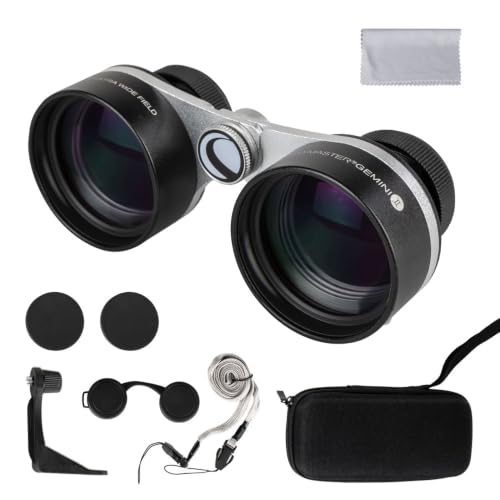
- 24° true field of view
- 6.8-ounce design
- Fully multi-coated optics
Best For: Portable constellation and meteor-shower viewing
Best for Wide-Field Stargazing

- 7x magnification for broad sky views
- 50mm multi-coated objectives
- Tripod-adapter socket; adapter not included
Best For: Beginners scanning constellations and the Milky Way
Best for Day-and-Night Versatility

- 10x magnification and 50mm objectives
- Multi-coated BK-7 optics
- Water-resistant, textured rubber-covered body
Best For: Budget-conscious buyers viewing wildlife and the night sky
Widest Constellation View – SVBONY SV407 2.1×42
Among compact astronomy binoculars, the SVBONY SV407 is built for seeing whole constellations rather than picking out tiny details. Its 2.1x magnification and 26° field of view make it a practical choice for relaxed sky sweeping.
Best For: Stargazers who want a broad view of constellations and star fields.
Pros:
- 26° field of view fits large sections of the night sky.
- Fully multi-coated 42mm objectives support brighter, clearer views.
- Compact design includes a carrying case, strap, and lens covers.
Cons:
- 2.1x power is not intended for close-up views of distant objects.
- Individual eyepiece focusing takes an initial adjustment for each eye.
Choose the SV407 if framing an entire constellation matters more to you than magnifying a single target.
High-Power Multiuse Pick – FLYA 20×50 Binoculars
These 20×50 binoculars take a different approach to compact astronomy binoculars: they prioritize magnification for distant subjects over a sweeping constellation view. They also suit buyers who want one pair for stargazing and daytime outings.
Best For: Buyers seeking 20x magnification for stargazing as well as bird watching and travel.
Pros:
- 20x magnification emphasizes distant targets.
- 50mm objectives, coated optics, and BAK4 Porro prisms support clear viewing.
- Center focus wheel and textured rubber grip aid everyday handling.
Cons:
- At 0.89 kg, these are heavier than a pocket-size option.
- Despite the waterproof description, the maker says not to immerse them.
This is the more versatile high-power choice in the group, but its weight and magnification make it less suited to effortless, wide-field sky scanning.
Pocketable Sky Sweeper – Celestron SkyMaster Gemini 2×40
The Celestron SkyMaster Gemini is a compact astronomy binoculars option for learning constellations and scanning broad stretches of sky. Its 2x power and 24° true field of view favor a steady, panoramic view over close-up detail.
Best For: Beginners who want an easy-to-carry binocular for constellations, meteor showers, and Milky Way sweeps.
Pros:
- 24° field of view can encompass entire constellations.
- Fully multi-coated 40mm optics support bright, clear views.
- Weighs 6.8 ounces and includes a tripod adapter.
Cons:
- 2x magnification offers limited detail on small or distant targets.
- Each barrel needs to be focused separately.
Pick the Gemini for its lightweight, expansive viewing experience; choose a higher-power pair if magnifying individual objects is your priority.
Best for Wide-Field Stargazing – Celestron Cometron 7×50
If you’re shopping for compact astronomy binoculars, note that the Cometron 7×50 is listed as full-size. Its 7x magnification and wide field of view make it a practical beginner choice for sweeping the Milky Way and finding constellations.
Best For: Beginners who want broad views of the night sky.
Pros:
- Wide 6.6° angular field of view suits sky scanning.
- 50mm objectives and multi-coated optics support bright views.
- Tripod-adapter socket allows mounted viewing with an adapter, sold separately.
Cons:
- Full-size body is less compact than the keyword may suggest.
- 7x magnification offers less reach than a 10x pair.
Choose these if finding large celestial sights matters more than magnification. They also work for daytime viewing, though their 26.2-foot close focus is worth considering for nearby subjects.
Best for Day-and-Night Versatility – Celestron UpClose G2 10×50
For shoppers comparing compact astronomy binoculars, the UpClose G2 10×50 is another full-size option rather than a pocket-size pair. Its 10x magnification and 50mm objectives make it useful for both night-sky viewing and daytime wildlife watching.
Best For: Buyers who want one budget-friendly pair for astronomy and outdoor use.
Pros:
- 10x magnification brings distant subjects closer.
- Multi-coated BK-7 optics and 50mm objectives support bright, high-contrast views.
- Water-resistant, rubber-covered aluminum body has textured gripping areas.
Cons:
- Full-size, 765g build is not especially compact.
- 12mm eye relief may be a consideration for eyeglass wearers.
This is the more magnification-focused pick of the two, especially if your binoculars will also see frequent daytime use. Weigh that extra reach against the steadier handheld view a 7x model may offer.
How We Picked These Compact Astronomy Binoculars
We compared the five selected models by magnification, objective size, field-of-view intent, and likely handheld usability. We also considered how easily each fits into a casual observing routine. This is a comparison of published configurations, not a claim that every pair has been independently tested.
“Compact” is relative here: the 2x viewers are intended for broad sky views, while the 50 mm models use larger objectives to gather more light. If coat-pocket size is essential, check each model’s dimensions and weight before buying.
Quick Comparison
- 2.1×42 SVBONY SV407 and 2×40 Celestron SkyMaster Gemini: Low-power choices for sweeping across constellations and keeping a broad view of the sky.
- 7×50 Celestron Cometron: A middle-ground option for handheld scanning with more magnification than the 2x models.
- 10×50 Celestron UpClose G2: A choice if you want more reach for the Moon and bright deep-sky targets while retaining daytime versatility.
- 20×50 high-powered binoculars: The highest magnification in this group; best considered if you can support them with a tripod or other steady rest.
Key Buying Factors for Compact Astronomy Binoculars
Magnification and Steadiness
Lower magnification makes it easier to find your way around the sky and keep the image steady. At 7x or 10x, targets appear larger, but hand shake becomes more noticeable. At 20x, expect a narrow, shaky handheld view; check for tripod-mounting options if that model appeals to you.
Objective Size and Sky Conditions
The second number—40, 42, or 50—is the objective diameter in millimeters. Larger objectives can collect more light, but they also tend to add bulk. Dark skies generally make more difference to faint objects than a small change in lens size. Under city lights, start with bright targets such as the Moon and prominent star clusters.
Fit, Focus, and Field of View
Check weight, eye relief if you wear glasses, and whether you can comfortably set the spacing between eyepieces. A wide field helps you locate constellations; a narrower field can make finding objects harder. Product names alone cannot tell you how well a pair fits your face, so review the listed specifications and return policy.
Who Should Buy Which Compact Astronomy Binoculars?
Choose a 2x model if your main pleasure is relaxed, wide-field sky scanning. Pick the 7×50 Cometron for a conventional handheld astronomy starting point. Consider the 10×50 UpClose G2 if you also want to view wildlife and don’t mind holding a steadier pose. Reserve the 20×50 option for observers who prioritize magnification and can provide support. Whichever you choose, make sure its size suits how—and how often—you’ll take it outside.