
A camera slider can add controlled movement to interview footage without the complexity of a full motion-control rig. The right model helps create smooth push-ins, lateral moves, and subtle background separation while keeping setup practical on location.
This roundup covers 10 options ranging from compact manual sliders to app-controlled motorized rails. Consider travel needs, camera weight, noise, and the type of movement you actually use before choosing.
Best 10 Camera Slider for Interview Shots Picks for 2026
Best All-Around Motorized Pick
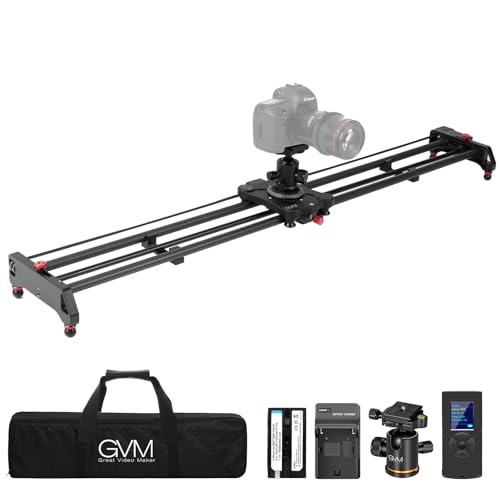
GVM 27-Inch Motorized Camera Slider

- Automated video, time-lapse, and round-trip modes
- Supports horizontal, vertical, and 45-degree shooting
- Includes bag, controllers, cable, and power-bank adapter
Best For: Repeatable interview movements and adaptable studio setups
Best for Quiet Long-Track Moves
NEEWER ER1 31.5-Inch Motorized Slider

- Long 31.5-inch carbon-fiber track
- Silent motor with app-controlled motion modes
- Supports up to 11 lb horizontally
Best For: Quiet, longer tracking shots and repeatable video movement
Best Lightweight Manual Option
Zecti 24-Inch Carbon Fiber Slider

- Lightweight 1.4-pound travel-friendly design
- Supports multiple angles and mounting configurations
- Works with cameras, phones, and action cameras
Best For: Portable manual interview and B-roll setups
Best Compact Smart Slider

- Compact 15.8-inch motorized design
- Quiet brushless motor with five shooting modes
- Up to eight programmable motion points and seven-hour battery life
Best For: Mobile creators using phones, DJI Pocket, or action cameras
Best Compact Rail
Andoer 30cm Camera Track Slider

- Smooth, quiet bearing-based movement
- Supports up to 11 pounds
- Multiple lengths and accessory threads
Best For: Compact manual interview setups
Best Portable Dolly
NEEWER SD001 Camera Slider Dolly

- Linear and circular wheel movement
- Quiet rubber-padded wheels
- Includes ball head and phone clamp
Best For: Lightweight mobile interview rigs
Best Motorized Option
GVM 48-Inch Carbon Fiber Slider
- Motorized tracking and horizontal modes
- 120-degree panoramic shooting
- Remote-adjustable speed and looping
Best For: Repeatable professional interview moves
Best Portable Pick
Compact Carbon Fiber Camera Slider

- Lightweight 16-inch design for mobile setups
- Smooth, quiet movement with four bearings
- Includes phone and action-camera mounting accessories
Best For: Portable interview setups with lightweight cameras or mobile devices
Best Long-Travel Motorized Pick

- 120cm rail for extended camera movement
- App-controlled tracking, panorama, and time lapse
- Multiple mounting ports and adjustable legs
Best For: Planned studio or production shots requiring programmable movement
Best Battery-Powered Pick

- 120cm rail with 11lb horizontal load capacity
- App control and support for a 2.4G remote
- Includes a 4400mAh NP-F750 battery
Best For: Automated interview, product-video, and time-lapse shooting
Best All-Around Motorized Pick – GVM 27-Inch Motorized Camera Slider
For creators seeking a versatile camera slider for interview shots, the GVM 27-inch motorized slider combines automated movement with a sturdy aluminum-alloy rail. It supports video, time-lapse, and automatic round-trip shooting, while adjustable feet help keep the slider balanced.
Best For: Interview setups needing repeatable motorized movement, multiple shooting angles, and tripod compatibility.
Pros:
- Supports video, time-lapse, and automatic round-trip shooting.
- Works horizontally, vertically, or at 45-degree angles, with a stated 2.5 kg maximum load.
- Multiple 1/4-inch and 3/8-inch mounting holes allow use on the ground or with a tripod.
- Includes a carrying bag, wired controller, remote cable, and power-bank adapter.
Cons:
- At 2.36 kg and 26.8 inches folded, it is less travel-friendly than smaller sliders.
- It is not water resistant.
The GVM is a practical choice when you want motorized repeatability and flexible mounting more than compact portability. Its included accessories and multi-angle support make it especially adaptable for controlled interview and studio work.
Best for Quiet Long-Track Moves – NEEWER ER1 31.5-Inch Motorized Slider
The NEEWER ER1 is a strong camera slider for interview shots when you need a longer travel distance and quiet automated movement. Its carbon-fiber construction, app control, and silent stepper motor are suited to polished video production.
Best For: Longer tracking shots, quiet interview recording, product videos, and time-lapse work.
Pros:
- Offers a 31.5-inch track and a silent stepper motor for quieter movement during recording.
- Supports manual, video, and time-lapse modes through the app; a 2.4G remote is also supported but not included.
- Rated for up to 11 lb horizontally and 5.5 lb at a 45-degree tilt.
- Includes a 4400mAh NP-F750 battery and supports tripod mounting through 1/4-inch and 3/8-inch threaded holes.
Cons:
- The slider weighs 8.7 lb, making it comparatively heavy for mobile interview work.
- A charger or portable power source may require careful planning; the notes specify that a charger is not included.
- Minor shake may occur during macro photography.
Choose the ER1 when quiet operation, a longer rail, and substantial horizontal load capacity matter most. Its weight is the main tradeoff, but it can be worthwhile for more demanding, repeatable camera moves.
Best Lightweight Manual Option – Zecti 24-Inch Carbon Fiber Slider
If you prefer hands-on control, the Zecti is a lightweight manual camera slider for interview shots with a 24-inch carbon-fiber track. Its adjustable legs, bubble level, and multiple mounting points make it useful for straightforward horizontal, diagonal, vertical, and sideways camera movement.
Best For: Portable interview kits, manually operated B-roll, and shooters using small cameras, phones, or action cameras.
Pros:
- Weighs about 1.4 lb and includes a scratch-resistant carrying bag for travel.
- Four precision bearings and a double interior carbon-fiber rail are designed for stable, quiet movement.
- Supports horizontal, vertical, diagonal, and sideways operation with adjustable legs and non-skid feet.
- Compatible with cameras, camcorders, phones, and action cameras, with 1/4-inch and 3/8-inch mounting holes.
Cons:
- This is a manual slider, so it does not provide automated or repeatable motorized movement.
- The supplied note warns that overtightened screws can cause noise or rough movement and may need adjustment.
- Its maximum recommended load is 4.4 lb.
The Zecti is appealing when portability and simplicity are priorities. It can cover several shooting angles without a motor or battery, but users should fine-tune the screws and stay within its lower load rating for smoother results.
Best Compact Smart Slider – iFootage Shark Slider PICO
The iFootage Shark Slider PICO is a compact camera slider for interview shots designed for small cameras, smartphones, and DJI Pocket devices. Its quiet brushless motor, programmable motion points, and app control offer advanced movement tools in a travel-friendly 15.8-inch body.
Best For: Mobile creators using smartphones, DJI Pocket cameras, or action cameras who want quiet, programmable motion.
Pros:
- Supports video, time-lapse, stop motion, panorama, and multi-target modes.
- Its brushless motor is designed for quiet operation suitable for recorded audio.
- The app supports up to eight programmable points, while the onboard knob provides quick shot marking.
- Weighs 1.9 lb and offers a 5000mAh battery with up to seven hours of operation.
Cons:
- The 15.8-inch size provides less travel than the longer sliders in this roundup.
- Its compatibility emphasis is on DJI Pocket devices, action cameras, and smartphones rather than broad DSLR support.
- The listed payload is 2.4 lb, limiting heavier camera setups.
PICO stands out for creators who value compact size, quiet operation, and programmable motion over maximum payload or rail length. It is especially well matched to lightweight interview rigs and mobile production workflows.
Best Compact Rail – Andoer 30cm Camera Track Slider
For a compact camera slider for interview shots, the Andoer 30cm rail offers a straightforward manual setup for adding smooth side-to-side movement. Its aluminum-alloy body supports up to 11 pounds, while multiple mounting points make it practical for a camera, monitor, microphone, or LED light.
Best For: Interview creators who want a compact manual slider with broad camera and accessory-mounting flexibility.
Pros:
- Four high-precision bearings are designed for smooth, quiet movement.
- Supports loads from 2 to 5kg, with an 11-pound maximum recommendation.
- Includes 1/4-inch and convertible 3/8-inch mounting options plus additional accessory threads.
- Available in 30cm, 40cm, and 50cm track lengths.
Cons:
- This listing describes a manual rail rather than a motorized slider.
- The 30cm version provides a relatively short travel distance for wider moves.
- It is not water resistant.
The Andoer is a sensible choice when portability and quiet manual operation matter more than automated movement or a long tracking path. Choose a longer version if your interview compositions need more noticeable camera travel.
Best Portable Dolly – NEEWER SD001 Camera Slider Dolly
The NEEWER SD001 is a pocket-sized alternative to a traditional rail, making it a versatile camera slider for interview shots on tables, floors, or compatible slider surfaces. Its adjustable wheels support straight or circular movement, while the included ball head and phone clamp accommodate cameras and smartphones.
Best For: Mobile interview and content setups that need compact linear or curved movement for mirrorless cameras, phones, or action cameras.
Pros:
- Wheels can be adjusted for linear or circular movement.
- Soft rubber wheel rings are designed for smooth, quiet operation.
- 360-degree ball-head rotation and 90-degree tilt provide flexible framing.
- Compact 7.76-ounce design includes a rotatable phone clamp with a cold shoe.
Cons:
- Not suitable for telephoto lenses.
- Action-camera adapter is sold separately.
- Its movement depends on a suitable floor, table, or slider surface rather than a fixed rail.
The SD001 prioritizes portability and setup flexibility over heavy-duty camera support. It is especially useful for lightweight interview rigs where a small dolly can create either a straight push or a curved pan.
Best Motorized Option – GVM 48-Inch Carbon Fiber Slider
For repeatable movement and automated timing, the GVM 48-inch model is a motorized camera slider for interview shots with tracking, horizontal, and 120-degree panoramic modes. Remote controls let you set speed, endpoints, dwell time, pauses, loops, and time-lapse parameters for more consistent camera motion.
Best For: Professional interview productions and repeatable video or time-lapse moves that benefit from a long 120cm travel path and remote control.
Pros:
- Offers tracking, horizontal, 120-degree panoramic, video, and time-lapse modes.
- Remote control adjusts speed, endpoints, dwell time, distance, pauses, shot count, and looping.
- Supports automatic back-and-forth movement and time-lapse capture of up to 1,000 photos.
- Multiple 1/4-inch and 3/8-inch ports support tripod mounting, and six shutter cables are included.
Cons:
- At 5.42kg, it is substantially less portable than compact manual options.
- The 120cm slider requires more setup space.
- It is not water resistant.
The GVM is the strongest fit when controlled, repeatable motion is a priority. Its length, motorized functions, and remote settings add capability, but they also make it better suited to planned studio or production setups than quick handheld-style interviews.
Best Portable Pick – Compact Carbon Fiber Camera Slider
For creators who need a camera slider for interview shots without adding much gear to a kit, the NEEWER CS1M offers a compact 16-inch rail, smooth manual movement, and flexible mounting. Its adjustable legs and included phone and action-camera accessories make it practical for small setups and location work.
Best For: Portable interview setups using lightweight cameras, phones, or action cameras.
Pros:
- Carbon-fiber and aluminum construction weighs about 615g and supports up to 4.4lb horizontally.
- Four bearings provide smooth, noiseless manual sliding along the 16-inch rail.
- Adjustable legs, a bubble level, and 1/4-inch and 3/8-inch threads support uneven surfaces and tripod mounting.
- Includes a 360-degree ball head, phone clamp, and action-camera mount.
Cons:
- The 16-inch travel distance is limited compared with longer sliders.
- Load capacity drops to 2.2lb for 45-degree or vertical use.
The CS1M is a sensible choice when portability and compatibility matter more than automated movement or a long camera travel path.
Best Long-Travel Motorized Pick – GVM 48-Inch Motorized Slider
The GVM 48-inch motorized slider is a strong option for a camera slider for interview shots when you want repeatable movement across a long rail. App control, programmable motion, and multiple shooting modes make it suited to planned video sequences, tracking shots, and time-lapse work.
Best For: Studio or production setups needing long, programmable camera movement.
Pros:
- Provides 120cm of travel for wider, more gradual camera moves.
- App control supports tracking, panoramic, time-lapse, and video capture modes.
- Settings include speed, interval, stop time, photo count, motor torque, and automatic looping.
- Carbon-fiber construction, adjustable legs, and multiple 1/4-inch and 3/8-inch ports support varied setups.
Cons:
- At approximately 4kg, it is considerably less portable than a compact manual slider.
- The battery average life is listed as about two hours.
- It is not water resistant.
Choose this GVM when long, automated moves are central to the shot; it is better suited to prepared setups than quick, lightweight interview locations.
Best Battery-Powered Pick – NEEWER ER1 Motorized Slider
The NEEWER ER1 combines a 120cm carbon-fiber rail with app control and a rechargeable NP-F750 battery. As a camera slider for interview shots, it can create consistent manual, video, or time-lapse movement while supporting horizontal, 45-degree tilt, tracking, and 120-degree panoramic configurations.
Best For: Creators who want automated motion and flexible control for interviews, product videos, and time lapses.
Pros:
- Supports up to 11lb horizontally and 5.5lb at a 45-degree tilt.
- Silent stepper motor and four roller bearings are designed for smooth, balanced movement.
- Offers app control plus support for a 2.4G remote, along with manual, video, and time-lapse modes.
- Includes a 4400mAh NP-F750 battery and supports tripod mounting through 1/4-inch and 3/8-inch threads.
Cons:
- The 2.4G remote is not included.
- A charger is not included; a 5V 2A Type-C portable charger can be used.
- The notes caution that minor shake may occur during macro photography.
The ER1 is a versatile motorized choice for repeatable motion, especially when its included battery and multiple control options are more valuable than the simplicity of a manual slider.
How We Picked the Best Camera Slider for Interview Shots
We selected these sliders based on the needs of interview-focused video creators: motion smoothness, usable track length, payload support, portability, control options, and compatibility with cameras, phones, and accessories. The list includes both manual and motorized designs so you can match the slider to your production style and budget.
For a Camera Slider for Interview Shots, reliability and quiet operation matter more than maximum speed. A slider that is easy to level, mount, and repeat can be more useful than a longer model that takes excessive time to configure.
Quick Comparison
| Type | Best suited to | Main advantage | Trade-off |
|---|---|---|---|
| Compact manual | Small cameras, phones, travel kits | Lightweight and simple | Less automation |
| Long manual | Controlled studio or tripod moves | Greater travel distance | Needs careful leveling |
| Compact motorized | Repeatable interview B-roll | Programmable movement | Battery and motor noise considerations |
| Long motorized | Professional setups and time-lapse | Long, consistent moves | Heavier and less portable |
Key Buying Factors for a Camera Slider for Interview Shots
Length and Setup Space
A 12- to 16-inch slider works well for subtle tabletop moves and tight locations. Tracks around 24 to 32 inches provide more visible travel without becoming difficult to transport. A 47- or 48-inch model is better when you need a pronounced move, but it generally benefits from two support points or a sturdy tripod system.
Payload and Balance
Check the rated load with your complete setup installed, including the camera, lens, battery, cage, and microphone. Keep heavier rigs centered and use a solid ball head or mounting plate. A slider’s rating is not a substitute for a stable support system.
Manual Versus Motorized Movement
Manual sliders are fast to deploy and usually quieter, making them practical when dialogue is being recorded. Motorized models are useful for repeatable push-ins, time-lapse sequences, and solo operation. If the motor is audible, record the interview separately or use the slider only for cutaways and B-roll.
Control, Power, and Compatibility
App control, remote control, round-trip modes, and programmable speed can simplify repeated shots. Also check battery format, charging options, camera mounting hardware, and whether the included phone clamp or ball head suits your equipment.
Who Should Buy Which Camera Slider for Interview Shots?
- Traveling interview creators: Choose a compact manual or short motorized slider that fits easily in a small case.
- Solo videographers: A motorized model with app or remote control can make repeatable B-roll easier to capture.
- Studio and corporate video teams: A longer carbon-fiber slider offers more dramatic movement and works well on a controlled set.
- Phone and lightweight-camera users: Look for an included clamp, ball head, and a lower-weight design rather than paying for excess payload capacity.
- Filmmakers recording live dialogue: Prioritize a smooth manual slider or confirm that motor noise will not enter the microphone.