
The best beginner chemistry sets make science feel tangible, combining safe, guided experiments with real lab-style tools and clear instructions. The right kit should match a child’s age, attention span, and curiosity—not just promise the largest number of activities.
We compared 10 popular chemistry kits across experiment variety, educational value, included equipment, guidance, and progression so families can choose a set that is engaging now and useful as skills develop.
Best 10 Beginner Chemistry Sets Picks for 2026
Best Overall

- 125 experiments with real lab equipment
- Includes seven chemicals and safety goggles
- Illustrated manual covers core chemistry topics
Best For: Ages 10+ beginners seeking structured, hands-on chemistry
Best Play-Focused Pick

- Colorful lab station with 57 pieces
- Includes slime, fizzing, bubbles, and chromatography activities
- Non-hazardous chemicals and no borax
Best For: Younger children ages 6+ who prefer visual, playful experiments
Best Variety
National Geographic Mega Science Lab
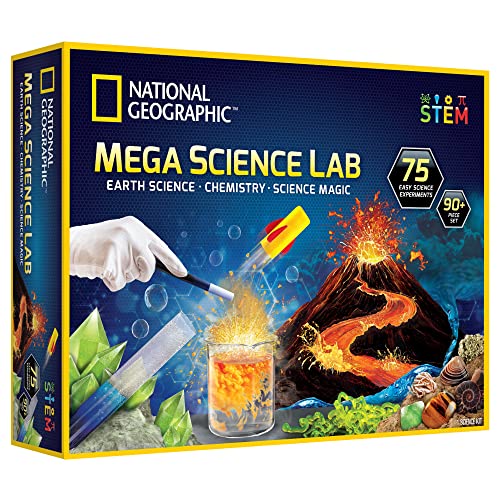
- Combines chemistry, Earth science, and science magic
- Includes 75 experiment ideas
- Adds rocks, minerals, crystals, and fossil activities
Best For: Ages 8–12 who want broad science exploration
Best Advanced Upgrade

- More than 333 experiments in 27 chapters
- Covers inorganic, organic, and electrochemistry
- Includes 103 pieces and a 192-page manual
Best For: Motivated students ages 12+ ready for advanced chemistry
Best All-Around Pick
National Geographic Amazing Chemistry Set

- 100+ total experiment ideas
- Includes tools and materials for 15 experiments
- Suitable for ages 8 and up
Best For: Kids who want maximum experiment variety
Best Guided Introduction
Thames & Kosmos Chemistry C500

- 28 guided experiments
- 48-page full-color science guide
- Includes core lab-style equipment
Best For: Kids who prefer structured chemistry lessons
Best for Big Reactions
National Geographic Stunning Chemistry Set

- 45 hands-on experiments
- Includes volcano, geyser, and rocket activities
- Illustrated, easy-to-follow guide
Best For: Kids who enjoy dramatic visual reactions
Best Intermediate Upgrade

- 250 experiments with a 128-page full-color manual
- Real lab equipment and an alcohol burner included
- Designed for ages 11+ with adult supervision
Best For: Older kids ready for structured, hands-on laboratory chemistry
Best for Young Beginners
National Geographic Junior Chemistry Set

- 50 hands-on experiments for early learners
- Includes 20+ child-friendly lab tools
- Illustrated instructions use familiar household items
Best For: Children ages 4 and up starting their first science activities
Best Visual Reaction Kit

- 31 experiments include volcanoes, glow potions, and instant snow
- Teaches pH, gas production, density, and acid-base reactions
- Includes tools and materials for guided activities
Best For: Kids ages 8+ who enjoy colorful, hands-on science demonstrations
Best Overall – Thames & Kosmos Chem C1000
For families seeking beginner chemistry sets with authentic equipment and structured instruction, the Thames & Kosmos Chem C1000 is a strong starting point. It includes 125 experiments, seven chemicals, safety goggles, and an 80-page illustrated manual covering topics from indicators and chromatography to electrolysis.
Best For: Curious students ages 10 and up, homeschool families, and beginners ready for a more authentic laboratory experience.
Pros:
- Offers 125 hands-on experiments across 10 themed chapters.
- Includes real lab equipment, safety goggles, and seven chemicals.
- Provides clear explanations, safety guidance, and waste-disposal instructions.
- Introduces varied topics such as secret inks, crystals, electrochemistry, and food chemistry.
Cons:
- Requires adult supervision.
- Some experiments require common household additions or careful setup.
- Its chemistry focus may be more advanced than a simple play-oriented kit.
The C1000 balances accessible projects with genuine laboratory technique, making it a particularly well-rounded choice for beginners who want to build a foundation for more advanced chemistry.
Best Play-Focused Pick – Ooze Labs Chemistry Station
The Ooze Labs Chemistry Station is one of the more approachable beginner chemistry sets for younger children. Its colorful station, 57 pieces, experiment cards, and full-color manual support engaging activities such as glowing slime, fizzing reactions, bubbles, and chromatography.
Best For: Children ages 6 and up who learn best through colorful, highly visual experiments and an organized play station.
Pros:
- Designed for a younger audience starting at age 6.
- Includes a large chemistry station with beakers, test tubes, flasks, pipettes, and other tools.
- Features accessible experiments involving slime, fizzing reactions, bubbles, and chromatography.
- Uses non-hazardous chemicals and does not contain borax.
Cons:
- Offers less advanced chemistry content than larger laboratory-focused sets.
- Its plastic equipment is primarily designed for introductory play.
- Adult guidance may still be helpful during experiments.
This is a practical choice when the priority is an inviting first introduction rather than a deep chemistry curriculum. The station format also makes the equipment easy to organize between activities.
Best Variety – National Geographic Mega Science Lab
Families comparing beginner chemistry sets with broader science coverage may prefer the National Geographic Mega Science Lab. It combines chemistry with Earth science and science magic, offering 45 included experiments plus 30 additional activities using common household items.
Best For: Kids ages 8 to 12 who want to sample chemistry alongside rocks, minerals, fossils, volcanoes, and science-themed magic tricks.
Pros:
- Combines three subject areas in one kit: Earth science, chemistry, and science magic.
- Includes 75 total experiment ideas, including household-item projects.
- Offers engaging chemistry activities such as bubbling reactions, gas-powered rockets, and crystal projects.
- Includes rock, mineral, and crystal specimens plus a fossil-digging activity.
Cons:
- Provides less focused chemistry depth than a dedicated chemistry set.
- The broad mix of activities may appeal less to children seeking only chemistry.
- Some projects depend on common household materials.
The Mega Science Lab is best viewed as a versatile science sampler rather than a comprehensive chemistry course. Its variety can keep siblings or children with changing interests engaged over time.
Best Advanced Upgrade – Thames & Kosmos Chem C3000
For older students who have outgrown basic beginner chemistry sets, the Thames & Kosmos Chem C3000 provides a substantial home laboratory experience. It includes more than 333 experiments, 103 pieces, a 192-page manual, real chemicals, and equipment for inorganic, organic, and electrochemistry.
Best For: Students ages 12 and up, homeschoolers, and aspiring chemists preparing for more advanced high-school chemistry work.
Pros:
- Offers more than 333 experiments across 27 chapters.
- Covers advanced subjects including chemical equations, atomic structure, organic chemistry, acids and bases, and electrolysis.
- Includes extensive laboratory equipment such as an Erlenmeyer flask, alcohol burner, electrodes, tubing, and safety goggles.
- Provides a detailed 192-page manual with integrated safety and disposal guidance.
Cons:
- May be too advanced for younger or completely new learners.
- Requires adult supervision throughout.
- Some experiments require clearly listed household additions.
The C3000 is a serious step up in scope and complexity. It is a strong long-term investment for a motivated student, but its depth makes it better suited to committed learners than casual experimenters.
Best All-Around Pick – National Geographic Amazing Chemistry Set
For shoppers comparing beginner chemistry sets, the National Geographic Amazing Chemistry Set stands out for its broad mix of hands-on activities. It includes materials for 15 experiments plus a guide with 85 additional projects using common household items.
Best For: Kids ages 8 and up who want lots of variety and hands-on use of test tubes, beakers, and pipettes.
Pros:
- Offers more than 100 total experiment ideas.
- Includes materials for crystal growing, color-changing reactions, glowing test tubes, and more.
- Uses real scientific tools for an engaging STEM experience.
Cons:
- Only 15 experiments include the supplied materials; the additional 85 require common household items.
- The manufacturer recommends the set for ages 8 and up, so younger children may need to wait.
This is a strong choice when experiment count and activity variety matter most. Its combination of included materials and household-item projects can keep curious children exploring beyond the initial kit.
Best Guided Introduction – Thames & Kosmos Chemistry C500
Among beginner chemistry sets, the Thames & Kosmos Chemistry Chem C500 emphasizes structured learning. Its 28 guided experiments and 48-page, full-color manual explain both how to perform each activity and why the results occur.
Best For: Children ages 10–15 who benefit from clear instructions and explanations of basic chemical reactions.
Pros:
- Provides 28 classic, guided chemistry experiments.
- Covers acids and bases, fizzy and foamy reactions, invisible ink, and states of matter.
- Includes beakers, test tubes, chemicals, stoppers, pipettes, and a detailed manual.
Cons:
- Offers fewer experiments than the larger National Geographic kits.
- The manufacturer recommends it for ages 10–15, making it less suited to younger beginners.
The C500 is a practical pick for families who value explanation over sheer experiment count. Its guided format can help children connect visible reactions with introductory chemistry concepts.
Best for Big Reactions – National Geographic Stunning Chemistry Set
For families seeking beginner chemistry sets with highly visual activities, the National Geographic Stunning Chemistry Set focuses on fizzy, bubbly, and eruptive reactions. Its 45 experiments include a volcano, geyser, rocket, and other hands-on projects.
Best For: Kids ages 8 and up who enjoy easy-to-follow experiments with dramatic, visible results.
Pros:
- Includes 45 experiments with kid-friendly illustrated instructions.
- Features volcano, geyser, and rocket activities alongside other chemical reactions.
- Introduces the scientific process and chemistry fundamentals through hands-on play.
Cons:
- Has fewer total experiments than the National Geographic Amazing Chemistry Set.
- Its activities are geared toward ages 8 and up rather than older students seeking a more advanced introduction.
This kit makes sense when visual excitement is a priority. The illustrated guide and 45-project lineup offer an accessible starting point for children who are motivated by movement, fizz, and eruptions.
Best Intermediate Upgrade – Thames & Kosmos Chem C2000
For older kids who have outgrown basic beginner chemistry sets, the Thames & Kosmos Chem C2000 offers a substantial step up. It combines 250 experiments, professional-style equipment, an alcohol burner, and a detailed manual covering a broad range of chemistry topics.
Best For: Aspiring young chemists ages 11 and up who want a structured introduction to high school-level laboratory work.
Pros:
- Includes 250 experiments across 18 themed chapters.
- Features real lab equipment, glassware, goggles, electrolysis components, and an alcohol burner.
- The 128-page, full-color manual provides step-by-step guidance and scientific explanations.
- Includes safety rules, GHS labeling, first-aid guidance, and waste-disposal instructions.
Cons:
- Its intermediate focus and alcohol burner make adult supervision essential.
- Recommended for ages 11–15, so it may be too advanced for younger beginners.
- Some experiments require careful setup and handling of chemicals and heat.
This is the most comprehensive choice of the three for families seeking genuine, progressive chemistry practice rather than short craft-style activities. Its equipment and breadth make it a strong long-term option, provided an adult can supervise the lab work.
Best for Young Beginners – National Geographic Junior Chemistry Set
The National Geographic Junior Chemistry Set is a straightforward entry point for young children exploring beginner chemistry sets. It offers 50 illustrated experiments and more than 20 child-friendly lab tools, with activities that use familiar household ingredients such as baking soda and vinegar.
Best For: Early learners ages 4 and up who need simple, highly guided science activities.
Pros:
- Provides 50 hands-on chemistry experiments.
- Includes more than 20 durable, child-safe lab tools.
- Illustrated, step-by-step instructions are designed for easy follow-through.
- Many activities use common household items, including baking soda and vinegar.
Cons:
- The kit depends on household ingredients for some experiments.
- Its junior focus may feel limited for older children seeking deeper chemistry concepts.
- The supplied notes do not indicate that it includes batteries or more advanced laboratory equipment.
Choose this set when accessibility and age-appropriate guidance matter most. It is less suited to serious lab progression, but its approachable format can help very young children build confidence and curiosity around chemistry.
Best Visual Reaction Kit – Discovery Radical Reactions
The Discovery Radical Reactions Science Kit blends beginner chemistry sets with engaging DIY projects for kids ages 8 and up. It includes 16 guided kit experiments plus 15 bonus household-material activities, with memorable demonstrations such as volcanoes, instant snow, glow potions, gas-powered balloons, and color-changing pH reactions.
Best For: Kids ages 8 and up who learn best through colorful, highly visible reactions and hands-on projects.
Pros:
- Offers 31 total experiments, including 16 guided activities and 15 bonus projects.
- Includes tools and materials such as test tubes, a volcano mold, instant snow, glow paint, and measuring equipment.
- Introduces acid-base reactions, gas production, density, exothermic heat, and pH indicators.
- Bonus activities use basic household materials, extending the kit beyond the included supplies.
Cons:
- Some experiments require household items such as water and vinegar.
- It is more activity-focused than a formal, equipment-heavy laboratory set.
- Adult supervision is required.
This kit is a strong middle ground for children who want exciting visual results while still learning real chemistry concepts. It offers more variety than a single-project science toy, though older students seeking advanced laboratory technique may prefer the Chem C2000.
How We Picked the Best Beginner Chemistry Sets
We focused on kits that provide a practical introduction to chemistry through structured, hands-on activities. Our comparison considered the number and variety of experiments, recommended age, quality of the instruction manual, usefulness of the included tools, and how well each set supports independent or parent-assisted learning.
Experiment count is only one factor. A kit with fewer, clearly explained activities may be more rewarding than one with dozens of repetitive demonstrations. We also looked for options spanning several skill levels, from first science activities to more substantial sets for children ready to revisit concepts and try longer projects.
Quick Comparison
| What to Compare | Why It Matters |
|---|---|
| Experiment count | Shows potential variety, but not necessarily depth or quality. |
| Age guidance | Helps match reading level, motor skills, and supervision needs. |
| Lab equipment | Reusable tools can make experiments more engaging and teach authentic techniques. |
| Instruction quality | Clear, illustrated directions make setup and cleanup easier. |
| Skill progression | More advanced kits are better for children who want increasingly challenging activities. |
Key Buying Factors for Beginner Chemistry Sets
Age, Supervision, and Reading Level
Check the manufacturer’s age recommendation before buying. Younger children generally benefit from short, visual activities with an adult handling measurements and cleanup. Older children may be ready for multi-step experiments, more detailed explanations, and greater independence. Adult supervision is still important whenever a kit involves chemicals, heat, glassware, or spills.
Experiment Variety and Educational Depth
Look for a balanced mix of reactions, acids and bases, crystals, color changes, separation techniques, and observation-based activities. Variety keeps interest high while exposing children to core chemistry ideas instead of relying on one repeated effect.
Included Tools and Replacement Supplies
Realistic lab equipment can improve the experience, particularly when it includes measuring tools, containers, droppers, goggles, or other reusable pieces. Before purchasing, check whether household materials or replacement chemicals are needed and whether the included quantities support every advertised experiment.
Manual Quality and Storage
A well-organized manual should explain the goal, materials, steps, expected result, and science behind each activity. A storage tray, labeled components, or a compact workstation can also reduce lost parts and make repeat experiments less frustrating.
Who Should Buy Which Beginner Chemistry Sets?
Choose a compact, highly guided set for a first introduction or a child who prefers quick activities. A midrange kit with several dozen experiments is a strong all-purpose choice for families seeking variety without overwhelming setup. Larger Thames & Kosmos-style sets are better for motivated children who want authentic equipment, detailed manuals, and a longer progression from beginner to intermediate work.
National Geographic and Discovery options are particularly suitable when bright presentation, accessible experiments, and broad STEM appeal matter. For an older or especially enthusiastic learner, prioritize experiment depth, reusable tools, and a substantial manual over the headline activity count. Whichever kit you choose, set up a well-ventilated workspace, follow the instructions closely, and treat cleanup and safe storage as part of the experiment.