
Battery health is easy to misread if you only check voltage. A good tester helps you see internal resistance, spot weak cells sooner, and make better replacement decisions.
Below, we’ve narrowed the field to practical options for car batteries, consumer cells, and universal troubleshooting so you can choose the right tool with confidence.
Best 10 Battery Internal Resistance Testers Picks for 2026
Multi-Voltage Vehicle Battery Tester
KINGBOLEN BM550 6V/12V/24V Analyzer

- Tests 6V, 12V, and 24V batteries
- Shows SOH, SOC, voltage, resistance, and CCA
- Includes reverse connection protection
Best For: Drivers and garages needing a simple multi-voltage battery checker
Precision Resistance Test Meter
Portable True Four-Wire Battery Resistance Tester
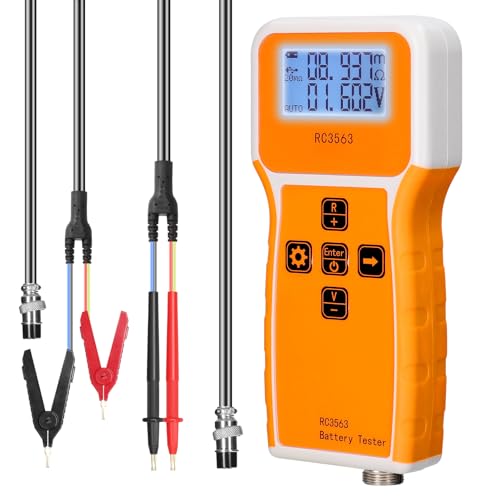
- Measures resistance and voltage together
- Uses true four-wire clamping for accuracy
- Supports PC analysis and serial communication
Best For: Battery maintenance and testing setups that need higher-precision readings
12V Battery and Charging Tester
ANCEL BA101 12V Automotive Battery Analyzer

- Checks SOH, SOC, voltage, current, and CCA
- Includes cranking and charging system tests
- Supports common 12V battery standards
Best For: 12V vehicle owners who want a reliable battery and alternator check
Compact Precision Battery Meter
RC3563 Portable Battery Resistance Voltage Tester
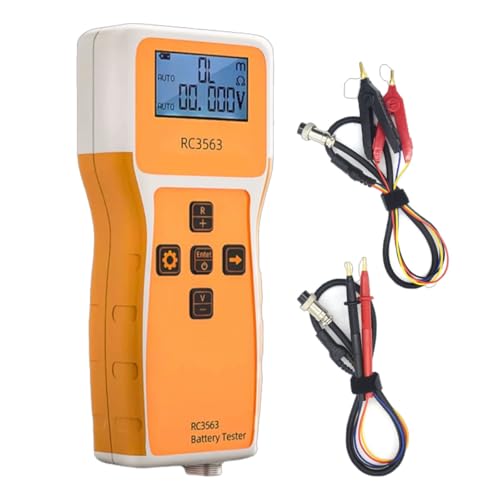
- True four-wire 1kHz AC sine measurement
- Works with lithium, lead-acid, and UPS batteries
- Supports PC-linked data analysis
Best For: Precision testing in labs, workshops, and DIY repair settings
Universal Battery Health Checker

- Wide compatibility with common and button cells
- Reads voltage, capacity percentage, and internal resistance
- Portable design with large LCD and test leads
Best For: General household battery checks across many cell types
Kelvin Precision Tester
WESTOBIG Color Screen Analyzer

- Kelvin four-terminal sensing for low-resistance accuracy
- Preset standards and auto-saving test records
- PC data transfer for easier analysis
Best For: Users who need precise diagnostics and test logging
Four-Wire Diagnostic Meter
YR1035+ Battery Resistance Tester

- True four-wire measurement for accuracy
- Reads internal resistance and voltage simultaneously
- Compact design with a clear LCD
Best For: Battery screening and configuration with precise readings
Upgrade Clamp-Style Battery Diagnostic Tool

- Measures internal resistance and voltage together
- Kelvin four-wire method improves accuracy
- History storage and export support
Best For: portable battery checks for household and automotive use
All-in-One Multimeter Battery Checker
ZOYI XR1 Battery Internal Resistance Tester

- Battery tester plus 25,000-count multimeter
- Measures resistance and voltage together
- Type-C charging and TFT color display
Best For: users who want one tool for battery checks and multimeter testing
Compact Color-Display Battery Analyzer
FNIRSI HRM-10 Black Battery Analyzer

- Automatic resistance and voltage testing
- Kelvin four-wire method for accuracy
- Stores and exports historical readings
Best For: lightweight battery checks with easy-to-read results
Multi-Voltage Vehicle Battery Tester – KINGBOLEN BM550 6V/12V/24V Analyzer
If you want battery internal resistance testers for quick vehicle diagnostics, the KINGBOLEN BM550 covers a wide range of 6V, 12V, and 24V batteries with support for common lead-acid types. It gives you SOH, SOC, voltage, internal resistance, and CCA-based results in a compact, easy-to-read format, making it a practical choice for routine checks at home or in the shop.
Best For: DIY drivers, garages, and fleet users who need a straightforward tester for common vehicle batteries.
Pros:
- Tests 6V, 12V, and 24V batteries across flooded, AGM, GEL, and EFB types
- Displays SOH, SOC, voltage, internal resistance, and CCA results
- Works in-vehicle or out-of-vehicle with simple plug-and-play use
- Includes reverse connection protection for safer operation
Cons:
- Not suitable for deep cycle batteries
- Requires entering the correct CCA value for accurate results
- Depends on proper clamp contact for stable screen behavior
This is a solid pick if you need one tool to handle a broad mix of everyday vehicle batteries without complicated setup. It focuses on practical readings and fast checks rather than advanced lab-style analysis.
Precision Resistance Test Meter – Portable True Four-Wire Battery Resistance Tester
Among battery internal resistance testers, this portable model is aimed at users who need precise resistance and voltage measurement in a compact format. Its true four-wire clamp design is built to reduce error from contact and lead resistance, while the backlit display and computer communication make it useful for testing and analysis work.
Best For: Battery production, maintenance, and lab-style testing where accuracy matters.
Pros:
- Measures internal resistance and voltage at the same time
- Uses a true four-wire test clamp to improve accuracy
- Features a clear LCD with backlight and battery level display
- Supports serial communication and computer analysis software
Cons:
- Not a dedicated automotive battery analyzer with CCA-style grading
- More technical than basic consumer testers
- Best suited to users who need resistance-focused measurements
This is a good fit if your priority is resistance and voltage accuracy rather than a quick car-battery health check. The rechargeable design and data-link features make it especially useful for ongoing testing workflows.
12V Battery and Charging Tester – ANCEL BA101 12V Automotive Battery Analyzer
If you need battery internal resistance testers for vehicle diagnostics, the ANCEL BA101 takes a broader 12V approach by checking SOH, SOC, voltage, current, CCA, cranking, and charging performance. It is designed for quick everyday use with a readable screen and direct battery power, making it a practical diagnostic tool for common 12V systems.
Best For: 12V car, truck, boat, and RV owners who want dependable battery and charging checks.
Pros:
- Tests 12V batteries and charging/cranking systems
- Provides SOH, SOC, voltage, current, and CCA readings
- Supports multiple battery standards and common 12V battery types
- Includes protective features for reverse polarity, shorts, overcurrent, and overvoltage
Cons:
- Not for lithium batteries or non-12V systems
- Not suitable for motorcycles below 30Ah
- 6V and 24V users need a different model variant
This model stands out as a dependable all-around tester for standard 12V batteries and charging systems. If you want readable results and safer operation without extra charging steps, it is a strong everyday pick.
Compact Precision Battery Meter – RC3563 Portable Battery Resistance Voltage Tester
For users comparing battery internal resistance testers, the RC3563 is built around accurate resistance and voltage measurement with a true four-wire AC sine system. It is compact, rechargeable, and suited to everything from lithium and lead-acid batteries to resistors and low-resistance components, so it can handle both workshop and field testing.
Best For: Labs, workshops, and DIY users who need a compact precision tester for many battery types.
Pros:
- Measures internal resistance and voltage simultaneously
- Uses true four-wire 1kHz AC sine measurement for better accuracy
- Supports many battery types, including lithium, lead-acid, and UPS batteries
- Includes a backlit LCD and computer link for graphic analysis
Cons:
- More focused on precision testing than easy car-battery grading
- Requires familiarity with resistance-based testing workflows
- Not a simple one-button automotive analyzer
If you want a portable meter for detailed resistance work, this is one of the more versatile options in the group. Its rechargeable design and PC support make it especially useful when you need repeatable results and data review.
Universal Battery Health Checker – Dlyfull LCD Battery Tester
If you want battery internal resistance testers that also handle everyday household cells, this Dlyfull model is a practical all-rounder. It reads voltage, battery capacity percentage, and internal resistance, and its lead-based design makes it easy to check many battery formats without inserting them into bays.
Best For: Quick, portable testing of mixed battery types in home gear, toys, flashlights, and controllers.
Pros:
- Works with a wide range of batteries, including AA, AAA, C, D, 9V, lithium-ion, and many button cells.
- Measures battery voltage, capacity percentage, and internal resistance.
- Large LCD display makes results easy to read at a glance.
- Compact, portable design with test leads for flexible use.
Cons:
- Uses a rotary dial and test leads rather than a quick insert-style bay.
- More focused on battery health checks than advanced data logging.
This is a solid choice if you need a straightforward tester for common batteries and want internal resistance readings in the same tool. It is especially appealing for general troubleshooting and basic battery screening.
Kelvin Precision Tester – WESTOBIG Color Screen Analyzer
For buyers comparing battery internal resistance testers with more precision, this WESTOBIG model emphasizes Kelvin four-terminal sensing and data handling. It is designed to measure voltage and resistance across a broad range, with preset thresholds and PC export for users who need repeatable diagnostics.
Best For: Detailed battery diagnostics for automotive and universal battery testing where accurate low-resistance readings matter.
Pros:
- Kelvin four-terminal sensing helps measure very low resistance more accurately by reducing lead resistance effects.
- Supports voltage and resistance testing across a wide range, including car batteries and smaller battery types.
- Preset data function lets you compare readings against stored standards.
- Automatically saves test records and can transfer data to a PC via Excel.
Cons:
- Has a higher-complexity feature set than simple handheld testers.
- Must not be used above 100V DC and is not for AC voltage.
This model makes sense if you want a more analysis-oriented tester with low-resistance measurement capability and record keeping. Its color display and data workflow are geared toward more serious inspection tasks.
Four-Wire Diagnostic Meter – YR1035+ Battery Resistance Tester
If you need a focused tool for battery internal resistance testers, the YR1035+ is built around true four-wire measurement. It measures internal resistance and voltage simultaneously, with a large LCD that keeps readings clear during screening, configuration, or bench work.
Best For: Accurate battery screening and configuration work where simultaneous resistance and voltage readings are useful.
Pros:
- True four-wire testing system measures internal resistance and voltage at the same time.
- Large LCD display shows real-time readings clearly.
- Compact and lightweight enough for field work or bench use.
- Suitable for battery performance testing, screening, and configuration across multiple battery types.
Cons:
- Accessory bundle may vary by combination.
- More specialized than general-purpose battery checkers.
This is a practical pick for users who care most about accurate diagnostic readings rather than broad consumer convenience features. Its four-wire design and simultaneous measurement make it well suited to careful battery evaluation.
Upgrade Clamp-Style Battery Diagnostic Tool – FNIRSI HRM-10 Battery Tester
If you want one of the more versatile battery internal resistance testers for mixed-use diagnostics, the FNIRSI HRM-10 is built to measure internal resistance and voltage at the same time. It works with different battery types using the included clamp, probe, and Kelvin accessories, making it a practical pick for checking household batteries as well as car batteries.
Best For: Users who want a compact, accurate tester for both household and automotive battery checks.
Pros:
- Automatically measures internal resistance and voltage together.
- Uses a customized Kelvin four-wire connection to reduce lead and contact resistance.
- Supports historical records and exportable measurement data.
- TFT HD color display makes readings easier to review.
Cons:
- Maximum resistance range is up to 200Ω, so it is designed for battery diagnostics rather than broader heavy-duty electrical work.
- Must not be used with DC voltage above 100V.
- Not for AC voltage use.
This is a strong all-around option if you value portability, accuracy-focused design, and simple battery comparison features. The 8-set history view and export support make it especially useful when you want to track battery condition over time.
All-in-One Multimeter Battery Checker – ZOYI XR1 Battery Internal Resistance Tester
The ZOYI XR1 is a battery internal resistance tester that also works as a 25,000-count digital multimeter, so it fits well if you want one tool for battery diagnosis and general electrical testing. It measures internal resistance and voltage at the same time, and the color TFT screen makes the results easy to read in everyday use.
Best For: People who want a battery tester that doubles as a feature-rich multimeter.
Pros:
- Combines battery internal resistance testing with multimeter functions.
- Supports AC/DC voltage, resistance, capacitance, frequency, temperature, diode, and continuity tests.
- 4-wire Kelvin clips help reduce lead and contact resistance.
- Includes adjustable brightness, auto-shutdown timing, and Type-C charging.
Cons:
- Max input voltage is 100V, so it is not for higher-voltage work.
- Bulkier than a simple standalone battery checker.
- Feature set may be more than needed if you only want quick battery checks.
For buyers comparing battery internal resistance testers, the XR1 stands out because it is not just a checker—it is also a capable multimeter. That makes it a practical choice for users who want one handheld tool for both battery health checks and broader troubleshooting.
Compact Color-Display Battery Analyzer – FNIRSI HRM-10 Black Battery Analyzer
This FNIRSI HRM-10 version is another practical choice in battery internal resistance testers, especially if you want a compact handheld meter for checking battery condition on the go. It automatically measures internal resistance and voltage, and the TFT color display plus historical record feature make comparisons straightforward.
Best For: Buyers who want a lightweight battery analyzer with clear visuals and simple comparison tools.
Pros:
- Measures internal resistance and voltage automatically at the same time.
- Uses Kelvin four-wire testing for improved measurement accuracy.
- Supports historical records and export of measurement tables.
- Works with all kinds of batteries for household and automotive checks.
Cons:
- Resistance range tops out at 200Ω.
- Must not be used above 100V DC.
- Not suitable for AC voltage testing.
If you want a straightforward battery tester with a color display and dependable resistance/voltage readings, this HRM-10 is easy to recommend. It is especially useful when you want to review up to 8 stored readings and compare battery condition quickly.
How We Picked These Battery Internal Resistance Testers
We focused on measurement range, accuracy, display readability, battery type support, and how easy the tool is to use in real-world testing. For Battery Internal Resistance Testers, the best choices are the ones that give stable readings, simple operation, and enough range for both small cells and higher-capacity automotive batteries.
We also looked for features that matter in daily use, such as four-wire/Kelvin-style sensing, clear LCD output, voltage measurement, and clip or probe setups that make repeat testing faster and more consistent.
Quick Comparison
If you need a fast overall check for a 12V or 24V vehicle battery, choose a model designed for automotive diagnostics. If you test AA, AAA, Li-ion, Ni-MH, or mixed household batteries, a universal meter is usually the better fit. Some Battery Internal Resistance Testers lean toward high precision lab-style measurement, while others prioritize convenience and broad compatibility.
Key Buying Factors for Battery Internal Resistance Testers
Measurement Range
Check both resistance and voltage ranges. Automotive batteries and small rechargeable cells have very different needs, so a wider range gives you more flexibility.
Testing Method
Four-wire or Kelvin-style sensing is valuable because it reduces lead resistance error and improves repeatability. This matters a lot when you’re comparing batteries or tracking degradation over time.
Battery Compatibility
Make sure the tester supports the battery chemistries you actually use. Some models are built for lead-acid car batteries, while others work better with Li-ion, Ni-MH, Ni-CD, alkaline, and LiFePO4 cells.
Ease of Use
A bright screen, straightforward controls, and solid probes or clips make testing quicker and reduce user error. If you’ll test often, a tool with a simple interface is worth prioritizing.
Interpretation and Workflow
Internal resistance is most useful when paired with voltage and a consistent test process. The best Battery Internal Resistance Testers help you collect both without extra steps.
Who Should Buy Which Battery Internal Resistance Testers?
Choose an automotive-focused tester if your main job is checking starter batteries, alternator performance, or charging issues. Choose a universal tester if you maintain household electronics, tool batteries, or mixed chemistry packs. If you want the most repeatable readings for comparison work, prioritize a model with four-wire measurement and clear calibration behavior.
For most buyers, the right choice comes down to battery type, range, and how often you’ll test. Match the tool to your use case, and you’ll get more meaningful results than from voltage alone.