
Choosing the right battery capacity tester can save time, reduce guesswork, and help you spot weak cells before they fail. Whether you need a simple household checker or a more advanced load tester, the right tool depends on the battery type and the level of detail you want.
This roundup covers 10 practical options for everyday users, hobbyists, and technicians, with an emphasis on accuracy, compatibility, and value.
Best 10 Battery Capacity Testers Picks for 2026
Universal Battery Checker
Dlyfull LCD Display Tester for Common Cells

- Checks AA, AAA, C, D, 9V, and button cells
- LCD shows good, weak, or poor battery status
- Small, lightweight, and easy to store
Best For: Home users who need a compact checker for lots of common household and button-cell batteries
Discharge Analyzer Board
HiLetgo 1.5V to 12V Capacity Meter
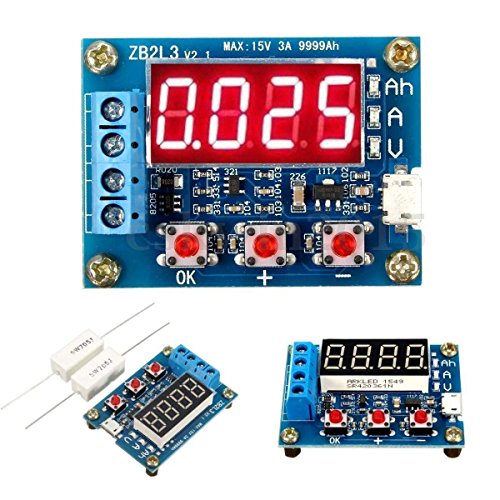
- Measures capacity through controlled discharge testing
- Supports 1.5V to 12V batteries, including 18650 and lead-acid
- Uses a micro USB power input and compact board layout
Best For: DIY users and hobbyists who want a compact discharge tester for measuring battery capacity on a bench
Analog Battery Checker
D-FantiX BT-168 for Household Cells
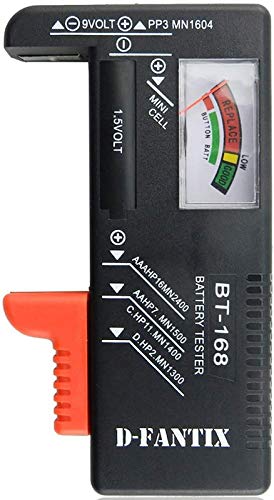
- Checks AA, AAA, C, D, 9V, and button cells
- Analog needle uses green, yellow, and red zones
- No batteries needed to operate
Best For: Budget-conscious households that want a simple, no-battery-needed tester for everyday cells
4-Channel 18650 Analyzer

- Measures capacity, resistance, voltage, current, and power
- Four-channel design supports multiple 18650 cells
- 1.77-inch screen shows real-time battery data
Best For: Users testing multiple 18650 lithium batteries who want capacity and resistance data on a small display module
Analog Household Battery Checker
Compact 2-Pack for Everyday Cells

- Works with AA, AAA, C, D, 9V, and button cells
- No internal battery needed
- Analog needle shows good/low/replace zones
Best For: Quick at-home checks of common household batteries
High-Power Load Tester
180W USB Battery Capacity Analyzer

- Shows voltage, current, power, capacity, and temperature
- Four modes include constant current, power, resistance, and voltage
- Four-wire design improves measurement accuracy
Best For: Advanced discharge testing of batteries and USB-powered devices
Cell-by-Cell Battery Checker
Digital Meter for LiPo and NiMH Packs

- Reads cell voltages, total voltage, and voltage gap
- Supports LiPo, LiFe, Li-ion, NiMH, and NiCd
- Shows estimated remaining capacity percentage
Best For: Checking multi-cell RC and rechargeable battery packs
Car Battery Health Checker

- Reads SOH, SOC, voltage, current, and rating data.
- Supports flooded, AGM, EFB, and GEL 12V batteries.
- Includes health, cranking, and charging system tests.
Best For: Drivers and shops needing fast 12V battery and alternator checks.
High-Voltage Load Analyzer
150W 200V 20A Battery Capacity Tester

- Measures batteries, DC power supplies, and charging lines.
- Displays capacity, impedance, temperature, energy, and time.
- Supports up to 200V, 20A, and 150W load testing.
Best For: Engineers and makers needing high-voltage bench testing.
Universal Battery Checker – Dlyfull LCD Display Tester for Common Cells
If you want a simple battery capacity testers option for everyday household cells, the Dlyfull tester gives you a fast way to check AA, AAA, C, D, 9V, and several coin and specialty batteries. Its LCD display quickly indicates whether a battery is in good, weak, or poor condition, making it easy to sort usable batteries from ones that should be replaced.
Best For: Home users who need a compact checker for lots of common household and button-cell batteries.
Pros:
- Works with a wide range of battery sizes, including AA, AAA, C, D, 9V, and many button cells
- LCD bars clearly show battery health as good, weak, or poor
- Compact, lightweight design is easy to keep in a drawer or toolbox
- Includes one AAA battery and an 18-month warranty
Cons:
- Not intended for rechargeable battery testing
- Measures voltage status rather than precise capacity
For quick at-home sorting, this is a practical battery tester that focuses on speed and convenience. It is best suited to basic battery checks rather than detailed analysis, but it covers a lot of common battery types in a very small package.
Discharge Analyzer Board – HiLetgo 1.5V to 12V Capacity Meter
For buyers looking for battery capacity testers that go beyond a simple pass-or-fail reading, the HiLetgo discharge analyzer is designed to measure battery capacity through controlled discharge. It supports batteries from 1.5V to 12V and is built around a micro USB power input, making it a more technical choice for evaluating rechargeable packs and cells.
Best For: DIY users and hobbyists who want a compact discharge tester for measuring battery capacity on a bench.
Pros:
- Supports a wide 1.5V to 12V battery range, including 18650, lithium, and lead-acid batteries
- Measures discharge voltage, current, and termination settings with fine resolution
- Compact board size is suitable for DIY testing setups
- Micro USB powered with low working current
Cons:
- Requires a more hands-on setup than a handheld tester
- Better suited to technical users than casual battery checks
This is a capable option if you want real discharge-based capacity data instead of a basic voltage readout. Its small board format and broad voltage support make it useful for testing rechargeable batteries in a project or repair environment.
Analog Battery Checker – D-FantiX BT-168 for Household Cells
The D-FantiX BT-168 is a straightforward battery capacity testers choice for people who just want a quick voltage-based check on common household batteries. Its analog needle display uses a color-coded scale, so you can quickly see whether a battery is good, low, or ready to replace or recharge.
Best For: Budget-conscious households that want a simple, no-battery-needed tester for everyday cells.
Pros:
- Works with AA, AAA, C, D, 9V, and button cell batteries
- Analog needle and color-coded zones make results easy to read
- No batteries required to operate
- Compact and lightweight for home use
Cons:
- Does not directly measure battery capacity precisely
- More of a voltage tester than a full analyzer
If you want a basic household checker that is simple and inexpensive to use, this model fits the job well. It is best for quickly deciding whether a battery still has usable life, rather than producing detailed capacity numbers.
4-Channel 18650 Analyzer – Type-C Capacity Tester Module
If you need battery capacity testers for 18650 cells specifically, this 4-channel module is built for capacity, internal resistance, and electrical readouts in one compact unit. The 1.77-inch display shows voltage, current, power, capacity, and resistance, which makes it useful when you want more complete battery data during charging and discharge testing.
Best For: Users testing multiple 18650 lithium batteries who want capacity and resistance data on a small display module.
Pros:
- Supports four-channel capacity and internal resistance measurement
- Displays voltage, current, power, capacity, and battery level in real time
- Type-C powered module with integrated charge and discharge workflow
- Designed specifically for 18650 lithium batteries
Cons:
- Only supports batteries with up to 5V detection voltage and 18650-focused use
- Measurement error is listed at about 10%
- Less convenient for general household battery checking
This module is a strong fit for technical 18650 testing where capacity and resistance matter more than portability. It is not a universal checker, but it offers much more detailed analysis for the battery type it was designed around.
Analog Household Battery Checker – Compact 2-Pack for Everyday Cells
If you want simple battery capacity testers for everyday household cells, this analog checker keeps things quick and straightforward. It works with AA, AAA, C, D, 1.5V, 9V, and 1.5V button cells, and it needs no battery of its own because it activates from the cell being tested.
Best For: Quick at-home checks of common disposable or rechargeable household batteries.
Pros:
- Tests a wide range of common battery types, including AA, AAA, C, D, 9V, and button cells
- No internal battery required for operation
- Simple analog needle display with good, low, and replace/recharge zones
- Compact, lightweight design and comes as a 2-pack
Cons:
- It estimates battery condition by voltage rather than measuring true capacity precisely
- Tests should be kept short to avoid unnecessary battery drain
This is a practical pick if you want a fast visual check instead of a more advanced diagnostic tool. It is best suited to routine household use where convenience matters more than detailed readings.
High-Power Load Tester – 180W USB Battery Capacity Analyzer
For shoppers comparing battery capacity testers that can do more than a basic voltage check, this MakerHawk load tester adds adjustable electronic-load functions and detailed readouts. It supports constant current, constant power, constant resistance, and constant voltage modes, with screen data for voltage, current, power, capacity, temperature, resistance, and discharge timing.
Best For: More advanced discharge testing of batteries, power banks, chargers, cables, and power adapters.
Pros:
- Large 2.4-inch color screen shows a wide set of test parameters
- Four discharge modes offer flexible testing options
- Four-wire system improves measurement accuracy by reducing wire-resistance error
- Built-in protection and temperature-controlled fan support safer long tests
Cons:
- Requires corded electric power rather than portable battery operation
- More complex than a basic handheld checker
This model is aimed at users who need deeper discharge data and compatibility with app or PC connections. If you want a serious testing setup for higher-power devices, it offers much more than a simple go/no-go meter.
Cell-by-Cell Battery Checker – Digital Meter for LiPo and NiMH Packs
If your battery capacity testers need to work with multi-cell hobby packs, this RC Cellmeter 7 focuses on cell-level voltage checking and remaining-capacity display. It is designed for LiPo, LiFe, Li-ion, NiMH, and NiCd batteries, and it shows individual cell voltages, total voltage, highest and lowest cell voltage, voltage gap, and estimated remaining capacity.
Best For: Checking multi-cell RC and rechargeable battery packs by cell voltage.
Pros:
- Supports LiPo, LiFe, Li-ion, NiMH, and NiCd batteries
- Displays individual cell voltages plus total voltage and voltage imbalance
- Shows estimated remaining battery capacity percentage
- Small, lightweight, and easy to read
Cons:
- Made for pack diagnostics, not general household batteries
- The item is sold without a battery
This is a strong fit if you need a compact digital checker for hobby packs rather than a universal household tester. Its biggest value is the extra insight it gives into cell balance and pack condition.
Car Battery Health Checker – TOPDON BT100 12V Load Tester
If you want a practical battery capacity tester for 12V automotive systems, the TOPDON BT100 is built for quick health checks without extra setup. It reads SOH, SOC, voltage, current, rating, and other diagnostics, making it useful when you need a fast answer on whether a battery should be replaced, recharged, or jump-started.
Best For: Drivers, DIY users, and shops that need fast 12V battery, cranking, and charging system checks.
Pros:
- Tests 12V lead-acid batteries with support for flooded, AGM, EFB, and GEL types.
- Includes battery health, cranking, and charging system tests in one compact tool.
- Passive testing design means it powers on only when properly connected.
- Small size makes it easy to store in a glove box or center console.
Cons:
- Limited to 12V batteries, so it is not a general-purpose high-voltage capacity tester.
- Works best for users specifically checking vehicle battery and alternator performance.
For everyday vehicle troubleshooting, the BT100 offers a straightforward way to evaluate battery condition and charging behavior. It is a solid pick if you want clear results and broad 12V vehicle compatibility in a portable tester.
Bench Discharge Monitor – 150W 20A Adjustable Electronic Load
This electronic load is a useful battery capacity tester if you want to measure discharge performance on power batteries in a bench setup. It offers up to 150W and 20A, with a 2.4-inch TFT display that shows voltage, current, power, electricity, capacity, internal resistance, load, operating mode, and protection status.
Best For: Hobbyists and technicians who need adjustable discharge testing with detailed on-screen data.
Pros:
- Supports four working modes: constant current, constant voltage, constant power, and constant resistance.
- 2.4-inch TFT color screen displays capacity, internal resistance, and other useful metrics.
- Settable overvoltage, overcurrent, overpower, stop-voltage, and time-limit protections.
- Supports testing power batteries and includes an external NTC sensor for temperature monitoring.
Cons:
- Requires a bench-style setup rather than a simple handheld battery check.
- Best suited to users who are comfortable with adjustable load testing controls.
For controlled discharge testing, this unit gives you a lot of visibility into battery behavior and test limits. It is a strong option when capacity measurement and configurable load modes matter more than portability.
High-Voltage Load Analyzer – 150W 200V 20A Battery Capacity Tester
For users who need a battery capacity tester with a wider measurement range, this electronic load is designed for testing batteries, DC power supplies, and charging data lines. It supports up to 150W, 200V, and 20A, while showing voltage, current, power, battery capacity, impedance, temperature, energy, and time during discharge.
Best For: Engineers, makers, and experimental users who need high-voltage load testing with detailed readouts.
Pros:
- Supports up to 200V, 20A, and 150W for broader test applications.
- Measures voltage, current, power, capacity, impedance, temperature, energy, and time.
- LCD module displays Chinese and English interfaces with easy mode switching.
- Built-in fan and discharge tube are designed for quiet heat dissipation.
Cons:
- More suited to bench testing than casual battery checks.
- Users need to manage the control knob carefully before use.
This model is a good fit when you want a more flexible load tester for lab-style measurements and battery discharge analysis. Its higher voltage ceiling and broader data display make it especially useful for technical testing workflows.
How We Picked These Battery Capacity Testers
We focused on Battery Capacity Testers that match real-world buying needs: broad battery compatibility, clear displays, simple operation, and useful measurement modes. For capacity-style tools, we also looked at discharge testing features, supported voltage ranges, and whether the tester is better suited to consumer cells, lithium packs, or automotive batteries.
Quick Comparison: Which Type Fits Your Needs?
Not all testers do the same job. Basic universal checkers are best for fast go/no-go checks on AA, AAA, 9V, and button cells. Discharge analyzers are better for measuring usable capacity on rechargeable cells such as Li-ion, NiMH, and LiPo. Electronic loads are the most flexible for DIY testing because they can simulate real discharge conditions and handle higher-power batteries.
Key Buying Factors for Battery Capacity Testers
Battery Compatibility
Make sure the tester supports the exact cell chemistry and format you use most often. A household checker may be ideal for alkaline and button cells, while a lithium-focused analyzer is better for 18650 packs and other rechargeable cells. For automotive use, choose a dedicated 12V battery tester instead.
Measurement Method
Simple voltage indicators are quick, but they do not always reflect true remaining capacity. If you need more meaningful results, look for discharge testing, load testing, or mAh/mWh reporting. These features give a better picture of battery health under use.
Power, Current, and Heat Handling
Higher-wattage electronic loads are useful for larger batteries and longer tests. Check the current limit, wattage rating, and cooling design if you plan to test lithium packs or high-capacity cells. Good heat management matters for consistency and safety.
Display and Ease of Use
Clear LCD or TFT screens make readings easier to interpret. If multiple people will use the tool, simple controls and obvious indicators are especially valuable.
Who Should Buy Which Battery Capacity Testers?
If you want fast everyday battery checks, a universal battery checker is usually enough. If you build or maintain rechargeable packs, choose a discharge analyzer or electronic load with capacity readout. If you work on cars, use an automotive battery tester designed for cranking and charging systems. In short, the best Battery Capacity Testers are the ones matched to your battery type, testing goal, and comfort level with setup.