
Choosing among astrophotography mounts under $1,000 means balancing tracking performance, payload capacity, portability, and setup complexity. The right mount can make longer exposures more consistent without pushing you into premium observatory pricing.
This roundup covers GoTo equatorial mounts, compact star trackers, wedges, and mounting hardware so beginners and experienced imagers can narrow the field by camera setup and shooting style.
Best 10 Astrophotography Mounts Under 1000 Picks for 2026
Responsive GoTo Choice
Explore Scientific iEXOS-100-2

- Eight-CPU PMC-Eight control system
- ExploreStars app for tablet operation
- Dual-axis drives with polar alignment aids
Best For: Tablet-controlled GoTo astrophotography setups
Alignment Accessory
Greensen Latitude Adjustment Base
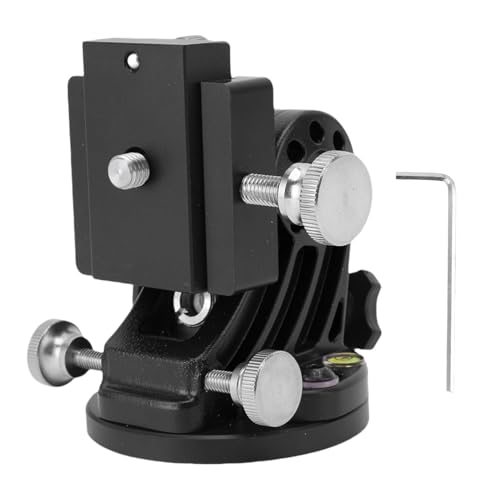
- 0–90-degree angle adjustment
- Standard 3/8-inch bottom thread
- Leveling bubble and locking knobs
Best For: Fine-tuning compatible tracker alignment
Compact Equatorial Option
Explore Scientific FirstLight EXOS Nano EQ3

- Includes steel ST1 tripod
- Alloy-steel construction
- Listed weight of 1000 grams
Best For: Lightweight, compact equatorial setups
DIY-Friendly Star Tracker
ConsoleXpress Equatorial Mount
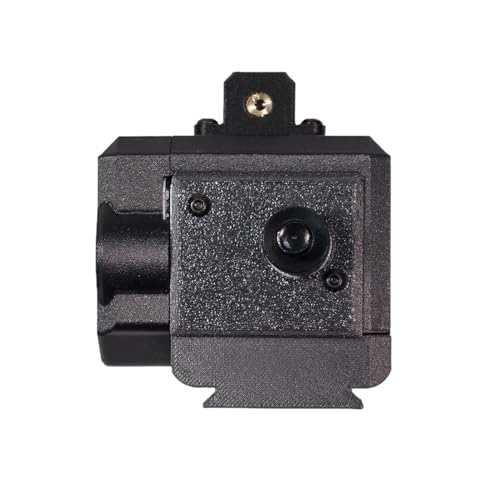
- Stated 4 kg axial capacity
- ESP32 dual-core 5V control
- Bright pointer for cold-weather alignment
Best For: Portable deep-sky and time-lapse imaging
Astromania Universal Finder Base

- Fits compatible 10.2–30.2 mm mounting-hole spacing
- Accepts common finder and reflex-sight brackets
- Anodized aluminum with quick-lock thumbscrews
Best For: Custom finder setups on compatible telescopes
OrionU Star Tracker
- 4 kg axial and 2 kg lateral load capacity
- 5V power-bank operation with ESP32 control
- High-brightness polar pointer for alignment
Best For: Portable camera astrophotography and time-lapse
Astromania Tri-Finder Bracket

- Holds up to three finder or aiming devices
- Uses Vixen/Synta slots without drilling
- Tool-free thumbscrew adjustment for cold weather
Best For: Multi-finder and guide-scope configurations
Best Open-Source Tracker

- Stellar, lunar, and custom rotation speeds
- 15kg stated load capacity
- USB-C power-bank compatibility
Best For: Portable camera tracking and time-lapse work
Best Mounting Accessory

- Full-metal 107mm mounting plate
- 1/4-inch camera thread
- Connects telescopes, rings, and cameras
Best For: Adapting cameras and telescope gear to EQ equipment
Best Latitude Wedge

- 0–90-degree latitude adjustment
- 6061T aluminum construction
- Bubble level and dual locking knobs
Best For: Alignment support for compatible mounts and tripods
Responsive GoTo Choice – Explore Scientific iEXOS-100-2
For astrophotography mounts under 1000, the Explore Scientific iEXOS-100-2 stands out as a feature-rich equatorial option with app-based GoTo control. Its PMC-Eight system, dual-axis drives, and alignment aids are aimed at making tracking and setup more manageable.
Best For: Astrophotographers who want Wi-Fi and Bluetooth tablet control with a full equatorial mount and tripod.
Pros:
- PMC-Eight system uses eight independent CPUs for responsive operation.
- ExploreStars app supports Apple, Android, and Windows tablets.
- Clutched dual-axis worm gears and belt-driven stepper motors provide quiet operation.
- RA-axis sight hole and adjustable altitude control assist polar alignment.
Cons:
- Control is centered on compatible tablets rather than a dedicated hand controller.
- No focuser is included.
This is the most complete option here for buyers who want GoTo functionality and app control in one astrophotography-oriented package. The built-in alignment features further reduce the need for separate setup accessories.
Alignment Accessory – Greensen Latitude Adjustment Base
Among astrophotography mounts under 1000, this Greensen latitude base is an accessory rather than a complete mount. It is designed to support polar alignment with adjustable positioning, a leveling bubble, and a standard 3/8-inch bottom thread.
Best For: Astrophotographers who need a Sky-Watcher-compatible latitude adjustment base for supported trackers, telescopes, or photography equipment.
Pros:
- Adjusts from 0 to 90 degrees for flexible positioning.
- Aluminum alloy construction balances portability with stability.
- Dual locking knobs help secure the selected angle.
- Built-in leveling bubble supports repeatable setup.
Cons:
- It is an adjustment base, not a complete equatorial mount.
- Compatibility should be checked against the equipment’s mounting standard.
This base makes the most sense for a setup that already has a compatible tracker or telescope mount. Its adjustment range and leveling feature can simplify alignment, but it cannot replace the tracking hardware itself.
Compact Equatorial Option – Explore Scientific FirstLight EXOS Nano EQ3
Explore Scientific FirstLight EXOS Nano EQ3 Mount; Steel ST1 Tripod, FL-EXOSNANOT1-00
Check Price On AmazonFor shoppers comparing astrophotography mounts under 1000, the Explore Scientific FirstLight EXOS Nano EQ3 is a compact equatorial mount paired with a steel ST1 tripod. The supplied specifications emphasize its alloy-steel construction and relatively light 1000-gram weight.
Best For: Buyers seeking a straightforward, compact equatorial mount and tripod for a lightweight observing or imaging setup.
Pros:
- Includes an EXOS Nano EQ3 mount and steel ST1 tripod.
- Alloy-steel material provides a sturdy construction.
- Listed weight is 1000 grams for easier portability.
Cons:
- The supplied notes do not specify GoTo, motorized tracking, or astrophotography control features.
- No payload capacity is provided in the available specifications.
This model may suit buyers prioritizing a compact mount-and-tripod package, but the limited listed feature information makes it important to confirm tracking and payload details before choosing it for long-exposure astrophotography.
DIY-Friendly Star Tracker – ConsoleXpress Equatorial Mount
This ConsoleXpress star-tracking equatorial mount is a noteworthy contender among astrophotography mounts under 1000 for buyers focused on deep-sky imaging and time-lapse work. It combines a stated 4 kg axial capacity without counterweights with ESP32 dual-core control and a lightweight carbon-fiber-reinforced body.
Best For: Outdoor astrophotographers and time-lapse users seeking a compact, electronically controlled tracker with a stated 4 kg axial capacity.
Pros:
- Supports up to 4 kg of axial weight without counterweights, according to the supplied notes.
- ESP32 dual-core control runs from low-voltage 5V sources.
- Bright star pointer is designed for alignment in temperatures down to -10°C.
- Carbon-fiber-reinforced PETG body is lightweight and durable.
Cons:
- The supplied notes do not identify a tripod or provide a detailed control interface.
- Compatibility is listed with OrionU, so system compatibility should be verified.
Its stated capacity and low-voltage ESP32 control make this an interesting specialized tracker for portable imaging projects. Confirm the included accessories and compatibility before treating it as a complete mount system.
Astromania Universal Finder Base – Compact Dovetail Mount
For astrophotography mounts under 1000, this compact finder base is a practical way to add or reposition an aiming device on a compatible telescope. Its Synta-style dovetail design accepts common finder, laser, and reflex-sight brackets, provided your telescope’s mounting holes meet the specified spacing.
Best For: Telescope owners building a custom finder or backup aiming setup on compatible Celestron, Meade, Orion, or other SCT optical tubes.
Pros:
- Compatible with telescope holes spaced 10.2–30.2 mm center-to-center and screws up to 5 mm in diameter.
- Works with finder scopes, red-dot finders, reflex sights, and laser-pointer brackets.
- Anodized aluminum construction includes two thumbscrew locks and two M5 screws.
Cons:
- Compatibility depends on the telescope having suitable drilled holes; the holes are not threaded.
- It is a finder accessory rather than a primary camera-tracking mount.
This is a lightweight, tool-friendly solution for adding aiming hardware, but buyers should verify hole spacing and bracket compatibility before ordering.
OrionU Star Tracker – ESP32 Equatorial Astro Mount
Among astrophotography mounts under 1000, this OrionU star tracker is aimed at portable deep-sky imaging and time-lapse work. It combines an equatorial design, ESP32 dual-core control, a high-brightness star pointer, and 5V power-bank compatibility in a compact camera-tracking platform.
Best For: Field astrophotographers who use camera gear up to the stated 4 kg axial or 2 kg lateral capacity and want USB-style 5V power operation.
Pros:
- Reinforced steel shaft and dual-screw locking system are designed for rigidity under reverse load.
- Supports up to 4 kg axial load and 2 kg lateral load without counterweights.
- Includes a high-brightness polar pointer and ESP32 control compatible with 5V mobile power banks.
- Carbon-fiber-reinforced PETG body is lightweight and temperature-resistant.
Cons:
- The notes do not specify tracking-rate options, alignment accuracy, or included tripod.
- The star pointer should never be aimed at people.
- Its compact capacity may not suit heavier telescope-based imaging rigs.
With hand assembly, calibration, testing, and a stated one-year warranty, this tracker offers a feature-rich portable setup; confirm your camera and lens load falls within its separate axial and lateral limits.
Astromania Tri-Finder Bracket – Triple Dovetail Mount
For astrophotography mounts under 1000, the Astromania Tri-Finder is a flexible accessory for organizing several aiming or guiding devices on one telescope. Its three Vixen/Synta-style positions attach without drilling and can hold combinations of finder scopes, red-dot finders, reflex sights, laser brackets, or mini guide scopes.
Best For: Visual observers and astrophotographers who need multiple aiming or guiding devices on a telescope with a compatible Synta-style finder shoe.
Pros:
- Provides three independent dovetail positions for flexible finder configurations.
- No drilling is required when used with a compatible Vixen/Synta-style base.
- Anodized aluminum construction and knurled thumbscrews support tool-free adjustment, including in cold weather.
- Compatible with finder scopes, LED finders, laser pointers, reflex sights, and mini guide scopes.
Cons:
- Requires a compatible Vixen/Synta-style finder shoe or base.
- Adding three devices can increase the telescope’s accessory weight and balance demands.
- It is a finder bracket, not an equatorial tracking mount.
This bracket is a strong choice for expandable finder and guide configurations, particularly when you want several devices available without modifying the telescope with new holes.
Best Open-Source Tracker – Compact Equatorial Mount
Equatorial Mount Star Tracker with Latitude Adjustment Base for Astrophotography
Check Price On AmazonFor shoppers comparing astrophotography mounts under 1000, this compact equatorial mount offers stellar, lunar, and custom rotation speeds in a portable design. Its PETG and carbon-fiber shell, metal latitude base, USB-C power, and 15kg stated load capacity make it a flexible option for camera-based tracking.
Best For: Astrophotographers and time-lapse photographers who want a customizable tracker that can run from a power bank without an app.
Pros:
- Supports stellar, moon, and custom rotation speeds.
- Switches between northern and southern hemisphere operation.
- Includes a CNC-machined metal latitude adjustment base and 3/8-inch bottom thread.
- Works with USB-C power banks and standard quick-release equipment.
Cons:
- Does not include a built-in battery.
- A ball head is required to connect a camera.
- A separate 1/4-to-3/8-inch screw sleeve may be needed.
This is a feature-rich choice for users comfortable checking thread and accessory compatibility. The no-app setup and power-bank support are especially practical for portable shoots.
Best Mounting Accessory – 107mm Dovetail Plate
Among astrophotography mounts under 1000, this product is a mounting accessory rather than a complete tracking mount. The full-metal 107mm dovetail plate is designed to connect telescopes, telescope rings, cameras, and tripod adapters to compatible equatorial equipment.
Best For: Astrophotographers who need a compact adapter plate for linking cameras or telescope hardware to an EQ mount or tripod.
Pros:
- Full-metal alloy construction with an oxidized finish.
- Includes a 1/4-inch camera mounting thread.
- Supports connections among telescope optics, rings, cameras, and tripod adapters.
- Designed for tool-free connection and removal.
Cons:
- It is an accessory plate, not a complete equatorial mount.
- Compatibility depends on the dovetail and thread standards of the equipment.
- The supplied notes do not state a load capacity.
This plate makes sense when your existing EQ setup needs a simple mechanical interface. Confirm the mounting dimensions and thread compatibility before ordering.
Best Latitude Wedge – Adjustable Equatorial Base
This adjustable latitude base is a practical add-on for shoppers researching astrophotography mounts under 1000 and needing more precise setup. Its 0–90-degree adjustment range, integrated bubble level, dual locking knobs, and standard 3/8-inch thread are intended to support alignment for tracking and long-exposure work.
Best For: Astronomers who need a rigid, adjustable wedge for positioning a compatible mount or tripod at different geographic latitudes.
Pros:
- Offers a broad 0–90-degree latitude adjustment range.
- Uses a universal 3/8-inch mounting thread.
- 6061T aluminum construction is lightweight and rigid.
- Bubble level and dual locking knobs help with setup and angle retention.
Cons:
- It is a latitude-adjustment base, not a complete tracking mount.
- The stated payload capacity is only 29 ounces.
- Its 90-day manufacturer warranty is relatively limited.
This wedge can improve positioning when its payload rating and thread fit match your setup. Check the weight of your mount and accessories carefully, especially for larger telescope configurations.
How We Picked the Best Astrophotography Mounts Under 1000
We focused on the features that most directly affect usable astrophotography: equatorial or star-tracking operation, adjustment range, payload support, tripod stability, polar-alignment aids, control options, and compatibility with cameras or telescope dovetails. The selection includes complete mounts as well as supporting wedges, rails, and finder hardware because a capable imaging setup often depends on more than the tracking head alone.
We also considered portability and learning curve. A compact tracker may be the better choice for a wide-angle camera, while a GoTo equatorial mount generally offers a stronger upgrade path for a small telescope, autoguiding, and deeper-sky targets.
Quick Comparison
| Mount type | Best suited to | Main advantage | Watch for |
|---|---|---|---|
| GoTo equatorial mount | Small telescopes and advanced setups | Object locating and upgrade potential | Weight, alignment, and power requirements |
| Compact star tracker | Wide-field cameras and travel | Simple, portable tracking | Limited payload and framing control |
| Latitude wedge | Trackers and camera mounts | More precise polar-angle adjustment | Usually not a complete tracking mount |
| Dovetail or finder hardware | Mounting and accessory integration | Improved compatibility | Requires an existing mount or scope |
Key Buying Factors for Astrophotography Mounts Under 1000
Payload Capacity
Check the manufacturer’s stated capacity, then leave practical headroom for the camera, lens or telescope, guide scope, dew shield, and accessories. Imaging loads benefit from a conservative margin because vibration and balance problems become more noticeable during long exposures.
Tracking and Alignment
Look for smooth sidereal tracking, a usable polar scope or alignment aid, and fine latitude adjustment. GoTo control can save time locating targets, but accurate alignment and careful balancing still determine image quality.
Portability and Stability
A heavy steel tripod can improve stability, while a lighter tracker is easier to transport. Consider the complete packed weight, setup time, power source, and whether the mount can be leveled reliably on uneven ground.
Compatibility and Expansion
Verify dovetail standards, camera-screw sizes, latitude range, control connectivity, and whether the mount supports guiding or remote operation. Wedges and adapter plates are useful only when their dimensions and interfaces match the rest of your system.
Who Should Buy Which Astrophotography Mounts Under 1000?
Choose a compact star tracker if you mainly use a mirrorless or DSLR camera with wide or moderate focal-length lenses and want a portable entry point. Choose a GoTo equatorial mount if you plan to use a small telescope, photograph fainter deep-sky objects, or add guiding later.
Choose a latitude adjustment base when your existing tracker needs more precise polar-angle control. Choose a dovetail plate or finder bracket when the main problem is mounting compatibility rather than tracking. Before buying, confirm the payload rating, attachment standard, latitude range, and included accessories—those details often matter more than headline features.