
The best anemometers for home use make it easy to measure wind speed for weather watching, HVAC checks, ventilation projects, drones, sailing, and outdoor planning.
This roundup compares compact handheld meters with wireless weather stations, focusing on measurement range, display quality, convenience, and practical home use.
Best 10 Anemometers for Home Use Picks for 2026
Best Handheld Pick
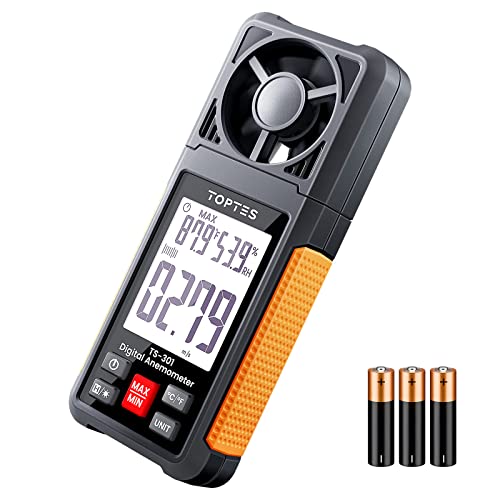
- Large backlit 2.26-inch display
- Six wind-speed measurement units
- Measures temperature and humidity
Best For: Portable home airflow and outdoor wind checks
Best Compact Weather Station
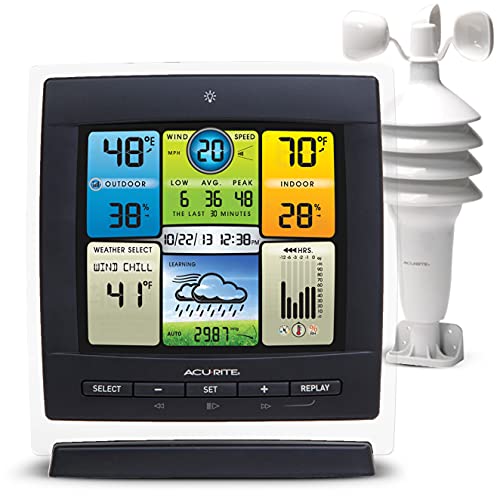
- Wireless indoor and outdoor readings
- Color display with adjustable dimmer
- Includes 12-hour hyperlocal forecasting
Best For: At-a-glance household weather monitoring
Best for HVAC Airflow

- Measures speed in five units
- Includes wind temperature and wind chill
- Tripod mount supports hands-free testing
Best For: Checking home vents, ducts, and airflow
Best Full-Feature Station
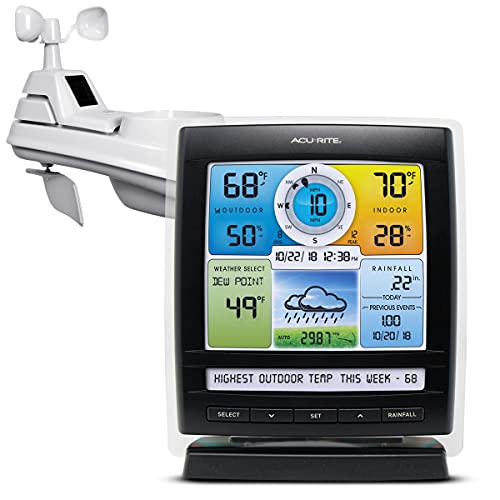
- Monitors wind speed and direction
- Provides over 55 weather data points
- Includes rainfall and personalized forecasting
Best For: Comprehensive home and garden weather tracking
Best for Easy Setup
HoldPeak 866B Digital Anemometer

- Measures wind speed, temperature, and wind chill
- Supports max, min, and average readings
- Includes tripod mount, pouch, batteries, and backlight
Best For: Portable home, outdoor, and basic HVAC measurements
Best Connected Station
Urageuxy WiFi Weather Station Anemometer
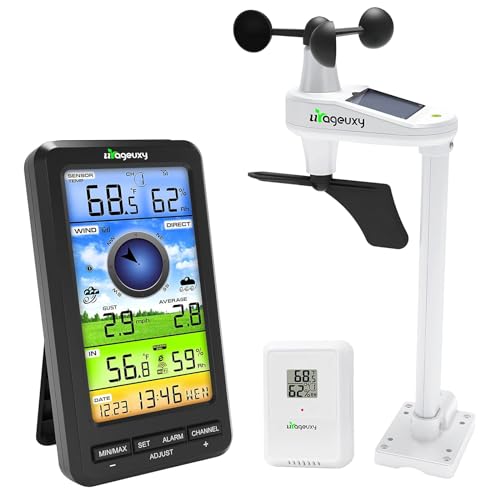
- Monitors wind speed, direction, temperature, and humidity
- Syncs data to supported weather websites over Wi-Fi
- Includes a 5-inch color display and weather alarms
Best For: Continuous home and garden weather monitoring
Best for HVAC
testo 405i Bluetooth Anemometer

- Measures air velocity, temperature, and in-duct airflow
- Extends to 15 inches for hard-to-reach ducts
- Connects to an app for graphs, storage, and reports
Best For: Home HVAC inspections and documented airflow testing
Versatile Home Airflow Pick
Mcbazel 3-in-1 Digital Anemometer

- Measures wind speed, temperature, and Beaufort level
- Offers multiple units plus MAX/MIN/AVG readings
- Backlit display shows speed and temperature together
Best For: Home HVAC checks and general indoor-outdoor measurements
Compact Wind-Chill Meter
BTMETER BT-816B Handheld Anemometer

- Measures wind speed, temperature, and wind chill
- Supports current, maximum, and average modes
- Lightweight 53 g body with backlit LCD
Best For: Portable home HVAC and outdoor spot checks
Pocket-Friendly Home Pick
Wintact WT816 Digital Anemometer
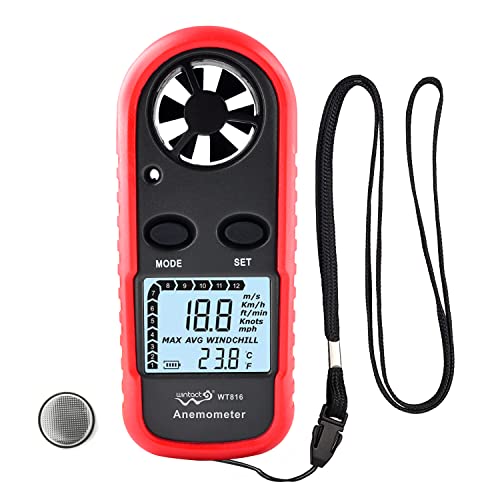
- Measures wind speed, wind chill, and air temperature
- Pocket-size 47 g design with rubber protective jacket
- Includes battery, data hold, backlight, and Beaufort scale
Best For: Lightweight home HVAC and occasional outdoor readings
Best Handheld Pick – TopTes TS-301
The TopTes TS-301 is a practical choice among anemometers for home use when you want quick, portable readings. Its large backlit display, six wind-speed units, and added temperature and humidity measurements make it useful for checking outdoor conditions or indoor airflow.
Best For: Homeowners and hobbyists who want a compact, easy-to-read meter for HVAC checks, vents, weather observations, and outdoor activities.
Pros:
- Large 2.26-inch backlit LCD screen is easy to read.
- Measures wind speed in six units, including mph, knots, and m/s.
- Also measures relative humidity and temperature.
- Includes three AAA batteries and a carry pouch.
Cons:
- Temperature and humidity sensors may need at least 30 minutes to adjust to a new environment.
- Automatic shutoff occurs after 10 minutes of inactivity.
Choose the TS-301 if portability and simple, readable measurements matter more than weather-station-style monitoring. It offers a useful combination of wind, temperature, and humidity readings in a pocket-friendly format.
Best Compact Weather Station – AcuRite Notos Weather Station
The AcuRite Notos is a strong option among anemometers for home use if you prefer ongoing readings on a dedicated color display. Instead of measuring wind speed by hand, it wirelessly reports indoor and outdoor conditions while adding humidity, pressure trends, and a 12-hour personalized forecast.
Best For: Homes and offices that want a convenient display for continuous wind speed, temperature, humidity, and weather-trend monitoring.
Pros:
- Displays indoor and outdoor temperature, humidity, wind speed, and pressure trends.
- Provides a hyperlocal forecast covering the next 12 hours.
- Color LCD has an adjustable dimmer for flexible placement.
- Includes wireless outdoor equipment and pole-mount hardware.
Cons:
- It is a larger, stationary weather station rather than a pocket handheld meter.
- The outdoor sensor requires mounting for setup.
The Notos makes sense for buyers who want wind information available at a glance inside the home. Its historical data and additional weather readings provide more context than a basic handheld anemometer.
Best for HVAC Airflow – BTMETER BT-100
The BTMETER BT-100 is one of the more task-focused anemometers for home use, particularly for checking vents and duct airflow. It measures wind speed across five units, includes wind temperature and wind chill readings, and offers a tripod mount for hands-free testing.
Best For: DIY HVAC checks, duct and vent measurements, and homeowners who need a portable meter with a tripod option.
Pros:
- Measures air speed from 0.67 to 67.1 mph with stated accuracy of plus or minus 2% of readings.
- Supports five wind-speed units and Celsius/Fahrenheit temperature readings.
- Includes wind temperature, wind chill, and a backlit LCD.
- Tripod hole enables continuous hands-free measurements.
Cons:
- Wind temperature range is limited to 14°F to 113°F.
- Its included batteries are AAA, with only two supplied.
The BT-100 is a sensible pick when airflow testing is the priority. Its tripod thread and low-airflow sensitivity add flexibility for HVAC work, while the case and compact design make storage and transport straightforward.
Best Full-Feature Station – AcuRite Iris Weather Station
The AcuRite Iris is designed for buyers who want more than occasional wind readings from their anemometers for home use. Its wireless sensor reports wind speed and direction alongside rainfall, temperature, humidity, barometric pressure, and more than 55 data points on a large color screen.
Best For: Gardens, homes, and offices that need broad, ongoing weather monitoring with historical information and a built-in clock.
Pros:
- Reports wind speed and direction wirelessly in real time.
- Tracks more than 55 weather data points, including rainfall and dew point.
- Large color LCD shows readings, time, and date with adjustable brightness.
- Uses pressure and elevation data to provide a personalized 12-hour forecast.
Cons:
- Requires outdoor sensor installation on a pole or post.
- Its broad feature set makes it less portable than a handheld anemometer.
- The listed lower temperature rating is 32°F.
The Iris is the better fit when wind speed is only one part of your home-weather picture. It provides a substantial set of current and historical measurements, making it useful for routine garden and household observation.
Best for Easy Setup – HoldPeak 866B Digital Anemometer
For shoppers comparing anemometers for home use, the HoldPeak 866B is a versatile handheld option for checking outdoor wind, HVAC airflow, and temperature. It measures wind speeds from 0.67 to 67.1 mph with stated accuracy of ±2% of readings and supports several measurement units.
Best For: Homeowners, outdoor enthusiasts, and DIY HVAC checks that benefit from a portable meter.
Pros:
- Measures wind speed, wind chill, and temperature.
- Offers maximum, minimum, and average wind-speed readings.
- Includes a tripod hole, hand strap, backlight, batteries, and carrying pouch.
- Can help with low-airflow and duct measurements for CFM calculations.
Cons:
- Requires manual positioning and reading rather than continuous remote monitoring.
- CFM calculations require the user to provide the duct cross-sectional area.
The 866B is a practical choice when you want one compact instrument for occasional home, outdoor, and basic airflow measurements. Its included accessories also make storage and transport straightforward.
Best Connected Station – Urageuxy WiFi Weather Station Anemometer
The Urageuxy combines an anemometer with a complete wireless weather station, making it a strong option for anemometers for home use when you want ongoing readings rather than a handheld check. Its outdoor sensor measures wind speed and direction while the console also tracks indoor and outdoor temperature and humidity.
Best For: Homes, gardens, offices, farms, and other spaces that need continuous local weather monitoring with Wi-Fi access.
Pros:
- Tracks wind speed, wind direction, temperature, and humidity.
- Uploads data through 2.4 GHz Wi-Fi to supported weather platforms.
- Uses a 5-inch color display with adjustable brightness.
- Supports min/max records, alarms, calibration, and additional remote sensors.
Cons:
- Requires an electrical adapter and six AAA batteries.
- Wi-Fi features depend on a compatible 2.4 GHz router and setup.
- Additional remote thermo-hygro sensors are not included.
Choose this model if you want a permanent household weather setup with both on-site display and online data access. It is less suited to quick, one-off measurements than a handheld meter.
Best for HVAC – testo 405i Bluetooth Anemometer
For precise indoor airflow work, the testo 405i is one of the more specialized anemometers for home use. Its hot-wire sensor measures air velocity, temperature, and in-duct airflow, while the extendable shaft reaches up to 15 inches for vents and confined duct spaces.
Best For: Home HVAC inspections, air-conditioning servicing, and users who want app-based measurement records.
Pros:
- Measures air velocity, temperature, and in-duct airflow.
- Calculates volume flow when duct dimensions are entered.
- 15-inch telescopic shaft helps reach ducts, vents, and tight spaces.
- Bluetooth and the Smart Probe App support remote readings, graphs, storage, and reports.
Cons:
- Its HVAC-focused design may be more specialized than needed for basic outdoor wind checks.
- App operation requires a compatible smartphone or tablet.
- It has a stated response time of five seconds.
The testo 405i is the best fit when airflow documentation and access to recessed HVAC locations matter. Its Bluetooth workflow adds convenience for service work, though casual users may prefer a simpler standalone meter.
Versatile Home Airflow Pick – Mcbazel 3-in-1 Digital Anemometer
For shoppers comparing anemometers for home use, the Mcbazel 3-in-1 combines wind speed, temperature, and Beaufort scale readings in one handheld device. Its backlit display and multiple measurement modes make it practical for checking indoor airflow, HVAC performance, and outdoor conditions.
Best For: Home HVAC checks and users who want wind speed, temperature, and Beaufort readings together.
Pros:
- Measures wind speed, wind temperature, and Beaufort level.
- Supports m/s, km/h, knots, ft/s, and mph.
- Displays speed and temperature together with MAX/MIN/AVG and data hold functions.
- Backlight, low-battery indicator, and auto power-off support convenient use.
Cons:
- AAA batteries are required but not included.
- Its 100 g handheld design is less pocket-focused than the smallest meters.
The Mcbazel is a well-rounded choice when home measurements involve more than wind speed alone. It offers useful monitoring features without requiring a separate thermometer or Beaufort reference.
Compact Wind-Chill Meter – BTMETER BT-816B Handheld Anemometer
The BTMETER BT-816B is a compact option among anemometers for home use, especially when you want wind speed, temperature, and wind chill in one reading. Its backlit LCD, lightweight body, and current, maximum, and average modes suit quick checks around the house or outdoors.
Best For: Portable HVAC, outdoor, and home airflow checks where wind chill information is useful.
Pros:
- Measures wind speed from 0.3 to 30 m/s with stated accuracy of ±5% of reading.
- Provides real-time temperature and wind-chill measurements.
- Includes current, maximum, and average modes with selectable units.
- Lightweight 53 g design includes a backlit LCD and lanyard.
Cons:
- Its temperature range is limited to -14°F to 113°F.
- The supplied notes do not mention a protective case.
Choose the BT-816B if portability and wind-chill data matter more than a larger display or broader feature set. The small form factor makes it convenient to keep nearby for repeated spot checks.
Pocket-Friendly Home Pick – Wintact WT816 Digital Anemometer
The Wintact WT816 is a pocket-size choice for anemometers for home use, offering wind speed, wind chill, and air-temperature readings in a compact package. Its rubber jacket, backlit screen, and included CR2032 battery make it ready for convenient indoor or outdoor spot measurements.
Best For: Home users who want a lightweight meter for HVAC checks and occasional outdoor readings.
Pros:
- Measures wind speed from 0 to 30 m/s or 0 to 65 mph with ±5% accuracy.
- Displays wind chill and air temperature from 14°F to 113°F.
- Supports multiple units, Beaufort scale, and current, maximum, and average readings.
- Includes a CR2032 battery, backlight, data hold, and rubber protective jacket.
Cons:
- Its temperature range does not extend below 14°F.
- The compact display may provide less viewing space than larger handheld meters.
The WT816 stands out for easy carrying and straightforward everyday monitoring. It is a practical fit when you want a small, protected meter that can move between home HVAC checks and outdoor activities.
How We Picked the Best Anemometers for Home Use
We focused on the features that matter most outside professional field work: useful wind-speed ranges, readable displays, straightforward controls, portability, and measurement flexibility. The selection includes dedicated handheld anemometers for quick spot checks, models with airflow and temperature functions, and weather stations that continuously monitor outdoor conditions.
We also considered the type of measurement each product supports. A handheld meter is usually the simplest choice for checking a fan, vent, breeze, or drone launch conditions. A wireless weather station is better for ongoing outdoor monitoring, especially when wind speed and direction need to be viewed alongside temperature, humidity, and barometric data.
Quick Comparison
- Best for simple spot checks: Compact handheld meters such as the TopTes TS-301, HoldPeak 866B, Mcbazel 3-in-1, and Wintact models.
- Best for HVAC and airflow work: The testo 405i and BTMETER BT-100, which add airflow-related readings and features useful around ducts and vents.
- Best for continuous weather monitoring: AcuRite Notos, AcuRite Iris, and the Urageuxy wireless station.
- Best for a broad wind-speed range: The BTMETER BT-816B is designed for readings up to 67 mph, while several other handheld options reach roughly 65 mph.
Key Buying Factors for Anemometers for Home Use
Measurement Type and Range
Check whether you need wind speed only or also airflow, temperature, wind chill, and wind direction. For normal backyard use, a moderate range is generally sufficient. Higher ranges are more useful for exposed properties, storm preparation, model aircraft, and demanding outdoor activities.
Handheld Meter or Weather Station
Handheld anemometers provide readings when and where you need them, and they are typically compact and affordable. Weather stations use a mounted outdoor sensor and indoor display, making them better for continuous tracking. They require more setup space and may need batteries, solar charging, or wireless pairing.
Display, Controls, and Portability
A backlit screen is valuable in garages, attics, outdoors, and other dim areas. Look for clear units, simple buttons, and a design that is comfortable to hold. A compact meter is easier to keep in a toolbox, vehicle, or sailing bag.
Airflow and HVAC Features
If you plan to test registers, exhaust fans, or ductwork, choose a model that measures airflow in CFM or supports temperature readings. An extendable probe, such as the one on the testo 405i, can help reach confined or in-duct locations.
Who Should Buy Which Anemometers for Home Use?
Choose a basic handheld model if you want quick readings for gardening, weather observation, ventilation, or outdoor hobbies. Choose an HVAC-focused meter if airflow volume, temperature, or duct access is central to your projects. Choose a wireless weather station if you want an always-on view of wind conditions and broader indoor and outdoor weather data.
Before buying, confirm the stated units, maximum range, power requirements, sensor placement, and whether the display or app provides the information you actually need. For most households, a readable handheld meter offers the best value; frequent weather watchers may benefit more from a complete station.