
Choosing a 3D scanner for reverse engineering comes down to more than raw resolution. Accuracy, tracking stability, object size range, and workflow speed all affect how cleanly you can turn real parts into usable digital models.
This roundup highlights 10 strong options for engineers, product designers, makers, and inspection-focused users who want dependable scans for CAD, fitting, and redesign work.
Best 10 3d Scanner for Reverse Engineering Picks for 2026
Professional Multi-Range Laser Scanner
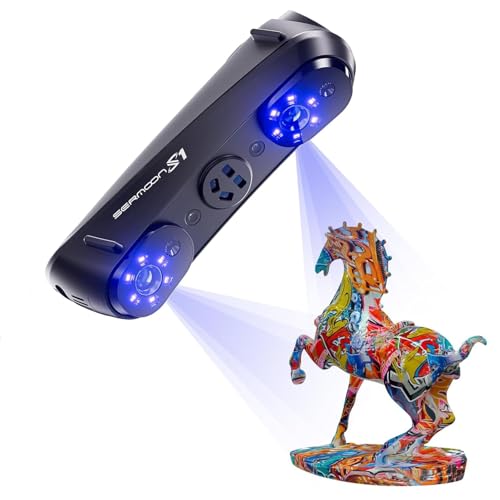
- 5 mm to 4000 mm scan range
- 0.02 mm accuracy for detailed reverse engineering
- Triple laser modes for holes, edges, and large parts
Best For: Engineers who need one scanner for tiny parts and large objects
All-in-One Photogrammetry Scanner

- Photogrammetric kit for large-object measurement
- 0.04 mm single-point cloud accuracy
- Portable body with Wi-Fi 6 and USB-C
Best For: Portable scanning with photogrammetric metrology and color capture
Metrology Laser Desktop Scanner

- Up to 0.02 mm accuracy and 0.01 mm precision
- Auto Turntable mode for automated desktop scans
- Handles dark or shiny parts with blue laser
Best For: Desktop reverse engineering and inspection with automated scanning
Fast Dual-Mode Handheld Scanner

- Blue laser and NIR in one handheld scanner
- 0.02 mm accuracy with 60 fps blue-light mode
- Covers objects from 5 mm to 2000 mm
Best For: Handheld reverse engineering across small and large objects
Large-Object Capture
Revopoint RANGE 2 for big scans

- Up to 0.1 mm single-frame precision
- 60% bigger capture area for large objects
- Wi-Fi 6 and USB-C connection options
Best For: Large-object reverse engineering, vehicles, furniture, and body scans
Industrial Detail
Revopoint MetroY Ultra for tight tolerances

- Up to 0.01 mm single-frame precision
- Five modes for small to medium parts
- No-spray scanning for dark or shiny surfaces
Best For: Tight-tolerance reverse engineering and industrial inspection
High-Speed Hybrid

- Up to 0.02 mm accuracy and 660,000 points/sec
- Handles 5 mm to 4000 mm objects
- Scans black, metallic, and some transparent surfaces without spray
Best For: Mixed-size reverse engineering and difficult materials
Ultra-Precision Reverse Engineering
Revopoint MetroY Blue Laser Scanner

- Up to 0.01 mm resolution and 0.02 mm accuracy
- Three scan modes for surfaces, detail, and deep holes
- No spray needed on shiny or dark surfaces
Best For: High-accuracy reverse engineering and metrology work
Portable Scan-to-CAD Pick
Revopoint POP 3 Plus Full-Color Scanner
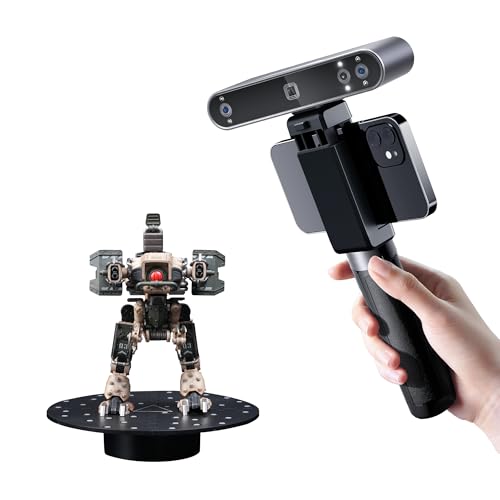
- 20% more accuracy with 20-micron calibration
- Lightweight 190g body with Wi-Fi 6 and USB-C
- Full-color scans and optical zoom for more detail
Best For: Portable reverse engineering and scan-to-CAD work
Outdoor-Friendly Value
Revopoint INSPIRE 2 Structured Light Scanner

- Up to 0.05 mm accuracy with 0.03 mm precision
- Outdoor scanning up to 20,000 lux
- Spray-free capture plus RGB texture mapping
Best For: Portable outdoor scanning and mixed-material reverse engineering
Professional Multi-Range Laser Scanner – Creality Sermoon S1
If you want a 3d scanner for reverse engineering that can move from tiny parts to very large assemblies, the Creality Sermoon S1 is built for that kind of workflow. Its 5 mm to 4000 mm scan range, triple blue laser modes, and 0.02 mm accuracy make it a strong fit for engineering capture, inspection, and scan-to-CAD work.
Best For: Engineers and makers who need one scanner for small precision parts, industrial components, and large objects.
Pros:
- Triple laser setup includes 34 crossed lines, 7 parallel lines, and single-line mode for deep holes and grooves
- Up to 0.02 mm accuracy and 0.08 mm/m volumetric precision support reverse engineering and quality inspection
- 90 FPS scanning helps capture larger datasets faster with less rescanning
- Marker-free scanning and AI-assisted software simplify setup and cleanup
Cons:
- Recommended system specs are fairly demanding, especially for Windows workflows
- Best performance depends on compatible hardware and enough RAM
Overall, the Sermoon S1 stands out if you need broad coverage without sacrificing precision on detailed parts. It is especially appealing when your reverse engineering projects vary a lot in size and complexity.
All-in-One Photogrammetry Scanner – Revopoint MIRACO Plus
The Revopoint MIRACO Plus is a practical 3d scanner for reverse engineering when you want high-detail capture plus photogrammetric metrology in one portable unit. Its 0.04 mm single-point cloud accuracy, hybrid capture tools, and Revo Design compatibility make it useful for measuring and converting scans into CAD-ready data.
Best For: Users who need portable all-in-one scanning with photogrammetry support for detailed measurement work.
Pros:
- Photogrammetric kit supports accurate capture on large objects with coded targets and scale bars
- Quad depth camera system handles small parts in Near mode and large surfaces in Far mode
- 48MP RGB camera and flash LEDs improve color capture and model realism
- Lightweight design, Wi-Fi 6, USB-C, and long battery life support field use
Cons:
- Revo Design for scan-to-CAD is sold separately
- Software compatibility is limited to x86_64 systems, so it may not fit every computer setup
For users balancing portability, color capture, and measurement support, the MIRACO Plus offers a flexible workflow. It is especially appealing when projects include both small detail work and larger objects that benefit from photogrammetric accuracy.
Metrology Laser Desktop Scanner – Revopoint MetroX
The Revopoint MetroX is aimed at buyers who need a 3d scanner for reverse engineering with metrology-style detail and desktop automation. With up to 0.02 mm accuracy, 0.01 mm precision, and blue laser scanning that handles dark or shiny surfaces, it is built for inspection, CAD workflows, and repeatable part capture.
Best For: Users who want high-precision desktop scanning with automated turntable workflows.
Pros:
- Blue laser system reaches up to 0.02 mm accuracy and 0.01 mm precision
- Auto Turntable mode automates scanning for quick, repeatable desktop workflows
- Can scan dark or shiny surfaces without needing spray in many cases
- Multiple tracking modes support feature-rich, plain, and complex objects
Cons:
- USB 3.0 connection is required for best performance
- Software is only compatible with x86_64 architecture
The MetroX is a strong choice if your reverse engineering work benefits from consistent, desktop-based scanning and high metrology detail. Its automated mode and surface flexibility make it especially useful for parts, molds, and inspection tasks.
Fast Dual-Mode Handheld Scanner – Creality CR-Scan Raptor
The Creality CR-Scan Raptor is a compact 3d scanner for reverse engineering that combines blue laser and NIR scanning in one handheld unit. With 0.02 mm accuracy, 60 fps blue-light scanning, and support for objects from 5 mm to 2000 mm, it is designed for users who need both detail and flexibility.
Best For: Users who want a handheld scanner for small precision parts and larger objects with marker-free options.
Pros:
- 2-in-1 blue light and NIR scanning covers both high-precision and marker-free workflows
- 7 parallel blue laser lines are thin enough to capture sharp edges and fine detail
- Up to 60 fps scanning in blue mode helps speed up capture
- Supports a wide size range from very small parts to large objects
Cons:
- Requires relatively strong PCs for Windows and macOS use
- Marker-based workflows may still be needed for some precision scans
The CR-Scan Raptor is a versatile option if you need fast handheld capture without giving up fine-detail performance. It fits well in reverse engineering setups where you alternate between mechanical parts, bodies, and medium-to-large objects.
Large-Object Capture – Revopoint RANGE 2 for big scans
If you need a 3d scanner for reverse engineering large parts, the Revopoint RANGE 2 is built for scanning cars, furniture, machinery, and even full bodies with less effort. Its larger capture area, up to 0.1 mm single-frame precision, and IMU stabilization make it a practical choice when you want cleaner data from bigger subjects.
Best For: Reverse engineering large objects, vehicles, furniture, and body scans where portability matters.
Pros:
- Up to 0.1 mm single-frame precision for accurate large-object capture
- 60% bigger capture area and 400 mm to 1300 mm scanning distance
- Up to 16 fps scanning and full body/face scans in under 90 seconds
- Wi-Fi 6 support for mobile scanning and flexible setup
Cons:
- Revo Design scan-to-CAD software is sold separately
- Revo Design is Windows-only and requires x86_64 architecture
- Best suited to larger subjects rather than tiny precision parts
Overall, RANGE 2 fits buyers who value speed, ease of use, and broad compatibility when digitizing larger real-world objects. It is a solid scan-to-model option, especially if your reverse engineering workflow starts with large, awkward, or mobile subjects.
Industrial Detail – Revopoint MetroY Ultra for tight tolerances
The Revopoint MetroY Ultra is a strong 3d scanner for reverse engineering when your priority is fine detail and measurement-grade results. With up to 0.01 mm single-frame precision, blue laser modes, and support for dark or shiny surfaces without spray, it is aimed at industrial parts and inspection workflows.
Best For: Small to medium parts, tight-tolerance reverse engineering, and industrial inspection.
Pros:
- Up to 0.01 mm single-frame precision and 0.015 + 0.04 mm x L volumetric accuracy
- Five scanning modes, including laser lines, single-line, structured light, and turntable scanning
- Can scan black, glossy, and metallic parts without spray
- Works outdoors up to 100,000 lux and includes Wi-Fi 6 support
Cons:
- Higher system requirements than simpler consumer scanners
- Best for small to medium objects rather than very large scenes
- Requires compatible hardware for top scanning speed
MetroY Ultra is the most precision-focused option here, especially if you need detailed scans for inspection or scan-to-CAD work. Its combination of laser modes, no-spray scanning, and outdoor usability makes it a versatile pick for serious technical users.
High-Speed Hybrid – Creality CR-Scan Raptor Pro
If you want a 3d scanner for reverse engineering that covers tiny parts, large objects, and challenging materials, the Creality CR-Scan Raptor Pro is built to do all three. Its 22 crossed blue lasers, 7 parallel lasers, and NIR mode make it a flexible choice for users who need both speed and detail in one handheld scanner.
Best For: Mixed-size reverse engineering, fast handheld scanning, and difficult materials like black or metallic surfaces.
Pros:
- Up to 0.02 mm accuracy with 660,000 points per second capture
- Scans objects from 5 mm to 4000 mm, including body and face scans
- No spray powder needed for black, metallic, and some transparent surfaces
- 24-bit RGB camera and broad software compatibility with professional tools
Cons:
- Best performance depends on matching the right mode to the job
- Higher-end workflow may require capable Windows or Mac hardware
- Wireless scanning and outdoor use depend on the supported setup and conditions
Raptor Pro stands out for buyers who want one scanner that can handle a wide range of reverse engineering tasks without constant prep work. It blends precision, speed, and material flexibility in a way that should appeal to technical users moving between shop floor and field work.
Ultra-Precision Reverse Engineering – Revopoint MetroY Blue Laser Scanner
If you need a 3d scanner for reverse engineering with true metrology-minded performance, the Revopoint MetroY is built for high-detail capture on parts that demand precision. Its blue laser setup, multi-line scanning modes, and spray-free performance on shiny or dark surfaces make it a strong fit for accurate scan-to-CAD workflows.
Best For: Engineers, product designers, and makers who need highly accurate scans for reverse engineering, metrology, and 3D printing.
Pros:
- Up to 0.01 mm resolution and up to 0.02 mm accuracy for fine-detail capture
- Three scan modes, including single-line mode for deep holes and 30-line cross laser for faster surface coverage
- No scanning spray needed, even on shiny and dark surfaces
- Wi-Fi 6 streaming plus Revo Metro software with export paths to Revo Measure and Revo Design
Cons:
- Revo Design and Revo Measure are paid software sold separately
- Revo Design supports Windows only
- Best suited to users who need precision more than portability
The MetroY stands out when accuracy and workflow flexibility matter more than casual scanning convenience. If your reverse engineering work depends on detailed geometry and reliable measurement data, this is the most technically capable option in the group.
Portable Scan-to-CAD Pick – Revopoint POP 3 Plus Full-Color Scanner
The Revopoint POP 3 Plus is a practical 3d scanner for reverse engineering when you want a lightweight, portable system that still delivers detailed scans. It adds optical zoom, stable frame capture, and full-color output, making it a versatile choice for product work, 3D printing, and CAD conversion.
Best For: Users who want a lightweight scanner for medium-sized objects, scan-to-CAD projects, and color capture.
Pros:
- 20% more accuracy and calibration within 20 microns
- Optical zoom with 1.5x and 2x magnification for more point cloud detail
- Lightweight 190g design with Wi-Fi 6 and USB-C connectivity
- Free Revo Scan software plus Revo Design support for scan-to-CAD workflows
Cons:
- Resolution is lower than the MetroY, at 0.05 mm fused point distance
- Revo Scan is only compatible with x86_64 architecture
- Revo Design is sold separately and supports Windows only
The POP 3 Plus is the most balanced pick if you want mobility, color capture, and easy software support for reverse engineering. It is especially appealing for medium-sized objects and users who value an easier setup over maximum industrial-grade precision.
Outdoor-Friendly Value – Revopoint INSPIRE 2 Structured Light Scanner
The Revopoint INSPIRE 2 is a flexible 3d scanner for reverse engineering if you need a lightweight unit that can handle different environments, including outdoor scanning. Its dual scanning modules, spray-free capture on difficult surfaces, and built-in RGB color support make it a practical option for detailed modeling and CAD prep.
Best For: Users who need a portable scanner for outdoor use, mixed materials, and reverse engineering workflows.
Pros:
- Up to 0.05 mm accuracy and 0.03 mm precision for detailed models
- Scans reflective or dark surfaces without scanning spray
- Works outdoors in lighting up to 20,000 lux
- Wi-Fi 6 mobile scanning, RGB texture capture, and one-click import to Revo Design
Cons:
- Not as precise as the MetroY for the most demanding metrology tasks
- Revo Design is paid software sold separately and supports Windows only
- Color and portability are emphasized more than top-end scan resolution
INSPIRE 2 is a strong middle-ground choice when you need flexibility instead of maximum lab-grade accuracy. For outdoor jobs, mixed materials, and quick scan-to-CAD workflows, it offers a well-rounded feature set.
How We Picked the Best 3d Scanner for Reverse Engineering
For a 3d Scanner for Reverse Engineering, we prioritized accuracy claims, scan-range flexibility, tracking reliability, and support for both small detail work and larger parts. We also favored scanners that are practical to use in real projects, not just impressive on a spec sheet.
We looked for models that can help users capture geometry cleanly enough for modeling, measurement, and downstream CAD work, while still offering a reasonable learning curve and useful scanning modes.
Quick Comparison
In general, blue-laser handheld scanners tend to be the strongest choice for precision parts and mechanical components. All-in-one and color-focused models are often easier for general use, while larger-range scanners are better when the object size grows beyond typical handheld targets.
If your work involves small brackets, housings, tooling, or replacement parts, precision and tracking matter most. If you scan furniture, body panels, statues, or larger assemblies, range and workflow speed become more important than the last bit of micro-detail.
Key Buying Factors for a 3d Scanner for Reverse Engineering
Accuracy and Repeatability
Look for the best stated accuracy you can realistically afford, but also pay attention to repeatability and tracking. A scanner that is theoretically precise but loses alignment easily can create more cleanup work than it saves.
Object Size Range
Make sure the scanner matches the parts you reverse engineer most often. Smaller scan ranges are better for compact mechanical parts, while larger-range scanners are more practical for assemblies and oversized objects.
Lighting and Surface Handling
Reflective, dark, and featureless surfaces can be difficult. Blue laser systems often handle demanding surfaces better than basic structured-light setups, though matte spray and good scan prep can still improve results across the board.
Software and Export Workflow
Reverse engineering work depends on clean mesh output, alignment tools, and export support that fits your CAD pipeline. A smooth software experience can matter just as much as scanner specs if you need to move quickly from scan to model.
Who Should Buy Which 3d Scanner for Reverse Engineering?
If you need high-precision capture for engineering parts, choose a scanner with strong accuracy and laser-based tracking. If you want a more flexible everyday option for mixed-size projects, look for a balanced handheld model with multiple scan modes.
Users focused on large objects should lean toward scanners built for broader scan coverage, while buyers who value simplicity may prefer an all-in-one device with fewer setup steps. The best 3d Scanner for Reverse Engineering is the one that fits your part size, tolerances, and workflow—not just the one with the longest feature list.