
Choosing a 3D scanner for jewelry means balancing tiny-detail accuracy, surface capture, ease of use, and workflow speed. The best options can handle rings, pendants, settings, and small decorative pieces without losing edges or texture.
Below, we focus on scanners that make sense for jewelry work, whether you need high precision for reverse engineering or a smoother path to modeling and archiving.
Best 10 3d Scanner for Jewelry Picks for 2026
Industrial Precision Pick
Revopoint MetroX Pro 3D Scanner

- 0.01mm precision for fine detail
- Blue laser with 4 scanning modes
- Full color scan on Win/macOS
Best For: Advanced jewelry and reverse-engineering scans
All-Computer Studio Choice
Matter and Form Three 3D Scanner

- 33 micron accuracy for small details
- Autofocus 13MP cameras
- No tracking dots; color scanning
Best For: Precise studio scanning on any computer
Portable Value Pick
3DMakerpro Moose Lite Premium Kit

- 0.05mm accuracy, 0.10mm resolution
- AI visual tracking with JMStudio
- 15mm to 1500mm scan range
Best For: Portable small-object scanning and jewelry work
Fast Scan Leader
Creality CR-Scan Raptor 3D Scanner
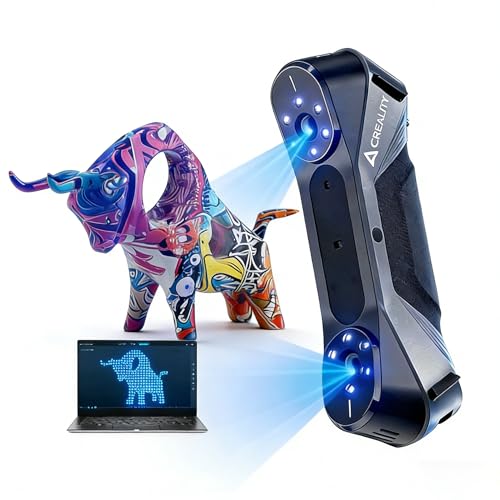
- 60fps blue and NIR scanning
- 0.02mm accuracy with anti-shake
- 24-bit color on Win/Mac
Best For: Fast, detailed scans with color support
Entry-Level Versatility
3DMakerpro Fox Medium-Format Handheld Scanner

- Markerless AI visual tracking
- 10FPS fast scanning
- 0.07mm accuracy
Best For: Makers and small businesses needing an easy handheld all-rounder
Fine-Detail Pick
Revopoint MINI 2 Full-Color Scanner
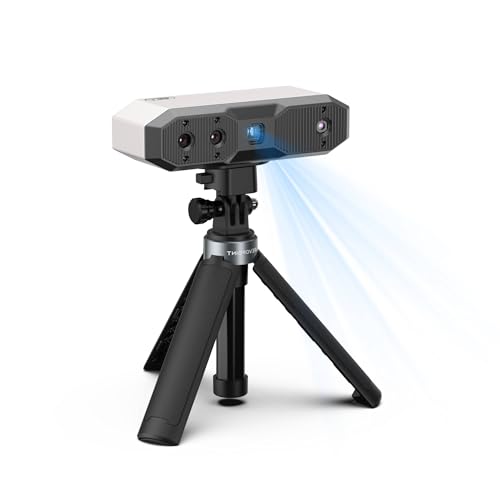
- Up to 0.02mm precision
- Blue light for finer detail capture
- RGB texture and color scanning
Best For: Small, intricate items where precision and texture matter
Budget Detail Scanner
3DMakerpro Seal Lite Small-Format Scanner

- 0.02mm accuracy
- Small-format objects from 10 to 300mm
- Mono texture with anti-shake support
Best For: Indoor scanning of small objects with fine surface detail
Precision Portable Scanner
Revopoint POP3 Plus for Detailed Work
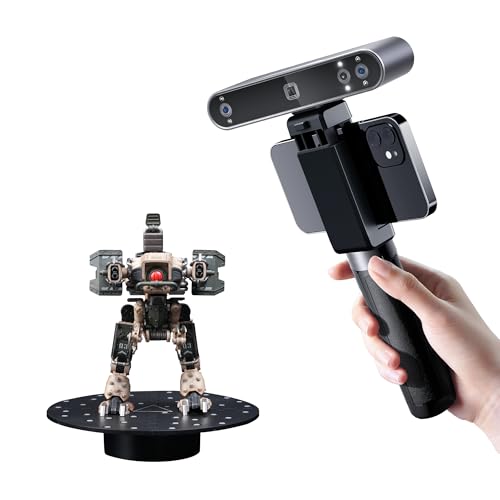
- 20-micron accuracy with refreshed calibration
- 1.5x and 2x optical zoom for finer point-cloud detail
- Full-color capture with Wi‑Fi 6 and USB-C
Best For: Portable small-object scanning with color capture and scan-to-CAD support
High-Speed Detail Scanner

- 0.02mm accuracy with blue laser scanning
- 60fps capture and marker-free scanning support
- 24-bit full-color texture with dual lighting
Best For: Fast, detailed handheld scanning across small to large objects
Outdoor-Ready Scanner
Revopoint INSPIRE 2 for Flexible Capture

- 0.05mm accuracy with 0.03mm precision
- 11 infrared laser lines for reflective or dark surfaces
- WiFi 6 wireless capture with full-color texture
Best For: Flexible mobile scanning where surface challenges and portability matter
Industrial Precision Pick – Revopoint MetroX Pro 3D Scanner
If you need a 3d scanner for jewelry that leans toward high precision and clean detail capture, the Revopoint MetroX Pro is built for demanding scanning workflows. Its blue laser scanning, 0.01mm precision, and four scanning modes make it a strong fit when accuracy matters more than speed alone.
Best For: Jewelry makers and advanced users who want industrial-grade precision for detailed objects and reverse engineering.
Pros:
- 0.01mm precision for highly detailed scanning
- Blue laser scan plus four scanning modes for different jobs
- Full color scan support for more complete captures
- Works with Windows and macOS
Cons:
- Designed for advanced use rather than casual scanning
- May be more scanner than needed for simple projects
The MetroX Pro stands out if your priority is fine-detail capture and flexible scanning options. For jewelry-related work, its precision-focused feature set makes it a practical choice when model fidelity is the main goal.
All-Computer Studio Choice – Matter and Form Three 3D Scanner
For buyers shopping for a 3d scanner for jewelry, the Matter and Form Three focuses on precision, easy setup, and broad compatibility. It offers 33 micron accuracy, autofocus 13MP cameras, and does not require tracking dots, which helps streamline scanning small, detailed objects.
Best For: Users who want a precise, color-capable scanner that works across every computer and OS.
Pros:
- 33 micron accuracy for detailed captures
- Autofocus 13MP cameras help simplify scanning
- No tracking dots needed
- Compatible with every computer and OS
Cons:
- Not presented as a handheld option
- May be more suited to studio-style workflows than mobile use
This model is appealing if you want a jewelry-friendly scanner that keeps the process straightforward while still delivering high accuracy. Its universal compatibility and no-dot workflow make it a strong pick for mixed-device workspaces.
Portable Value Pick – 3DMakerpro Moose Lite Premium Kit
If you want a 3d scanner for jewelry that balances portability and fine-detail capture, the 3DMakerpro Moose Lite Premium Kit is worth a close look. It uses blue light technology, AI visual tracking, and 0.05mm accuracy, with scan ranges from 15mm to 1500mm for a wide spread of object sizes.
Best For: Users who want a lightweight handheld scanner for detailed small-object scanning and flexible everyday use.
Pros:
- 0.05mm accuracy with 0.10mm resolution
- AI visual tracking and point-cloud processing
- Scan ranges from 15mm to 1500mm
- Lightweight design with no fan noise
Cons:
- Best fit depends on using JMStudio software
- Handheld workflow may take practice for tiny objects
The Moose Lite is a practical option if you want a portable scanner with strong detail capture and built-in software tools. Its small-object-friendly range makes it especially relevant when scanning jewelry or similarly compact items.
Fast Scan Leader – Creality CR-Scan Raptor 3D Scanner
For shoppers comparing a 3d scanner for jewelry, the Creality CR-Scan Raptor emphasizes speed, precision, and color capture. With 60fps blue and NIR scanning, 0.02mm accuracy, anti-shake support, and 24-bit color, it is built for quick, detailed scanning sessions on Windows and Mac.
Best For: Users who want fast, accurate scanning with color support for reverse engineering and detailed object capture.
Pros:
- 60fps blue and NIR scanning
- 0.02mm accuracy for detailed results
- Anti-shake support for steadier scanning
- 24-bit color and Win/Mac compatibility
Cons:
- Feature set may be more than basic users need
- Focused on speed and accuracy rather than simplicity
The CR-Scan Raptor is a strong pick when you want fast capture without giving up fine detail. For jewelry and other small objects, its accuracy and color support make it a compelling high-performance option.
Entry-Level Versatility – 3DMakerpro Fox Medium-Format Handheld Scanner
If you want a 3d scanner for jewelry that can also handle a wider range of small-to-medium objects, the 3DMakerpro Fox is built around speed and usable accuracy rather than ultra-specialized studio workflows. Its markerless AI visual tracking, 10FPS capture, and 0.07mm accuracy make it a practical option for users who want straightforward handheld scanning with less setup.
Best For: Makers and small businesses that want an entry-level handheld scanner for detailed objects without a complicated workflow.
Pros:
- Markerless AI visual tracking reduces setup time.
- 10FPS scanning helps capture objects efficiently.
- 0.07mm accuracy is suitable for detailed handheld scanning.
Cons:
- No color-scan feature is listed in the supplied notes.
- Accuracy is lower than the more jewelry-focused 0.02mm models here.
- Best suited to a broader medium-format use case, not the tiniest work.
Overall, the Fox is the most flexible pick in this group if you want a practical handheld scanner and can trade some precision for easier operation. It fits buyers who need a capable all-rounder more than a specialized fine-detail tool.
Fine-Detail Pick – Revopoint MINI 2 Full-Color Scanner
The Revopoint MINI 2 is a strong 3d scanner for jewelry if your priority is capturing tiny details and texture on small objects. Its industrial-grade blue light system delivers up to 0.02mm single-frame precision, and the larger single capture range plus RGB camera and Flash LEDs are designed to improve texture, color, and feature tracking.
Best For: Small, intricate items where precision and texture detail matter most.
Pros:
- Up to 0.02mm single-frame precision for fine detail.
- Blue light technology helps filter ambient light interference.
- RGB camera and Flash LEDs improve texture and feature capture.
- IMU, tactile buttons, USB-C, and Wi-Fi 6 support easier scanning.
Cons:
- Results may vary by material and color; scanning spray may help.
- Best for small items, not extremely large objects.
- Revo Design is sold separately and Windows-only.
For jewelry work, the MINI 2 stands out because it focuses on high precision, stable tracking, and better capture of texture and color details. If your scans need to preserve small surface features, this is the most specialized option in the lineup.
Budget Detail Scanner – 3DMakerpro Seal Lite Small-Format Scanner
If you need a 3d scanner for jewelry-style small objects and want strong detail capture, the 3DMakerpro Seal Lite is built around a blue LED light source and small-format scanning. It is designed for objects from 10 to 300mm, with 0.02mm accuracy and mono texture scanning for indoor use.
Best For: Indoor scanning of small objects where fine detail and edge texture matter.
Pros:
- 0.02mm accuracy with a blue LED structured light source.
- Supports small-format objects from 10 to 300mm.
- Scan-back and anti-shake features help stabilize results.
- JMStudio includes visual tracking, error correction, and auto-alignment.
Cons:
- Mono texture only, so it does not capture color.
- Indoor use is suggested.
- There is a learning curve and it needs a relatively powerful PC.
The Seal Lite is a strong choice if you want fine-detail scanning for small items and are comfortable working indoors with a bit of setup practice. It offers the kind of precision buyers often want for detailed object capture, without adding color-scanning complexity.
Precision Portable Scanner – Revopoint POP3 Plus for Detailed Work
If you want a 3d scanner for jewelry that balances portability with strong detail capture, the Revopoint POP3 Plus is built for compact objects and fine model work. Its refined accuracy, optical zoom, and full-color scanning make it a practical fit for jewelry pieces, especially when you need a lightweight scanner that can move easily between bench and studio workflows.
Best For: Jewelers and makers who want a compact, easy-to-use scanner for detailed small-object capture and scan-to-CAD workflows.
Pros:
- Up to 20 microns of accuracy with a new calibration board for more precise scans.
- Optical zoom at 1.5x and 2x helps capture more point-cloud detail on small subjects.
- Full-color RGB capture adds realistic texture data for presentation and archiving.
- Lightweight 190g design with Wi‑Fi 6 or USB-C connectivity for flexible use.
Cons:
- Revo Scan software is only compatible with x86_64 architecture.
- Best suited to medium-sized objects overall, so very tiny jewelry details may require careful setup.
The POP3 Plus is a strong all-around option if your priority is portability, color capture, and a straightforward path from scans to editable files. For jewelry-related work, its precision features matter most when you need repeatable detail without stepping up to a larger industrial system.
High-Speed Detail Scanner – Creality CR-Scan Raptor
For a 3d scanner for jewelry that also handles bigger scan jobs, the Creality CR-Scan Raptor brings high accuracy, fast capture, and strong texture scanning. Its blue laser and NIR modes are useful when you need sharp geometry on small decorative pieces while still keeping the option to scan larger objects in the same workflow.
Best For: Users who want fast handheld scanning with precise detail capture and full-color texture output.
Pros:
- Up to 0.02mm accuracy with 7 parallel blue laser lines for fine detail.
- Supports objects from 5×5×5mm to 2000×2000×2000mm for broad versatility.
- 60fps blue laser scanning helps speed up workflow and reduce wait time.
- 24-bit full-color scanning with built-in LED texture lights for richer models.
Cons:
- Recommended computer specs are fairly demanding, especially for smooth performance.
- Best feature sets depend on compatible Windows, macOS, or supported Android setups.
The Raptor is a compelling choice if you value speed and fine detail together. For jewelry work, its laser-based precision and marker-free scanning can make it easier to capture intricate shapes without slowing down the rest of your production process.
Outdoor-Ready Scanner – Revopoint INSPIRE 2 for Flexible Capture
If you need a 3d scanner for jewelry that can also work in more varied environments, the Revopoint INSPIRE 2 offers wireless scanning, dual scan modes, and strong accuracy for detailed capture. It is designed to handle reflective or dark surfaces without scanning spray, making it a practical option when jewelry materials or finishes are hard to read.
Best For: Mobile users who need flexible scanning for reflective surfaces, color capture, and scan-to-CAD workflows.
Pros:
- Up to 0.05mm accuracy and 0.03mm precision for detailed models.
- 11 infrared laser lines help scan reflective or dark surfaces without spray.
- WiFi 6 and wireless streaming support more flexible on-the-go workflows.
- Full-color RGB capture with synchronized texture and geometry data.
Cons:
- Revo Design scan-to-CAD software is sold separately and supports Windows only.
- Outdoor scanning is best in shaded or semi-bright conditions rather than full sun.
The INSPIRE 2 stands out for flexible use and reliable detail on trickier surfaces. If your jewelry scanning needs extend beyond a fixed desk setup, its wireless design and dual-mode capture make it easier to adapt to different jobs.
How We Picked the Best 3d Scanner for Jewelry
We prioritized fine-detail accuracy, small-object performance, reliable color capture, and scanning methods that suit reflective or intricate surfaces. We also looked at usability features that matter in real jewelry workflows, such as markerless tracking, autofocus, handheld flexibility, and software support.
Quick Comparison
For micro-detail and smaller pieces, compact scanners with very high accuracy tend to be the strongest fit. For broader studio use, handheld models can be more flexible and faster, especially when scanning prototypes, display pieces, or larger jewelry-related objects like mounts and props.
Key Buying Factors for a 3d Scanner for Jewelry
Accuracy and Resolution
Jewelry demands tight tolerances. Look for scanners with strong stated accuracy and the ability to preserve sharp edges, prongs, engravings, and stone settings. For ring interiors and fine filigree, small improvements in precision can make a big difference.
Small-Object Handling
Not every scanner that works well on medium objects will excel on jewelry. A true 3d Scanner for Jewelry should manage compact items without excessive noise, drift, or loss of detail. Autofocus and close-range scanning can help capture delicate geometry more cleanly.
Surface and Color Capture
Reflective metals and glossy finishes can be challenging. Blue light systems, structured light, and good texture capture often improve results, while color scanning helps with documentation, presentation, and comparison during restoration or custom design work.
Workflow and Software
Easy alignment, stable tracking, and clean export options matter as much as raw specs. If you plan to edit scans in CAD or jewelry design software, choose a scanner with dependable file output and a workflow that reduces manual cleanup.
Who Should Buy Which 3d Scanner for Jewelry?
If you need the most precise small-part capture, choose a scanner built for compact objects and fine geometry. If you want a versatile studio tool for jewelry plus other items, a handheld scanner with strong tracking and decent close-range performance is usually the better value. If you are a beginner, prioritize simple setup and fewer calibration steps; if you are a professional, focus on accuracy, repeatability, and software compatibility.
In short, the best 3d Scanner for Jewelry is the one that matches your smallest parts, your editing workflow, and the level of detail your projects require.