
A heated chamber can make a major difference when printing demanding materials such as ABS, ASA, PC, and carbon-fiber-reinforced filaments. By reducing temperature swings around the build, it helps limit warping, cracking, and layer-separation problems.
This roundup compares 10 enclosed 3D printers with active chamber heating, high-temperature hot ends, large build areas, and advanced material-handling features. Use the guide below to match chamber performance, print volume, automation, and workflow needs to your projects.
Best 10 3d Printer with Heated Chamber Picks for 2026
Best Large-Format Pick
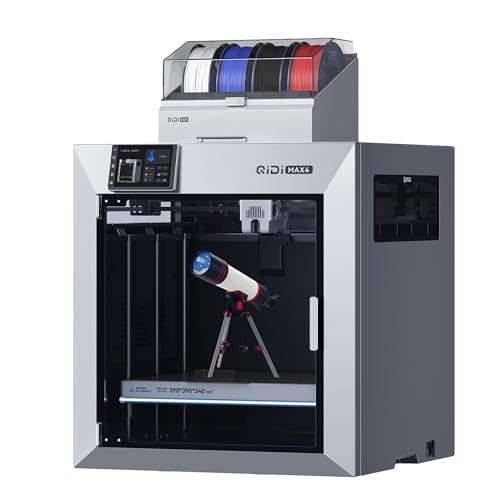
- 390×390×340mm build volume
- 65°C active heated chamber
- Supports abrasive and high-temperature materials
Best For: Large prototypes, molds, and industrial-style parts
Best Multi-Color Option

- Four independent toolheads
- 65°C heated chamber and 120°C bed
- HEPA 13 and carbon filtration
Best For: Multi-color, multi-material, and engineering-material printing
Best Easy-to-Use Pick
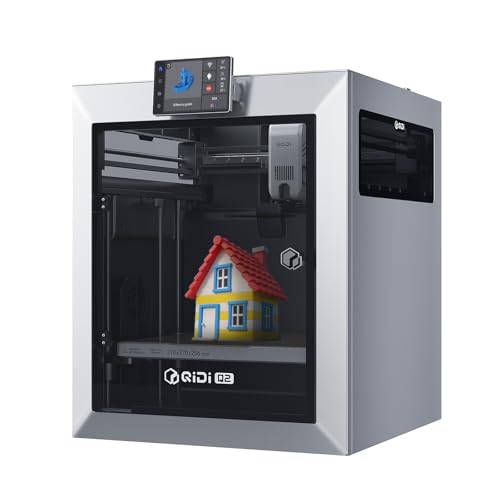
- 65°C chamber and 370°C nozzle
- Automatic nozzle-based leveling
- Triple filtration with AI monitoring
Best For: Beginners and makers moving into advanced materials
Best DIY Enclosed Kit

- 55°C actively controlled chamber
- Solder-free DIY CoreXY assembly
- Offline-capable operation
Best For: Hands-on hobbyists, schools, and privacy-conscious workshops
Best All-Around Heated Chamber Printer

- 65°C active chamber and 370°C hotend
- Large 12 x 12 x 11-inch build area
- Supports high-temperature engineering filaments
Best For: Makers and professionals printing demanding materials
Best for Low-Waste Multi-Color Printing

- Four independent toolheads minimize purge waste
- 65°C chamber for ABS, PC, and PA
- 600mm/s CoreXY printing with filtration
Best For: Advanced multi-color and engineering workflows
Best for Large-Scale Engineering Prints

- 320 x 320 x 300mm build volume
- 65°C chamber and 370°C extrusion temperature
- Optional QIDI BOX supports up to 16 colors
Best For: Large functional prototypes and batch production
Top Pick

- 65°C active heated chamber
- Four independent toolheads
- HEPA13 filtration and remote management
Best For: Multi-material engineering parts and batch production
Best Heavy-Duty Pick

- 300 × 300 × 300 mm build volume
- 60°C active chamber heating
- 600 mm/s speed with dual AI cameras
Best For: Large parts and high-throughput material experimentation
Industrial Multi-Color Pick
Flashforge Creator 5 Pro Industrial

- 65°C active heated chamber
- Four independent extruders
- HEPA13 filtration and 600 mm/s speed
Best For: Professional multi-color and engineering-material printing
Best Large-Format Pick – QIDI Max4 Combo
The QIDI Max4 Combo is a strong choice if you need a 3d printer with heated chamber for large parts, molds, and prototypes. Its 390×390×340mm build volume, 65°C active chamber, and high-flow hotend support both everyday and demanding materials.
Best For: Large-format prototypes, industrial-style parts, and users working with abrasive or high-temperature filaments.
Pros:
- Large build area supports many parts without splitting.
- 65°C heated chamber and full-surface heated bed help reduce warping.
- Closed-loop X/Y motors, fast motion, and a 40mm³/s high-flow hotend support productive printing.
- AI monitoring can detect failures and pause the printer.
Cons:
- At 120 pounds, it requires substantial setup space.
- The Polar Cooler is sold separately.
- Multi-color printing requires the separately connected QIDI BOX.
Choose the Max4 Combo when build size and material flexibility matter most. It offers a capable foundation for advanced printing, though its large footprint and optional accessories should be included in your buying decision.
Best Multi-Color Option – FLASHFORGE Creator 5 Pro
The FLASHFORGE Creator 5 Pro combines a heated chamber with four independent toolheads, making it a practical 3d printer with heated chamber for multi-color and multi-material work. Its enclosed 65°C chamber and 120°C bed are designed for engineering materials such as ABS, ASA, PC, and Nylon.
Best For: Users who prioritize efficient four-color printing, material changes, and enclosed engineering-material workflows.
Pros:
- Four independent toolheads enable multi-color and multi-material printing.
- Dedicated nozzles eliminate purge waste during color changes.
- Automatic calibration and flow compensation simplify setup.
- HEPA 13 and activated carbon filtration help capture dust and VOCs.
Cons:
- Its multi-toolhead design may be more capability than basic users need.
- The 39.6-pound printer still requires a dedicated workspace.
- The supplied notes do not specify its build volume.
The Creator 5 Pro stands out for users who regularly print in multiple colors or materials and want less filament waste. Its enclosed, filtered design also makes it a well-equipped option for a workshop or other indoor workspace.
Best Easy-to-Use Pick – QIDI Q2
The QIDI Q2 is designed to bridge beginner-friendly operation and advanced material capability. As a 3d printer with heated chamber, it offers a 65°C chamber, a 370°C nozzle, automatic leveling, and support for materials including nylon, PC, and fiber-reinforced composites.
Best For: Beginners, educators, makers, and engineers who want guided operation without giving up professional-grade material support.
Pros:
- Nozzle-based leveling is designed for accurate first layers.
- Full-metal CoreXY construction and linear rails support speeds up to 600mm/s.
- AI monitoring, power-loss recovery, and detection features improve print reliability.
- Triple filtration and a flame-retardant chamber support cleaner indoor operation.
Cons:
- Multi-color printing requires the QIDI BOX.
- The supplied notes do not list the build volume.
- Its advanced features may be unnecessary for simple PLA printing.
The Q2 is a balanced option for someone starting with 3D printing but expecting to explore more demanding materials later. Its automation and safety-focused features reduce routine setup while its high-temperature hardware leaves room for more advanced projects.
Best DIY Enclosed Kit – Original Prusa CORE One+
The Original Prusa CORE One+ is a DIY enclosed CoreXY kit for buyers who want to understand and maintain their machine. Its actively controlled 55°C chamber makes it a suitable 3d printer with heated chamber for materials such as carbon fiber, Nylon, ASA, and PC-Blend, while its automatic top vent helps manage airflow.
Best For: Hands-on hobbyists, schools, businesses, and experienced users who value offline operation and repairable, self-built hardware.
Pros:
- Step-by-step, solder-free assembly provides a hands-on learning experience.
- All-steel exoskeleton frame is designed for stable high-speed printing.
- 55°C active chamber and automatic top vent support varied materials.
- Can operate offline with a removable Wi-Fi module and local processing.
Cons:
- Assembly typically takes 15–20 hours, depending on experience.
- The 55°C chamber is lower than the 65°C chambers of some alternatives.
- The kit format may not suit buyers seeking immediate plug-and-play printing.
The CORE One+ is best viewed as a rewarding workshop project rather than a quick appliance. Its enclosed thermal control, offline capability, and extensive software ecosystem make it particularly appealing where ownership, privacy, and hands-on maintenance are priorities.
Best All-Around Heated Chamber Printer – QIDI PLUS4
The QIDI PLUS4 is a practical choice if you want a 3d printer with heated chamber for high-temperature materials and larger projects. Its 65°C chamber, 370°C hotend, and 12 x 12 x 11-inch build area support both functional parts and multi-model production.
Best For: Makers and professionals printing ABS, ASA, PC, PA, PPS-CF, and other demanding materials.
Pros:
- 65°C actively heated chamber helps reduce warping and cracking.
- 370°C hotend supports a broad range of high-temperature filaments.
- Large build volume and CoreXY design support faster multi-part printing.
- Remote monitoring, camera tracking, and filament detection add convenience.
Cons:
- Its 59.4-pound weight and large footprint require substantial workspace.
- Multi-color printing requires the separately referenced QIDI BOX system.
The PLUS4 balances chamber heating, material flexibility, and smart monitoring without focusing exclusively on industrial-scale production. It is a strong fit for users who want advanced filament support in a relatively approachable package.
Best for Low-Waste Multi-Color Printing – FLASHFORGE Creator 5 Pro
The FLASHFORGE Creator 5 Pro is a 3d printer with heated chamber designed around industrial multi-material and color workflows. Its four independent toolheads, 65°C active chamber, and 600mm/s CoreXY platform target fast production with substantially less purge waste.
Best For: Engineering teams and advanced users who need rapid multi-color or multi-material printing with waste reduction.
Pros:
- Four toolheads and a 7-second FlashSwap system reduce flushing and material waste.
- 65°C heated chamber supports ABS, PC, and PA printing.
- CoreXY motion system is rated for speeds up to 600mm/s.
- HEPA 13 and activated-carbon filtration help manage particles and fumes.
Cons:
- The industrial feature set may be more than needed for basic single-material printing.
- Its 16 x 14 x 18-inch dimensions still require dedicated workspace.
Choose the Creator 5 Pro when toolhead flexibility and operational efficiency matter more than a simple entry-level setup. Automated calibration, chamber monitoring, and remote controls further support repeatable production work.
Best for Large-Scale Engineering Prints – QIDI Plus5 Combo
The QIDI Plus5 Combo is a 3d printer with heated chamber built for oversized prototypes, batch production, and engineering-grade materials. Its 320 x 320 x 300mm build volume, 65°C active chamber, and 370°C extrusion temperature provide room and thermal control for demanding parts.
Best For: Engineers, production-minded makers, and users who need large functional parts or optional multi-color printing.
Pros:
- Large build volume accommodates prototypes, multiple parts, and oversized models.
- 65°C chamber and 370°C extrusion support PPS-CF, PPA-CF, PC, nylon, and more.
- CoreXY system reaches up to 600mm/s with 20,000mm/s² acceleration.
- AI camera monitoring, automatic leveling, filtration, and thermal sensors support longer jobs.
Cons:
- At 96.8 pounds and 22 x 22 x 24 inches, it needs a sturdy, spacious location.
- Up to 16-color printing requires the optional QIDI BOX.
- The extensive engineering features may exceed the needs of casual PLA users.
The Plus5 is the strongest choice here for users who prioritize build size and production capability. Its active drying and optional multi-color ecosystem add flexibility, while the enclosed heated design is aimed at stable high-temperature printing.
Top Pick – Flashforge Creator 5 Pro
If you need a 3d printer with heated chamber for demanding materials and multi-material work, the Flashforge Creator 5 Pro combines a chamber that reaches 65°C with four independent toolheads. Its enclosed CoreXY design, filtration, and automated setup make it well suited to both engineering parts and repeat production.
Best For: Multi-material printing, batch production, and users working with ABS, ASA, or PA.
Pros:
- Four independent toolheads reduce flushing and color bleed while supporting rigid and flexible materials in one job.
- Active chamber heating, adaptive cooling, and HEPA13 filtration support enclosed printing across a broad material range.
- Auto-leveling, automatic XYZ offset adjustment, monitoring sensors, and remote management simplify operation.
Cons:
- The 256 × 256 × 256 mm build volume is smaller than some large-format alternatives.
- At 39.6 pounds, it is a substantial printer to place and move.
The Creator 5 Pro stands out when clean material changes and controlled chamber conditions matter more than maximum build size. It is a particularly capable choice for users who want production-oriented features in an enclosed desktop format.
Best Heavy-Duty Pick – Creality K2 Pro
The Creality K2 Pro is a strong option if your 3d printer with heated chamber needs to handle larger models or several parts at once. Its 300 × 300 × 300 mm build volume, 60°C active chamber, and 600 mm/s rated speed balance capacity with advanced-material support.
Best For: Large models, higher-throughput production, and users planning to add multicolor printing with the CFS system.
Pros:
- The 300 × 300 × 300 mm build area accommodates large models or multiple parts in one print.
- Active chamber heating supports materials such as ASA and PPA while reducing warping and cracking.
- Dual AI cameras, intelligent auto-leveling, direct drive extrusion, and Wi-Fi/LAN control add automation and monitoring.
Cons:
- Multicolor printing requires the separately referenced CFS Smart Filament System.
- The supplied notes do not specify that the printer includes CFS in the box.
Choose the K2 Pro when build volume is a priority and you want a fast, connected machine with a heated chamber. Its camera-assisted calibration and broad material compatibility make it a flexible platform for creative, educational, and industrial work.
Industrial Multi-Color Pick – Flashforge Creator 5 Pro Industrial
For buyers seeking a 3d printer with heated chamber in a more industrial-oriented package, the Flashforge Creator 5 Pro Industrial offers a 65°C chamber, a sealed enclosure, and four independent extruders. It is designed around consistent engineering-material printing, clean color separation, and high-throughput operation.
Best For: Professional multi-color production, engineering materials, and controlled office or educational environments.
Pros:
- The 65°C active chamber helps improve interlayer adhesion and reduce warping with ABS, ASA, PC, and Nylon.
- Four independent extruders enable multi-color and multi-material printing without purging through one shared nozzle.
- CoreXY construction, 600 mm/s speed, automatic calibration, HEPA13 filtration, and a flexible PEI plate support productive workflows.
Cons:
- The 256 mm build volume is less spacious than the K2 Pro’s 300 mm cube.
- Its industrial feature set may be more than needed for basic single-material printing.
The Industrial Creator 5 Pro is the more specialized choice for users who value clean tool changes, stable chamber conditions, and repeatable operation. Its enclosed filtration and maintenance-friendly design also suit shared indoor workspaces.
How We Picked the Best 3d Printer with Heated Chamber
We focused on printers that provide active chamber heating rather than relying only on a passive enclosure. The selected models were also evaluated by their build volume, maximum chamber and nozzle temperatures, enclosure design, filtration, material compatibility, automation, and multi-material options.
Because these machines target different users, we included compact and large-format options, DIY and ready-to-run designs, as well as systems built for multicolor or industrial-style production. Specifications can vary by configuration, so confirm the included accessories, power requirements, and supported materials before ordering.
Quick Comparison
| What to Compare | Why It Matters |
|---|---|
| Chamber temperature | Higher, controlled heat generally improves results with warping-prone engineering filaments. |
| Build volume | A larger workspace accommodates bigger prototypes, enclosures, and functional parts. |
| Nozzle temperature | Higher temperatures expand compatibility with materials such as nylon, PC, and PPS-CF. |
| Toolheads or material system | Independent toolheads can reduce purge waste and support multiple colors or materials. |
| Filtration | HEPA filtration can help manage airborne particles, but it does not replace ventilation. |
Key Buying Factors for a 3d Printer with Heated Chamber
Chamber Control and Enclosure Design
Look for an actively heated, well-sealed chamber with stable temperature control. A heated chamber is most useful when the printer also has a rigid frame, enclosed build area, and consistent airflow. Check whether the quoted temperature is the maximum setting or a sustained operating temperature.
Material and Hot-End Compatibility
Match the nozzle and extruder specifications to your filament plans. A high-temperature nozzle is important for advanced materials, while hardened components may be necessary for abrasive carbon-fiber or glass-fiber blends. Dry filament storage or a compatible dryer can be equally important for moisture-sensitive nylon and similar materials.
Size, Speed, and Reliability
Choose build volume based on the parts you actually intend to print, not simply the largest number. High speed is valuable only when motion control, cooling, extrusion, and calibration keep pace. Features such as automatic leveling, input shaping, recovery, remote monitoring, and a dependable first-layer system can save substantial time.
Air Management and Operating Environment
Enclosed printers are preferable for hot materials and can reduce drafts, noise, and exposure to printing byproducts. Filtration systems vary, so use appropriate ventilation and follow the filament manufacturer’s safety guidance, especially for long production runs.
Who Should Buy Which 3d Printer with Heated Chamber?
Choose a large-format QIDI model if you need substantial build capacity and active chamber heating for functional parts or engineering prototypes. Choose a QIDI Q2 or PLUS4 when high-temperature material support is a priority but you do not need the largest workspace.
Choose a FLASHFORGE Creator 5 Pro variant if multicolor, multimaterial production, independent toolheads, low purge waste, filtration, or a more industrial workflow matters most. Compare the exact bundle carefully because similarly named listings may include different hardware.
Choose the Prusa CORE One+ if you prefer a DIY kit, a strong maker ecosystem, and hands-on assembly. Consider the Creality K2 Pro if fast CoreXY-style printing, automation, and optional CFS multicolor capability fit your workflow.
For any 3d Printer with Heated Chamber, budget for suitable filament, spare wear parts, ventilation, and a stable electrical setup. The best choice is the model whose chamber, nozzle, build volume, and material system match your regular projects—not necessarily the printer with the highest headline specification.