
3D Night Vision Goggles review is for buyers who want a wearable night-vision binocular setup with IR assist, white supplemental light, and manual focus.
It looks aimed at hunting, observation, and outdoor recording rather than casual curiosity.
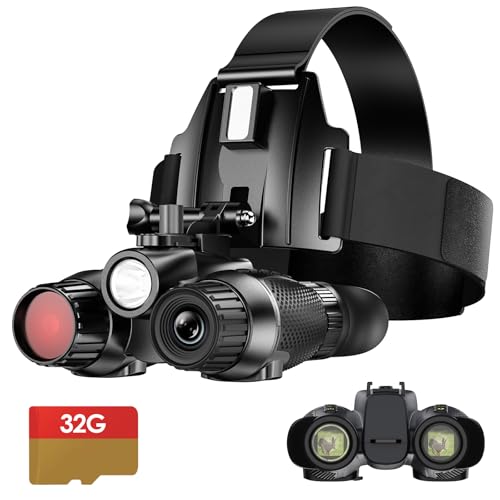
3D Night Vision Goggles Review Summary
The 3D Night Vision Goggles make sense for buyers who want a head-mounted, hands-free night-vision tool with a clear feature stack: dual-screen 3D viewing, infrared adjustment, white light support, and helmet-compatible wear options.
If you need a wearable binocular-style device for field use, this is the kind of product that solves a real problem.
It is especially relevant if you want a compact observation setup for nighttime scouting, wildlife watching, or documenting low-light scenes without holding a monocular the entire time.
The listing leans hard into utility: 36MP photos, UHD video support, 8x zoom, manual focus, and multiple viewing modes all suggest a device built for active use.
At the same time, the complexity is part of the tradeoff.
This is not a simple point-and-shoot gadget.
Review Scorecard
| Category | Score | Rationale |
|---|---|---|
| Night visibility | 8/10 | IR adjustment plus white fill light should help in dim conditions, and the listing emphasizes clearer target acquisition at higher IR levels. |
| Wearability | 8/10 | The headband and helmet mount adapter make it more practical than handheld units for longer sessions. |
| Imaging flexibility | 8/10 | Multiple color effects, photo capture, and video support give it broader use than basic night goggles. |
| Ease of use | 6/10 | Manual focus, diopter adjustment, and menu settings add control but also setup complexity. |
| Field utility | 8/10 | The wearable design and 10-meter viewing distance guidance fit hunting, scouting, and outdoor recording use cases. |
| Value for specialists | 7/10 | The feature set is strong for niche buyers, but it is overbuilt for casual or occasional users. |
Key Features and Specifications of 3D Night Vision Goggles
The headline feature is the dual-screen, dual-eyepiece 3D viewing experience.
The listing positions this as a naked-eye 3D effect, which makes the product feel more immersive than a basic single-eye night vision unit.
That matters if your goal is depth perception while scanning terrain or reviewing scenes rather than just seeing a brightened monochrome image.
The device also includes white supplemental lighting and infrared support.
According to the listing, you can turn on a white fill light by activating an IR setting and pressing the WL/IR button.
That gives the product a more flexible low-light toolkit, especially when the ambient scene is too dark for comfortable viewing.
The IR brightness is adjustable across seven levels, which is useful because not every night condition needs maximum power.
The viewing modes are broader than many buyers expect.
The listing describes four switchable color effects: color, fluorescent green, infrared light, and black-and-white.
That is a practical range if you want to compare how different visual modes handle contrast, subject separation, or scene clarity.
Key listed capabilities include:
- 8x zoom
- 36MP photo capture
- UHD and 4K video support
- Manual focus wheel
- Left/right eyepiece diopter adjustment
- Headband and helmet mount adapter compatibility
- FAST and MICH helmet compatibility
- TF card included
- Shooting/viewing distance guidance of 10 meters / 32 feet
The fit and setup details matter as much as the imaging features.
The listing instructs users to close one eye at a time, adjust each eyepiece diopter until clear, and then fine-tune with the manual focus wheel.
That tells you this product rewards careful setup.
If you expect instant clarity without adjustment, you may be disappointed.
If you like control and want to tune the image to your eyes, the design is more appealing.
Pros and Cons of 3D Night Vision Goggles
Pros
- Hands-free wearability is the biggest practical advantage. The included headband and helmet adapter make the device more adaptable than a handheld binocular.
- IR adjustment gives real control over low-light output. Seven levels are more useful than a fixed brightness mode.
- White fill light adds flexibility when you need a clearer scene in very dark conditions.
- Multiple visual modes make it easier to choose the right look for the environment.
- Manual focus and diopter adjustment help you tune the image to your eyes instead of accepting a one-size-fits-all setup.
- TF card support and capture features make it more than just a viewing device.
Cons
- Setup is not trivial. The product depends on correct eyepiece adjustment, focus tuning, and menu navigation.
- It is specialized gear. Most buyers do not need wearable dual-eye night vision with helmet support.
- The listing suggests a narrow practical distance. The 10-meter / 32-foot guidance implies this is more about near-to-mid-range use than long-distance scouting.
- The feature list is dense enough to overwhelm casual users. If you only want simple night visibility, this may be too much device.
Who Should Buy 3D Night Vision Goggles?
This is a fit for hunters, outdoor observers, and field users who want their hands free while scanning in darkness.
It is also a logical choice for people who already use helmets or headgear and want a mounted night-vision setup that stays stable during movement.
It can also make sense for content creators or hobbyists who want to document nighttime scenes with a device that supports photo and video capture.
The ability to switch color modes gives it more creative range than bare-bones goggles.
Skip it if you want simplicity. If your only goal is to glance around a dark area occasionally, the manual adjustments and wearable setup are probably more device than you need.
It also does not read like a product for indoor casual use or for buyers who want a plug-and-play toy.
Night Vision Use Cases for 3D Night Vision Goggles
Hunting and Scouting
For hunting and reconnaissance-style use, the strongest appeal is the mix of hands-free wear, IR control, and depth-aware dual-eye viewing.
That combination is more practical than a handheld observer when you need to stay mobile.
Recording and Review
The photo and video claims make this more than a viewing aid.
If your goal is to capture what you see at night, the recording features and TF card inclusion matter as part of the workflow, not as extras.
Helmet-Mounted Field Work
The FAST and MICH compatibility is a real differentiator for buyers who already wear compatible helmets.
That makes the product more serious than a novelty accessory and closer to a task-specific tool.
Setup and Tuning
The product asks for a careful first setup: adjust each eyepiece, then use manual focus to sharpen the view.
That is worth it for users who want tailored clarity, but it will feel slow if you prefer automatic convenience.
Alternatives to 3D Night Vision Goggles
If you want a simpler monocular-style option, look at a Bushnell Equinox night vision monocular.
It is a more straightforward category choice for buyers who do not need wearable binocular hardware.
If you want a more established wearable night-vision line, search for a ATN night vision binocular.
That is a credible brand family for buyers comparing field-oriented imaging gear.
If you want helmet-oriented thermal or night-vision style gear, a AGM Global Vision night vision goggle is another relevant comparison point for serious outdoor use.
If you want the most familiar mainstream option for basic low-light viewing, a SiOnyx night vision camera may be a better fit, especially if you care more about brand recognition than wearable binocular form factor.
Is 3D Night Vision Goggles Worth It?
Yes, if you want a wearable, feature-rich night-vision setup and you are willing to spend time learning it. The 3D Night Vision Goggles have a focused appeal: hands-free use, IR brightness control, white fill light, multiple display modes, zoom, and capture support.
For hunters, scouts, helmet users, and outdoor recorders, that is a coherent package.
For casual buyers, it is likely too specialized and too adjustment-heavy to justify.
If you want a serious field-oriented night-vision binocular with more control than a basic viewer, this looks worth considering.
If you want simplicity first, look elsewhere.