
Looking for Christmas science gift ideas under $50? These picks bring science to life with hands-on building, experiments, puzzles, and discoveries that curious kids can explore at home.
From geology and robotics to space and simple physics, this collection of 17 ideas offers options for different interests and ways to learn.
17 Christmas Science Gift Ideas Under $50 to Consider in 2026
A Little Window-Side Wonder
Kikkerland Solar Powered Rainbow Maker

- Turns sunlight into moving rainbow patterns.
- Attaches to a sunny window with a suction cup.
- Runs on solar power, with no batteries needed.
Best For: A science-minded teen or adult who enjoys playful home decor.
Hands-On Physics Builder
Thames & Kosmos Physics Workshop Kit

- Builds 38 models and explores 37 physics experiments.
- Covers topics including gears, gravity, and simple machines.
- Includes a full-color manual with physics explanations.
Best For: A curious child age 8 or older who likes building and exploring motion.
Dinosaur Fossil Discovery
National Geographic Dinosaur Fossil Dig Kit
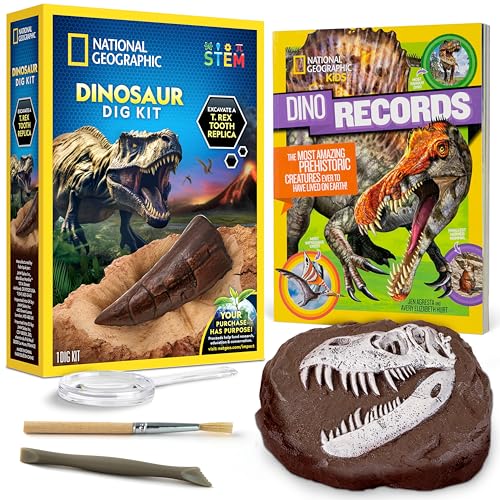
- Dig brick hides a T. rex tooth replica.
- Includes excavation tools and a full-color dinosaur book.
- Offers a hands-on introduction to paleontology.
Best For: A young dinosaur fan or budding paleontology enthusiast age 8 or older.
Pocket Guide to Space

- Compact paperback with 160 pages of space facts.
- Covers planets, stars, rockets, spacecraft, and more.
- Includes bite-size entries, photographs, and fact files.
Best For: A reader age 8–12 who enjoys browsing accessible astronomy facts.
Microscope Slide Collection
AmScope Prepared Microscope Slide Set

- Includes 50 prepared biology and pathology slides.
- Samples include plants, insects, and animal tissues.
- Comes in a fitted wooden storage box.
Best For: A student with access to a microscope who is curious about specimens.
Gravity-Powered Puzzle Fun

- Presents marble-maze challenges from beginner to expert.
- Includes 60 challenge cards, towers, marbles, and a game grid.
- Combines building play with logic and problem-solving.
Best For: A child age 8 or older who enjoys puzzles and cause-and-effect play.
Geode Cracking Kit
National Geographic Break Open 10 Geodes Kit

- Includes 10 natural geodes to break open and explore.
- Comes with safety goggles, a magnifying glass, and display stand.
- A learning guide explains how geodes form.
Best For: A rock-loving child age 8 or older who enjoys discovery activities.
Snap-Together Electronics
Snap Circuits SC-100 Electronics Kit

- Offers more than 100 project ideas for learning circuitry.
- Color-coded parts snap onto the included board without soldering.
- Includes a project manual; batteries are required.
Best For: A child age 8 or older interested in electronics and building.
A Rock-Tumbling Hobby
National Geographic Hobby Rock Tumbler Kit
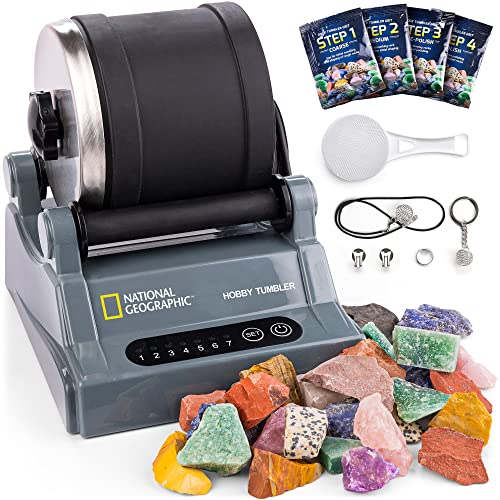
- Polishes rough rocks into gemstone-like stones over time.
- Includes a tumbler, four polishing grits, and nine types of rough gemstones.
- Features a timer, automatic shutoff, and learning guide.
Best For: A patient young collector or adult who enjoys geology projects.
Earth Science Experiment Box
National Geographic Earth Science Kit

- Includes more than 15 activities, including a volcano and crystal growing.
- Features two geologic dig kits and water-tornado experiments.
- Comes with a full-color guide and step-by-step instructions.
Best For: A school-age child curious about rocks, volcanoes, and Earth science.
Chemistry with a Magic Act
National Geographic Magic Chemistry Set
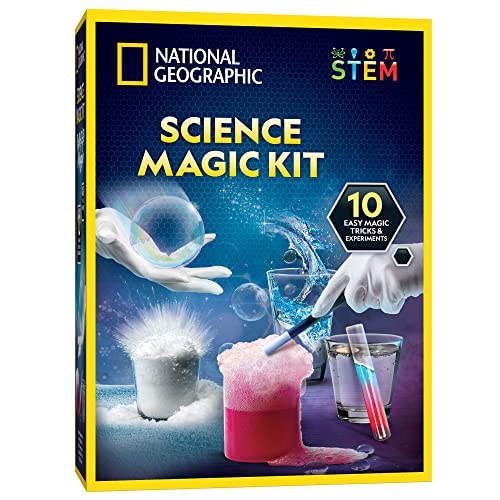
- Includes materials for 10 science tricks and experiments.
- Features a magic wand, white gloves, and illustrated instructions.
- Explains the science behind the demonstrations.
Best For: A child age 8 or older who enjoys performing surprising science tricks.
Science Tricks and Experiments
National Geographic Science Magic Kit

- Includes materials for 20 magic-style science experiments.
- Adds a bonus guide with 85+ experiments using household items.
- The illustrated guide explains the science behind the tricks.
Best For: A child age 8 or older who likes performing tricks and learning how they work.
A First Look at the Moon

- Designed to help beginners locate and view the Moon.
- Includes a finder scope, two eyepieces, and a tabletop tripod.
- Comes with an educational learning guide.
Best For: A beginning stargazer age 8 or older who would enjoy viewing the Moon with family.
Glow-In-The-Dark Solar System
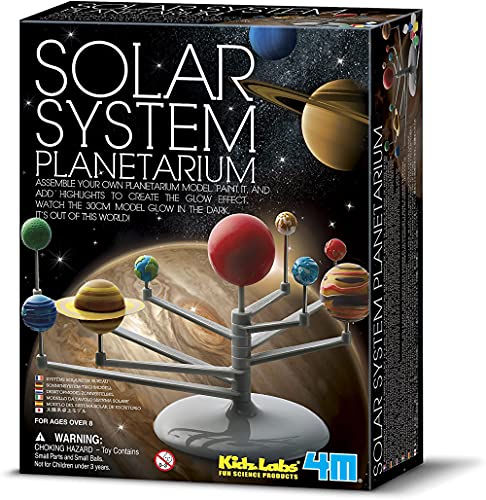
- Assemble and paint a model of the eight planets.
- Includes glow paint, a fact-filled wall chart, and quiz questions.
- No batteries are required.
Best For: A space-loving child age 8 or older who enjoys building projects and room decor.
Colorful Crystal-Growing Lab
National Geographic Mega Crystal Growing Kit

- Grow eight crystals in different colors, including glow-in-the-dark.
- Includes two growing chambers and a USB-powered display stand.
- Comes with five real gemstone specimens and a learning guide.
Best For: A curious child age 8 or older who enjoys hands-on science experiments.
Build a Moving Robot

- Build a small mechanical robot that moves near a table edge.
- Includes the components and instructions for assembly.
- Requires a small Phillips screwdriver and one AA battery, not included.
Best For: A creative child age 8 or older who likes tinkering with robotics.
A Starter Microscope Lab
National Geographic Microscope for Kids

- Offers three magnification levels up to 400x and lights above and below.
- Includes prepared and blank slides, rocks, minerals, and science tools.
- The lab guide offers specimen-viewing activities.
Best For: A young observer interested in exploring specimens and everyday materials.
Christmas Science Gift Ideas Under $50: How to Choose
Christmas science gift ideas under $50 dollars can suit very different kinds of curiosity. Start with what the recipient already enjoys: space, dinosaurs, rocks, puzzles, building, or surprising experiments. A gift that connects with an existing interest can feel immediately inviting, while a broader activity kit can open the door to a new subject.
Match the Activity to the Child
Consider how the child likes to spend time. A young space fan might enjoy reading quick facts about planets and spacecraft, making a solar system model, or exploring the Moon with a beginner telescope. A child who likes making things may be more drawn to a physics workshop, a tabletop robot, or an electronics kit with projects to build. For someone who enjoys careful observation, microscope slides or a microscope kit offer a way to examine specimens.
Also think about the kind of participation involved. Some gifts are designed for independent reading or puzzle solving; others work well as shared activities with a parent, sibling, or friend. Excavation, geode breaking, and experiments may need a grown-up nearby, so consider whether the recipient will have help and space to use them.
Check Age Guidance and Setup
Use the stated age range as a starting point, then consider the child’s patience and experience. Building models, following experiment steps, and handling small components can call for different levels of focus. Check whether a project needs anything beyond what comes in the box. For example, the tabletop robot requires a small cross-head screwdriver and one AA battery, while the SNAP CIRCUITS kit requires batteries. The planetarium set includes its assembly instructions and does not require batteries.
For activities that involve looking through a microscope or telescope, think about whether an adult will help with setup and aiming. A book or logic game may be simpler to begin using straight away, while a build or experiment kit can make gift opening the start of a longer activity.
Budget Considerations for Science Gifts
With a firm under-$50 budget, compare what each gift includes as well as its price at the time of purchase. A kit with several projects, experiments, or specimens may offer more ways to explore, but the best value depends on the recipient’s interests and how likely they are to use it. A compact reference book can be a thoughtful choice for a reader; a larger activity kit may be better for a child who enjoys hands-on projects.
Keep any extras in mind when planning the full gift budget. Some products list required batteries or a tool, and ongoing activities may need adult assistance. Check the current price and included components before ordering, since prices and package contents can change. Set a maximum amount for the entire gift, including any required supplies, so the final choice stays within budget.
Personalization Tips for a Thoughtful Gift
Make the gift feel personal by connecting it to a question the child already asks. A recipient fascinated by the night sky may enjoy a space-themed book or model; one who collects rocks could appreciate a geology activity. Children who like performing for others may find a science magic kit especially appealing, while a logic game can suit someone who likes solving challenges.
A short handwritten note can turn the gift into an invitation to explore together. Suggest a first activity, such as building a model, looking for interesting specimens, or reading about a planet. You can also pair a gift with a simple observation journal or a homemade coupon for shared experiment time, without needing to add another product recommendation.
Last-Minute Christmas Buying Advice
Before placing an order, confirm the current price, age guidance, and what is included. Read the product details for batteries, tools, assembly, or other setup needs, and consider whether the household has a suitable place for the activity. For gifts with multiple steps, clear instructions and an adult’s availability can make it easier to get started.
Check the retailer’s current delivery estimate and gift options directly, since timing can vary. If shipping may be tight, choose an option that is already available to you, such as a science book, or print a simple note describing a planned activity together. A practical last check is to make sure the gift suits the child’s interests and that any required supplies can be ready on Christmas morning.
The strongest science gift is one the recipient will want to explore. A little thought about interests, age, setup, and budget can help you choose a Christmas present that makes curiosity part of the celebration.