
Make Christmas reading time a launchpad for big questions, tiny creatures, and new discoveries. These 15 science books cover topics from space and ecosystems to engineering and the human body.
Choose a subject that matches the recipient’s curiosity, reading stage, and interest in exploring ideas together.
15 Christmas Science Book Gift Ideas Under $50 to Consider in 2026
Planet and Ecosystem Explorer
The Wondrous Workings of Planet Earth

- Illustrated tour of ecosystems, biodiversity, and nature’s cycles.
- Uses art, maps, and infographics to explain earth science.
- Covers ecosystems ranging from reefs and rainforests to a drop of water.
Best For: Older children and teens interested in ecosystems and environmental science.
Tiny Creature Discovery

- Introduces insects and other small creatures with facts and illustrations.
- Explores where bugs live, what they eat, and how their bodies work.
- Offers a nature-focused read for curious young animal enthusiasts.
Best For: Children who are fascinated by insects, spiders, and other small creatures.
Space Fact Adventure
National Geographic Kids Everything Space

- Explores planets, stars, and beyond through facts and reports from explorers.
- Includes maps, infographics, and more than 100 pictures.
- A space-themed book for readers around ages 8 to 12.
Best For: Space-loving children who enjoy photos, facts, and maps.
Life Through Time

- A 40-page book about the history of life.
- Listed for readers ages 4 to 8.
- A compact choice for children curious about animals and fossils.
Best For: Young readers interested in the history of life on Earth.
Physics with Humor
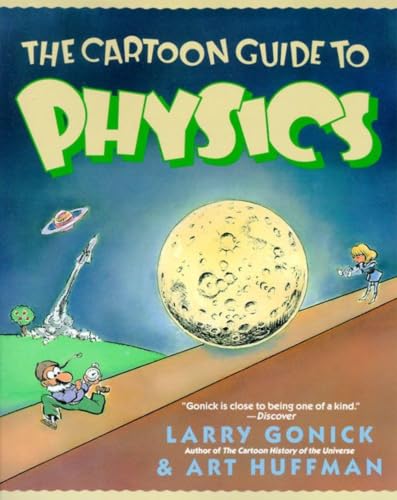
- Explains velocity, acceleration, electricity, magnetism, circuits, and relativity.
- Uses humorous cartoons and relatable examples to introduce physics.
- Suitable for students, professors, and casually curious readers.
Best For: Teens and adults looking for an approachable, illustrated physics introduction.
Brain Science in Comics

- Uses a graphic novel adventure to explore the brain and senses.
- Raises questions about memory, brain evolution, and what makes us who we are.
- Presents STEM ideas in an illustrated story format.
Best For: Middle-grade readers who enjoy graphic novels and brain science.
Night Sky Starter
A Child’s Introduction to the Night Sky

- Introduces stars, planets, constellations, and the solar system.
- Includes a star finder and glow-in-the-dark stickers.
- Covers navigating the night sky and the history of space exploration.
Best For: Children who like astronomy and families who enjoy looking at the stars together.
How Machines Work

- Explores machinery and technology, from cars and microchips to watches and lasers.
- Uses a woolly mammoth to help demystify how things work.
- Offers 400 pages for readers who want to explore a wide range of inventions.
Best For: Older kids and adults curious about engineering, inventions, and machines.
Beginner Astronaut Guide
The Usborne Official Astronaut’s Handbook

- Answers questions about rockets, astronaut routines, and life aboard a spaceship.
- Explores spacesuits, Soyuz spacecraft, and experiments on the International Space Station.
- A 128-page guide listed for ages 9 and up.
Best For: Children dreaming about space travel and astronaut life.
Practical Astronomy Reference
A Field Guide to the Stars and Planets

- Includes 24 monthly sky maps for views facing north or south.
- Contains 52 atlas charts covering the sky, with close-ups of selected areas.
- Provides a detailed reference for exploring astronomy.
Best For: Teenagers and adults who want an astronomy reference with sky maps and charts.
Try-It Science Activities
The Usborne Big Book of Experiments

- Encourages readers to investigate the world and see science in action.
- An activity-book format for exploring science through experiments.
- A 96-page option for children who enjoy trying activities with an adult.
Best For: Elementary school children who like simple science activities with an adult.
Climate Conversation Starter
A Kids Book About Climate Change

- Explains climate change for children ages 5 to 9.
- Uses a friendly, empowering tone to introduce a complex topic.
- Designed to support conversations between children and grownups.
Best For: Children beginning to ask questions about climate and the environment.
Human Body Visual Guide
Knowledge Encyclopedia Human Body!
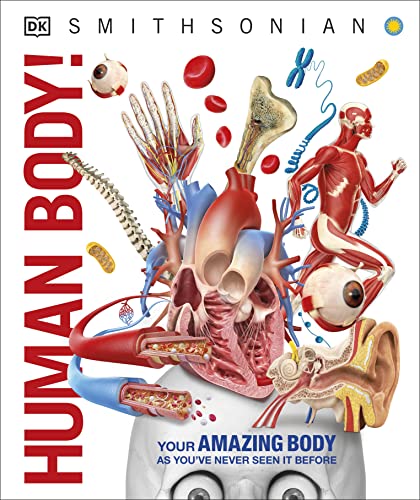
- Covers the body from head to toe with facts, charts, and infographics.
- Uses detailed CGI images, cross-sections, and cutaways to show body systems.
- Structured for young readers to explore in sections.
Best For: Children ages 9 to 12 who are curious about bones, muscles, organs, and body systems.
Young Inventor Story
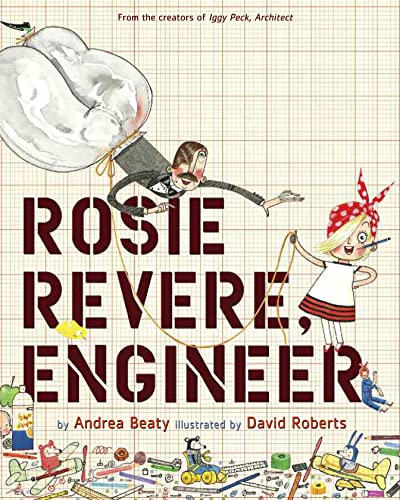
- Picture-book story about a young inventor who makes gadgets and gizmos.
- Celebrates creativity, problem-solving, and the courage to keep trying.
- Features lively rhyming text and imaginative illustrations.
Best For: Early readers who enjoy stories about inventions, engineering, and persistence.
Hands-On Science Ideas
The Everything Kids’ Science Experiments Book
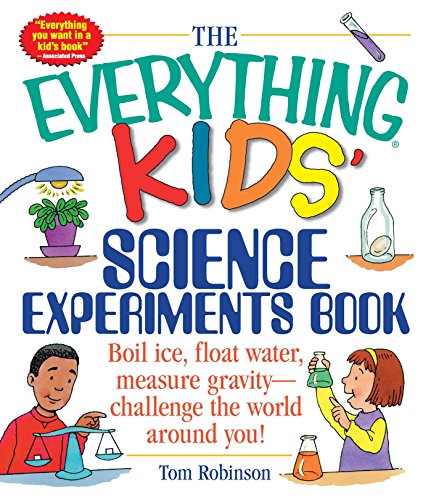
- Offers experiments across biology, chemistry, physics, technology, engineering, and space.
- Describes activities using household items.
- Includes questions about magnets, coins, balloons, and other everyday science.
Best For: Kids who want to explore science experiments using common household items.
Christmas Science Book Gift Ideas Under $50
Christmas science book gift ideas under $50 can make it easier to match a book with a reader’s interests, whether they are captivated by planets, fascinated by bugs, or always asking how machines work. Start with the subject that already gets their attention, then consider how they like to learn: through pictures, stories, practical activities, or a deeper reference book.
How to Choose the Right Science Book Gift
Think about both topic and reading experience. Younger readers may enjoy a picture book or a visually rich introduction with short sections they can explore at their own pace. Books about insects, climate, engineering, and the human body can help connect big ideas to familiar parts of everyday life. For a child who likes stories, a graphic novel or an imaginative inventor’s tale can offer a welcoming way into STEM themes.
For readers ready to follow a subject in more detail, look for books that cover a clear area such as physics, astronomy, or how technology works. A field guide can suit someone who likes returning to reference material, while an illustrated overview can be a comfortable starting point for someone new to a topic. Age guidance in the book details can help you judge fit, but the recipient’s own reading habits and interests matter too.
Match the Book to Their Curiosity
Notice what they talk about, draw, watch, or ask questions about. A child who watches the night sky may appreciate an astronomy introduction, while a budding maker may be drawn to engineering stories or experiments. Nature lovers might prefer ecosystems or insects. If you are unsure, choose a subject they already enjoy and a format that feels inviting, such as illustrations, maps, charts, or comic panels.
Budget Considerations for Gifts Under $50
Set a comfortable spending limit before choosing. The selections here span different science subjects and reading formats, so you can compare options without assuming that a longer or more detailed book is automatically the right one. A concise illustrated book may be a thoughtful match for a younger reader, while a substantial reference can make sense for someone who likes to revisit facts and diagrams.
Consider whether the book will be read independently, shared with a family member, or used as a starting point for conversation. That can help you decide what kind of value matters most: accessible explanations, a broad subject survey, or ideas to explore together. Keep the recipient’s age and attention style in mind as you weigh the choices.
Personalization Tips for a Thoughtful Christmas Gift
Make the selection feel personal by connecting it to something the recipient already loves. A space enthusiast might enjoy a book that invites more sky watching; an animal fan may appreciate learning about small creatures and their roles in nature. For a child who likes building and imagining, an engineering-themed story can recognize that interest. A book about climate or the human body may suit a reader who often asks thoughtful questions about the world.
You can also add a short note explaining why you chose that subject. If the book lends itself to shared reading or activities, suggest a simple plan to explore it together, such as reading a chapter or looking up at the stars. Keep the note specific to the recipient rather than promising an outcome the book cannot guarantee.
Last-Minute Buying Advice
When time is short, narrow the choice by subject and recipient age first. Check the current product listing for availability and delivery estimates before ordering, since these can change. If delivery timing is uncertain, a book can still be presented as a planned Christmas gift with a note about the topic you chose. Confirm the title and format in the listing, particularly when multiple editions may appear.
For a confident final choice, ask yourself three things: Will this reader care about the subject? Does the format suit how they like to learn? Can they enjoy it alone or share it with someone? Those simple checks make it easier to choose a science book that feels thoughtful, useful, and suited to the person opening it at Christmas.