
Biology students spend their time exploring how living systems work, from cells and anatomy to plants and wildlife. These 17 Christmas gift ideas pair that curiosity with useful tools, study companions, and science-themed everyday items.
Choose a hands-on project, a field reference, or a small personal gift to match the student’s interests and how they like to learn.
17 Christmas Gift Ideas for Biology Students to Consider in 2026
Indoor Plant Science
LetPot 12-Pod Hydroponic Growing System

- Includes 12 planting cups, sponges, baskets, covers, and A&B nutrients.
- App controls lighting schedules, with two growing modes and reminders.
- Adjustable LED rod and 5.5-liter tank support an indoor growing project.
Best For: A plant biology student who wants to observe indoor growing and root development.
Sample Storage
30 Clear 50 ml Screw-Top Test Tubes

- Set includes 30 clear plastic tubes with screw-top lids.
- Flat bottoms allow the tubes to stand on their own.
- Suitable for storing small craft items or non-hazardous samples for observation.
Best For: A student who wants containers for safely carrying leaves or soil to observe later.
Root-Watching Display
Glass Plant Propagation Station with 5 Tubes

- Five glass tubes sit in a freestanding wooden stand.
- Transparent containers make developing roots easy to see.
- Compact tabletop size suits a home, office, or study space.
Best For: A plant enthusiast curious about watching roots develop over time.
Digital Microscopy
AmScope DM300HD Digital Compound Microscope
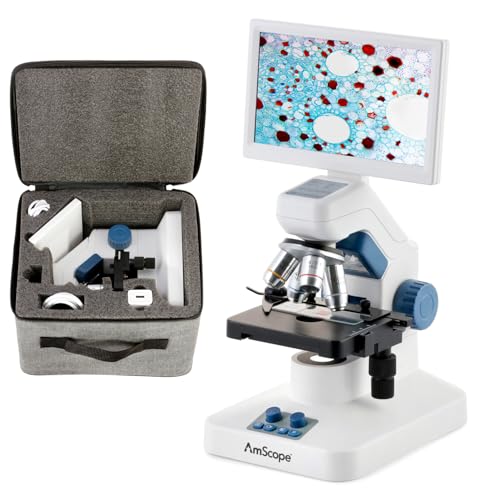
- Built-in 7-inch Full HD display shows images and video.
- Includes prepared slides, blank slides, a carrying case, and HDMI cable.
- Rechargeable battery and dual illumination support viewing different specimens.
Best For: A biology student interested in examining slides and small specimens at home.
Science Accessory Set

- Set contains 28 science-themed pin designs.
- Motifs include test tubes, microscopes, and DNA double helices.
- Pins are about one inch and can decorate clothing, backpacks, or hats.
Best For: A student who likes adding science-themed designs to a backpack or outfit.
Anatomy Study Model

- Two-part model depicts 34 labeled heart structures.
- Detachable front wall uses magnets to reveal internal chambers.
- Includes a tabletop base and a full-color study booklet.
Best For: A student reviewing heart anatomy or cardiovascular structures.
Biology Study Mug
DNA Biology Ceramic Mug, 11 oz

- Ceramic mug has an 11-ounce capacity and a biology-themed design.
- Design is printed on one side of the mug.
- Mug is listed as dishwasher and microwave safe.
Best For: A biology student who would enjoy a subject-themed mug for daily coffee or tea.
Field Notes Companion
Rite in the Rain Side Spiral Notebook

- Weatherproof notebook is sized 4.625 by 7 inches.
- Green cover and squared ruling suit written notes and sketches.
- Includes 64 pages for observations or class notes.
Best For: A student who records field observations, sketches, or notes outdoors.
Seed-Starting Project
Gardzen Seed Starter Trays, 5-Set

- Five trays provide a total of 200 cells, with 40 cells per kit.
- Clear domes have adjustable vents and let growth remain visible.
- Drain holes and bases support seed starting or propagating cuttings.
Best For: A student interested in germination, plant growth, or hands-on botany.
Slide Preparation Supplies
AmScope Blank Slides and Cover Slips

- Package includes 50 pre-cleaned blank slides and 100 cover slips.
- Glass slides measure 1 by 3 inches.
- Square cover slips measure 7/8 by 7/8 inch.
Best For: A student with a microscope who wants supplies for preparing specimens.
Genetics Learning Model
Mobestech DNA Double Helix Model Set

- Package includes five plastic DNA teaching model sets.
- Designed around DNA structure and genetics learning.
- Multiple sets can support group activities or shared study.
Best For: A student learning genetics who benefits from a hands-on DNA model.
Birding Field Guide
The Sibley Field Guide to Eastern North American Birds

- Second edition covers 650 bird species found east of the Rocky Mountains.
- Includes more than 4,600 illustrations and over 600 range maps.
- Species accounts describe field marks, habitat, behavior, and other details.
Best For: A student who enjoys identifying birds and observing biodiversity outdoors.
Anatomy Review Activity

- Includes more than 450 realistic medical illustrations and quizzes.
- Covers major body systems, cells, tissues, muscles, and development.
- The 384-page book includes descriptive overviews and learning hints.
Best For: A student who likes reviewing anatomy through coloring and self-quizzes.
Tree Identification Guide

- Covers more than 600 native and introduced tree species.
- Includes more than 4,100 detailed paintings and over 500 maps.
- Highlights identifying features such as leaves, bark, needles, flowers, and fruit.
Best For: A student who wants to identify trees and learn visible features in the field.
Science-Themed Casual Wear
Funny Biology Microscope T-Shirt

- Features a humorous microscope design for science and biology fans.
- Classic-fit, short-sleeve T-shirt with a lightweight design.
- Machine-washable care is listed for the shirt.
Best For: A biology student who enjoys wearing casual, subject-themed graphic shirts.
Insect Identification Bottle
Beetle Species Insulated Water Bottle

- 30-ounce bottle features a chart of 12 beetle types.
- Double-wall stainless steel construction is described as insulated.
- Includes a leak-proof flip lid and BPA-free plastic straw.
Best For: An insect enthusiast who wants a reusable drink bottle for lectures or field days.
Biology Puzzle Break

- Contains 52 puzzles covering human biology topics.
- Features 780 vocabulary words across subjects including genetics and anatomy.
- Portable 6-by-9-inch format has 104 pages.
Best For: A student who enjoys screen-free puzzles and biology vocabulary practice.
Christmas Gift Ideas for Biology Students: How to Choose
Christmas gift ideas for biology students can support a particular course, encourage observation beyond the classroom, or simply celebrate a favorite subject. Start with what the recipient studies and enjoys. Someone drawn to plants may appreciate equipment for growing seeds or observing roots, while a student focused on anatomy may value a visual model or a book for reviewing structures. For wildlife enthusiasts, a field guide can turn a walk into an opportunity to notice and identify more of the natural world.
Consider how the student likes to learn, too. Some people enjoy setting up an experiment or examining specimens; others prefer reading, drawing, puzzles, or practical accessories they can use every day. A microscope or model offers a tactile, visual experience. A puzzle book or coloring book makes review more interactive. A notebook, mug, or themed pin can be a personal reminder of their interests without requiring a dedicated study session.
Match the Gift to Their Biology Interests
Think broadly about biology rather than assuming every student wants the same lab equipment. Plant biology, genetics, human anatomy, and field ecology each suggest different directions. A propagation station or seed-starting trays suit a student curious about plant growth. A DNA model connects with genetics topics, and an anatomical heart model offers a three-dimensional reference for heart structures. Bird and tree guides are useful companions for students who like identifying organisms outdoors.
Also consider where the gift will be used. A compact guide or notebook can travel in a backpack; a display model or growing system needs a place at home or in a study area. For products involving specimens, think about whether the student has an appropriate way to collect and observe them. A simple, safe observation project is often more appealing than equipment that requires specialized materials or setup.
Set a Budget That Fits the Occasion
Biology gifts come in different scales. Small accessories, books, and activity items can make considerate gifts on their own or work as additions to a larger present. Practical tools and hands-on kits may cost more, so compare the learning opportunity with the recipient’s likely use. A more elaborate item makes sense when it matches a sustained interest, such as indoor gardening or microscopy, and has a clear place in their routine.
For a modest budget, focus on a book, notebook, or science-themed everyday item that feels specific to the student. If several family members are contributing, a larger study tool may be a shared option. Keep the decision centered on usefulness and fit rather than choosing the most complex gift available.
Personalization Tips for a Thoughtful Gift
Personal touches can make a biology gift feel especially well chosen. Pick a field guide that reflects the kinds of organisms or habitats the student likes exploring. Pair a notebook with a note encouraging them to record observations, sketches, or questions. For a study resource, mention the class or topic that inspired your choice. A subject-themed mug, shirt, or pin can reflect a sense of humor or help the recipient show their enthusiasm.
When selecting a hands-on gift, consider the recipient’s space and existing interests. A desk-friendly project may suit someone living in a dorm, while a student who spends weekends outdoors may prefer a portable reference. Choose personalization through the subject, use, or message rather than assuming every biology student has the same specialty.
Last-Minute Christmas Buying Advice
If Christmas is approaching, choose a gift that is easy to understand and use without extra components you cannot confirm. Books, notebooks, and simple accessories are straightforward options. For equipment or kits, read the product description carefully to understand what is included and whether the student may need other supplies. Avoid relying on delivery promises or availability until you verify them with the seller.
A thoughtful Christmas present does not need elaborate wrapping or a complicated setup. Add a handwritten note explaining why the gift reminded you of the student, or suggest a low-key activity, such as taking a bird-identification walk or tracking a seed’s progress. The best choice is one that fits their curiosity and gives them a reason to keep exploring biology after class.