
A router with detachable antennas can give you more flexibility than a standard all-in-one model, especially when cellular signal strength, outdoor placement, or directional coverage matters. The right choice depends on whether you need 4G LTE, 5G, Wi-Fi 6 or 7, travel features, or a rugged installation.
We compared ten options across cellular connectivity, wireless performance, antenna support, portability, durability, and value to help you choose a dependable setup for home, RV, remote work, or backup internet.
Best 10 Wi Fi Router with Detachable Antennas Picks for 2026
Best Outdoor 4G Pick

- 4G LTE router with SIM card slot
- IP65 housing and passive PoE included
- Detachable SMA antennas for cellular upgrades
Best For: Remote outdoor locations without wired broadband
Best Modern Home Router
TP-Link Archer BE230 Wi-Fi 7 Router

- Wi-Fi 7 with up to 3.6Gbps combined rate
- Two 2.5Gbps-capable ports plus gigabit LAN
- EasyMesh and app-based network management
Best For: Connected homes with multi-gigabit internet
Best 5G Antenna Flexibility
RM520N AX3000 5G Wi-Fi 6 Router

- 5G modem with speeds up to 3.4Gbps
- Nine detachable high-gain antennas
- Multi-WAN, failover, and VPN support
Best For: Rural, mobile, and backup-internet setups
Best Budget Legacy Option
TP-Link TL-WDR4300 N750 Router

- Three detachable dual-band antennas
- Four gigabit Ethernet ports
- Two USB ports for sharing devices and media
Best For: Basic home or office networks on a budget
Best RV Cellular Kit

- Includes MIMO window and detachable 5dBi antennas
- Supports up to 32 devices with 4G LTE connectivity
- Rugged 12V design with wired networking ports
Best For: RV owners and travelers needing portable cellular internet
Best Advanced Cellular Router

- Four interchangeable SMA antenna connectors
- Wi-Fi 6 and CAT 12 4G LTE performance
- Dual-SIM, multi-WAN, failover, and VPN features
Best For: Advanced home or business cellular networking
Best Traditional Wi-Fi 6 Router
TP-Link Archer AX21 Wi-Fi 6 Router
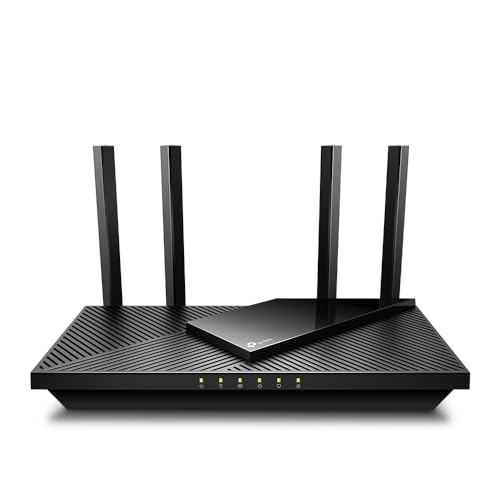
- Dual-band Wi-Fi 6 with up to 1.8Gbps total bandwidth
- Four high-gain fixed antennas with beamforming
- Gigabit ports, VPN server, and WPA3 support
Best For: Broadband-connected homes needing Wi-Fi 6 coverage
Best Travel Pick

- Router, extender, and wireless bridge modes
- Private network for travel connections
- Wall, power-bank, or USB power options
Best For: Travelers and portable networking
Best Industrial LTE Pick

- Four detachable SMA antennas
- Supports 32 Wi-Fi users and four Ethernet ports
- 12V and 5V power inputs for mobile use
Best For: Remote, vehicle, and industrial LTE setups
Best Home Performance Pick

- Dual-band Wi-Fi up to 1,200 Mbps
- Four external beamforming antennas
- Gigabit ports, WPA3, and OneMesh support
Best For: Homes wanting flexible dual-band networking
Best Outdoor 4G Pick – Cudy LT400 Outdoor
If you need a wi fi router with detachable antennas for a remote property, cabin, RV, farm, or outdoor camera setup, the Cudy LT400 Outdoor is built around cellular connectivity rather than wired broadband. Insert a compatible SIM card, mount the weather-resistant router outdoors, and use its detachable SMA antennas to improve 4G LTE reception or connect a higher-gain antenna.
Best For: Outdoor locations without reliable cable internet, including cabins, farms, shops, RVs, and remote security cameras.
Pros:
- Supports major 4G providers and download speeds up to 150 Mbps with a compatible SIM.
- IP65 housing and 4KV lightning protection support outdoor installation.
- Detachable 5dBi cellular antennas allow use of external high-gain antennas.
- Passive PoE adapter and pole-or-wall mounting simplify installation.
Cons:
- It is a Wi-Fi 4, single-band 2.4GHz router with 10/100Mbps LAN ports.
- Cellular performance depends on carrier coverage, signal conditions, and the SIM plan.
The LT400 Outdoor is a practical choice when the main challenge is getting internet to a remote or exposed location. Its weatherproof design and antenna flexibility are more important here than modern indoor Wi-Fi speeds.
Best Modern Home Router – TP-Link Archer BE230 Wi-Fi 7 Router
The TP-Link Archer BE230 is a strong choice if you want a current home router, although it does not match the wi fi router with detachable antennas requirement because its four antennas are fixed. Its Wi-Fi 7 support, multi-gigabit ports, EasyMesh compatibility, and app-based management make it suited to busy connected homes.
Best For: Homes that want Wi-Fi 7 performance, multi-gigabit wired networking, and support for many simultaneous devices.
Pros:
- Wi-Fi 7 features include Multi-Link Operation, Multi-RUs, and 4K-QAM.
- Offers up to 2882 Mbps on 5GHz and 688 Mbps on 2.4GHz under stated conditions.
- Includes a 2.5Gbps WAN/LAN port, a 2.5Gbps LAN port, and three gigabit LAN ports.
- Supports EasyMesh, parental controls, IoT security, and Tether app setup.
Cons:
- Its antennas are fixed rather than detachable.
- It is dual-band and does not support the 6GHz band.
- A separate modem is required for most internet providers.
Choose the Archer BE230 for a fast, feature-rich indoor network rather than antenna customization. It is especially appealing if you have multi-gigabit service or want an upgrade path to EasyMesh.
Best 5G Antenna Flexibility – RM520N AX3000 5G Wi-Fi 6 Router
For shoppers specifically seeking a wi fi router with detachable antennas and cellular backup or primary internet, the RM520N combines a 5G modem with Wi-Fi 6. It has four detachable cellular antennas and five detachable Wi-Fi antennas, plus SMA connectivity for an external cellular antenna when reception needs improvement.
Best For: Rural homes, offices, RVs, remote cameras, and users who need 5G internet with multiple connection or failover options.
Pros:
- Qualcomm SDX62 modem supports stated 5G speeds up to 3.4Gbps with a compatible SIM.
- Wi-Fi 6 provides up to 574 Mbps on 2.4GHz and 2402 Mbps on 5GHz.
- Nine detachable high-gain antennas support flexible cellular and Wi-Fi placement.
- Multi-WAN, load balancing, network failover, and several VPN options add versatility.
Cons:
- Actual 5G speeds and coverage depend on carrier service, location, and network conditions.
- The supplied details list one port, so wired expansion may require additional networking hardware.
The RM520N is the most capable cellular option in this group for users who value antenna flexibility and connection resilience. Its multi-WAN and failover features make it more suitable for demanding remote or mobile deployments than a basic SIM router.
Best Budget Legacy Option – TP-Link TL-WDR4300 N750 Router
The TP-Link TL-WDR4300 is an older but straightforward option for shoppers who want a wi fi router with detachable antennas at a lower-complexity feature level. Its three external dual-band antennas, gigabit ports, USB sharing, and combined N750 rating suit basic home or office networking, though it uses Wi-Fi 4 rather than a newer standard.
Best For: Basic home or office networks that need detachable antennas, gigabit Ethernet, and USB printer or media sharing.
Pros:
- Three external, detachable dual-band antennas support coverage and signal positioning.
- Provides simultaneous 2.4GHz and 5GHz networking with a combined N750 rating.
- Four gigabit Ethernet ports support fast wired connections.
- Two USB ports enable local or internet-based printer, file, and media sharing.
Cons:
- It supports Wi-Fi 4 (802.11n), not Wi-Fi 5, Wi-Fi 6, or Wi-Fi 7.
- Security features are listed as basic, with WPA security.
- The product is an older model and may be less suitable for dense modern-device networks.
The TL-WDR4300 remains worth considering when detachable antennas and gigabit ports matter more than current wireless standards. For newer devices, higher throughput, or stronger security features, a modern router will be the better long-term purchase.
Best RV Cellular Kit – KUMA Connect Play 4G Router
If you need a wi fi router with detachable antennas for travel, this KUMA kit combines a 4G LTE router with a drill-free high-gain MIMO window antenna. It supports 2.4GHz Wi-Fi speeds up to 300Mbps and is designed for RVs, campers, motorhomes, and other mobile setups where cellular coverage is available.
Best For: RV owners, remote workers, and travelers who need cellular internet with flexible antenna placement.
Pros:
- Includes a suction-cup MIMO window antenna and four detachable 5dBi antennas.
- Supports up to 32 connected devices and works with T-Mobile and AT&T SIM cards.
- Offers four LAN ports, one WAN port, USB, microSD, firewall, and VPN support.
- Rugged metal housing and both 12V DC and wall-plug power options suit mobile use.
Cons:
- It is single-band 2.4GHz Wi-Fi rather than dual-band Wi-Fi.
- Verizon users may need a previously activated SIM and manual APN setup.
- Cellular performance depends on available network coverage.
Choose this model when portability, external signal capture, and 12V compatibility matter more than the faster Wi-Fi features found on newer home routers.
Best Advanced Cellular Router – GL.iNet Spitz Plus 4G LTE
For shoppers seeking a wi fi router with detachable antennas and more advanced networking controls, the GL.iNet GL-X2000 Spitz Plus offers four interchangeable SMA connectors, CAT 12 LTE, Wi-Fi 6, and dual-SIM flexibility. It is designed for North American cellular networks and supports multiple WAN connection types.
Best For: Homes, businesses, and remote locations that need cellular failover, external antenna options, or configurable multi-WAN networking.
Pros:
- Four interchangeable SMA connectors allow external antenna integration.
- Wi-Fi 6 provides up to 574Mbps on 2.4GHz and 2402Mbps on 5GHz under test conditions.
- Dual-SIM support, network failover, and multi-WAN enable flexible connectivity.
- Includes OpenVPN and WireGuard with remote-access support.
Cons:
- Cellular support is limited to North America.
- It uses single standby for dual-SIM operation rather than simultaneous active SIM connections.
- External antennas are not included in the supplied contents.
This is the strongest fit for users who want detachable-antenna flexibility alongside Wi-Fi 6, VPN tools, and backup-internet features rather than a basic plug-and-play router.
Best Traditional Wi-Fi 6 Router – TP-Link Archer AX21 Wi-Fi 6 Router
The TP-Link Archer AX21 is a conventional home router with four high-gain antennas, but its antennas are fixed rather than detachable. If you are comparing a wi fi router with detachable antennas, treat this as a strong alternative for standard broadband setups where Wi-Fi 6 coverage and Gigabit networking are more important than antenna replacement.
Best For: Homes with cable or DSL internet that want affordable dual-band Wi-Fi 6 for streaming, gaming, and multiple connected devices.
Pros:
- Dual-band Wi-Fi 6 offers up to 1200Mbps on 5GHz and 574Mbps on 2.4GHz under stated conditions.
- OFDMA, beamforming, four high-gain antennas, and an advanced FEM support coverage and capacity.
- Includes Gigabit Ethernet ports and supports OpenVPN and PPTP VPN servers.
- Works with major internet service providers and supports WPA3 security.
Cons:
- The four antennas are fixed, so they cannot be detached or replaced.
- A separate modem is required for cable or DSL internet service.
- It does not provide built-in cellular connectivity or SIM support.
Pick the Archer AX21 if you already have broadband service and want a capable Wi-Fi 6 home router; choose one of the cellular models instead if external antenna connections are essential.
Best Travel Pick – NETGEAR Trek N300
NETGEAR Trek N300 Travel Router, Range Extender, and Wireless Bridge (PR2000-100NAS)
Check Price On AmazonThe NETGEAR Trek N300 is a practical option if you need a wi fi router with detachable antennas for travel, although its high-performance antenna is described as flip-out rather than detachable. It can create a private network from Ethernet or Wi-Fi, extend existing coverage, and connect wired-only devices.
Best For: Travelers, hotel rooms, public hotspots, and portable networking setups.
Pros:
- Works as a router, range extender, or wireless bridge.
- Creates one private network for multiple devices, helping avoid separate access fees.
- Offers flexible power options through a wall plug, power bank, or laptop USB port.
- Includes a USB port for storage, printing, and smartphone charging.
Cons:
- Single-band 2.4 GHz wireless operation.
- N300 speeds are more modest than those of modern dual-band routers.
- The antenna is flip-out, not specified as detachable.
Choose this model for portability and flexibility rather than maximum throughput. Its travel-focused design and multiple operating modes make it especially useful when you need to turn a wired or public connection into a more manageable private network.
Best Industrial LTE Pick – GC111 4G CPE Router
The GC111 is the strongest match here for shoppers seeking a wi fi router with detachable antennas. This industrial-grade 4G LTE CPE uses four detachable SMA antennas, supports alternate antennas through its SMA ports, and can provide connectivity where fixed broadband is unavailable.
Best For: Vehicles, boats, camps, workshops, offices, and other demanding LTE installations.
Pros:
- Includes four detachable SMA antennas and two additional 1.5-meter 4G extension cables.
- Supports up to 32 Wi-Fi users and provides four RJ45 ports.
- Offers dual 12V and 5V power inputs for vehicle or power-bank use.
- Metal housing and stated industrial-grade, temperature-resistant construction suit tougher environments.
Cons:
- Single-band 2.4 GHz Wi-Fi with a listed 300 Mbps transfer rate.
- Requires a compatible universal SIM; some locked or contract SIMs may not work.
- LTE band compatibility varies by version and region.
This is a specialized cellular router, not a conventional home broadband replacement. Its detachable antenna system, industrial enclosure, flexible power inputs, and broad mounting possibilities make it the most adaptable choice for remote or mobile LTE deployments.
Best Home Performance Pick – TP-Link Archer A6
The TP-Link Archer A6 is a capable home router for buyers comparing a wi fi router with detachable antennas, but note that its four external antennas are listed as fixed. It combines dual-band Wi-Fi 5, Gigabit Ethernet, beamforming, MU-MIMO, and OneMesh support for everyday home networking.
Best For: Homes needing dual-band performance, wired Gigabit connections, and expandable coverage.
Pros:
- Dual-band speeds are rated up to 1,200 Mbps combined.
- Four external antennas use beamforming to help concentrate Wi-Fi signals.
- Four Gigabit LAN ports support high-speed wired devices.
- Includes MU-MIMO, WPA3 security, AP mode, parental controls, and OneMesh support.
Cons:
- Antennas are fixed rather than detachable.
- A modem is required for most internet service providers.
- It uses Wi-Fi 5 rather than a newer Wi-Fi generation.
The Archer A6 is a sensible home-network choice when dual-band coverage and Gigabit ports matter more than antenna replacement. If detachable antennas are essential, look elsewhere; if fixed external antennas are acceptable, its feature set is well suited to typical connected households.
How We Picked the Best Wi Fi Router with Detachable Antennas
We focused on models that offer practical antenna flexibility or are commonly used with external cellular or Wi-Fi antennas. The list includes traditional broadband routers, 4G LTE and 5G modem routers, travel devices, and rugged industrial or outdoor equipment.
Our comparison considers wireless standard, cellular category, SIM support, Ethernet connectivity, antenna design, installation flexibility, network management features, and intended use. Because carrier compatibility and antenna connectors vary, confirm the specifications for your location before ordering.
Quick Comparison
- Best for modern home networking: TP-Link Archer BE230, Archer AX21, or Archer A6, depending on your Wi-Fi and budget needs.
- Best for 5G cellular internet: RM520N AX3000 or GL.iNet Spitz Plus, subject to carrier-band compatibility.
- Best for RV and mobile use: KUMA Connect Play or the compact NETGEAR Trek N300.
- Best for outdoor or harsh installations: Cudy’s IP65 outdoor modem router.
- Best for industrial deployments: GC111, with its rugged enclosure, multiple Ethernet ports, and large external antennas.
- Best for basic legacy networking: TP-Link TL-WDR4300, although newer Wi-Fi 6 models generally provide better efficiency and long-term value.
Key Buying Factors for a Wi-Fi Router with Detachable Antennas
Cellular Bands and Carrier Support
For a 4G or 5G router, start with modem bands and carrier approval rather than Wi-Fi speed. A router that does not support your provider’s LTE or 5G bands may deliver poor performance or fail to connect. Check SIM size, APN configuration, network mode, and whether the model is region-specific.
Antenna Connectors and Placement
Detachable antennas are useful only when the connectors and supported frequencies match your intended antenna. SMA, RP-SMA, and other connector types are not interchangeable without the correct adapter. Cable length also matters: excessive cable can reduce the signal gain you hoped to achieve. For weak cellular service, placing the antenna higher or near a window may help more than simply choosing a higher-gain model.
Wi-Fi Coverage and Capacity
Wi-Fi 6 and Wi-Fi 7 can improve efficiency in busy homes, but they do not automatically increase internet speed from a weak cellular connection. Consider the number of clients, home layout, wired backhaul, Ethernet speed, and whether you need mesh support. Dual-band Wi-Fi remains adequate for many smaller spaces.
Power, Durability, and Management
RV, outdoor, and industrial installations should be checked for DC input options, passive PoE, temperature tolerance, weather protection, and mounting hardware. Look for useful controls such as signal statistics, failover, VPN support, guest networking, remote management, and dual-SIM switching when reliability is important.
Who Should Buy Which Wi Fi Router with Detachable Antennas?
Choose the Archer BE230 if you want current Wi-Fi 7 features for a conventional home network. The Archer AX21 is a sensible middle ground for Wi-Fi 6 performance, while the Archer A6 suits budget-conscious users with straightforward broadband needs.
For cellular broadband, select the RM520N for a 5G-focused setup or the GL.iNet Spitz Plus when advanced controls, dual-SIM flexibility, and Wi-Fi 6 are priorities. RV owners should consider the KUMA kit, while travelers wanting a compact multi-purpose device may prefer the NETGEAR Trek.
Choose the Cudy for outdoor LTE placement and the GC111 for demanding industrial environments. The older TL-WDR4300 is best reserved for basic or low-cost installations where newer wireless standards are not essential.