
The best weather stations for home use make it easier to track temperature, humidity, wind, rainfall, and changing conditions around your property. The right model depends on whether you want a simple room-and-yard display or a connected system with detailed outdoor data.
We’ve rounded up 10 options covering everyday household monitoring, gardening, backyard projects, storm awareness, and smart-home weather tracking. Use the guide below to compare features and choose a station that fits your space, budget, and technical comfort level.
Best 10 Weather Stations for Home Use Picks for 2026
Best Simple Setup
AcuRite Wireless Home Weather Station
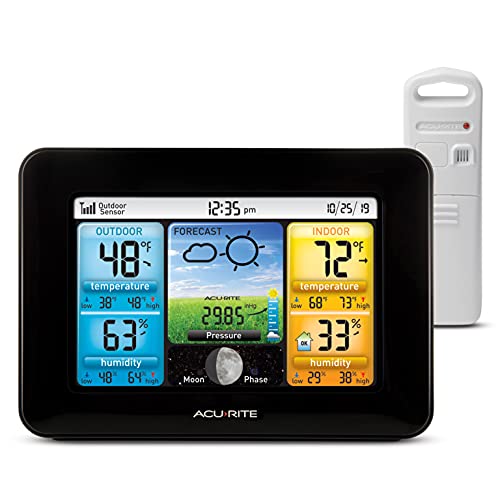
- Color LCD with adjustable dimmer
- Tracks temperature, humidity, and pressure trends
- Wireless sensor offers a 12-hour forecast
Best For: Easy everyday weather monitoring at home
Best Smart-Home Pick
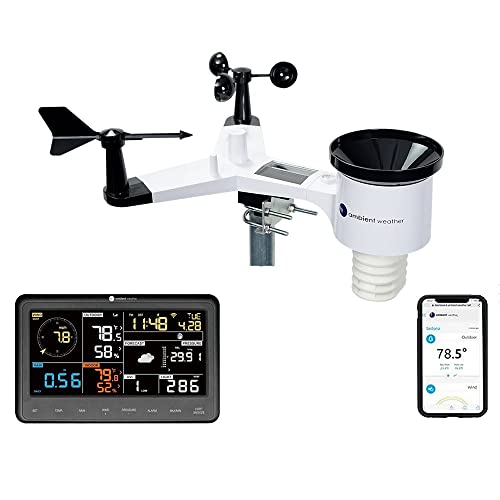
- Wi-Fi supports remote monitoring and alerts
- Measures wind, rain, UV, and solar radiation
- Works with Alexa, Google Home, and IFTTT
Best For: Connected homes, gardens, and detailed outdoor tracking
Best for Comfort Alerts
La Crosse Weather Station with Custom Alerts

- Custom high/low temperature and humidity alerts
- Large display with adjustable brightness
- Includes dew point, heat index, and comfort charts
Best For: Home comfort monitoring and easy-to-read alerts
Best Data Coverage
AcuRite Iris Wireless Weather Station
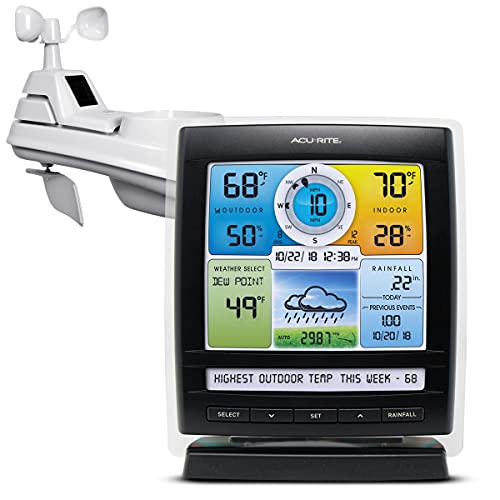
- Provides more than 55 weather data points
- Tracks wind, rainfall, temperature, and humidity
- Large color display with adjustable dimmer
Best For: Detailed backyard weather monitoring without Wi-Fi
Best Wi-Fi Weather Station
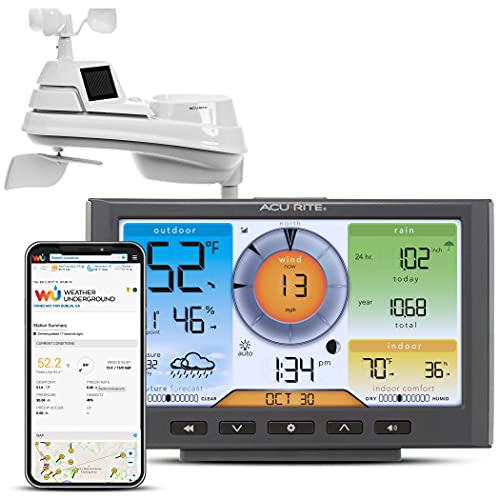
- Tracks temperature, humidity, wind, pressure, and rainfall
- Connects to Weather Underground for remote monitoring
- Offers 25+ data points, alerts, and historical tracking
Best For: Detailed home weather monitoring with Wi-Fi access
Best Atomic Clock Weather Station
DreamSky Wireless Weather Station

- Large display with adjustable five-level backlight
- WWVB atomic clock with automatic DST adjustment
- Supports up to three sensors and temperature alerts
Best For: Everyday household weather and timekeeping
Best Rainfall Tracking Weather Station
12-in-1 Wireless Weather Station

- Records rainfall from hourly to cumulative intervals
- Displays 12 weather and calendar data categories
- Uses a large 6.5-inch adjustable color display
Best For: Gardens, farms, and detailed precipitation monitoring
Best for Multiple Locations
OBET Wireless Weather Station with 3 Sensors

- Supports three sensors with a 500-foot wireless range
- 7.68-inch display includes alerts, trends, and forecast icons
- USB or battery power with adjustable backlight
Best For: Tracking temperature and humidity across several locations
Best Clock Combination
Newentor Wireless Weather Station with Atomic Clock

- Combines weather readings with atomic time and dual alarms
- Always-on display with included DC adapter
- Supports up to three sensors; one is included
Best For: Bedrooms and living spaces needing weather and clock functions
Best Simple Setup – AcuRite Wireless Home Weather Station
If you want straightforward weather stations for home use, this AcuRite model focuses on essential indoor and outdoor readings without a complicated installation. Its wireless sensor provides temperature, humidity, pressure trends, daily highs and lows, and a 12-hour personalized forecast on a color LCD display.
Best For: Households wanting an easy-to-read station for everyday temperature, humidity, and forecast monitoring.
Pros:
- Simple sensor setup with two AA batteries and an integrated hanger.
- Displays indoor and outdoor temperature, humidity, pressure trends, and forecast icons.
- Color LCD includes adjustable dimming, moon phase, trend arrows, and historical high/low readings.
Cons:
- Outdoor sensor batteries are not included.
- It does not list Wi-Fi or remote-monitoring connectivity.
This is a practical choice when clear local readings matter more than advanced networking. The compact display and uncomplicated wireless sensor make it well suited to a home office, living space, or RV.
Best Smart-Home Pick – Ambient Weather WS-2902 Wi-Fi
Ambient Weather WS-2902 Wi-Fi Smart Weather Station | With Wi-Fi Remote Monitoring and Alerts
Check Price On AmazonFor shoppers comparing weather stations for home use with connected features, the Ambient Weather WS-2902 adds Wi-Fi access and smart-home compatibility. Its outdoor sensor array measures temperature, humidity, wind, rainfall, UV intensity, and solar radiation, while the display provides a local view of conditions.
Best For: Gardeners and smart-home users who want remote weather access, alerts, and broad outdoor data collection.
Pros:
- Measures wind speed and direction, temperature, humidity, rainfall, UV, and solar radiation.
- Supports remote access, alerts, and integrations with IFTTT, Google Home, and Alexa.
- Can optionally transmit data to the Ambient Weather personal weather station network.
Cons:
- Requires a 2.4 GHz Wi-Fi connection for its connected features.
- The sensor array uses three AAA batteries in addition to its solar-powered design.
- Its broader feature set may be more than needed for basic temperature monitoring.
The WS-2902 is the strongest fit here for users who want weather data to be part of a connected home setup. Choose it when wind, rain, UV readings, and remote monitoring are more important than minimal installation.
Best for Comfort Alerts – La Crosse Weather Station with Custom Alerts
This La Crosse model is a useful option among weather stations for home use when comfort tracking and customizable alerts are priorities. Its large display shows indoor and outdoor temperature, humidity, dew point, heat index, forecast icons, and daily high/low records, with adjustable brightness for easy viewing.
Best For: Families and home gardeners who want large readings plus high/low temperature and humidity alerts.
Pros:
- Customizable high and low alerts for both temperature and humidity.
- Shows dew point, heat index, comfort charts, forecast icons, and trend arrows.
- Includes an atomic self-setting clock, calendar, adjustable backlight, and seven time zones.
Cons:
- The forecast requires seven to ten days for barometric calibration.
- Backup batteries are not included.
- The display is AC powered for continuous backlighting.
With its large screen and comfort-focused information, this station is well suited to everyday household monitoring. It is especially useful if alerts for indoor or outdoor temperature and humidity are more valuable than Wi-Fi access.
Best Data Coverage – AcuRite Iris Wireless Weather Station
For buyers seeking extensive readings from weather stations for home use, the AcuRite Iris provides more than 55 data points on a large color screen. The wireless outdoor sensor reports temperature, humidity, wind, pressure, and rainfall, while the display adds heat index, dew point, feels-like temperature, historical information, and a 12-hour forecast.
Best For: Home weather enthusiasts who want broad local data coverage and detailed indoor/outdoor monitoring.
Pros:
- Tracks more than 55 data points, including wind, rain, pressure, heat index, and dew point.
- Large color LCD includes an adjustable dimmer, clock, date, and forecast information.
- Wireless sensor installation uses batteries and an included mounting bracket.
Cons:
- It requires multiple batteries across the station and sensor components.
- Its larger volume of data may be excessive for shoppers seeking only basic temperature readings.
- The supplied specifications do not list Wi-Fi or remote access.
The Iris is the most comprehensive traditional wireless option in this group. Its detailed readings and large color display make it a strong choice for users who want to study backyard conditions without relying on a connected app.
Best Wi-Fi Weather Station – AcuRite Iris 5-in-1
For shoppers comparing weather stations for home use, the AcuRite Iris 5-in-1 stands out for its broad set of indoor and outdoor readings plus Wi-Fi access through Weather Underground. It tracks temperature, humidity, wind, barometric pressure, and rainfall, while its color display adds historical data and threshold alerts.
Best For: Home users who want detailed, hyperlocal weather monitoring and remote access to their data.
Pros:
- Measures temperature, humidity, wind speed and direction, pressure, and rainfall.
- Connects to Weather Underground for remote monitoring and data sharing.
- Provides more than 25 data points, historical tracking, and weather threshold alarms.
- Large color LCD includes time, date, indoor readings, and adjustable brightness.
Cons:
- Temperature accuracy is rated at plus or minus 2°F.
- The outdoor sensor is rated for temperatures from 32°F to 122°F.
- Its feature-rich setup may be more than casual users need.
The Iris is a strong choice when comprehensive measurements and online access matter more than simplicity. Its included instruments and detailed tracking make it particularly useful for gardeners, weather enthusiasts, and homeowners monitoring conditions around a property.
Best Atomic Clock Weather Station – DreamSky Wireless Weather Station
Among weather stations for home use, the DreamSky combines a large, readable display with indoor/outdoor temperature and humidity readings. Its WWVB atomic clock, automatic daylight-saving adjustment, forecast function, and adjustable backlight make it suited to everyday household use.
Best For: Homes, offices, bedrooms, and other spaces where easy-to-read weather information and accurate timekeeping are priorities.
Pros:
- Large colorful display shows weather information, time, date, and calendar details.
- WWVB atomic timekeeping includes automatic daylight-saving adjustment.
- Supports up to three outdoor sensors for monitoring multiple locations.
- Includes customizable high/low alerts, forecast information, and five backlight levels.
Cons:
- Only one outdoor sensor is included.
- Battery backup requires three AA batteries, which are not included.
- On battery power alone, the display lights for 10 seconds before dimming.
The DreamSky prioritizes convenience rather than a full suite of wind and rainfall instruments. It is a practical pick for users who mainly want clear temperature and humidity readings, automatic timekeeping, alerts, and a forecast in one compact display.
Best Rainfall Tracking Weather Station – 12-in-1 Wireless Weather Station
For buyers seeking weather stations for home use with detailed outdoor measurements, this 12-in-1 wireless model offers a broad monitoring package. Its display covers temperature, humidity, pressure, wind, rainfall, dew point, feels-like temperature, moon phase, and calendar information, with rainfall records extending from hourly to cumulative totals.
Best For: Gardeners, farms, and homeowners who need rainfall history and a wide range of outdoor weather readings.
Pros:
- 6.5-inch HD color display uses oversized fonts and adjustable backlighting.
- Tracks rainfall hourly, daily, weekly, monthly, and cumulatively.
- Displays temperature, humidity, pressure, wind direction and speed, dew point, and feels-like temperature.
- Wireless sensor is designed for straightforward mounting and transmission across larger properties.
Cons:
- The supplied notes identify the product as battery powered without detailing battery requirements.
- Its broad feature set may be unnecessary for users who only need basic temperature readings.
- The notes do not specify a remote app or online weather-data connection.
This station is especially compelling for users who value precipitation records and property-wide monitoring. Its display and wireless installation are designed for accessibility, while the rainfall history and environmental readings provide useful context for gardens, farms, and outdoor planning.
Most Comprehensive – Sainlogic 12-in-1 Wireless Weather Station
The Sainlogic 12-in-1 is a strong choice if you want weather stations for home use with broad outdoor coverage and detailed rainfall tracking. Its large color display combines household readings with wind, pressure, moon phase, and rain data, while the wireless sensor can transmit up to 443 feet in open conditions.
Best For: Homes, gardens, farms, and larger outdoor areas where rainfall and wind monitoring matter.
Pros:
- Tracks rainfall from 0–9999 mm with hourly, daily, weekly, monthly, and cumulative records.
- Displays 12 data points, including temperature, humidity, pressure, wind, dew point, and feels-like temperature.
- Uses a 6.5-inch color display with three adjustable backlight levels.
- Includes mounting hardware and wireless transmission up to 443 feet in unobstructed conditions.
Cons:
- It does not offer Wi-Fi connectivity.
- Requires three AA batteries for the listed battery-powered operation.
Choose this model when detailed precipitation records and a wide range of measurements are more important than app access. Its combination of a high-contrast screen and extensive outdoor data makes it especially practical for monitoring a yard, garden, or farm.
Best for Multiple Locations – OBET Wireless Weather Station with 3 Sensors
The OBET is a practical option among weather stations for home use when you need readings from several areas. Its 7.68-inch color screen supports three wireless sensors, customizable alerts, forecast icons, and adjustable backlighting for flexible monitoring around the home, garden, garage, or RV.
Best For: Monitoring temperature and humidity in multiple rooms or outdoor locations.
Pros:
- Supports up to three sensors across separate locations with a wireless range of up to 500 feet.
- Large color display shows temperature, humidity, trends, pressure, forecasts, and max/min records.
- Offers customizable alerts plus frost and snowflake indicators.
- Can run from USB or batteries, with adjustable backlight levels when USB-powered.
Cons:
- The USB plug is not included.
- Battery-only backlight operation turns off after 10 seconds.
- Temperature and humidity accuracy are listed at approximately ±1°C and ±5% RH.
This station stands out for multi-location coverage rather than specialized rainfall or wind measurements. It is a useful fit if alerts, a large screen, and the ability to add sensors are central to your buying decision.
Best Clock Combination – Newentor Wireless Weather Station with Atomic Clock
The Newentor combines everyday timekeeping with core indoor and outdoor weather information, making it a convenient pick among weather stations for home use. Its color LCD shows temperature, humidity, pressure, forecast details, moon phase, and daily highs and lows, while the included adapter supports an always-on display.
Best For: Bedrooms, living rooms, and offices where a weather monitor and atomic clock are both useful.
Pros:
- Combines indoor/outdoor temperature and humidity readings with an atomic clock, dual alarms, and snooze.
- Includes weather forecast, moon phase, barometric pressure, daily high/low records, and customizable alerts.
- Supports up to three remote sensors, with one sensor included.
- Wall-power mode keeps the display continuously illuminated; battery mode provides a 15-second quick glance.
Cons:
- Additional remote sensors are not included.
- Batteries are not included for battery operation.
- Its temperature range is listed as 14°F to 122°F.
This is a sensible choice if you want one bedside or living-room display to handle both weather information and clock functions. Select it for convenient indoor use and expandable sensor support rather than highly specialized outdoor measurements.
How We Picked the Best Weather Stations for Home Use
We focused on the features that matter most in everyday home monitoring: sensor coverage, display readability, measurement range, setup requirements, alert options, connectivity, and overall versatility. The selection includes basic wireless thermometers as well as multi-sensor systems that measure wind, rain, barometric pressure, humidity, and more.
We also considered different installation and ownership preferences. Some households want a low-maintenance display with one outdoor sensor, while others benefit from Wi-Fi access, weather-service integration, historical trends, or multiple remote sensors.
Quick Comparison
| Type | Best For | Typical Features | Connectivity |
|---|---|---|---|
| Basic wireless station | Simple household monitoring | Indoor/outdoor temperature, humidity, clock | Local display |
| Multi-sensor station | Gardens and detailed backyard data | Wind, rain, pressure, temperature, humidity | Local display; some Wi-Fi |
| Smart weather station | Remote access and data logging | App access, online dashboards, alerts | Wi-Fi or weather-service integration |
| Multi-room monitor | Homes with several zones | Multiple sensors and readings | Usually local wireless |
Key Buying Factors for Weather Stations for Home Use
Measurements and Sensor Coverage
Decide which readings you actually need. Temperature and humidity are sufficient for many homes, but gardeners and weather enthusiasts may want wind speed, wind direction, rainfall, UV levels, or barometric pressure. A 5-in-1 or 12-in-1 sensor can provide broader coverage, but it may require more involved outdoor installation.
Display and Readability
Look for a large, high-contrast screen if the console will sit across a room or in a workshop. Color displays can make readings easier to scan, while simpler monochrome screens may use less power and provide a cleaner interface. Check whether the display shows all important readings at once.
Wireless Range and Installation
Measure the distance between the indoor console and the outdoor sensor, accounting for walls, metal, and other obstructions. Multi-sensor systems also need a suitable mounting location with clear exposure for wind and rain measurements. Confirm whether the outdoor unit uses batteries, solar assistance, or both.
Wi-Fi, Apps, and Alerts
Wi-Fi is useful if you want to check conditions away from home, upload data to a weather network, or receive alerts. If you prefer a straightforward appliance with no account or app, a local-display model may be more dependable and easier to maintain.
Accuracy, Calibration, and Maintenance
No home station replaces official meteorological equipment, but sensor placement strongly affects results. Keep temperature sensors shaded and ventilated, mount wind sensors in an exposed location, and clean rain collectors periodically. Custom alerts for freezing temperatures, high heat, or humidity can add practical value.
Who Should Buy Which Weather Stations for Home Use?
- For simple temperature and humidity checks: Choose a basic wireless station with a clear indoor display and a single outdoor sensor.
- For gardening and outdoor projects: Select a system that includes humidity, rainfall, wind, and pressure readings.
- For smart-home users: Pick a Wi-Fi model with mobile access, online history, and configurable notifications.
- For large homes or multiple zones: Look for support for additional sensors so you can monitor bedrooms, basements, garages, or greenhouses.
- For low-maintenance ownership: Favor a reliable local console, straightforward battery replacement, and a sensor layout that is easy to reach.
Before buying, confirm the sensor range, power requirements, mounting hardware, and the measurements included in the specific package. Those details will determine whether the station is merely convenient or genuinely useful for your home.