
Intermittent voltage drops and current spikes are easy to miss with a handheld meter. A data logger records readings over time, giving you evidence to investigate equipment faults, verify loads, or monitor a circuit.
These 10 options range from compact AC loggers to single- and three-phase power recorders. The right choice depends on what you need to measure, how long you need to record, and how you plan to review the data.
Best 10 Voltage Current Data Loggers Picks for 2026
Best Dual-Input Pick
Triplett ACDL200 True RMS AC Datalogger

- Logs two AC inputs simultaneously
- Up to 131,000 dual-input readings
- 1-second to 24-hour sampling
Best For: Comparing two AC voltage or current readings
Best Three-Phase Monitoring Pick

- Records voltage, current, and power metrics
- Up to 200,000 data groups
- USB transfer with PC software
Best For: Three-phase system inspection and PC-based analysis
Best Single-Channel Pick
Triplett ACDL100 AC Datalogger

- Logs one True RMS AC input
- Stores up to 100,000 readings
- Includes clamp, leads, and USB cable
Best For: Single-point AC voltage or current tracking
Best Long-Run Three-Phase Pick

- Tracks three-phase power metrics
- Up to 200,000 records
- Rechargeable battery rated up to 48 hours
Best For: Extended three-phase recording with PC review
Compact AC Recorder
DT-176CV2 Voltage and Current Logger
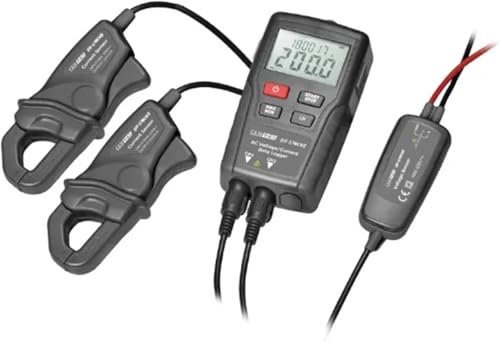
- Records AC voltage and current
- Listing describes single- and dual-channel use
- Confirm model details before ordering
Best For: Portable, battery-powered AC recording
Best for Everyday Use

- Tracks three-phase power metrics
- Stores up to 200,000 records
- Up to 48 hours of battery operation
Best For: Extended three-phase electrical inspections
PC Trend-Tracking Pick

- Records multiple electrical measurements
- Creates real-time trend curves
- Requires a PC to start
Best For: Windows-based measurement trend tracking
Best for Extended Logging
Single-Phase Power Recorder with Clamp Sensor

- Up to 200,000 data sets
- 1-second to 99-minute intervals
- USB transfer and rechargeable battery
Best For: Extended single-phase monitoring
Best for Equipment Cycle Checks

- 0–500 V AC measurement
- Stores up to 10,750 data points
- Voltage and current alarm indicators
Best For: Single-phase equipment cycle checks
Best for Clamp-Fit Planning
ETCR8400 Single-Phase Recorder

- 32 mm × 42 mm clamp jaw
- Up to 200,000 data groups
- USB transfer; up to 48 hours screen-off
Best For: Single-phase field logging with specified clamp dimensions
Best Dual-Input Pick – Triplett ACDL200 True RMS AC Datalogger
Among voltage current data loggers, the Triplett ACDL200 stands out when you need two AC measurements recorded together. Its dual channels support voltage/voltage, current/current, or voltage/current logging, with a selectable sampling interval from 1 second to 24 hours.
Best For: Technicians who need to compare two AC voltage or current readings over time.
Pros:
- Records up to 131,000 measurements with both inputs or 256,000 with one.
- Measures True RMS AC voltage up to 600V or current up to 200A.
- Includes test leads, two current clamps, batteries, an AC adapter, and a USB cable.
Cons:
- Specified for AC voltage and current, not DC logging.
- Dual-input recording has lower capacity than single-input recording.
Choose this model if simultaneous AC readings matter more than maximizing storage on a single channel; its Min/Max recall and real-time clock add useful context to logged measurements.
Best Three-Phase Monitoring Pick – ETCR8430 Power Recorder
For three-phase work, the ETCR8430 expands beyond basic voltage current data loggers by recording voltage, current, frequency, active and apparent power, and power factor. Its stated measurement ranges cover 0.01V to 600V and 1mA to 400A.
Best For: Industrial maintenance teams assessing three-phase electrical systems and reviewing recorded data on a PC.
Pros:
- Stores up to 200,000 groups of data at intervals adjustable from 1 second to 99 minutes.
- Built-in rechargeable battery is rated for up to 48 hours of continuous operation.
- USB connection and PC software support downloading and analyzing records.
Cons:
- Its stated frequency measurement range is limited to 45–65Hz.
- Recording intervals top out at 99 minutes.
This is the more capable choice here when power and power-factor readings matter alongside voltage and current; check that its stated ranges suit the system you plan to inspect.
Best Single-Channel Pick – Triplett ACDL100 AC Datalogger
Triplett ACDL100 AC Voltage/Current Datalogger | True RMS AC Voltage (600V) or Current (200A)
Check Price On AmazonThe Triplett ACDL100 is a straightforward option among voltage current data loggers when you only need to record one AC measurement at a time. It logs True RMS AC voltage up to 600V or current up to 200A, with sampling selectable from 1 second to 24 hours.
Best For: Tracking a single AC voltage or current measurement over time.
Pros:
- Stores up to 100,000 measurements.
- Offers Min/Max recall and an average peak measurement display.
- Comes with test leads, a current clamp, batteries, an AC adapter, and a USB cable.
Cons:
- Cannot log voltage and current simultaneously on its single channel.
- Specified for AC rather than DC measurements.
Pick the ACDL100 for focused, single-point AC logging; step up to a dual-input model if you need to capture two readings at once.
Best Long-Run Three-Phase Pick – 3 Phase USB Power Recorder
This three-phase recorder is aimed at buyers comparing voltage current data loggers for extended industrial checks. It records voltage, current, frequency, active and apparent power, and power factor, with a stated current range of 1mA to 400A.
Best For: Extended three-phase monitoring where stored records can be transferred to a PC.
Pros:
- Stores up to 200,000 records with adjustable 1-second to 99-minute intervals.
- Built-in rechargeable battery is rated for up to 48 hours of operation.
- USB interface and PC software support data transfer and analysis.
Cons:
- The supplied notes do not state a voltage measurement range.
- The listed included components do not clarify which probes or cables are supplied.
Its storage and battery specifications suit longer recording sessions, but confirm the voltage range and package contents before ordering for a particular job.
Compact AC Recorder – DT-176CV2 Voltage and Current Logger
For shoppers comparing voltage current data loggers, the DT-176CV2 is a battery-powered option described as an AC voltage and current recorder with USB software. Its compact 50 g listed weight may appeal when portability matters.
Best For: Recording AC voltage and current when a battery-powered, USB-software-based device is preferred.
Pros:
- Records AC voltage and current.
- Listing describes single- and dual-channel recording.
- Battery powered and listed at 50 g.
Cons:
- The notes do not specify measurement ranges, logging capacity, or software compatibility.
- The listing references both DT-175CV1 and DT-176CV2, so confirm the exact model and included components before ordering.
This is worth considering for straightforward AC logging, but the conflicting model details make verification especially important.
Best for Everyday Use – WALFRONT Power Recorder
Among voltage current data loggers, this WALFRONT recorder stands out for three-phase monitoring. Alongside voltage and current, it tracks frequency, active and apparent power, and power factor for a broader view of an electrical system.
Best For: Technicians inspecting three-phase systems who need extended recording and USB-based PC analysis.
Pros:
- Measures current from 1 mA to 400 A and frequency from 45 to 65 Hz.
- Stores up to 200,000 records with selectable intervals from 1 second to 99 minutes.
- Rechargeable battery supports up to 48 hours of continuous use.
- USB connection and PC software support data transfer and review.
Cons:
- Its three-phase feature set may be more than a basic voltage-and-current logging task requires.
- PC software is part of the stated data-review workflow.
Choose this model when the additional power and frequency readings are useful; its recording capacity makes it particularly relevant for longer inspections.
PC Trend-Tracking Pick – Hantek 365F True RMS Logger
The Hantek 365F is a PC-oriented choice among voltage current data loggers. It records voltage and current over time, along with resistance and capacitance, and its software creates real-time trend curves.
Best For: Users who want True RMS measurements and PC-based trend views across several electrical measurement types.
Pros:
- Logs voltage, current, resistance, and capacitance over time.
- Creates real-time trend curves.
- Supports True RMS measurement and is described as plug-and-play.
Cons:
- Needs a PC to start, according to the product title.
- Software support is specified for Windows 10 and above.
This is a practical fit if you plan to review trends on a supported Windows computer rather than start logging independently of a PC.
Best for Extended Logging – Single-Phase Power Recorder with Clamp Sensor
Among voltage current data loggers for single-phase systems, this recorder offers flexible monitoring of voltage, current, frequency, and power on 120V and 240V systems. Its clamp sensor lets you measure current without disconnecting wires.
Best For: Technicians who need extended single-phase monitoring with adjustable recording intervals.
Pros:
- Stores up to 200,000 data sets, with intervals adjustable from 1 second to 99 minutes.
- Transfers stored measurements to a computer via USB.
- Rechargeable battery supports up to 48 hours of operation with the screen off.
Cons:
- Provides one voltage input and one current input, so it is limited to single-phase monitoring.
- The stated 48-hour runtime assumes the screen is off.
Choose it when recording capacity and flexible sampling matter more than monitoring multiple circuits at once.
Best for Equipment Cycle Checks – Supco LCV LOGiT Tester
The Supco LCV LOGiT is a practical choice among voltage current data loggers when you want to track single-phase AC equipment cycles, such as compressor or fan runs. It combines voltage measurement with an external current probe and includes over- and under-alarm indicators.
Best For: Checking voltage and current changes during single-phase equipment cycles.
Pros:
- Measures AC voltage from 0 to 500 V.
- Stores up to 10,750 data points for later review.
- Provides over- and under-alarm indicators for both voltage and current.
Cons:
- Its stated capacity of 10,750 data points is lower than the 200,000-data-set capacity of the other two listed recorders.
- Requires one 9V battery.
Its alarm indicators and current probe make it well suited to observing equipment behavior; consider the smaller stated storage capacity if you need extensive logging.
Best for Clamp-Fit Planning – ETCR8400 Single-Phase Recorder
If clamp size matters when comparing voltage current data loggers, the ETCR8400 specifies a 32 mm × 42 mm clamp jaw. It records voltage, current, frequency, and power for single-phase 120V and 240V systems using one voltage channel and one current channel.
Best For: Field technicians who want a specified clamp jaw size and adjustable single-phase logging.
Pros:
- Stores up to 200,000 data groups at intervals from 1 second to 99 minutes.
- Clamp sensor enables non-intrusive current measurement.
- USB transfer supports computer-based review; the rechargeable battery runs up to 48 hours with the screen off.
Cons:
- One voltage channel and one current channel limit it to single-phase measurements.
- The stated 48-hour battery runtime requires the screen to be off.
This is a useful fit when you need long-running single-phase records and want to check the specified jaw dimensions before selecting a clamp recorder.
How We Picked These Voltage Current Data Loggers
We organized the selection around common jobs: tracking AC voltage and current, investigating single- or three-phase loads, and capturing readings for later review. We also considered whether a device is a standalone recorder or needs a computer, and whether its stated features fit basic trending or more detailed power analysis. Product names alone cannot establish accuracy, logging capacity, or safety compliance; check the current manual and listing before ordering.
Quick Comparison by Use Case
For straightforward AC voltage-and-current trends, start with the Triplett ACDL100, Triplett ACDL200, or dual-channel DT-176CV2. The ACDL200 is the option to examine if True RMS and dual-input recording are priorities. If you also want to record resistance and can keep a PC involved, consider the Hantek 365F.
For single-phase circuits, compare the ETCR8400 with the single-phase recorder supplied with a clamp sensor. For three-phase installations, the ETCR8430 and the two listed 1 mA–400 A three-phase recorders are the relevant group; verify their included clamps, supported measurements, and software before treating them as interchangeable. The Supco LCV LOGiT is worth checking for a simpler current-and-voltage testing workflow, but confirm that its recording and export functions meet your needs.
Key Buying Factors
Measurement and Electrical Fit
Choose a logger that supports the circuit’s AC or DC voltage, current range, frequency, and phase configuration. Check whether it measures voltage and current simultaneously, how many inputs it provides, and whether it records power, energy, power factor, or power-quality events. True RMS can matter when loads produce non-sinusoidal waveforms.
Clamps, Safety, and Installation
Confirm clamp type, jaw opening, minimum measurable current, and whether voltage leads and sensors are included. Match the instrument’s rated voltage and CAT safety category to the installation; a quoted current range does not establish suitability for a live panel. Follow the manufacturer’s connection procedure, and use a qualified electrician where required.
Logging and Data Access
Check sampling interval, storage capacity, time-stamping, battery life, and whether recording continues without a PC. For intermittent faults, the interval must be short enough to capture the event; a device that saves periodic averages may miss brief transients. Verify USB compatibility, software requirements, and export formats before committing to a long monitoring run.
Who Should Buy Which Voltage Current Data Loggers?
Choose a compact AC logger for routine load trending and fault-finding when advanced power measurements are unnecessary. Choose a single-phase recorder for monitoring one circuit and a three-phase recorder for balanced-load checks or wider industrial investigations. Pick a PC-dependent instrument only if the setup location and workflow allow it. Above all, buy for the measurements and recording duration you actually need—not the broadest feature list on the box.