
Distributing one video or audio signal to multiple displays, cameras, monitors, or listening stations can make a home studio far easier to manage. The right distribution amplifier preserves signal quality while giving you the connections your setup actually needs.
These 10 picks cover HDMI, SDI, composite video, BNC, RCA, and headphone distribution. Use the buying guide below to narrow the list by format, output count, resolution, power requirements, and studio workflow.
Best 10 Video Distribution Amplifiers for Home Studios Picks for 2026
Professional SDI Routing
Blackmagic Design Mini Converter SDI Distribution

- Eight reclocked SDI outputs
- Auto-switches SD, HD, and 3G-SDI
- Supports embedded audio and ancillary data
Best For: SDI studio and live-production signal distribution
Shared Headphone Monitoring
Mackie HM-4 Headphone Amplifier

- Four independent headphone outputs
- Separate volume control per listener
- Compact metal enclosure
Best For: Small recording sessions and rehearsal monitoring
4K HDMI Display Expansion
KanexPro 1x8 4K HDMI Distribution Amplifier

- Sends one HDMI source to eight displays
- Supports 4K UHD and 1080p
- HDCP 2.2 and advanced audio support
Best For: Multi-display HDMI monitoring and studio systems
Analog RCA Signal Splitting
DTECH Powered 8-Way RCA Splitter

- One RCA input with eight outputs
- Built-in amplification for longer runs
- Includes DC 9V power adapter
Best For: Legacy composite-video and RCA-based studio setups
Long-Run SDI Pick
AVMATRIX SD1141 1×4 SDI Distribution Amplifier

- Four SDI outputs with automatic signal detection
- Reclocking supports reliable long-distance transmission
- Handles SD, HD, and 3G-SDI up to 1080p/60
Best For: SDI-based home studios with extended cable runs
Analog A/V Value
DTECH Powered 4-Way RCA Video Splitter

- One composite A/V input feeds four outputs
- Built-in amplification supports longer RCA connections
- Compact metal case includes a 9V power adapter
Best For: Legacy RCA-based studio and monitoring setups
Multi-Listener Monitoring
8-Channel Headphone Distribution Amplifier

- Eight channels provide 16 headphone outputs
- Mono/stereo modes and flexible input routing
- LED meters and independent volume controls
Best For: Multi-person studio headphone monitoring
Simple RCA Mirroring
4-Way Composite Video Audio Splitter
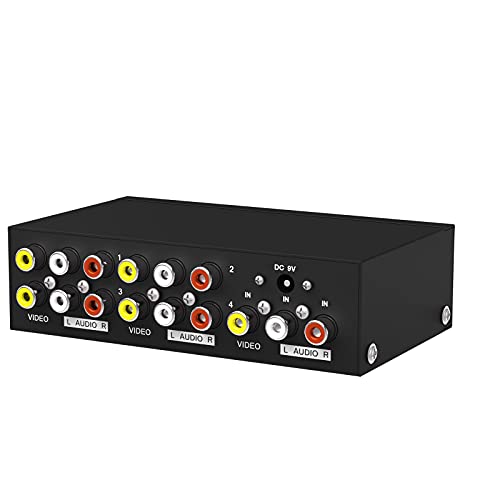
- Mirrors one RCA input to four outputs
- Plug-and-play design with no software
- Works with RCA-equipped TVs and DVRs
Best For: RCA-based home studio and AV setups
Analog BNC Distribution
4-Port 1080p BNC Video Splitter
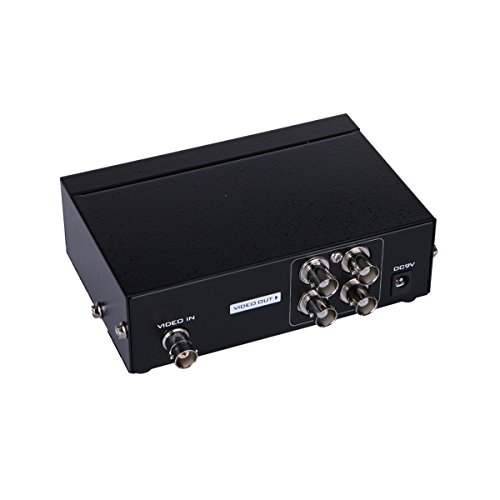
- Splits one BNC input into four outputs
- Supports analog video up to 1080p at 60Hz
- Metal housing and included power adapter
Best For: BNC-based analog monitoring and CCTV systems
Adjustable RCA Audio Routing
5-Way RCA Audio Distribution Amplifier

- Sends one stereo input to five outputs
- Adds independent volume controls
- Includes a stated 6dB gain boost
Best For: Multi-output RCA audio and speaker setups
Professional SDI Routing – Blackmagic Design Mini Converter SDI Distribution
For home studios built around SDI equipment, this Blackmagic Design unit is a focused choice among video distribution amplifiers for home studios. It accepts SD, HD, and 3G-SDI signals and distributes one input to eight reclocked outputs, with support for embedded audio and ancillary data.
Best For: SDI-based studios, live-production setups, and users who need to send one signal to several compatible devices.
Pros:
- Provides eight reclocked SDI outputs from one input.
- Automatically switches among supported SD, HD, and 3G-SDI formats.
- Supports ASI, ancillary data, and embedded audio.
- Includes a redundant SDI input for critical applications.
Cons:
- Designed for SDI workflows rather than HDMI or analog RCA connections.
- Requires a 12-volt minimum power supply.
Choose this model when signal integrity and broad SDI format support matter more than general-purpose connectivity. Its eight-output design is particularly useful when several pieces of SDI gear need the same feed.
Shared Headphone Monitoring – Mackie HM-4 Headphone Amplifier
The Mackie HM-4 is an audio-focused option among video distribution amplifiers for home studios, letting up to four people monitor a source simultaneously. It accepts a 1/4-inch or 1/8-inch source and provides independent volume controls for each listener.
Best For: Tracking sessions, rehearsals, and compact home studios where multiple listeners need separate headphone levels.
Pros:
- Drives four headphones from a single source.
- Provides individual level control for every output.
- Compact metal enclosure can be attached to a desk, rack, or stand.
- Offers plug-and-play operation with no separate power-supply management noted.
Cons:
- This is an audio headphone amplifier, not a video signal distributor.
- Its four-output capacity may be limiting for larger sessions.
For studios that mainly need shared monitoring rather than video routing, the HM-4 is a simple, space-conscious solution. Its independent controls help prevent one listener’s preferred level from affecting everyone else.
4K HDMI Display Expansion – KanexPro 1×8 4K HDMI Distribution Amplifier
For HDMI-based home studios, the KanexPro 1×8 is one of the more suitable video distribution amplifiers for home studios that need to feed several displays. It distributes one HDMI source to as many as eight outputs while supporting 1080p and 4K UHD video with HDCP 2.2 compliance.
Best For: HDMI studio environments, multi-display monitoring, and setups that require compatible surround-sound formats.
Pros:
- Distributes 4K HDMI video and audio to up to eight displays.
- Supports full HD 1080p and 4K UHD formats.
- Handles Dolby Digital, DTS-HD, and Dolby TrueHD audio.
- Supports High Speed HDMI features including deep color and lip sync.
Cons:
- Uses HDMI connectivity, so it is not intended for SDI or RCA systems.
- Compatibility depends on connected displays and HDMI equipment.
This model is a strong fit when a single HDMI feed must appear across multiple screens. Its eight-port layout and 4K support make it useful for monitoring walls, presentation systems, or multi-display studio setups.
Analog RCA Signal Splitting – DTECH Powered 8-Way RCA Splitter
The DTECH FJ108-US provides a practical analog option among video distribution amplifiers for home studios. Its powered 1-in/8-out design duplicates composite video and left/right audio through RCA connections for multiple monitors, speakers, or recording devices.
Best For: Legacy composite-video systems, dubbing projects, and home studios using RCA-equipped TVs, projectors, receivers, or capture devices.
Pros:
- Splits one 3-RCA audio/video signal to eight outputs.
- Built-in amplification helps support longer cable connections.
- Metal housing, anti-skid feet, and LED status indication support practical installation.
- Includes a DC 9V power adapter and requires no extra software.
Cons:
- Limited to analog composite video and RCA audio connections.
- Does not provide HDMI, SDI, or modern 4K distribution.
- Requires external power for operation.
This DTECH splitter makes sense for legacy A/V workflows where simple RCA duplication is the main requirement. It is especially convenient for distributing one analog source across several compatible displays or audio/video devices.
Long-Run SDI Pick – AVMATRIX SD1141 1×4 SDI Distribution Amplifier
For home studios distributing professional SDI video, the AVMATRIX SD1141 provides one input and four outputs with support for 3G-, HD-, and SD-SDI signals up to 1080p at 60 Hz. Its signal reclocking and long-distance transmission support make it practical for larger or more demanding video setups.
Best For: Home studios using SDI cameras, monitors, or other professional video equipment across longer cable runs.
Pros:
- Accepts HD, SD, and 3G-SDI signals automatically.
- Reclocks all outputs to help maintain signal transmission quality.
- Supports distances up to 400 m for SD, 200 m for HD, and 120 m for 3G-SDI.
- Includes a detachable wall-mounting bracket and four outputs.
Cons:
- Designed for SDI rather than RCA or other consumer video connections.
- Its 17V DC input may require planning around power placement.
The SD1141 is the strongest fit here when your home studio is built around SDI equipment and extended cable runs. It offers useful professional features without taking much physical space.
Analog A/V Value – DTECH Powered 4-Way RCA Video Splitter
For older or consumer-oriented video distribution, the DTECH FJ104-US is a powered 1-in/4-out RCA splitter that duplicates composite video and stereo audio. It is one of the more straightforward video distribution amplifiers for home studios that still use RCA-connected monitors, projectors, consoles, or capture devices.
Best For: Home studios routing one composite video and stereo audio source to up to four displays or audio destinations.
Pros:
- Splits one 3-RCA signal into four outputs for video and left/right audio.
- Built-in amplification is intended to preserve image and audio quality over longer connections.
- Compact metal housing includes anti-skid feet and an LED indicator.
- Includes a 9V AC power adapter with color-coded RCA jacks.
Cons:
- Limited to analog composite RCA connections.
- Requires external AC power for operation.
- Does not include switching or software-based control.
The DTECH is a practical choice for simple analog distribution and dubbing-style setups. It is best matched with legacy equipment rather than modern SDI or digital video workflows.
Multi-Listener Monitoring – 8-Channel Headphone Distribution Amplifier
If your home studio needs to distribute separate audio mixes rather than video, this 8-channel headphone amplifier offers eight independently controlled amplifier channels and 16 headphone outputs. It supports mono or stereo operation, making it a flexible companion to mixers, interfaces, and other production equipment.
Best For: Studios needing simultaneous headphone monitoring for up to eight channels or 16 connected headphones.
Pros:
- Provides eight high-power amplifier channels and 16 front/rear 1/4-inch headphone outputs.
- Supports mono/stereo modes and flexible IN1/IN2 routing per channel.
- Offers independent channel volume controls plus master input control.
- Includes six-segment LED meters and overload protection for real-time monitoring.
Cons:
- It is an audio headphone distribution amplifier, not a video signal distributor.
- Its 1U rack-mount format may be more equipment than a small solo setup needs.
- Connectivity is wired through 1/4-inch headphone jacks.
For a home studio roundup, this unit belongs in the monitoring category rather than the video chain. Its channel count, routing options, and metering make it useful when multiple performers or engineers need controlled headphone feeds.
Simple RCA Mirroring – 4-Way Composite Video Audio Splitter
For basic video distribution amplifiers for home studios, the MT-VIKI 104AV is a straightforward choice when your setup uses composite RCA connections. It duplicates one audio/video input across four outputs without requiring software or complicated configuration.
Best For: Home studios and AV setups that need to mirror one RCA source to four compatible displays or devices.
Pros:
- Splits one RCA audio/video input into four mirrored outputs.
- Plug-and-play operation requires no software.
- Compatible with devices using RCA inputs, including TVs and DVRs.
Cons:
- Uses composite RCA connections rather than digital or SDI formats.
- May experience noise near routers, TVs, power supplies, or other transmitters.
- Ground-loop issues can introduce noise in some setups.
This is a practical, no-frills distributor for older or RCA-based equipment. Place it away from potential interference sources and check grounding if unwanted noise appears.
Analog BNC Distribution – 4-Port 1080p BNC Video Splitter
Among video distribution amplifiers for home studios, this AuviPal unit suits analog coaxial workflows that rely on BNC connections. It sends one input to four displays or devices and supports analog PAL, NTSC, and SECAM signals up to 1080p at 60Hz.
Best For: Analog monitoring, CCTV, and studio systems using BNC-connected CVBS video equipment.
Pros:
- Distributes one BNC input to four BNC outputs simultaneously.
- Supports resolutions up to 1080p at 60Hz for compatible analog signals.
- Metal housing is designed for stability, heat resistance, and continuous operation.
- Includes a US power adapter, user manual, and one-year warranty.
Cons:
- Not compatible with SDI or digital signals.
- Connected cameras must be set to CVBS mode for seamless output.
- Requires BNC-compatible equipment rather than RCA-only connections.
With its powered design and durable enclosure, this splitter is a sensible option for analog video distribution. Confirm that your sources use CVBS and that all connected equipment supports BNC connections before buying.
Adjustable RCA Audio Routing – 5-Way RCA Audio Distribution Amplifier
For home studios focused on audio rather than picture, this five-output RCA unit adds useful control to video distribution amplifiers for home studios and related AV racks. It sends one stereo RCA input to five outputs, with independent volume knobs and a stated 6dB gain boost.
Best For: RCA stereo setups feeding multiple speakers, amplifiers, headphones, sound bars, or other audio devices.
Pros:
- Splits one stereo RCA input across five separate stereo outputs.
- Provides independent volume control for every output channel.
- Includes a +6dB gain compensation boost.
- Uses a dual-rail design and NJM4580 operational amplifiers for stated low-noise, high-fidelity operation.
Cons:
- Designed for RCA audio distribution, not video splitting.
- Requires the included 12V DC power adapter.
- Individual output controls may be unnecessary for simpler systems.
This is the most flexible choice here for multi-zone RCA audio routing, especially when each destination needs its own level adjustment. It is less suitable if your primary requirement is composite or BNC video distribution.
How We Picked the Best Video Distribution Amplifiers for Home Studios
We selected products across the main signal formats used in compact production, recording, streaming, monitoring, and presentation setups. The lineup includes HDMI and SDI distribution amplifiers, composite video and BNC splitters, RCA audio distributors, and headphone amplification systems.
Our priorities were signal compatibility, output count, practical installation, powered operation, and suitability for a home-studio environment. Because these products are not interchangeable, matching the amplifier to your source and destination equipment matters more than choosing the highest number of outputs.
Quick Comparison
| Best For | Look For | Products In This Roundup |
|---|---|---|
| Modern video displays | HDMI, supported resolution, HDCP compatibility | 4K UHD 1×8 HDMI Distribution Amplifier |
| Professional video workflows | SDI standard, BNC connections, reclocking or signal regeneration | Blackmagic Design Mini Converter; SDI 1×4 Distribution Amplifier |
| Legacy video equipment | Composite RCA or BNC compatibility | DTECH, MT-VIKI, and CCTV-oriented splitters |
| Multiple listeners | Headphone output count, impedance support, volume control | Mackie HM-4 and 8-channel headphone amplifier |
| Analog audio routing | RCA input/output layout and powered distribution | 4-way and 5-way RCA distribution products |
Key Buying Factors for Video Distribution Amplifiers for Home Studios
Signal Format and Connectors
Start with the source and destination connectors. HDMI, SDI, composite RCA, BNC, and analog audio require different hardware. An adapter may change the connector shape, but it does not necessarily convert the signal format or preserve compatibility.
Resolution, Bandwidth, and Protection
For HDMI systems, verify the supported resolution, refresh rate, color format, and HDCP version. A 4K source may fall back to a lower resolution if the amplifier or any connected display cannot handle the required standard. For SDI, confirm whether the unit supports SD, HD, or 3G-SDI and whether your cable length is appropriate.
Output Count and Signal Stability
Choose enough outputs for your current setup, with modest room for expansion. Powered distribution amplifiers are generally preferable when one source must feed several destinations because they are designed to regenerate or actively distribute the signal rather than relying on a passive split.
Audio and Monitoring Needs
If your goal is shared listening rather than video distribution, a headphone amplifier is the better match. Check the number of independent outputs, mono/stereo options, per-channel level controls, and whether the unit supports the headphone impedances used by your studio.
Installation and Power
Measure available rack, desk, or wall space and confirm the power adapter or supply arrangement. Labeling inputs and outputs helps prevent routing mistakes, especially when several displays, cameras, or monitoring devices are connected.
Who Should Buy Which Video Distribution Amplifiers for Home Studios?
Choose the 4K HDMI amplifier if your studio centers on current televisions, monitors, capture devices, or presentation displays. Choose an SDI model for camera, broadcast, or professional video equipment using BNC-based SDI connections.
For older cameras, game systems, or composite monitors, the powered RCA and BNC splitters are more appropriate than HDMI or SDI hardware. Select a four-way unit for a small setup and an eight-way option when several destinations must receive the same signal.
For collaborative recording or podcast sessions, a multi-output headphone amplifier is usually the most practical purchase. The Mackie HM-4 suits a compact four-listener arrangement, while an eight-channel model is better for larger groups and more extensive monitoring. Finally, use an RCA audio distributor when the requirement is analog speaker or amplifier routing rather than video.